Fraudster-Financier, War Criminal, Terrorist: Vardanyan's Journey from Billions to Prison
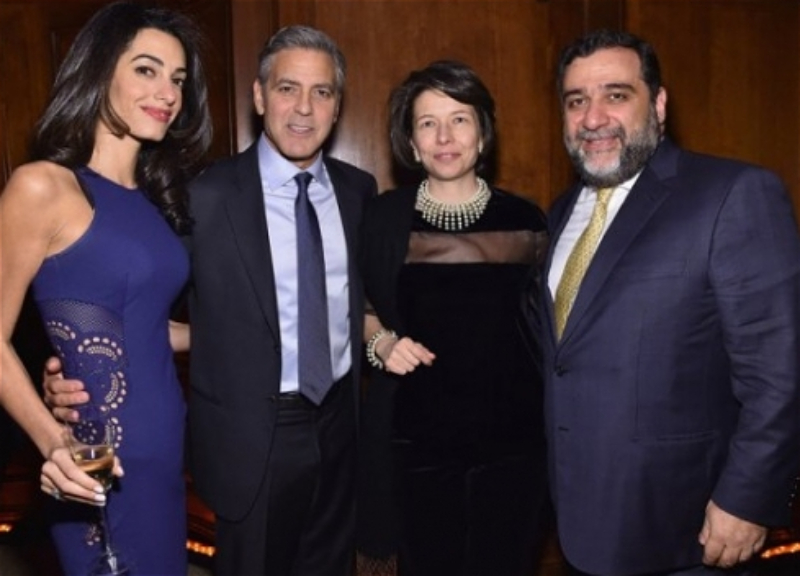
Twenty years of imprisonment – this is the final sentence handed down by the Baku Military Court to one of the former leaders of the separatist junta, Armenian citizen Ruben Vardanyan.
As reported, today at an open court session on the criminal case against Ruben Vardanyan, who was charged under articles of the Criminal Code of the Republic of Azerbaijan for crimes against peace and humanity, war crimes, terrorism, financing of terrorism, and other serious offenses, the verdict was announced.
The 57-year-old Vardanyan, a former banker and oligarch who, in an attempt to conceal his direct involvement in fraudulent schemes, renounced his Russian citizenship and dove into political speculation by illegally entering Karabakh and briefly leading the so-called "government" of the puppet regime, was detained while attempting to flee following the anti-terrorist operation in September 2023.
We present to our readers a material from 1news.az about the financial machinations that fully reveal the sources of Vardanyan's wealth, which he also directed toward war crimes and the financing of terrorism on Azerbaijani territory. This article was published in September 2018 and is republished today with minor updates related to temporal data.
Vardanyan's career began with the brokerage company "Troika Dialog." Working at the company since its founding, he led it from 1992, holding positions such as executive director, president, CEO, and chairman of the board of directors of the "Troika Dialog" group of companies until its sale to Sberbank on January 23, 2012. After that, he was co-head of Sberbank CIB and later an advisor to the president and chairman of the board of Sberbank.
In 2013, together with managing director and former "Troika Dialog" partner Mikhail Broitman, he founded the investment company "Vardanyan, Broitman and Partners." From 2002 to 2004, he served as the general director of "Rosgosstrakh" while simultaneously heading "Troika Dialog."
He was a member of the boards of directors of "KamAZ," Sollers, Ameriabank (Armenia), the economic council of IFC, and the board of trustees of the Investment and Venture Fund of the Republic of Tatarstan. Vardanyan was a founding partner and deputy chairman of the international board of trustees of the Moscow School of Management "Skolkovo," where he served as president from 2006 to 2011. He also chaired the supervisory board of the Institute for Emerging Market Studies and the expert council of the Center for Wealth Management and Philanthropy at the "Skolkovo" business school. Soon after, Ruben Vardanyan announced the launch of a new business project providing services for the transfer and formalization of business and capital to heirs.
In June 2015, Vardanyan opened the company Phoenix Advisors, which assisted clients in developing strategies for transferring assets and determining successors, as this circle is not always limited to family members. Most of Vardanyan's capital was managed by a small investment firm, "Vardanyan, Broitman and Partners." The assets under its management amounted to several billion dollars, with funds invested in a dozen projects.
According to Vardanyan's scheme, an owner could even transfer assets to another of his companies, the Cypriot VBP Cyprus, for management, while Vardanyan and other company representatives would handle strategy, represent the owner on the board of directors, and hire top managers.
Vardanyan sought to dominate not only the business environment but also the sphere of non-profit organizations. For this purpose, the Philin project (from philanthropy infrastructure) was created to support the infrastructure of Russian non-profit organizations (NPOs) and charitable foundations, which was supposed to help "reduce their costs." Thus, Vardanyan aimed to influence both large companies and the non-profit sector in Russia, effectively gaining access to their legal and financial documentation.
Money in Russia, Projects in the USA
A special line in Vardanyan's business was the media sphere. In March 2015, a message was circulated in New York about the creation of the "100 Lives" project, dedicated to studying the issue of the so-called "Armenian genocide." There are two important aspects here. Vardanyan involved the former editor-in-chief of the Russian international news agency "RIA Novosti," Svetlana Mironyuk, in the project's leadership. On the other hand, this project and the accompanying annual Aurora Prize of $1 million were established by Ruben Vardanyan together with American Armenians—entrepreneur Noubar Afeyan and president of the New York "Carnegie Corporation," Vartan Gregorian—while one of the co-chairs of the Aurora Prize was Hollywood actor George Clooney.
Another telling example of how money earned in Russia by Vardanyan was, to some extent, spent on promoting "Western values" is the international boarding school UWC Dilijan in Armenia, launched by him in 2014. The costs of this English-language school project were estimated at between 110 and 220 million dollars. It is worth noting here that this "noble deed" by Vardanyan (as it turned out, along with others) was a cleverly orchestrated fraudulent scheme. According to earlier reports in the Armenian press, the Dilijan project of the "philanthropist" Vardanyan was actually funded from the Armenian state budget. The fact is that a year before the opening of UWC Dilijan, in 2013, at the proposal of the government, specifically the then-Armenian Prime Minister Tigran Sargsyan, the country's parliament passed a law specifically for Ruben Vardanyan's project, which stipulated the following:
- Goods imported by Ruben Vardanyan and related to the construction of his school are exempt from VAT and customs duties,
- The provision of goods and services to organizations within the territory of the Republic of Armenia is exempt from value-added tax,
- The net profit of organizations before taxation, or the part of it used (invested) within the framework of the program by April 15 of the following reporting year, is exempt from income tax,
- Payments made by organizations to non-resident entities, in accordance with current legislation, are exempt from income tax for non-resident entities,
- Income directed toward the acquisition of land plots from individuals by organizations is exempt from income tax.
Thus, Vardanyan gained the ability to import goods free from budget payments amounting to 1.5 billion dollars. In this way, Vardanyan literally "made money out of thin air" on tax and customs privileges, earning up to 300 million dollars. The construction of the school, as mentioned earlier, was estimated at 110-220 million dollars. Such is the "philanthropy" à la Ruben Vardanyan—plundering the state budget, "donating" part of the loot to the homeland, and earning the reputation of a "great benefactor."
Vardanyan's appetites were so vast that at some point, he decided to "make money" on the occupied Azerbaijani territories by presenting a 20-million-dollar project initiated by his IDeA foundation to build a so-called "eco-village" on the seized lands of Azerbaijan. It seems Vardanyan did not consider that, under international law, such a project constitutes a crime.
Speaking of the IDeA foundation ("Initiatives for the Development of Armenia"), it should be noted that its activities are quite suspicious. The foundation, led by Ruben Vardanyan along with Noubar Afeyan, together with McKinsey and other partners, developed the "Armenia-2020" development program. However, the objectives of this program were outlined very vaguely—"organizing and conducting broad discussions on possible long-term development prospects for the Republic of Armenia, followed by the development of scenarios for Armenia's development until 2020."
In 2019, Vardanyan's wealth was estimated at over a billion dollars. That year, it became known that the investment company "Troika Dialog" had created a network of offshore companies through which money was laundered and withdrawn from Russia to the accounts of influential officials and businessmen in the country. An investigation by the Organized Crime and Corruption Reporting Project (OCCRP), published by The Guardian, noted that the "Troika Dialog" network included at least 76 offshore firms, through whose accounts more than 4.6 billion dollars passed over several years. A total of 1.3 million banking transactions are known. The offshore scheme of the investment bank operated like a melting pot: money entered the account of one company, was then moved several times through the accounts of other firms, and only afterward was transferred to the final recipients. After this, separating "dirty" money from "clean" became difficult, as claimed by OCCRP.
Vardanyan's illegal arrival on the internationally recognized territory of Azerbaijan, beyond the declared political goals, also pursued a pragmatic interest—increasing his personal wealth and gaining control over the resources of the Karabakh region of Azerbaijan. It did not succeed.
The Great Victory, the full restoration of Azerbaijan's territorial integrity and state sovereignty, led to the legal accountability of separatists.
Recall that on February 5, the Baku Military Court sentenced Armenian citizens Arayik Harutyunyan, Arkady Ghukasyan, Bako Sahakyan, David Ishkhanyan, David Babayan, Levon Mnatsakanyan, and others accused of committing crimes against peace and humanity as a result of Armenia's military aggression against Azerbaijan, war crimes including the preparation and conduct of aggressive war, genocide, violation of the laws and customs of war, as well as terrorism, financing of terrorism, violent seizure of power, its violent retention, and numerous other crimes.
By the court's decision, some of them were sentenced to life imprisonment, while others received terms ranging from 15 to 19 years. At the same time, some of the accused were found guilty of crimes falling under the article for life imprisonment, and these charges were fully confirmed during the trial. However, in accordance with the requirements of the Criminal Code of Azerbaijan, individuals who have reached the age of 65 before sentencing cannot be sentenced to life imprisonment. From this perspective, the verdict demonstrates strict adherence to the law by the Azerbaijani judicial system, which does not deviate from legal norms even in relation to individuals guilty of the most serious crimes.
As for Ruben Vardanyan, as noted earlier, today, February 17, the court in Baku sentenced him to 20 years of imprisonment.
Thus, the dates of February 5 and 17 will go down in history as days of the triumph of legality and justice, when the principle of the inevitability of punishment was fully confirmed.
F. Bagirova