Mandate Exists, Trust Does Not: Why the EU Mission in Armenia Has Become a Risk Factor
The South Caucasus continues to be a space where, under the guise of well-sounding rhetoric, very specific geopolitical interests are pursued.
Behind the talk of 'stabilization' and 'security support,' one can increasingly discern attempts by external actors to establish a foothold in the region and influence the formation of a new security architecture, driven primarily by their own strategic calculations.
It is in this context that the decision of the Council of the European Union on February 17 to appoint Satu Koivu as the new head of the EU Monitoring Mission in Armenia (EUMA) should be viewed. At first glance, it may seem like a routine personnel rotation within Brussels' bureaucratic logic. However, beneath the outwardly formal procedure lies a much deeper and more troubling political significance. This is not merely about a change in leadership but about the confirmation of the European Union's course toward securing a long-term presence in the South Caucasus under the pretext of so-called 'civilian monitoring.' The replacement of Markus Ritter with Satu Koivu does not signal a rethinking of approaches; on the contrary, it clearly demonstrates Brussels' intention to fully institutionalize a mission that was initially presented as temporary and limited in scope but has over time become a persistent element of external interference in regional processes.
The EU Monitoring Mission began its work on February 20, 2023, for a two-year term. Even then, Baku pointed out its unilateral nature and the lack of Azerbaijan’s consent to the presence of European observers near the border. Despite this, the mission was not only sustained but consistently expanded—from an initial 100 personnel to over 200. Simultaneously, the Armenian side granted it a special legal status, including immunity and inviolability, which effectively placed EUMA’s activities beyond the framework of ordinary civilian missions and endowed it with characteristics of a long-term institutional presence.
It is critically important to note that the mission's expansion did not occur amid escalation or rising tensions but during a period when Azerbaijan was consistently pushing for a peace settlement agenda and advocating for direct dialogue without intermediaries. In this context, the presence of a third party at the border appears not as a stabilizing factor but as one that undermines the very idea of post-conflict peace.
Particularly telling is the growing discourse in Yerevan about the desirability of maintaining the mission even after a peace treaty is signed.
Statements by Armenia’s Security Council Secretary Armen Grigoryan about the intention to seek 'further formats of cooperation' with the EU, despite the EUMA mandate expiring in 2027, effectively confirm that Armenian authorities view the mission not as a temporary tool but as an external guarantee mechanism. This approach directly contradicts the logic of a future peace agreement with Armenia, one of whose key provisions envisages the rejection of third-party forces at the border of the two states. The attempt to preserve European presence in advance signals an unwillingness to fully assume responsibility for peace and security in the post-conflict period.
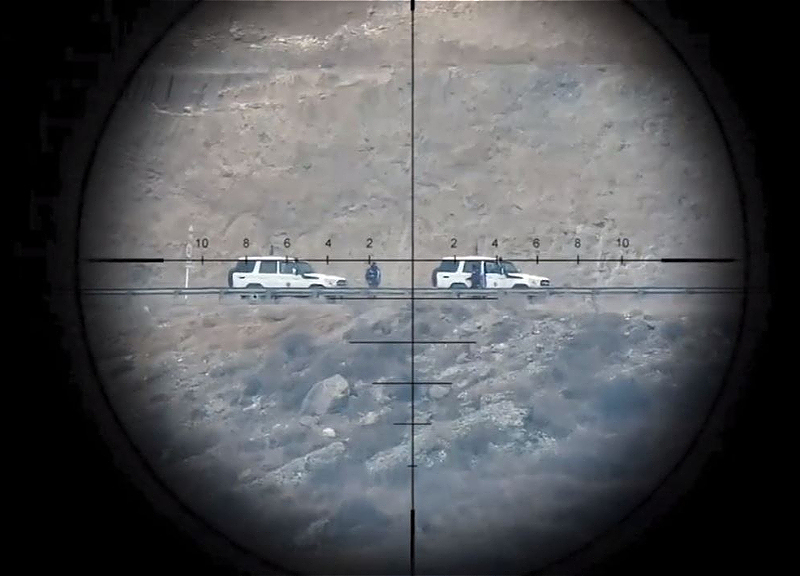
Baku has repeatedly emphasized that the EU mission’s presence creates additional risks for regional stability. This is not just about political symbolism but also about practical implications. The mission, formally labeled as 'civilian,' in reality employs technical surveillance tools, records movements in border areas, and accumulates information beyond its declared mandate. All of this heightens suspicions that EUMA is effectively performing functions far removed from neutral monitoring, while hiding behind corresponding rhetoric.
Particular irritation is caused by the double standards demonstrated by the European Union. While declaring commitment to the principles of territorial integrity and sovereignty, Brussels, in the case of the South Caucasus, opts for selective action. The mission is deployed exclusively on Armenian territory, its reports are not public, and its activities are not coordinated with Azerbaijan, whose interests are directly affected. As a result, the EU loses its image as a neutral actor and is increasingly perceived as a party playing on the Armenian field.
The illusion of neutral presence, which has been maintained around the European mission in Armenia for several years, has long dissipated. The longer EUMA remains in the region and the more actively its functions and numbers expand, the more evident it becomes that this is not about technical monitoring but about a political project with far-reaching goals. Behind the ostentatious activity of the observers lies not a special affinity for Armenia but a pragmatic desire to establish a foothold in the region and draw new lines of geopolitical demarcation.
By betting on Armenia as a convenient foothold, Western centers of power are consistently drawing it into their strategic calculations in the South Caucasus. At the same time, Brussels and other capitals are fully aware of how risky this course is and what severe consequences it could entail, primarily for Armenia itself.
On the other hand, unilateral steps and attempts at power balancing by the EU inevitably undermine Baku’s trust in the European structure and deepen fault lines instead of helping to overcome them.
Azerbaijan’s position on the activities of EUMA remains consistent and logically sound. Once a peace treaty comes into force, the need for any external monitoring missions will disappear on its own. True peace does not require the constant presence of third parties; on the contrary, it presupposes direct mechanisms of interaction, trust, and responsibility between the parties. Maintaining EUMA in the post-conflict period would only mean preserving distrust and sustaining the illusion of external protection for one of the sides.
The South Caucasus has repeatedly become an arena for geopolitical experiments, the consequences of which the region still feels today. Azerbaijan now consistently advocates for regional solutions, direct dialogue, and respect for the sovereignty of states. In this context, the EU’s attempts to entrench its presence in Armenia appear as a step in the opposite direction—an attempt to turn the region into a zone of permanent external control, where peace is replaced by managed instability.
The appointment of a new mission head does not change the essence of what is happening. EUMA remains a mission without trust, without neutrality, and without prospects. True and sustainable peace between Azerbaijan and Armenia is possible only under conditions where borders are guarded by the states themselves, and security is ensured not by external observers with expanded powers but by the political will of the parties. This is why the South Caucasus needs not a new overseer but a final liberation from external missions that, under the guise of stabilization, only prolong the status quo of instability.