Trump's neighbors voted against him: What Florida says about the November U.S. elections
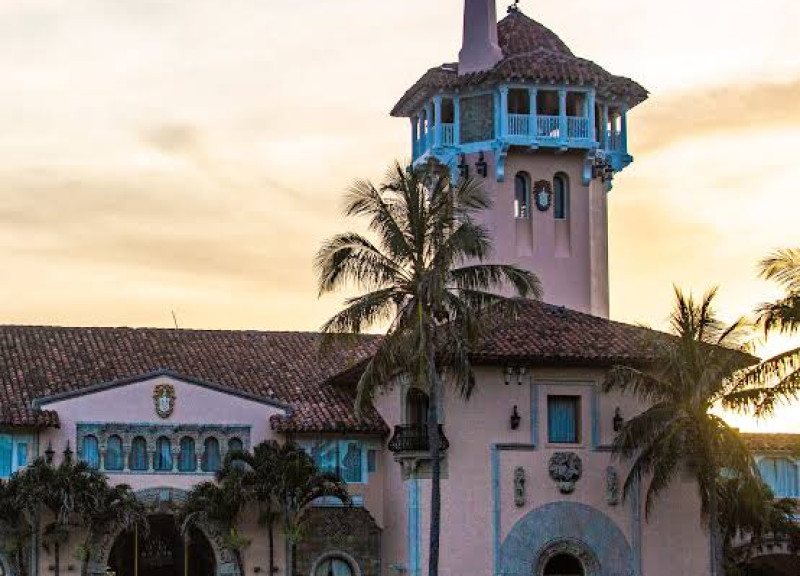
Democrats won a special election in the district that includes Trump's Mar-a-Lago residence — marking the 30th seat flipped from Republicans since the start of 2025. Republicans, during the same period, have not flipped a single one.
Emily Gregory, a fitness business owner and first-time political candidate, secured a victory in the special election for the Florida Legislature — in a district that encompasses Mar-a-Lago, the private residence of U.S. President Donald Trump in Palm Beach.
Her opponent, John Maples, ran with Trump's endorsement and positioned himself as an "America First patriot."
The Democrat's victory appears surprising given the district's political landscape: Republicans hold a significant advantage in the number of registered voters here, and the previous holder of this seat won the 2024 election by a 19-percentage-point margin. The district was a red enclave — even within Palm Beach County, which generally leans Democratic.
"Floridians are tired of chaos, corruption, and sky-high prices for everything — from groceries to healthcare," said Nikki Fried, chair of the Florida Democratic Party.
A TREND, NOT A COINCIDENCE
Gregory's victory is not an isolated incident. Since the start of 2025, Democrats have flipped 12 seats in state legislatures through special elections.
Republicans, over the same period, have flipped none. When considering the annual election cycle — including Democratic victories in gubernatorial races in Virginia and New Jersey, as well as successes in conservative states like Texas and Arkansas — the count reaches 30 seats.
On the same night in Florida, another Democrat, Brian Nathan — a Navy veteran and union leader — held a narrow lead in a special election for the state Senate in the Tampa area, vying for a seat vacated after a Republican was appointed lieutenant governor. This adds further weight to the trend: two districts, two wins, one night.
WHY IT MATTERS: A GAME-CHANGER
Historically, low turnout in special elections favored Republicans — they excelled at mobilizing their core electorate when most voters stayed home. Trump's entry into politics in 2015 turbocharged this model: he brought out "unlikely voters" in unprecedented numbers, and high turnout began to benefit his party.
Now, the opposite is happening. In conditions of low turnout — preliminary data suggests about 30% in Gregory's district — Democrats are showing greater discipline. The winner herself noted that ballot return statistics indicate some registered Republicans voted for her.
"Many independents and Republicans, judging by the results, must have voted for me," Gregory said.
"You take something for granted — and you lose it," said Republican Congressman Mario Díaz-Balart.
HOW REPUBLICANS ARE REACTING
Trump, typically quick to respond to political events on social media, has not publicly commented on the loss in his own district — despite personally endorsing Maples and meeting with him at Mar-a-Lago ahead of the election.
Maples, at the time of publication, had not conceded defeat. The White House did not respond to a request for comment.
Reactions among Republican lawmakers are mixed. Congressman Greg Steube said he "doesn't attach much significance to it" — turnout in special elections is incomparably lower than in midterms. Congressman Mario Díaz-Balart was more candid: "You take something for granted — and you lose it. It's no secret that Republicans traditionally perform worse in off-cycle elections."
Republican strategists insist that extrapolating the results of a few local elections to the November congressional campaign is methodologically incorrect. The White House has already held a special meeting dedicated to voter mobilization for the midterm elections.
WHAT HAPPENS IN NOVEMBER
This is the central question. Democrats believe the trend is sustainable: House Minority Leader Hakeem Jeffries reminded colleagues that the 30 flipped seats reflect systematic work, not luck. Heather Williams, head of the Democratic Legislative Campaign Committee, stated that "650 seats could be at risk" in November — the largest shift in favor of Democrats in over two decades.
Republicans continue to hold a supermajority in the Florida Legislature — Gregory's victory does not alter the balance of power in the state. Her term expires at the end of the year, and she intends to run for reelection in November. A rematch with Maples is possible.
Meanwhile, the symbolism of the victory needs no qualification: the closest neighbor of the U.S. President will now be represented in the Florida Legislature by a Democrat. Trump, who voted by mail in this same district — despite his public campaign against mail-in voting — has so far chosen to remain silent.
Material prepared based on publications from The Washington Post (Marianna Sotomayor, March 25, 2026) and The New York Times (David W. Chen, March 24–25, 2026).