Iran destroys American AWACS reconnaissance aircraft at airbase in Saudi Arabia
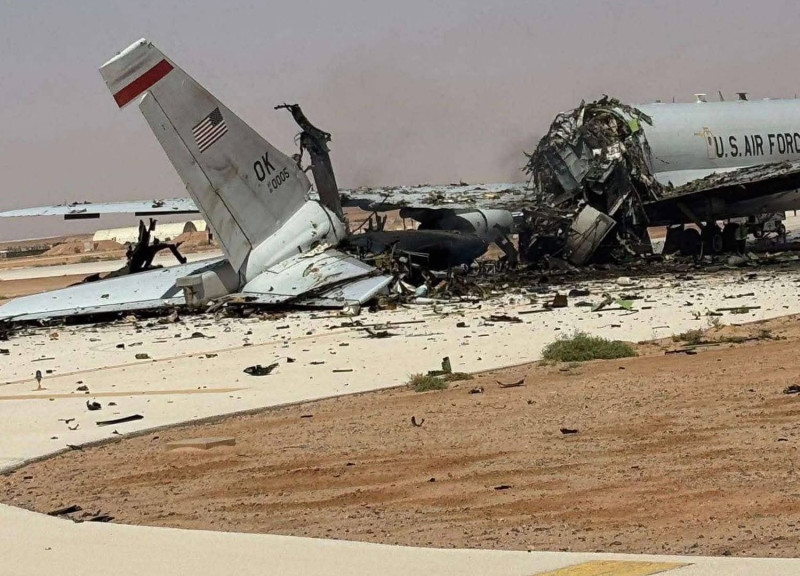
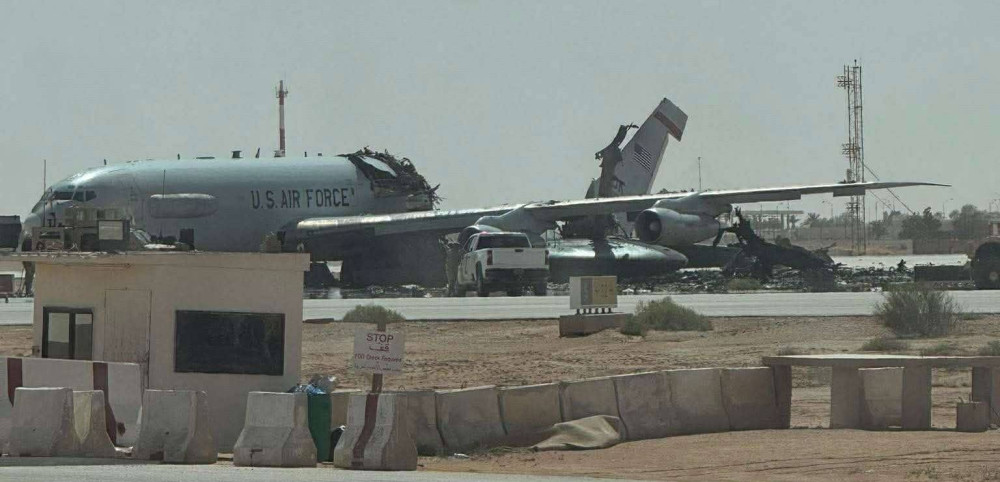
On March 27, Iran launched a combined missile and drone strike on the Prince Sultan Air Base in Saudi Arabia, destroying one of the most valuable aircraft of the U.S. Air Force—a long-range radar detection and control aircraft, the E-3G Sentry AWACS. According to available information, at least 15 American servicemen were injured in the attack, with five of them in critical condition.
According to the Associated Press, citing sources familiar with the situation, Iran employed six ballistic missiles and 29 armed drones in the attack.
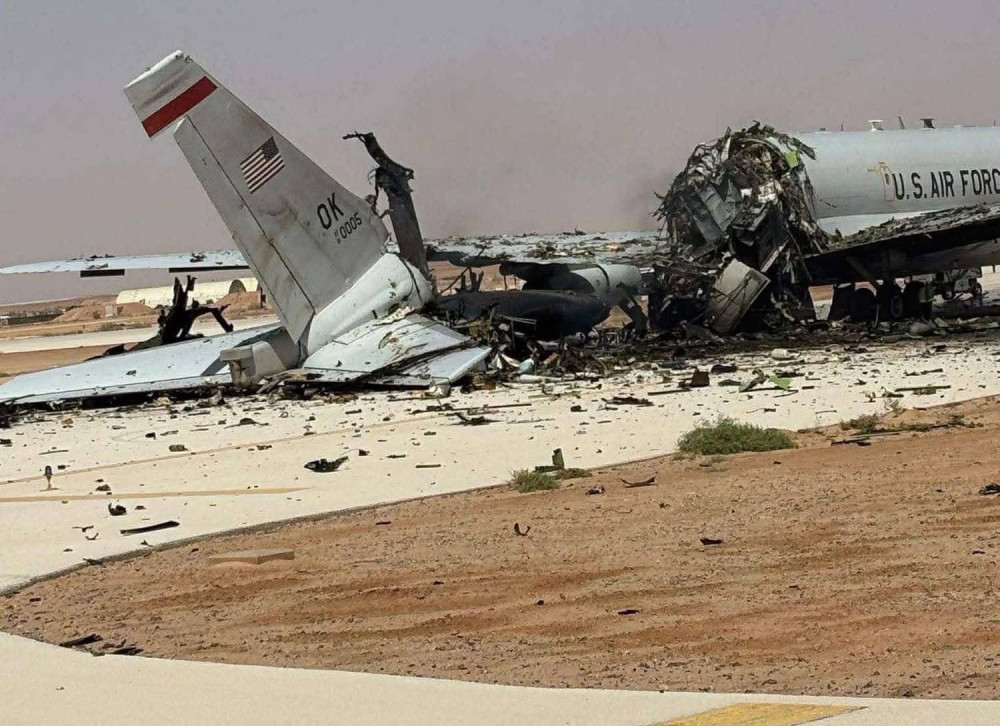
The destroyed aircraft, with tail number 81-0005, belonged to the 552nd Air Control Wing, based at Tinker Air Force Base in Oklahoma. The aircraft had been deployed to Saudi Arabia as part of Operation "Epic Fury."
Catastrophic damage
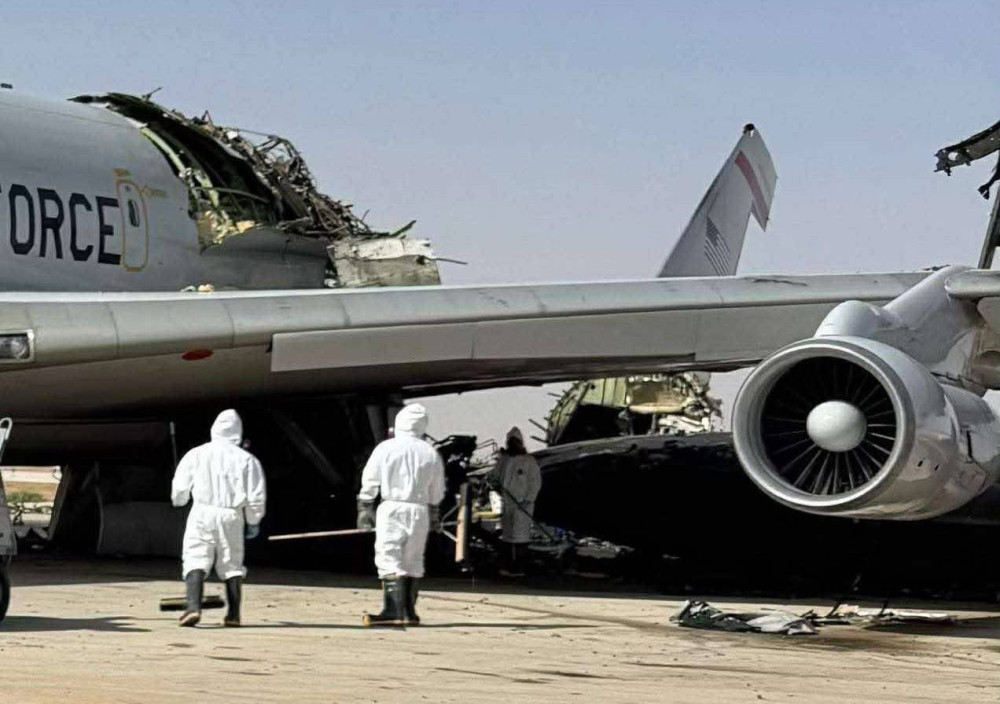
Images released by open-source intelligence (OSINT) analysts show the complete destruction of the aircraft: the supporting structure of the radar dome is entirely demolished, the rear section of the fuselage is detached, and the radome housing the AN/APY-2 radar antenna is displaced. Experts agree that the aircraft is beyond repair.
Heather Penney, a former F-16 pilot and director of research at the Mitchell Institute for Aerospace Studies, commented on the loss, saying: "The loss of this E-3 is extremely painful, considering how critically important these battle management platforms are—from airspace deconfliction and aviation coordination to targeting and enabling strike capabilities."
In addition to the AWACS aircraft, the strike damaged several KC-135 Stratotanker refueling aircraft: according to satellite imagery and photographs, one tanker was completely destroyed, while three others sustained severe damage.
Strategic dimension of the loss
The E-3 Sentry is one of the most valuable support aircraft in the U.S. Air Force arsenal—alongside the E-4B Nightwatch airborne command post—and is valued at approximately $500 million.
This marks the first combat loss of an E-3 in history. Prior to the incident, the U.S. possessed only 16 such aircraft, with production having ceased in 1992.
The readiness level of the entire E-3 fleet was around 56% in the 2024 fiscal year, and the loss of one aircraft actively involved in current operations could significantly complicate airspace management for the U.S. Air Force, experts warn.
The replacement of the aging E-3 with the modern E-7A Wedgetail remains uncertain: funding for the first aircraft of the new generation was approved only in early March, with delivery timelines stretched over many years.
Context: a month of conflict
Prince Sultan Air Base, located in central Saudi Arabia approximately 600 km from the Iranian coast, serves as a key forward hub for American aviation operations in the Middle East.
According to U.S. officials, over the course of Operation "Epic Fury," more than 300 U.S. servicemen have been injured, and 13 have been killed, including one soldier at Prince Sultan Air Base during a previous attack in early March.
Commander of U.S. Central Command Admiral Brad Cooper stated on March 25 that the intensity of Iranian missile and drone attacks has decreased by more than 90% since the conflict began on February 28, and that American strikes have destroyed or damaged over two-thirds of Iran’s production capacities for missiles, drones, and naval assets. However, the destruction of the AWACS on the ground clearly demonstrates that Iran’s capability to conduct precise long-range strikes remains intact.
Experts also highlight the vulnerability of American assets: previous attacks on the base should have prompted the military to disperse or shelter the most valuable aircraft, yet large assets—tankers and AWACS aircraft—continued to remain in open parking areas.
U.S. Central Command has refrained from providing official comments on the specifics of the incident.