Finish or rollback: What is at stake in Armenia's elections - Perspectives from Baku and Yerevan
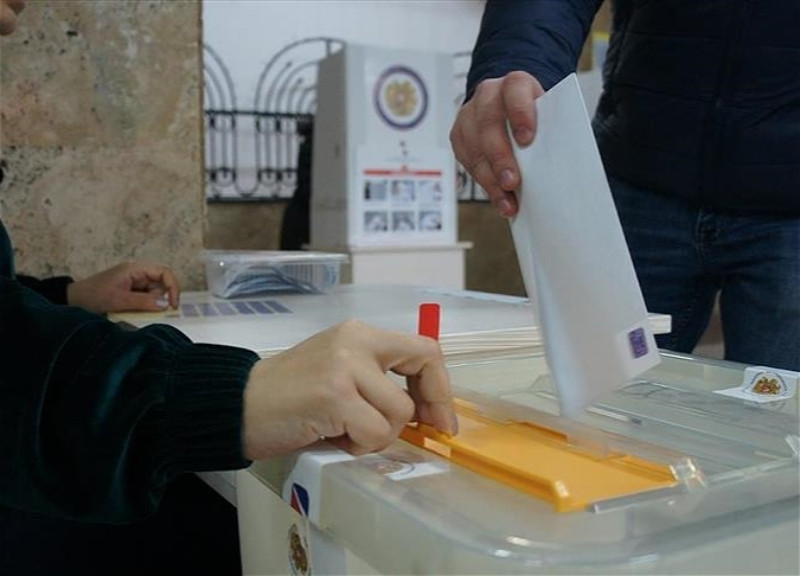
The parliamentary elections in Armenia, scheduled for June 7, are not just another electoral cycle but a point of strategic choice that directly impacts the security architecture of the entire South Caucasus.
Against the backdrop of a fragile yet progressing peace agenda between Baku and Yerevan, the outcome of this vote takes on significance far beyond internal political competition.
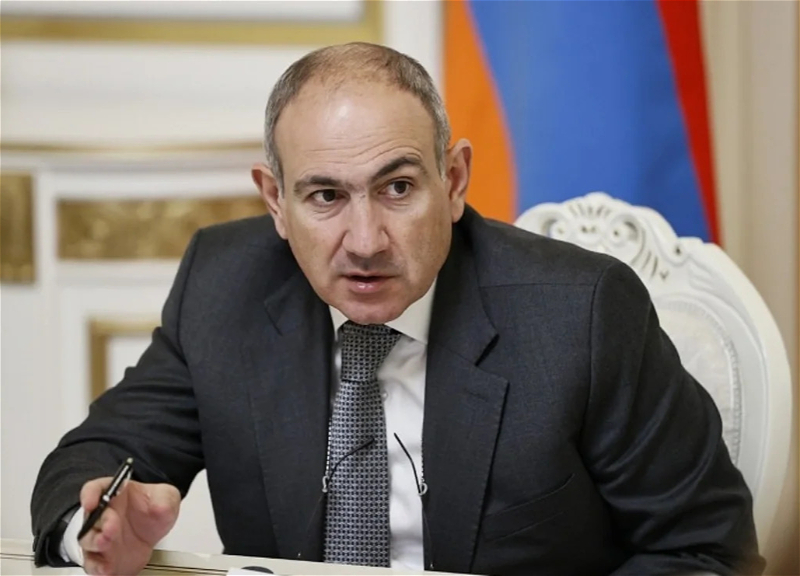
On one side is the ruling force led by Nikol Pashinyan, which, despite significant costs, has brought the negotiation process with Azerbaijan to its final stage. On the other is a fragmented but largely ideologically unified opposition camp, where key positions are held by the bloc of former President Robert Kocharyan, as well as several political figures oriented toward revising the current course, including the leader of the new party 'Strong Armenia,' Russian oligarch Samvel Karapetyan.
The intrigue of the elections lies not only in whether the current government will retain control of parliament but also in which development path Armenia will choose: continuing pragmatic dialogue or returning to a logic of confrontation.
In this context, the key questions are stark: Is it possible for forces oriented toward derailing the peace agenda to come to power? Will Pashinyan’s defeat effectively 'reset' the negotiation process? Is Azerbaijan prepared to engage with any new government in Yerevan? And finally, could the very concept of post-conflict settlement, including the unblocking of communications, be at risk?
The answers to these questions are far from clear. That is why we sought assessments from both Azerbaijani and Armenian experts to understand which scenarios appear most likely and what risks each of them poses for the region’s future.
Political analyst and head of the South Caucasus Political Scientists Club, Ilgar Velizade:
'The situation in Armenia today is such that Pashinyan’s victory is far from guaranteed—indeed, various scenarios are possible. However, the key question is different: Who might ultimately emerge victorious?
At this stage, it is extremely difficult to predict the final distribution of power following the elections. As is known, several major parties and political movements are vying for seats in parliament, each hoping to secure a certain number of mandates. How exactly the seats will be distributed after the elections is hard to say at this point. However, there is a high likelihood that the ruling party will not achieve either an overwhelming or a constitutional majority. In such a case, the formation of a coalition government becomes a realistic scenario.
In other words, under a certain distribution of forces in parliament, a coalition capable of taking control of the country could emerge. This, in turn, means that forces opposing Pashinyan could theoretically come to power in Armenia.
Such a development would inevitably affect regional processes, primarily the peace agenda. It is evident that the rise of opposition forces could significantly complicate its advancement and generally have a negative impact on the peace process.
In this case, one can assume that, in particular, the processes related to adopting a new Constitution in Armenia would stall. Meanwhile, the adoption of a new Constitution, including changes to its preamble, is considered one of the key conditions for signing a peace treaty.
Thus, in such a scenario, the prospect of concluding a peace agreement between Azerbaijan and Armenia would be seriously questioned. The rise of opposition forces—regardless of their specific configuration—could lead to a revision of the domestic political agenda, the curtailment of constitutional reforms, and, as a consequence, the effective blocking of the peace treaty signing process.
In this sense, any defeat of Pashinyan can be seen as a de facto reset of the negotiation process. The fact is that it has already reached the final stretch, and its logical conclusion was supposed to be the signing of a peace treaty. If the agreement is not concluded, one can say that the entire negotiation process would be reduced to zero.
In this context, statements by opposition leaders, particularly former President Robert Kocharyan, leave little doubt that, if they come to power, Armenia’s Constitution will not be amended—especially in the part concerning the preamble.
Moreover, it is not excluded that Kocharyan might attempt to return the country to a presidential form of governance. Either he himself or a coalition formed around his political force, in the event of electoral success, could steer toward rolling back institutional reforms and restoring the previous model under which Armenia functioned as a presidential republic.
In this regard, only minor, coordinating changes are possible, but the preamble is likely to remain untouched, as it forms the basis of their political legitimacy. It is unlikely that these forces would take steps that would effectively undermine their own legitimacy by revising this provision.
As for the question of Azerbaijan’s readiness to continue negotiations with any government in Armenia, the answer is essentially negative.
In my opinion, albeit with the possibility of error, Azerbaijan will not continue negotiations with Robert Kocharyan, his team, and his political entourage. The reason is that there is effectively no basis for constructive dialogue in this case.
These forces, without unnecessary pathos, bear direct responsibility for events that led to numerous casualties among the Azerbaijani population. The situation has fundamentally changed since 2023, and there is no return to the previous agenda. Forces associated with Kocharyan are more oriented toward reviving conflict logic—adapted to new conditions. In particular, this could involve attempts to re-raise the issue of the return of the Armenian population previously residing in the Karabakh economic region of Azerbaijan, but now with various demands, including security guarantees.
We have heard this 'record' many times before, and it is unlikely that the Azerbaijani leadership and society have the desire to return to the same scenarios—the patience for this has essentially been exhausted. In this regard, a logical question arises: What kind of dialogue is even possible under such conditions?
Clearly, attempts will be made to involve external arbiters. Additionally, it is not excluded that there will be an effort to build communication not so much directly with the new—essentially old—political leadership, but through their external partners and supporters who will speak on their behalf. We have already observed such practices during previous stages of the negotiation process with Armenia.
This does not look like a prospect—rather, it is a path to a dead end. And it is unlikely that the Azerbaijani side will agree to participate in such a scenario again: this stage has already been passed, and there is neither interest nor basis for returning to it. Today, Baku operates from a position of strength, and therefore it is improbable that it will agree to such negotiation formats.
If a real change of political leadership occurs in Armenia, then with high probability, the issue of unblocking communications will also be seriously questioned. The key reason is the lack of security guarantees for the transit of Azerbaijani goods and, even more so, passengers through Armenian territory under the new conditions.
In such a situation, neither the Azerbaijani leadership nor society will be inclined to trust the new—essentially old—Armenian authorities, which will further complicate any attempts at dialogue and the advancement of practical agreements.
There is no trust in these forces. They are perceived as inherently hostile toward Azerbaijan and Azerbaijani society, and their potential actions are likely to be aimed at reinforcing this confrontational line.
In this situation, a logical question arises about the prospects for dialogue: How possible is it at all with political forces that not only demonstrate harsh rhetoric but also do not hide their attitudes? It is enough to recall Robert Kocharyan’s statements about the 'genetic incompatibility' of Azerbaijanis and Armenians—such formulations are overtly radical and remain in political memory for a long time.
One can assume that under new conditions, such rhetoric will be adapted and presented in a more veiled form, but its essence will likely remain the same, further complicating the prospects for constructive interaction.
Such rhetoric will likely resurface. A reasonable question arises: Why participate in this if, under the guise of 'dialogue,' what is essentially offered is an imitation of the negotiation process? In such a format, there can be no talk of real substantive interaction.
Moreover, even previously, dialogue was often built not so much with the formal political leadership of Armenia but with external centers of influence. The so-called Minsk process essentially reflected this logic—negotiations were conducted with those who stood behind the Armenian authorities at the time, including figures like Robert Kocharyan and Serzh Sargsyan.
A return to such a model today seems devoid of practical sense. Under these conditions, the prospects for the so-called Zangezur Corridor are also in question: in the absence of trust and constructive dialogue, any transport initiatives may be transformed or seek alternative routes bypassing Armenian territory.
At the same time, there is indeed a format of trilateral agreements involving the United States, within which certain guarantees for the implementation of the Zangezur Corridor are envisaged. However, there are grounds to believe that in the event of a change of power in Armenia, this process could face serious resistance.
The new—essentially old—political configuration is unlikely to be interested in advancing this project and will most likely attempt to slow down its implementation. In particular, figures like Robert Kocharyan and the political forces associated with him are traditionally linked to a different foreign policy course and dependence on external centers of influence.
From the perspective of Azerbaijani legal and public perception, these forces bear responsibility for past actions, and expecting a change in their political essence is unrealistic. Baku maintains a clear position: such episodes are not forgotten and continue to define the level of trust.
One can assume that they will take steps aimed at restraining or effectively hollowing out agreements on the Zangezur Corridor, including those reached in the Washington format. Even if the United States insists on the implementation of these agreements, the key factor remains the issue of trust.
Accordingly, from Baku’s perspective, Washington will need to provide not only political support for the project but also practical steps capable of convincingly guaranteeing its implementation on the agreed terms. This primarily concerns the provision of reliable and clear security guarantees, without which the advancement of such initiatives appears extremely difficult.
Under new conditions, if revanchist forces come to power, the implementation of such initiatives will become extremely complex and problematic. This, in essence, would mean delaying the entire concept for an indefinite period—such is the logic of realpolitik.
That is why, when the current Armenian authorities warn society that a change of course in favor of revanchists will lead to a worsening of the situation, there is a rational basis to their words. Nikol Pashinyan and representatives of his team in this case speak based on an understanding of real political risks.
Against this backdrop, statements by Robert Kocharyan and his supporters about the possibility of 'restoring' the negotiation process with Azerbaijan, but on their terms, appear more like political bluff, unsupported by real capabilities.
There can be no talk of any 'their terms'—serious dialogue in such a format seems impossible. These political forces have largely lost trust and are perceived as having completely compromised themselves.
Accordingly, it is unlikely that a substantive negotiation process can be built with them or their representatives. The reason is that they are seen as dependent on external centers of influence and lacking independent political agency, meaning they are not fully capable of representing the interests of Armenian society and making strategic decisions.
In such a context, the prospects for constructive dialogue appear extremely limited.'
Political commentator and public figure Ishkhan Verdyan:
'Today, the political field in Armenia is conditionally divided into two camps. On one side is Nikol Pashinyan and his team, who have a vision for the country’s development, clear goals, and a program of action. On the other are forces that lack a coherent political program or vision for the development of a sovereign Armenia. Their main declared goal is to remove Pashinyan from power and, in one form or another, pursue rapprochement or even integration with Russia.
Both personal assessments and sociological survey data show that Nikol Pashinyan’s chances of re-election remain high. Moreover, if the current dynamics persist, it is not excluded that his political force could secure a constitutional majority in parliament.
If we consider the less likely scenario of his defeat, the forces opposing him openly declare their intention to revise any agreements with Azerbaijan, including the already initialed peace treaty. What this could lead to is difficult to predict. However, in the event of a rejection of the peace process and a return to territorial claims, one cannot rule out the development of events along the most negative scenario, up to a new escalation.
This is undoubtedly one of the worst scenarios for the South Caucasus today. Therefore, there are grounds to believe that Nikol Pashinyan will be able to win the upcoming elections and implement the declared plans for the country’s development.'
Author: Seba Agayeva