Diplomat in touch: Shahin Abdullayev on the new level of cooperation between Azerbaijan and Jordan
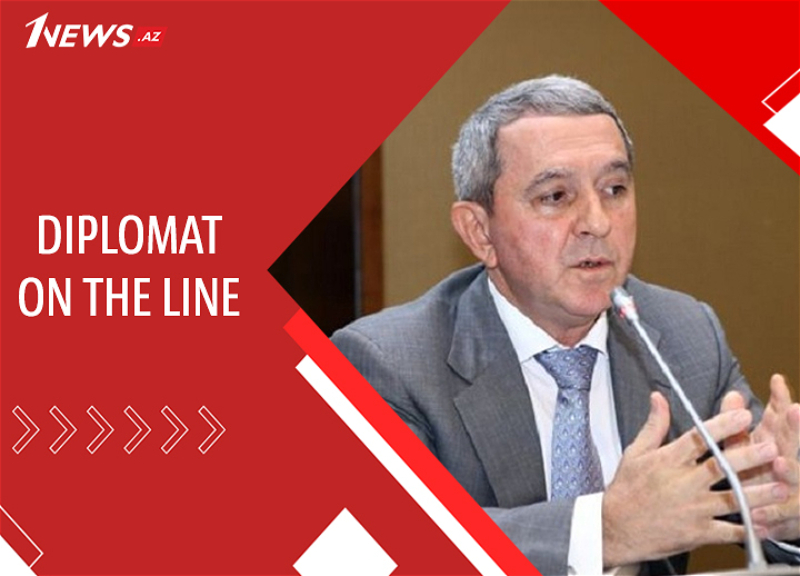
The development of partnership between Azerbaijan and Jordan remains one of the priority directions of the foreign policy of both countries.
Today, Baku and Amman are taking bilateral cooperation to a qualitatively new level, moving from reached agreements to their practical implementation. The expansion of interaction, the realization of joint projects, and the strengthening of business ties are shaping a new agenda for partnership. In an interview with 1news.az, the Ambassador of Azerbaijan to Jordan, Shahin Abdullayev, discussed the mechanisms for implementing this agenda and the priority goals for the coming years.
- Jordan has become one of the countries affected by the conflict between Israel/USA and Iran. How is the current security situation in the country assessed?
- Military operations have led to a rapid and fundamental change in the security environment in the Middle East region within a short period, accompanied by the disruption of an already fragile balance existing in the region.
As a result of the escalation, military-political tensions have significantly increased, and security risks have spread over a wide geographical area, taking on a multifaceted nature. Jordan has also entered the zone of direct impact of the emerging confrontation. According to official data, since February 28, Jordan has been subjected to 281 attacks, with 495 ballistic missiles and unmanned aerial vehicles neutralized by the Kingdom's Armed Forces. Overall, as a result of these attacks, 29 civilians have sustained injuries of varying severity.
- How many Azerbaijani citizens currently reside in Jordan, and what measures were taken by the embassy to ensure their safety during the hot phase of the conflict?
- According to the information available to the embassy, there are currently 118 citizens of the Republic of Azerbaijan living in Jordan. A significant portion of them are our compatriots residing in the Kingdom on a permanent basis. The embassy maintains contact with all our citizens in the Kingdom.
From the first day of the military escalation, in accordance with the instructions and directives of the Ministry of Foreign Affairs of Azerbaijan, the embassy has been operating in an enhanced mode, taking measures to provide appropriate support to our citizens. A hotline was established at the embassy, and information was collected about the whereabouts and living conditions of our compatriots. Additionally, notifications from Jordanian official structures were sent to citizens regarding the need to follow safety instructions, calls from law enforcement agencies to avoid approaching unidentified objects and missile debris, and to immediately report such findings to security services, as well as to rely only on official sources and refrain from spreading disinformation. Since the beginning of the conflict, no requests for evacuation have been received by our embassy from Azerbaijani citizens.
- In January of this year, by the decree of President Ilham Aliyev, the Executive Program of Cooperation between the governments of Azerbaijan and Jordan in the fields of science and education, culture and arts, youth and sports, archaeology, healthcare, and media for 2025-2027 was approved. This program was signed on November 27 of last year in Baku following the IV meeting of the bilateral intergovernmental commission on trade-economic and technical cooperation. What are the main stages of implementing this document?
- The Executive Program between Azerbaijan and Jordan for 2025-2027 is a document that marks the transition of bilateral relations to a qualitatively new level and outlines specific steps in this direction. In essence, the program systematizes the foundations of cooperation and focuses it on concrete, measurable results. Covering a wide range of areas such as science and education, culture and arts, youth policy, sports, archaeology, healthcare, and media, the document envisages deepening ties not only in political and economic dimensions but also in humanitarian and social spheres.
As for the implementation mechanisms, the program is based on a phased approach. It involves the preparation of specific action plans for each year, strengthening coordination between relevant agencies, and establishing joint working groups. This facilitates the practical implementation of agreements, preventing them from remaining merely on paper. At the same time, the program includes mechanisms for regular monitoring and evaluation, ensuring the sustainability of the achieved results.
I would also like to note that the mentioned program lays the foundation for a long-term roadmap between the parties and creates conditions for the formation of deep partnership in various fields. In particular, the development of human capital, academic exchanges, and the expansion of intercultural dialogue serve as important components that strengthen the sustainable foundation of future cooperation.
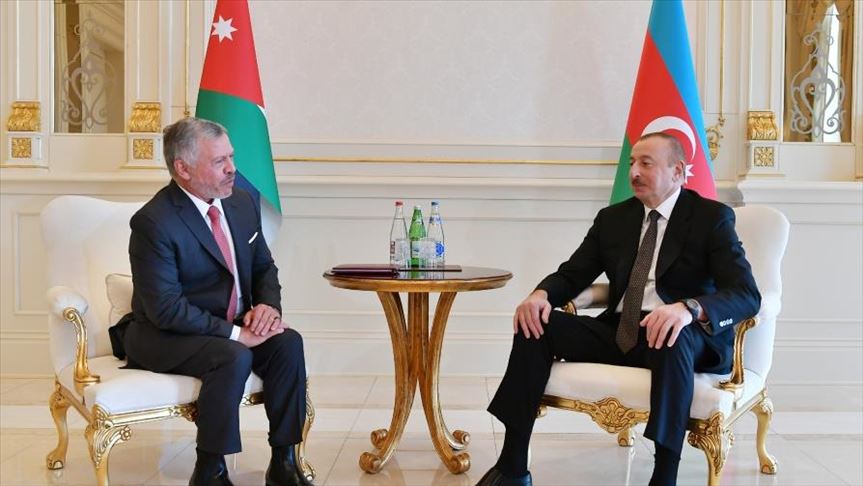
- Following the IV meeting of the intergovernmental commission, a package of agreements was also signed in the trade-economic, customs, tourism, and other spheres. What are the main priorities and goals for 2026?
- The main priorities for 2026 are primarily focused on the practical implementation of the agreements already reached. We believe that the broad contractual and legal framework established last year should now be transformed into concrete economic results. From this perspective, the introduction of customs cooperation, the implementation of joint promotional campaigns in the tourism sector, and the establishment of ties between small and medium-sized business structures are key directions.
At the same time, the portfolio of projects under discussion by the parties—especially in the fields of energy, pharmaceuticals, digitalization, transport logistics, and investments—holds an important place on the 2026 agenda. These directions align with both Azerbaijan's strategy for economic diversification and the strengthening of Jordan's position as a regional economic hub. Additionally, the organization of mutual high-level visits and business forums is also of great importance in terms of maintaining the momentum of cooperation.
Alongside this, the parties pay special attention to more active involvement of the private sector. In 2026, key tasks will include synchronizing state initiatives with business interests, developing mechanisms to encourage investments, and launching new tools for financing joint projects.
- The agreement on customs cooperation, signed on November 27, 2025, and ratified by the Azerbaijani parliament on February 2, 2026, is considered one of the key instruments for expanding trade ties. As noted by Jordan's Minister of Industry, Trade, and Supply, Yarub al-Qudah, the country views Azerbaijan as a strategically significant hub for expanding trade with CIS countries. What specific advantages does this agreement create for Azerbaijan in terms of export development and enhancing transit potential?
- The agreement on customs cooperation creates several important strategic advantages for Azerbaijan. First and foremost, this document directly contributes to expanding export opportunities by simplifying trade operations and increasing their transparency. The optimization of customs procedures reduces transactional costs and facilitates access for Azerbaijani products to the Jordanian market, and through it, to other markets in the Middle East and North Africa.
Alongside this, Jordan's view of Azerbaijan as a strategic hub for accessing the CIS space confirms the growing importance of our country's transit and logistical potential. Azerbaijan, leveraging the modern infrastructure developed within the framework of the Middle Corridor (Trans-Caspian International Transport Route), opens access for Jordanian businesses to new markets. This, in turn, allows Azerbaijan to mutually benefit from Jordan's extensive trade network in the Middle East region. Thus, this agreement serves as an important tool that stimulates not only bilateral trade but also broader regional economic integration.
At the same time, the mechanisms provided by the agreement for information exchange, technical cooperation, and risk management strengthen the fight against illegal trade and enhance the reliability of the overall trade environment. In the long term, this creates a more attractive and predictable environment for investors.
- There was information about the parties considering the possibility of establishing a joint pharmaceutical enterprise. At what stage are the negotiations in this direction?
- Negotiations on the establishment of a joint venture in the pharmaceutical sector are currently in an active phase at the expert level. This project is based on mutual economic interests and complementary opportunities of our countries. Azerbaijan's industrial and investment potential, combined with Jordan's established experience in the pharmaceutical sector, creates a favorable ground for successful cooperation in this area.
At present, the parties are working on the technical and economic feasibility of the project, determining production directions, and assessing potential markets. Given the current dynamics and political support, reaching concrete decisions and signing relevant agreements in the near future, already in the second half of this year, seems quite realistic. The implementation of this project will not only strengthen industrial cooperation between the two countries but also open new opportunities in terms of the production and supply of pharmaceutical products in the region.
Moreover, the establishment of such a format of cooperation is significant in terms of technology transfer, personnel training, and the introduction of innovative production standards. This will not only enhance the resilience of the healthcare systems of both countries but also contribute to the development of export-oriented production and increase competitiveness in regional markets.
- Thank you for the interview!