The Azerbaijan–Armenia dialogue in Gabala: there is no alternative to peace
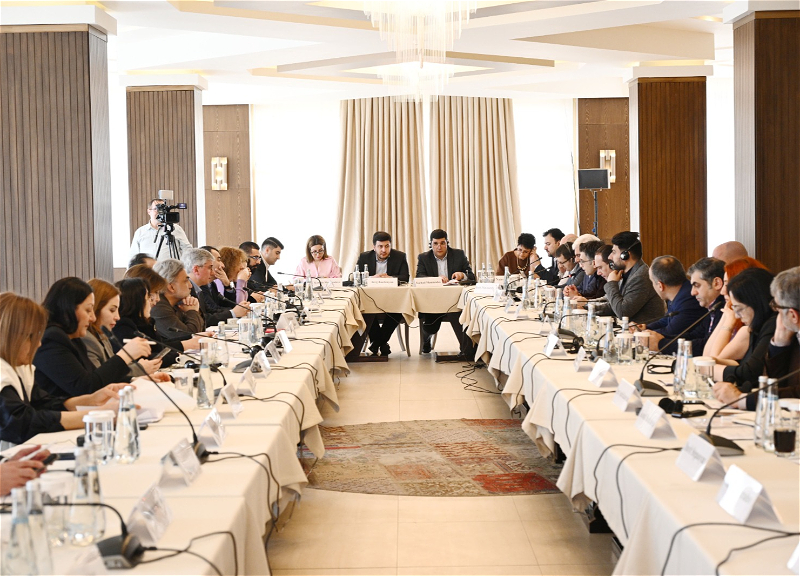
In the city of Gabala (Azerbaijan) from April 10 to 12, a bilateral roundtable was held within the framework of the "Bridge of Peace" Initiative, bringing together representatives of civil societies from Azerbaijan and Armenia.
This latest meeting saw participation from non-governmental organizations, media, and analytical centers of both countries. Details here.
The Armenian delegation arrived in Azerbaijan via the land border, crossing a delimited and demarcated section and undergoing all relevant border and passport procedures. This crossing itself became another symbolic step of the "Bridge of Peace" Initiative towards strengthening confidence-building measures between the societies of Azerbaijan and Armenia.
Over the course of two days, four discussion sessions took place. Participants addressed geopolitical processes in and around the South Caucasus and their impact on the peace process. Azerbaijani and Armenian experts exchanged views on their countries' positions and visions regarding regional development.
Prior to the bilateral dialogue, representatives of the "Bridge of Peace" Initiative held meetings and discussions with various segments of civil society in their respective countries to better understand public expectations and perceptions of the peace process. During a separate session, participants presented the outcomes of these meetings, highlighting key concerns, expectations, and perspectives existing within their societies.
Taking into account the expressed public expectations, participants dedicated the final session to exchanging views on future joint and individual initiatives in the subsequent stages of the peace process.
On April 11, participants of the fourth bilateral roundtable, held under the "Bridge of Peace" Initiative, met with Hikmet Hajiyev, Assistant to the President of the Republic of Azerbaijan and Head of the Foreign Policy Affairs Department of the Presidential Administration. During the meeting, issues of regional security, the progress of the peace process at the political level, and the contribution of civil society to the normalization process were discussed.
The two-day dialogue concluded with a press conference summarizing the outcomes of the fourth meeting.
The latest meeting of civil society representatives took place in an atmosphere of constructive dialogue, frank discussions, and reaffirmation that there is no alternative to a peaceful agenda. Participants of the dialogue, organized under the "Bridge of Peace" Initiative with the support of the governments of Azerbaijan and Armenia, expressed their intention to continue joint efforts to build trust in the next stages of the peace process.
What are the outcomes of the meeting and the prospects for normalizing relations? How much time will it take, and what stages must be completed to achieve sustainable peace? Which areas of cooperation are most promising for overcoming mutual alienation?
Participants of the Gabala meeting provided answers to these questions.
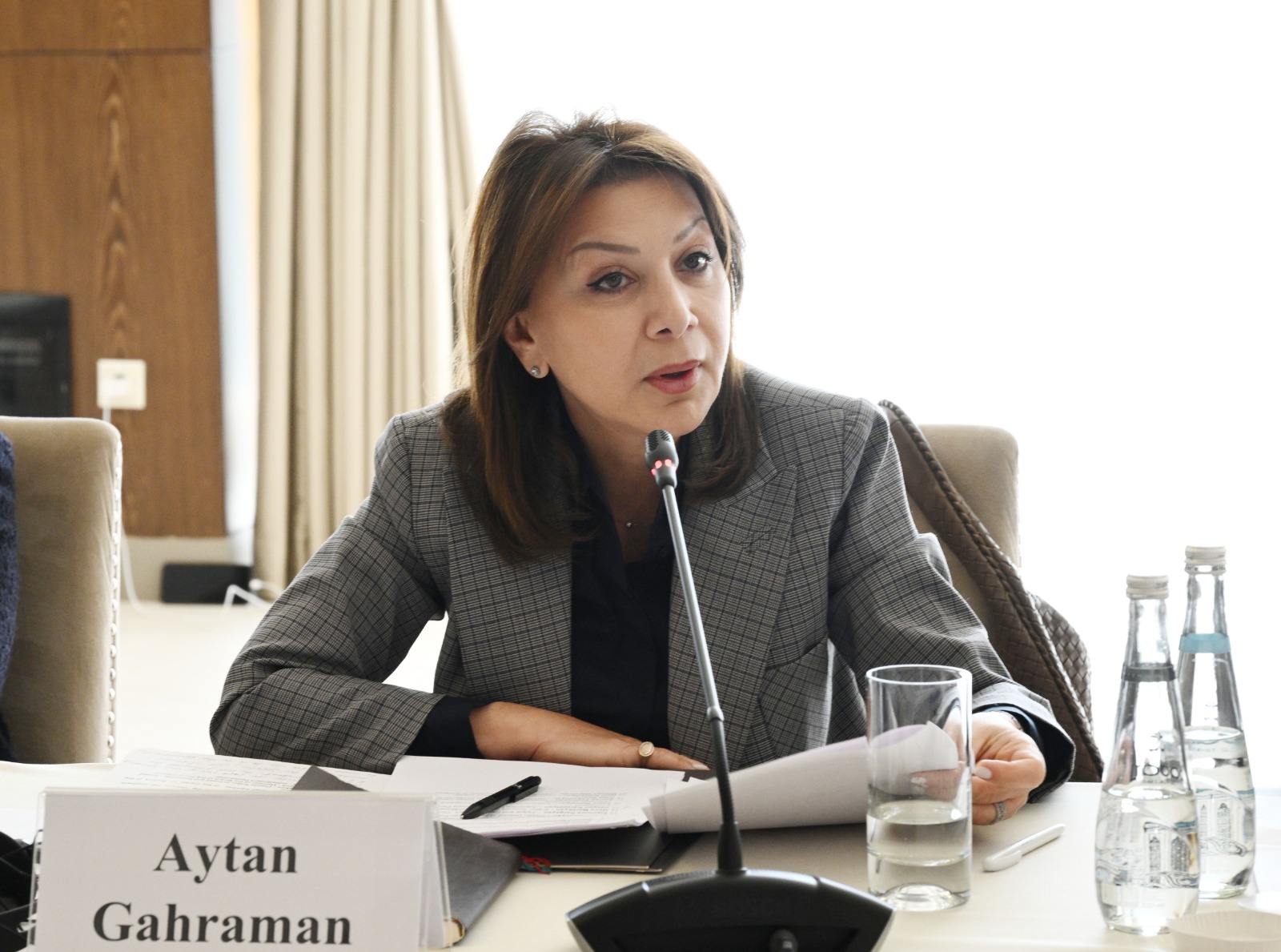
Ayten Gahraman – Advisor at the Baku International Multiculturalism Center, Doctor of Sciences, Associate Professor:
“As a participant in the fourth meeting under the "Bridge of Peace" Initiative held in Gabala, I assess the prospects for normalizing relations between Azerbaijan and Armenia with cautious but well-founded optimism. The dialogue demonstrated that both sides show genuine interest in advancing the peace agenda and are ready to continue interaction. The very fact of the Armenian delegation’s arrival via the land border, adhering to all border and passport procedures, held special significance as an important symbol of building trust and evidence of the gradual overcoming of barriers between our societies. Over two days, we held four sessions, each characterized by a constructive atmosphere of discussion and open exchange of views on regional security and the peace process.
During the event, a meeting took place with Hikmet Hajiyev, Assistant to the President of Azerbaijan and Head of the Foreign Policy Affairs Department of the Presidential Administration, lasting over two hours. The conversation confirmed the presence of political will and institutional support for the normalization process, as well as emphasized commitment to the Washington agenda, supported by concrete steps to strengthen peace. The development of trade, transit through Azerbaijan, and people-to-people contacts demonstrates the economic dividends of peace, while the TRIPP project opens new opportunities for Armenia as a transit country. Amid global instability, establishing lasting peace between Azerbaijan and Armenia takes on particular importance. At the same time, participants noted that despite lingering challenges, including the influence of revanchist forces in Armenia’s domestic politics, the societies’ aspiration for peace forms a solid foundation for furthering dialogue.
Overall, it should be emphasized that the normalization process is inherently long-term and multi-layered, making it difficult to set precise timelines for its completion. Nevertheless, if the current momentum is maintained, it can be expected that within the next few years, relations between the two countries could reach a level of stable and predictable interaction. A crucial role is also played by the consistent expansion of confidence-building measures, which help reduce mutual suspicion and foster an atmosphere of cooperation.
The most promising areas for overcoming mutual alienation are the development of economic ties, the opening of transport and transit routes, and the intensification of people-to-people contacts. Economic cooperation can deliver so-called ‘peace dividends,’ creating mutual interest in maintaining stability and good-neighborly relations. Expanding direct communication between citizens, experts, media representatives, and non-governmental organizations contributes to building mutual understanding and reducing the level of distrust accumulated over years of prolonged conflict. Overall, the "Bridge of Peace" Initiative meeting in Gabala showed that, despite the complexity of the process, there are real preconditions for establishing sustainable peace and a gradual transition to normal coexistence between the two states, based on mutual respect, pragmatic cooperation, and shared responsibility for the region’s future.”
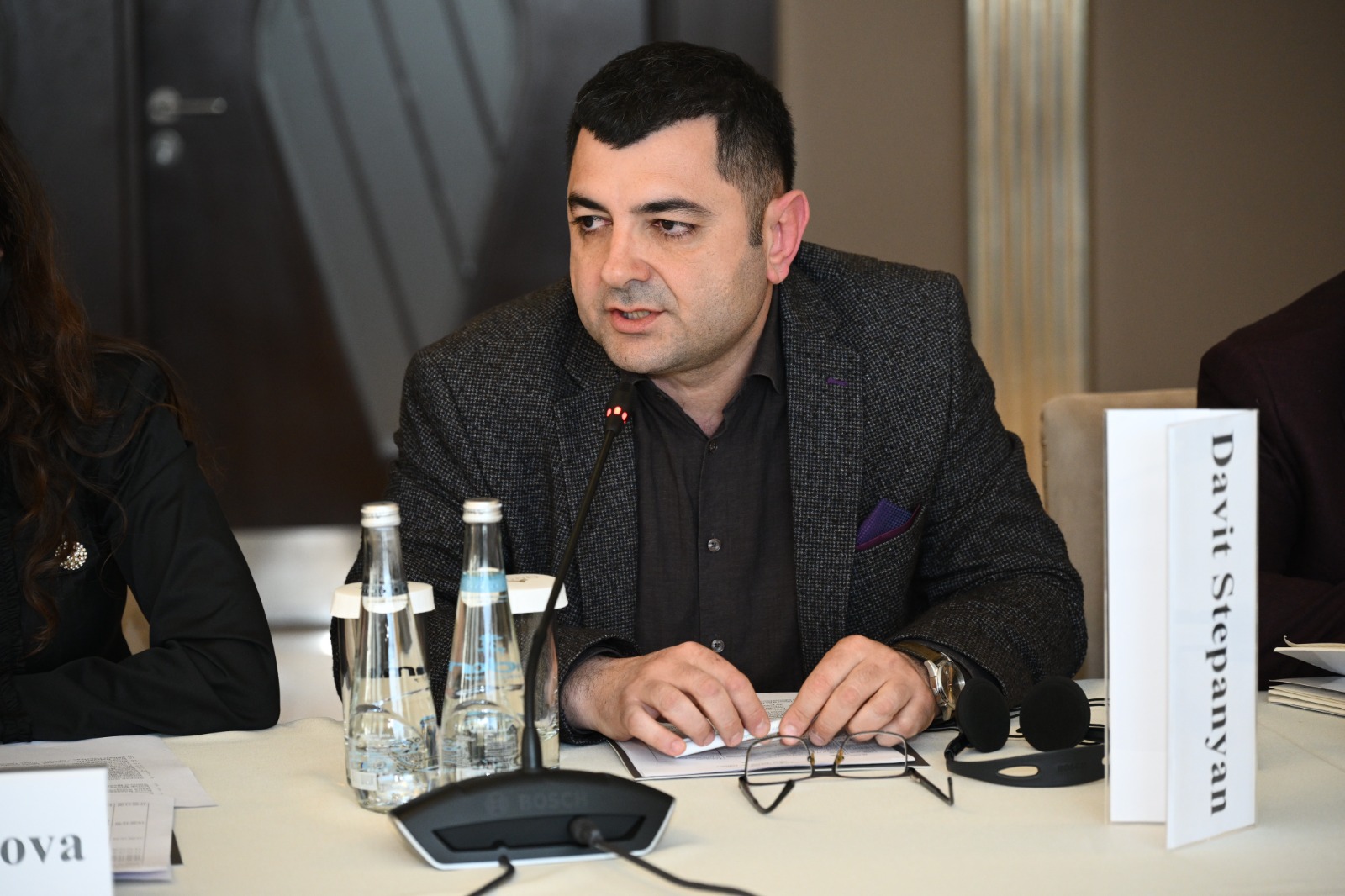
David Stepanyan – Expert at the Armenian Institute of International and Security Affairs, Political Commentator:
“First of all, as a participant in the meeting, I would like to once again thank the Azerbaijani side and the organizers for the warm, truly friendly reception and humane attitude. Despite everything, we must remain human and act humanely—regardless of how someone from outside tries to pit us against each other or portray us differently for their own interests.
I rate the meeting quite highly. I believe that the prospects for normalizing relations between Armenia and Azerbaijan remain intact. At least, that is the impression I got from my interactions with Hikmet Hajiyev, Assistant to the President of Azerbaijan.
I came to this conclusion through discussions with our Azerbaijani colleagues. I would like to emphasize once again that the Armenian side is firmly committed to normalizing relations with Azerbaijan—both at the level of the country’s leadership and government, and at our expert level as representatives of civil societies who continue this dialogue.
I sincerely hope that this process will not only continue but also gain further momentum. The prospects certainly remain, though unfortunately, serious challenges persist. I am referring primarily to the regional situation. We see that events in Iran continue to develop in a destructive direction, and this cannot fail to impact the entire region.
This includes both Armenia and Azerbaijan. I observe a serious, even heightened concern in Azerbaijan about the ongoing processes. Certain changes in Azerbaijani policy are also noticeable. All of this, undoubtedly, could not but affect the relations between our countries and the prospects for their development.
When I speak of prospects, I am also addressing the question of how much time will be needed and what stages must be passed to bring relations to a level of normal interaction and coexistence between the two states.
Here’s what I mean: based on the outcomes of the Gabala meeting, I understood that Azerbaijan currently prioritizes tasks related to building relations with Iran, as well as with the United States and Israel, and the contradictions arising from these relationships—this is an extremely important aspect. Undoubtedly, there is also concern in Azerbaijan regarding the outcomes of elections in Armenia. This issue was repeatedly raised during our meeting.
Personally, I believe that these two factors—elections in Armenia and the regional processes surrounding Azerbaijan—are closely interconnected. Perhaps not directly, but their mutual influence is evident.
All of this, undoubtedly, delays the prospects for a final settlement of relations between our countries. However, this does not mean that the process has reached a deadlock.
I would describe the current situation as a pause—the process is currently on hold, at least until the elections in Armenia. However, I believe that the dialogue will continue, and I very much hope for this. In my opinion, all the necessary preconditions for this exist.
Speaking of the most promising areas that can help overcome mutual alienation, I would first highlight economic cooperation. This is precisely the sphere where some progress has already been made, and it needs to be actively developed.
It is important that the process be mutual: in addition to the supply of goods from Azerbaijan, Armenia must also begin to fully export its products to the Azerbaijani market.
This is a key point—there must be mutual interest. Armenia is interested in Azerbaijani gas. Against this backdrop, recent events related to Nikol Pashinyan’s reception by Vladimir Putin in the Kremlin are telling—the energy agenda is increasingly coming to the forefront.
All these areas require a new impetus and practical content. At the same time, it is important to emphasize that economic interaction should not become a hostage to foreign policy conjunctures. In other words, economics is not geopolitics; it is a space for pragmatic cooperation where the parties can move forward even amidst lingering disagreements.
We can absolutely develop this cooperation without looking over our shoulders at Russia, Iran, the United States, or Israel—and it is precisely this pragmatic approach that should be prioritized.
I would very much like to see real progress in the process of delimitation and demarcation of the border between Armenia and Azerbaijan. For me, this is a key issue that has always been and remains fundamental.
As for the peace treaty, I am convinced that it will be signed. It is hard to say exactly when this will happen, but there are grounds to expect its subsequent ratification. It is this step that will be able to put a final point in the process of normalizing relations between our countries.
However, a great deal of work remains to be done before that—primarily in the areas I have already mentioned.
And, of course, it is necessary to resolve all humanitarian issues that remain between our countries as a consequence of a long and difficult conflict.
Overall, I see the settlement process in this light. Once again, I would like to emphasize that from the Azerbaijani side and Azerbaijani state institutions, there is a real intention to continue the dialogue and bring it to its ultimate result—the establishment of full-fledged peace.
The main question is the timeline. However, I hope that this factor will also be overcome with time.”
.jpeg)
Dilyara Efendiyeva – Head of the Center for "Women, Peace and Security" at the Azerbaijan Women’s Rights Protection Society:
“I hope that this meeting with the Armenian delegation will not be the last. I highly value its prospects, as we managed to start a truly constructive dialogue with the Armenian side, which I am convinced will lead to building peace between our countries.
The very fact of initiating contacts between civil society representatives testifies to both countries’ commitment to the peace agenda.
I would particularly like to highlight the expanded format meeting—20 on 20—in which representatives from nearly all layers of civil society participated: public organizations, media, and environmental structures. This shows that the project is not only functioning but also consistently expanding, involving more and more participants.
It is also important that the discussions covered virtually all key aspects of our countries’ lives—from the risks associated with the absence of a peace treaty to the prospects for its conclusion.
Moreover, it is evident that both Azerbaijan and Armenia are currently creating a significant geopolitical precedent in the South Caucasus. All of this allows us to say that the peace process has considerable potential and a sustainable future.”
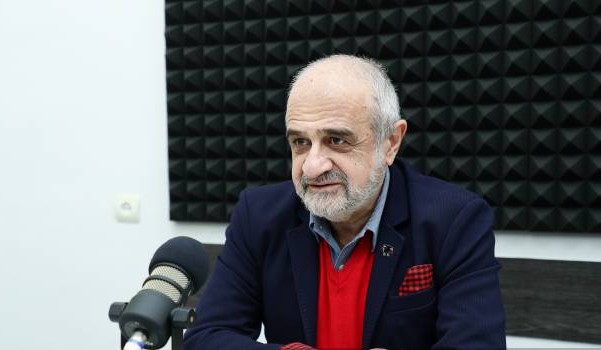
Ruben Babayan – Artistic Director of the Yerevan Puppet Theater:
“The process is still at its very initial stage. Essentially, it is civil society that is currently building the dialogue—with the support and approval of the governments of both countries. And this is extremely important.
At the same time, finding common themes, points of contact, values, and, if I may say so, a common language between societies is of even greater significance. No government can implement a peace process if society itself is not ready for it.
It is in this context that the meetings held over the past months are already yielding tangible results. People are practically convinced that they can talk to each other, find mutual understanding, be frank—without mistrust and without the need to hide anything.
It is not necessary to agree on everything, but mutual understanding is the most reliable path to peace. As I noted during the meeting with Hikmet Hajiyev, when we begin to recognize someone else’s pain, we become human. When we ignore it, we distance ourselves from that.
It is mutual understanding and human connection that, in my opinion, are the key conditions for moving forward.
At the same time, the most important thing remains something else: it was clearly emphasized that there is no alternative to peace. This position was repeatedly voiced by the leadership of both countries, and this, perhaps, is the main signal.
Because when there is a clear goal, the paths to achieving it become more understandable. This was unequivocally stated and supported by all participants of the meeting. Moreover, I am convinced that this position is shared by the majority of the population in our countries.
Despite differences in views—both in Azerbaijan and in Armenia—within societies, no one questions the value of peace. And this, perhaps, is the most important thing.
It is on this basis that dialogue can be built—through the search for common ground from which to push forward.
I think this is directly related to the peace agenda. The main and fundamental value is human life. If we truly proceed from the belief that its value is absolute and paramount, then peace is necessary for its preservation and protection.
When we define this fundamental value orientation, it becomes evident that it is not subject to division by national, religious, cultural, or civilizational lines. The value of human life is universal.
This foundation underlies the approach of the dialogue participants and, as I am convinced, is shared by a significant part of the societies in our countries.
Then everything becomes much simpler. We begin to focus on methods and mechanisms that will allow us to preserve this highest value and make it, if I may say so, a guiding star in our relations. This, in my view, is the main outcome of the meeting.
Moreover, the meeting itself was largely oriented toward the future—toward understanding in what format such dialogue can develop further. In particular, the idea of holding more specialized meetings was supported, where interaction would be built between representatives of specific professional communities—doctors, journalists, cultural figures, scientists, athletes, and other specialists.
It is important to more actively involve youth. If for the older generation this is, in a sense, a continuation of an interrupted path, for the young, everything starts practically from scratch—they have yet to get to know each other and build new connections.
A key element also discussed at the Gabala meeting is the need to prevent our countries and peoples from becoming hostages to the geopolitical games of external forces. We understand that such interests exist—this is evident in both Armenia and Azerbaijan. There are states for which the establishment of peace in the region means a loss of influence, and this factor cannot be ignored.
I believe it is extremely important when countries that recently opposed each other begin to realize where the real threats to their statehood and peaceful life come from. And when this understanding emerges, the possibility arises to jointly counter these challenges, which is of fundamental importance. Solving such tasks alone is much more difficult.
This, perhaps, encapsulates the main impressions from our meetings. And I am confident that over time, we will understand each other better and increasingly build relations on truly humanistic principles.
It is from these humanistic principles, by the way, that mutual interest, the development of trade, the opening of roads, joint production, and the implementation of common projects stem. All of this is directly linked to our worldview, based on the understanding that peace is irreplaceable and has no alternative.”
Read on the topic: