Peace with Azerbaijan as a priority: what lies behind Armenia's new course?
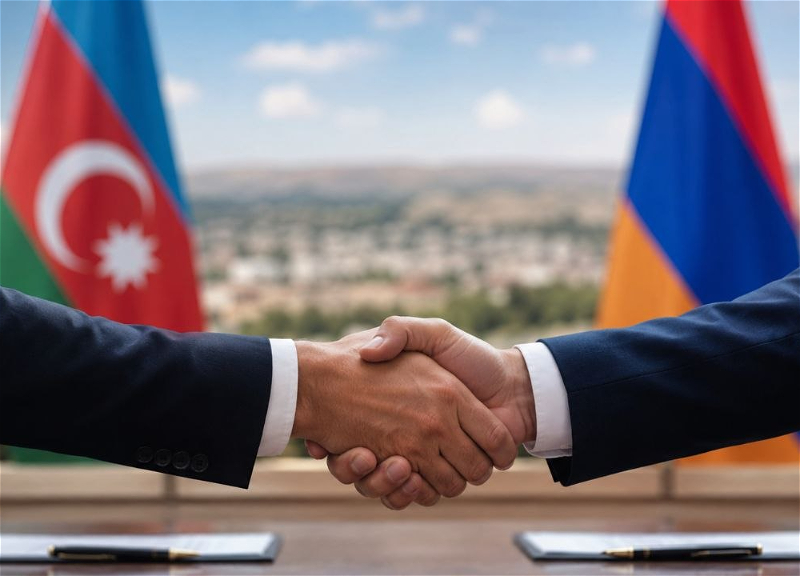
At its meeting on August 20, Armenia's Cabinet of Ministers approved the program of its activities for 2026–2031.
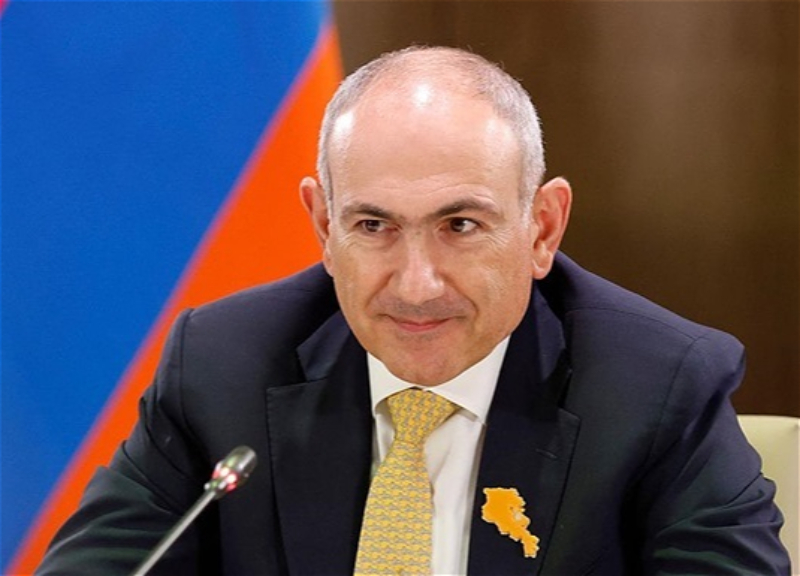
The 85-page document, presented at the government meeting by Prime Minister Nikol Pashinyan, will soon be submitted to parliament for approval. The program contains the following thesis: "On the basis of this program, the government will adopt a five-year program of measures for the implementation of its activities and will begin to carry it out. As a result of the implementation of the program, the formation of a state of a new quality and the assurance of its development are expected. Thus, the Republic of Armenia is entering that stage of its history which we call the Fourth Republic."
Foreign policy priorities
In the foreign policy section, the Armenian government's intention is noted to formalize peace with Azerbaijan, establish relations with Turkey, develop strategic ties with the EU, the U.S., Iran, and Georgia, and multifaceted ties with Russia (quotes according to "Sputnik Armenia").
Regional relations and neighbors:
Azerbaijan: Continued work on border delimitation, institutionalization of peace (signing of a peace treaty and other legal acts), as well as the intensification of contacts between civil society and business circles of the two countries.
Turkey: Establishment of diplomatic relations, opening of the border with at least two modern checkpoints, and the relaunch of energy infrastructure.
Iran: Deepening of strategic relations, maintaining political dialogue, strengthening economic ties (especially in energy), and development of the Persian Gulf – Black Sea transport corridor.
Georgia: Implementation of the 2024 declaration on strategic partnership, which envisages cooperation in various sectors.
Western direction:
European Union: Deepening of the strategic partnership, continued work on the implementation of the Comprehensive and Enhanced Partnership Agreement, as well as increased compliance with the EU's economic, legal, and social standards on the basis of the law "On Launching the Process of Armenia's Accession to the European Union" adopted in 2025. It is planned to complete the visa liberalization process.
U.S.: Implementation of the TRIPP project (at least in the part concerning railways and energy infrastructure) and development of cooperation on the basis of the memorandums signed by the governments of the two countries in August 2025.
France: Deepening the strategic partnership and bringing it to a qualitatively new level.
Russia and integration associations:
Russia: Reorganization and deepening of the multifaceted and mutually beneficial partnership (not called strategic) under the new conditions of peace in the region.
EAEU: Effective application of the union's fundamental principles — the free movement of capital, goods, services, and labor.
Other international directions:
China: Strengthening the strategic partnership
India: Development of the partnership
Middle Eastern countries: Expansion of relations.
Of particular interest in this context is Armenia's vision of relations with Azerbaijan, since it is precisely relations with Baku that will largely determine the practical content of the course toward regional stabilization declared by Yerevan.
Another provision enshrined in the document deserves separate attention.
"There is no logic of the 'Karabakh movement' in the new government program," Nikol Pashinyan stated at the government meeting. "Practically all political figures of Armenia of the middle and older generation and many in the younger generation are connected with the ideology of the Karabakh movement. This also applied to representatives of the authorities. Nevertheless, in the past years the government decided to 'reread the pages that had remained closed for many years.' Their reinterpretation led to the formation of the agenda of peace and real Armenia," he said, adding that a corresponding message also came from Armenian society.
This statement by Pashinyan is important to consider in the context of the general logic of the new program. On the whole, its formulations testify to the Armenian government's desire to move the peace process from the political plane to the institutional one — from the completion of border delimitation to the signing of a peace treaty and the formation of sustainable contacts between the societies and business circles of the two countries.
Thus, the normalization of relations with Azerbaijan is viewed as one of the elements of a larger-scale transformation of Armenia's foreign policy and regional positioning.
To what extent the declared intentions correspond to the real dynamics of the Armenian-Azerbaijani peace process, and what political consequences the enshrinement of these priorities in the new program of the Armenian government may have, was assessed in a commentary for 1news.az by the head of the "South Caucasus" Political Scientists Club, political analyst Ilgar Velizade.
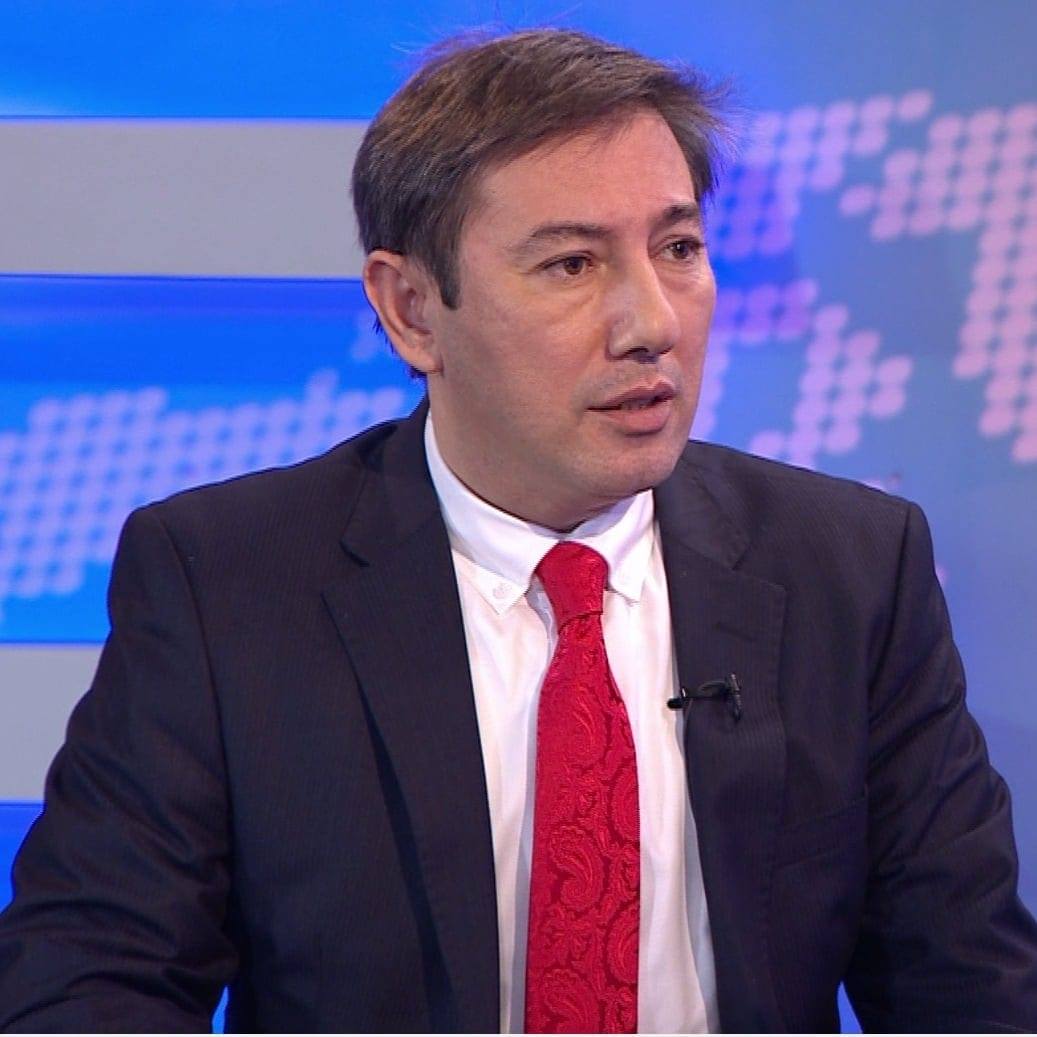
- The latest changes in the Armenian government after the elections, in particular the replacement of the secretary of Armenia's Security Council, already indicated that Yerevan intends to seriously revise its approaches to security precisely in institutional terms.
It is obvious that the Armenian leadership is oriented toward intensifying the peace process with Azerbaijan and links this process with domestic political dynamics.
Especially when we speak of the replacement of the secretary of the Security Council, this very fact could indicate a great deal. Alen Simonyan — a public politician by virtue of his previous position as parliament speaker — has spoken a great deal about peace with Azerbaijan, about the Armenian leadership's attitude toward the process of peacebuilding and the formation of a security system. And there are details that allow us to say that this replacement was, generally speaking, not accidental.
When Pashinyan says that the "Karabakh agenda" is absent from the approaches connected with Armenia's security system, this can even be traced visually through personnel decisions.
The former secretary of Armenia's Security Council, Armen Grigoryan, although he was of course an active member of the ruling team, was nevertheless a native of the Karabakh region of Azerbaijan. And in the first years of exercising his powers he was especially zealous in speaking on the side of the Karabakh separatists. If we set aside conventions — it is clear that all the leaders of Armenia at that time spoke on the side of the Karabakh separatists — in his case there was also a personal interest. Now this personal interest is gone.
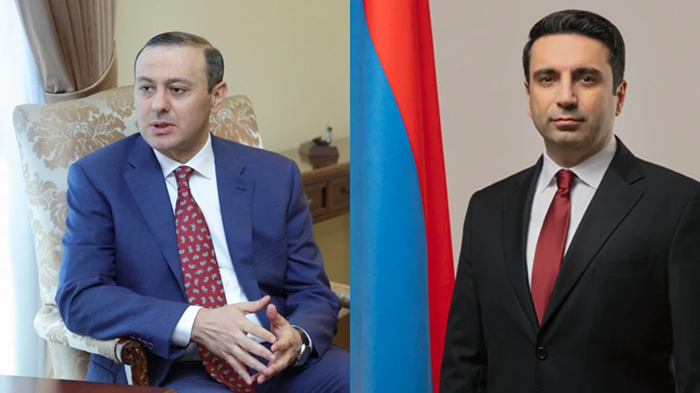
It is clear that the situation has changed, and that same Armen Grigoryan became actively involved in the new agenda and became one of its key promoters. But nevertheless, this element of his biography was also a very important factor.
Now, even at such a level, there are no "hooks" that could suggest that the current Armenian authorities might in one way or another somehow use the "Karabakh card." That is, this is perhaps a small touch, but a very significant one — of the kind where "even details matter."
Now, as regards the approaches to building Armenia's security concept as such. Here it must be noted that, judging by this program document and by the statements of Pashinyan and the leading members of his team, the country's security is viewed in a broader plane. Not only from the point of view of the military component, but also from the point of view of the political component of this security. And when we consider security from the point of view of the political component, the very concept of security is interpreted in a broader plane.
Security is ensured not only by missiles and other armaments.
Security is ensured by a reliable treaty and legal framework.
Security is ensured through agreements that imply taking into account the interests of the parties.
That is, all participants in the regional security system must be interested in preserving peace and stability. And in this respect, security itself becomes more durable and more effective.
And without good relations with Azerbaijan and Turkey, there can be no talk of security.
Again, armaments — whatever they may be, with whomever one cooperates in this field — cannot guarantee a country's security. Under conditions where your neighbors are much larger both economically and militarily and politically, you cannot guarantee your own security by relying solely on the force of arms.
All the more so since this reliance is quite illusory under conditions where both Azerbaijan and Turkey are actively developing their military-industrial complexes and are leading countries in the field of the development and application of various kinds of armaments.
Therefore, it seems that in Armenia they have begun to understand this problem and to approach it from a different position than was the case before. And this is very important from the point of view of prospective, future processes.
Today a solid foundation is being laid not only for building relations between Yerevan and Baku, Yerevan and Ankara, but also for the future architecture of regional security. Armenia wants to become an active participant in this very future security architecture.
And for this, building relations with Baku and Ankara is the main condition. If you want to become a constituent part of the entire security architecture, you must have a good, predictable dialogue with at least two of your main neighbors.
And here we observe a fairly pragmatic approach — from the point of view of Armenia's own national interests. Unfortunately, the previous Armenian leaders, owing to their political shortsightedness and exclusive dependence on external decision-making centers, could not and cannot think in such categories. These are extremely dependent politicians who only pretend that they can somehow independently determine the fate of their country.
Pashinyan, when he says that the "Karabakh issue" is absent from Armenia's new concept, in fact wants to rid himself of any ballast, any elements binding his actions, of this exclusive dependence on external parties.
This is the essence and the specificity of these processes. We see them not only at the institutional level, not only within the framework of the adoption of the new program, but also within the framework of concrete political steps.
I will repeat once again that Grigoryan's resignation from the post of secretary of the Security Council is not simply a resignation and not simply a message to someone. It is an internal change of approaches, a pure reformatting of Armenia's policy itself taking into account the new circumstances.
I would consider all these processes in a single connection.
Thus, in the analyst's opinion, the new program of the Armenian government demonstrates Yerevan's desire to consolidate the peace process with Azerbaijan not only as a foreign policy priority, but also as the basis for a broader revision of its own approaches to security and regional relations.
The "Fourth Republic" in Pashinyan's interpretation is not simply a new political name, but an attempt to form a state model in which Armenia's security rests on good neighborliness, economic interdependence, and a diversified foreign policy. And it is precisely relations with Azerbaijan that are becoming the main test of how much this new course really differs from the previous one.
If the intentions declared in the document are backed by practical steps, the normalization of relations with Baku and Ankara could become one of the key factors in the formation of a new security architecture in the South Caucasus.