"You don't burn a blanket because of one flea": will possible deliveries of American weapons to Ukraine lead to a rift between Moscow and Ankara?
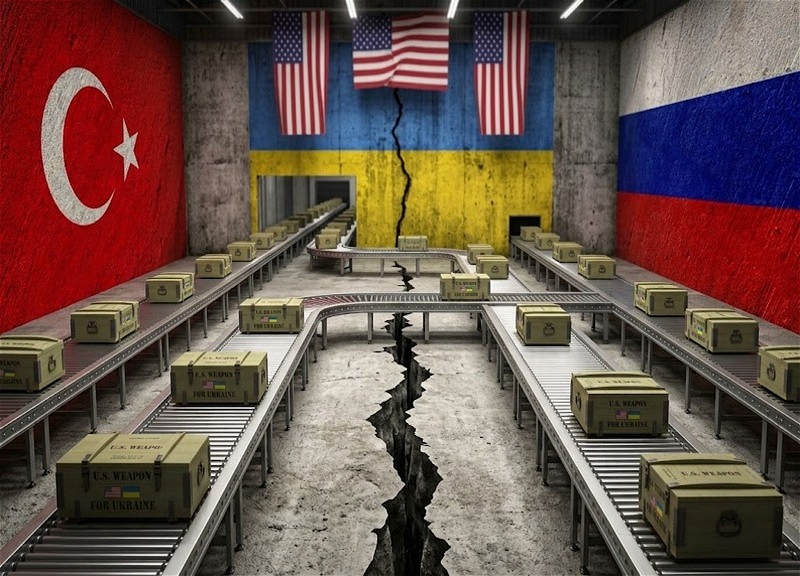
The possible transfer to Ukraine of American weapons from Turkish military stockpiles could become one of the most sensitive episodes for Russian-Turkish relations in recent times.
Moscow has already stated that it is awaiting clarifications from Ankara and Washington, and the official representative of the Russian Foreign Ministry, Maria Zakharova, warned of possible damage to bilateral relations.
What is known about the possible deal
On August 6, the U.S. State Department sent Congress a notification of its intention to allow Turkey to re-export to Ukraine American weapons held in Turkish military stockpiles. The value of the proposed deal is estimated at approximately $256–283 million.
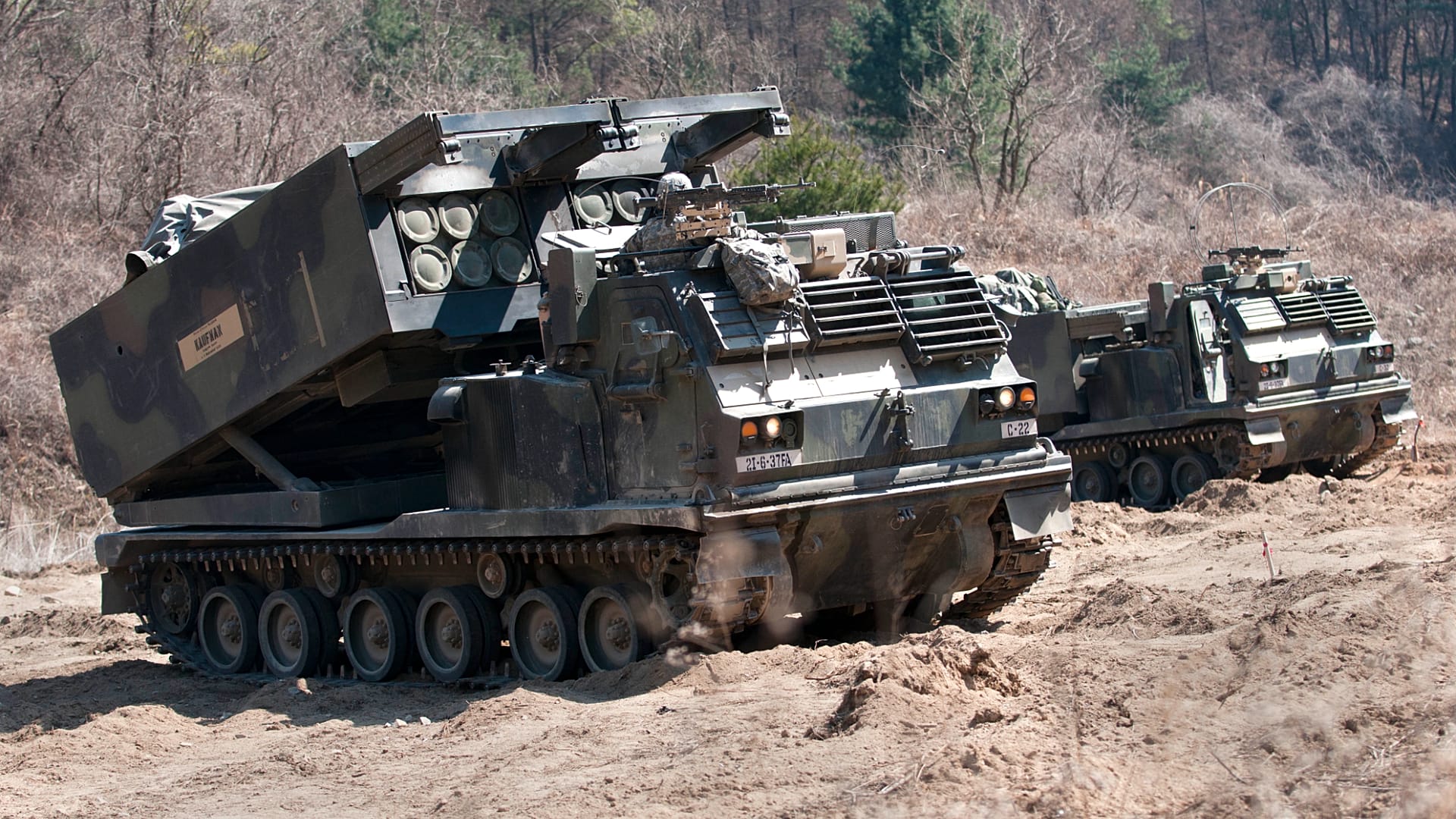
The list of weapons includes 70 M39 ATACMS tactical ballistic missiles, 12 M270 multiple launch rocket systems, 2,524 M26 cluster rockets and 47,000 M509A1 203 mm cluster artillery shells.
The American notification states that Ukraine intends to acquire these systems to "strengthen its offensive and defensive capabilities."
Since these systems and munitions were originally produced in the United States or under American licenses, their transfer to a third party requires Washington's consent.
The U.S. State Department stated that the proposed transfer is consistent with the American approach to ensuring security and that the administration is "ready to approve it." After the notification is sent, Congress has several days to review the deal and possibly express objections.
At the same time, on August 10, a source in the Turkish government told RIA Novosti that Ankara is not aware of U.S. plans to re-export old American weapons located in Turkey to Ukraine: "We have no information about any plans of the U.S. State Department in this direction; the question is better addressed directly to the American side."
Moscow's reaction
Against the backdrop of reports about the possible deal, Moscow requested clarifications from the United States and Turkey.
On August 15, the official representative of the Russian Foreign Ministry, Maria Zakharova, stated that the possible transfer of weapons could cause serious damage to Russia's relations with both Washington and Ankara.
"The Russian Foreign Ministry has requested clarifications from Washington and Ankara in connection with the information made public by the U.S. Congress," Zakharova said, emphasizing that "multifaceted damage from such deliveries is inevitable." According to her, this concerns not only possible casualties and destruction, but also serious damage to bilateral relations.
"Supplying Ukraine with weapons" simultaneously with "attempts to use peacemaking rhetoric," according to Zakharova, "inevitably undermines mutual trust."
On Thursday, Zakharova stated that Moscow continues to await clarifications from the United States and Turkey on the issue of possible arms deliveries to Ukraine. "We are still awaiting a response from Washington and Ankara, we count on receiving it, including due to the obvious projection of this issue onto the dynamics and prospects of sustainable solutions on the Ukrainian track, on the Ukrainian settlement," Russian media quoted her as saying.

It is still unclear what consequences this situation will have for Russian-Turkish relations. However, Moscow's statements show that the possible transfer of weapons is perceived not only as a question of military support for Ukraine, but also as a factor capable of affecting the level of trust between Ankara and Moscow.
Throughout the war, Turkey has sought to combine support for Ukraine's sovereignty and territorial integrity with the preservation of channels of direct dialogue with Russia. Ankara has acted as a mediator between the warring parties on individual issues.
That is precisely why in Moscow the possible transfer of weapons may be viewed not only as a military but also as a political signal, indicating a possible change in Turkey's balancing policy. Zakharova's emphasis on the "inevitable undermining of mutual trust" can be regarded as a signal that in Moscow such a step may be perceived as Ankara's departure from its previous line.
At the same time, it is premature to speak of Turkey's actual abandonment of its policy of balance. The very fact that the possible transfer of American weapons is being discussed does not yet mean that the delivery has taken place.
How this is perceived in Turkey
In the Turkish expert community, the possible deal is viewed in the broader context of Ankara's relations with the West. Some Turkish experts see the possible transfer as a possible sign of a more noticeable rapprochement between Ankara and its Western allies. The situation is also linked to last month's visit by U.S. President Donald Trump to Turkey for the NATO summit and the results of his talks with President Recep Tayyip Erdogan.
Ultimately, the possible transfer of American weapons to Ukraine affects several directions of Ankara's foreign policy at once. On the one hand, Turkey remains a U.S. ally in NATO and supports Ukraine's territorial integrity. On the other hand, maintaining working relations with Moscow remains an important element of Turkish foreign policy strategy.
Former Turkish military attaché in Azerbaijan, reserve general Yücel Karauz, expressed his view of the situation in a conversation with 1news.az.
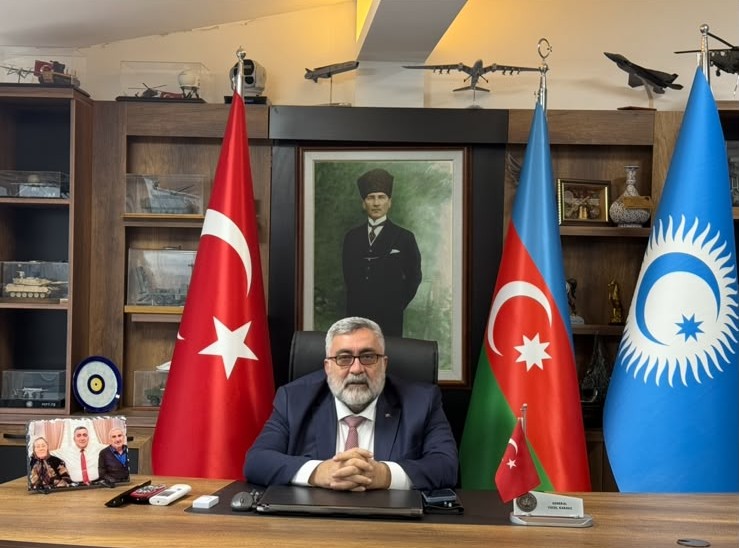
"In my opinion, this issue is not of a scale capable of leading to a strategic rupture in relations between Turkey and Russia.
Because relations between Turkey and Russia are no longer reduced merely to classical diplomatic ties between two countries. A system of multifaceted relations based on interdependence has taken shape, extending from energy and trade to tourism and nuclear energy, from the Black Sea to the Caucasus, from Syria to the Middle East and Africa.
The figures also confirm this. In 2024, the volume of trade in goods between the two countries amounted to approximately $52.6 billion. Turkey's imports from Russia amounted to about $44 billion, and exports to Russia to about $8.6 billion. In 2025, Russia also remained one of Turkey's largest trading partners in terms of imports, with imports from Russia amounting to about $42.4 billion. These indicators show that relations are based on deeper economic foundations than everyday political disagreements.
In addition, since the beginning of the Russian-Ukrainian war, Turkey has been pursuing a very sensitive policy of balance. On the one hand, as a NATO member, it fulfills its obligations; on the other, it keeps political and diplomatic channels with Moscow open. Ankara, while advocating Ukraine's territorial integrity, at the same time continues dialogue with Russia and demonstrates mediation initiatives aimed at ending the war.
The Istanbul talks, prisoner exchanges and the Black Sea Grain Initiative showed that Turkey is one of the few actors capable of conducting dialogue simultaneously with Moscow, Kyiv and the West.
Therefore, for Moscow, too, Turkey is not an ordinary country within NATO. Turkey is one of the most important states with which Russia is able to simultaneously conduct political and economic dialogue, as well as dialogue in the sphere of security within the Western system. Similarly, for Turkey, Russia is a strategic actor that cannot be ignored from the point of view of energy security, the Black Sea, the Caucasus, Syria and regional stability.
If the aforementioned transfer of weapons takes place, we may face harsh diplomatic statements from Russia and certain political pressure. However, I do not think that this will lead to an overall rupture of Russian-Turkish relations.
In Anatolia there is a saying: "You don't burn a blanket because of one flea." That is, jeopardizing a large-scale system of strategic relations that has developed over decades because of a single issue is in the interests of neither Turkey nor Russia.
Ultimately, Russian-Turkish relations are so deep, multifaceted and strategically significant that they cannot be assessed through the prism of one weapons system, one political statement or one crisis. Certain tension may arise, however, taking into account mutual economic dependence, regional cooperation and the balancing role that Turkey plays in the Russian-Ukrainian war, it appears more rational for the parties to keep this issue at the level of manageable disagreements."
Thus, in the analyst's opinion, the possible transfer of American weapons in itself does not yet provide grounds to speak of a revision of the entire system of Russian-Turkish relations. The scale and multifaceted nature of the two countries' interaction suggest that the parties will rather seek to localize emerging disagreements, while maintaining cooperation in key areas.