
Again 26. Russian propagandists have taken up the heroization of the Baku commissars. Why are they resurrecting Shaumyan?
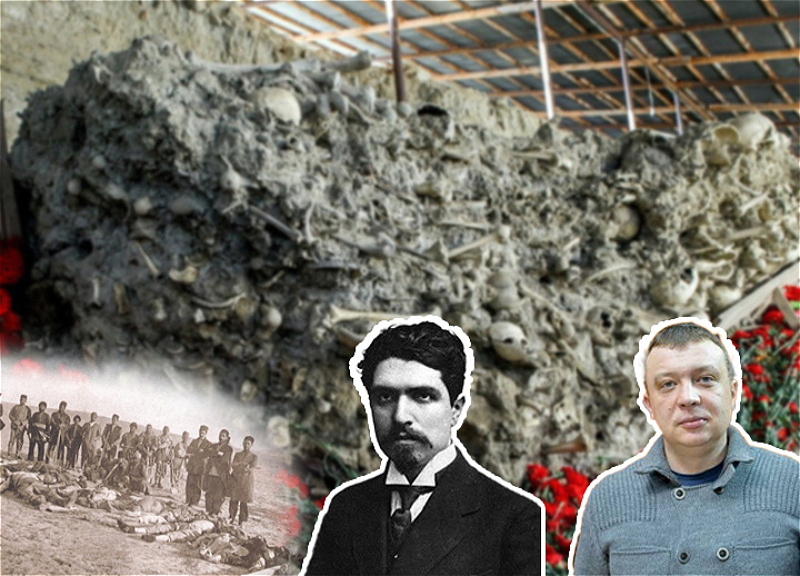
Semyon Uralov — a Russian “political consultant and media expert,” as he calls himself — who made public appeals against Azerbaijan and became one of the defendants in the criminal case initiated by the Prosecutor General's Office of the Republic of Azerbaijan, has now turned to one of the most painful pages of Azerbaijani history.
This time it concerns the 26 Baku commissars, whom Uralov, on his Telegram channel, called “true heroes of Azerbaijan.”
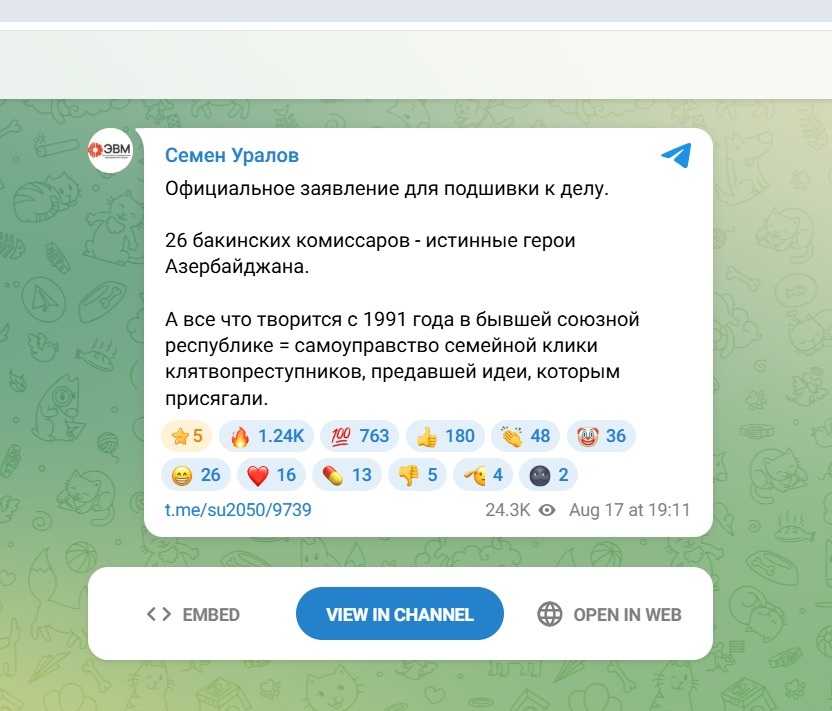
These are members of the Baku Soviet, whose activities are linked to the bloody events of 1918. “Those very commissars led by the Dashnak Stepan Shaumyan, who carried out the genocide of the Azerbaijani people in the spring of 1918,” recalls the director of the Center of History of the Caucasus, Rizvan Huseynov.
Commenting on Uralov's statement on his own Telegram channel, the Azerbaijani historian emphasizes that the attempt to present the commissars as “heroes of Azerbaijan” effectively means the heroization of those involved in mass violence against the civilian population: “At that time, tens of thousands of Azerbaijanis were brutally killed: Turks, Lezgins, Jews, Tats, Talysh and other peoples. And hundreds of thousands became refugees and destitute for many years.”
“Stepan Shaumyan, hiding behind the ideas of communism, organized the mass extermination of the peaceful population. It was in his hands, with the support of Bolshevik Russia, that power in the region was concentrated. After the February Revolution of 1917, Shaumyan was appointed chairman of the Baku Soviet, and in December — extraordinary commissar for Caucasus affairs. From April — chairman of the Baku Council of People's Commissars (SNK) and commissar for foreign affairs. That is, Shaumyan was the representative of Lenin and Soviet Russia throughout the Caucasus, including in the Turkish lands occupied at that time by Russian troops.
S. Shaumyan and his accomplices skillfully took advantage of the prevailing situation: the fall of tsarist Russia, anarchy in the Caucasus and the end of the First World War.
So whose will and interests did Shaumyan's gang represent? Archival materials and the chronicles of those years show that they certainly were not the interests of the Azerbaijani people, who were massacred en masse and driven out of Baku, Shamakhi, Guba, Lankaran, Derbent, other cities and hundreds of villages of the Baku Governorate.
Let us recall that at the end of the First World War, Shaumyan, as the person responsible for ensuring the withdrawal of Russian and Armenian military units from the Turkish and Balkan fronts, sent tens of thousands of Armenians armed to the teeth not to their homeland, but precisely to Baku, Ganja, Erivan and other cities of Azerbaijan. Advancing across Azerbaijani land, the well-armed and well-trained Armenian and Bolshevik groups carried out real terror and the mass extermination of the Azerbaijani, Turkic and Muslim population. According to rough estimates, in 1918–1919 alone, about 500,000 civilians in Northern and Southern (Iranian) Azerbaijan were killed or harmed at their hands.
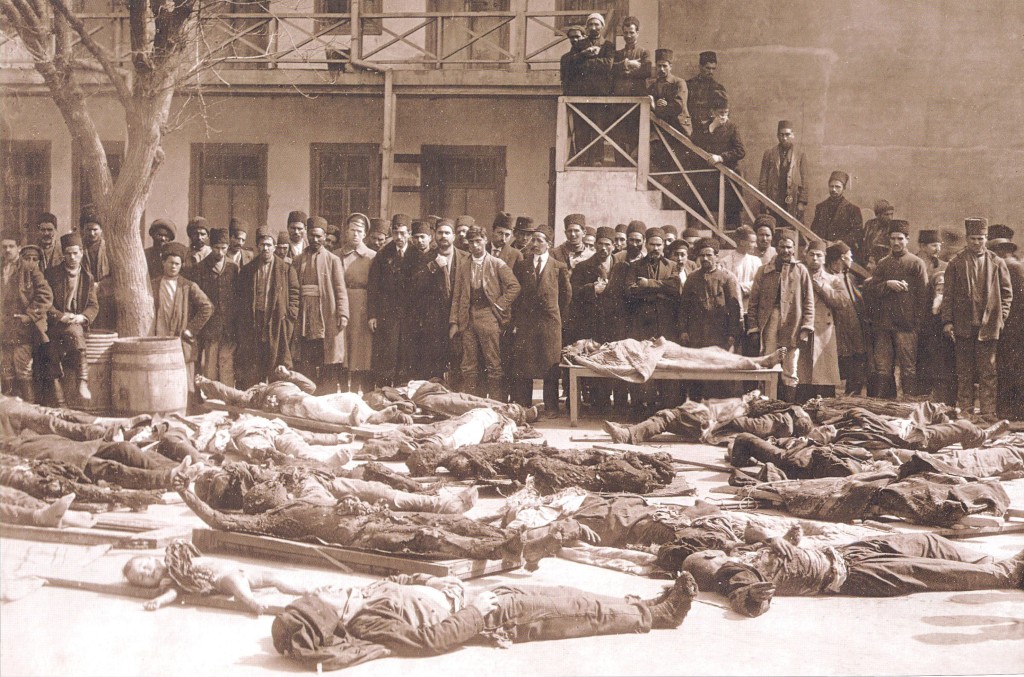
That is, the leaders of the Armenian nationalists took advantage of the chaos that reigned at the end of the First World War and, under its cover, pursued their plans to create a “Greater Armenia.” This is also confirmed by the fact that, in parallel with Shaumyan in Baku and other cities, the Dashnak leadership of the Ararat Republic carried out the mass extermination of the peaceful Azerbaijani population in Zangezur, the Erivan Governorate and the regions of Southern Azerbaijan. At the same time, Shaumyan's goal was first to massacre the Azerbaijani population, then to proclaim on these lands, with the capital in Baku, an Armenian-Bolshevik Soviet autonomy, and then to declare voluntary entry into Soviet Russia,” writes Rizvan Huseynov.
In his opinion, the main task today is not to argue with Uralov, but to remind the clique that feeds him that this time the plan of the Kremlin's “Shaumyans,” unleashed again in Karabakh in the 1980s–90s, failed. Perhaps this is what infuriates certain people in the Kremlin corridors? “We advise them to drink some water there too and reflect on the bitter end of Shaumyan and his gang. Such is the fate of all traitors and criminals on the land of Azerbaijan. By the way, Uralov is also wanted, and he will gladly be served Baku tea with a view of the Caspian.”
.jpg)
At the same time, the historian draws a parallel between the policies of the commissars and Russia's subsequent actions in the post-Soviet space. In his view, this is not only about assessing individual historical figures, but also about a broader political approach in which the Soviet past is used to justify contemporary Russian interests.
In this context, the question arises: why has Uralov turned to the figure of the 26 Baku commissars precisely now? Is this a kind of retaliatory attack in response to the criminal case initiated against him, or are there larger goals behind the appeal to the figures of the 26 commissars? Does it not indicate an attempt to once again revive the Soviet historical narrative regarding Azerbaijan?
1news.az spoke about this with the director of the Center of History of the Caucasus, Rizvan Huseynov.

- Why, in your opinion, did Uralov decide precisely now to turn to the topic of the 26 Baku commissars and present them as “true heroes of Azerbaijan,” despite the fact that their activities are linked to the genocide of Azerbaijanis in 1918? What lies behind such an attempt at heroization today?
According to some experts, the reason for this slanderous anti-Azerbaijani campaign, in which not only Uralov but also several other Russian figures are taking part, including the official Chadayev (until yesterday, Alexey Chadayev, working as a television journalist and correspondent, was an adviser to the Minister of Transport of the Russian Federation — ed.), may be Azerbaijan's position in defense of the interests of the peoples of Russia — their right to preserve their national heritage, language, culture and education in their native language.
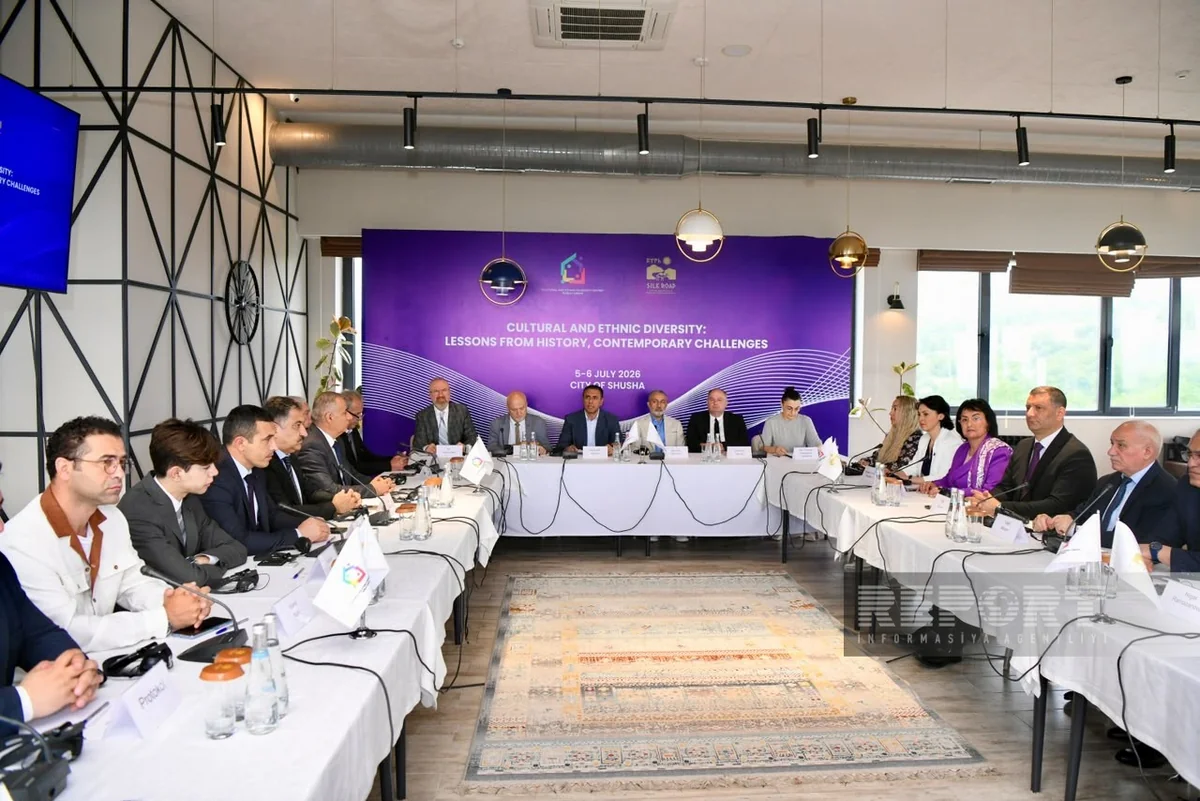
After all, an interesting forum was recently held in Shusha with the participation of public leaders, experts, activists, including representatives of various peoples of Russia.
There were representatives of the Circassians, Chechens, Nogais, Bashkirs, Tatars and other peoples. Very interesting statements were made at the forum, and following its results a document was signed containing an appeal to the Russian Federation not to deliberately send representatives of these peoples to the war in Ukraine. After all, it is precisely representatives of these peoples, in the opinion of the forum's participants, who are mainly sent to the war, where they die and receive severe injuries. Thereby, as they believe, certain forces in Moscow are waging a struggle against the national peripheries, against the federal districts where Turkic and Muslim peoples mainly live.
Apparently, this caused irritation among certain Kremlin circles, and they decided to raise the topic of the 26 Baku commissars. It is difficult to understand what exactly is going on in their minds and how this is connected with the event that took place in Shusha.
But, in their view, this is probably a kind of asymmetric response: as if to say, at one time, through the hands of Shaumyan and his clique, they were able in effect to attempt to “punish” the Azerbaijani people, to carry out the genocide in 1918, and then, in 1920, to overthrow the legitimate Azerbaijan Democratic Republic.
Apparently, the message is as follows: as if to say, we can commit such outrages again. But, unfortunately, the benighted nationalism and fascism that permeates the materials and speeches of both Uralov and other similar figures reflects the real state of affairs in the Russian media space, social networks and among the so-called Z-bloggers.
Background: On July 6, participants of the international conference on the topic "Cultural and ethnic diversity: lessons of history, contemporary challenges" in Shusha adopted a joint declaration reflecting the main conclusions and recommendations developed following the discussions.
The document emphasizes that cultural and ethnic diversity, tolerance and multiculturalism should be regarded as the national heritage of every state. The authors of the declaration stated that no people should be subjected to humiliation, discrimination or persecution on ethnic or religious grounds. The declaration notes that the provisions of the Universal Declaration of Human Rights, the Convention on the Prevention and Punishment of the Crime of Genocide, international obligations on the elimination of all forms of racial discrimination, as well as UNESCO's principles on the protection of cultural diversity, should become effective instruments for protecting the fundamental rights of peoples driven from their historical lands, who have survived mass killings, genocide and deportations, and who face the threat of losing their historical and cultural heritage and language.
“It is necessary to prevent modern forms of colonialism and actions that bring peoples tragedy, slavery and suffering. Ethnic and religious affiliation must not be considered a crime and become grounds for collective punishment,” the document states.
The authors of the declaration also called for taking into account the national dignity of peoples and being guided by the principles of humanism, and for replacing confrontation and clashes with dialogue, cooperation and an atmosphere of mutual trust.
In addition, the conference participants declared the need to stop the forced dispatch of representatives of Russia's ethnic minorities — Circassians, Lezgins, Avars, Tatars, Kumyks, Chechens, Sakha (Yakuts), Buryats and other non-Russian peoples — to the front in Ukraine through pressure, persecution, blackmail and deprivation of liberty.
The declaration contains an appeal to Russia to learn the lessons of the past, recognize the genocide of the Circassians and other peoples, renounce the heroization of persons involved in mass killings, ensure access to archival materials on historical topics, and put an end to manifestations of chauvinism, xenophobia and attacks on representatives of non-Russian peoples by skinhead groups and their modern analogues.
“Azerbaijan's exemplary model in the sphere of protecting ethnic and cultural diversity, as well as developing interreligious, intercultural and inter-civilizational dialogue, deserves high appreciation. Azerbaijan's historic victory in Shusha should serve as an example of the restoration of historical justice, which is especially needed by peoples who have experienced a colonial past,” the joint declaration notes.
The conference was organized by the Public Association "Center for Cultural and Ethnic Diversity" in partnership with the Public Association of Cultural and Historical Research "Silk Road" (quotations according to Report.az).
- Can Uralov's appeal to this topic be viewed as an attempt to once again revive the Soviet historical narrative regarding Azerbaijan? In your view, is this not about a desire to bring back into the public space the notion of the Soviet past as a political and historical model within which the events of 1918 were interpreted in a completely different way?
- Apparently so. We roughly know who is behind this topic, who commissions people like Uralov to make such provocative anti-Azerbaijani statements. These people are in many ways obsessed with and sick with the Soviet imperial past.
One of their goals, including at the start of the war with Ukraine, was to achieve a change of power in Ukraine, so that then Russia, Ukraine and Belarus would again gather in the Belovezhskaya Pushcha and proclaim the creation of USSR 2.
But they did not succeed. The war in Ukraine is in its fifth year. However, these people still dream. And, naturally, they have the same imperial attitude toward Azerbaijan and other countries of the post-Soviet space.
We see that such aspirations still exist within certain Russian circles, and they are voiced through the mouths of such notorious swindlers and scoundrels as Uralov.
- How closely, in your opinion, may Uralov's new statement be connected directly with the criminal case initiated in Azerbaijan and his being put on the wanted list — that is, is this not a kind of attempt to “snap back” in response? Or could there be larger goals behind the appeal to such a sensitive historical topic — for example, an attempt to shape a certain historical and political narrative regarding modern Azerbaijan?
- Apparently, it may indeed be an attempt to “snap back,” but this is not Uralov's personal initiative, but the actions of those who stand behind him.
We know that behind this entire anti-Azerbaijani campaign stand certain Russian officials and curators of the media space who, through people like Uralov, Chadayev, the host of the “Moscow 24” TV channel Ivan Knyazev and others, are trying to conduct a harsh dialogue with Azerbaijan.
But I think these attempts are doomed to failure. As we can see, Azerbaijan reacts very clearly and firmly to such actions. Therefore, this evokes nothing but regret.
I believe that such activity harms Russian interests even more and narrows Russia's opportunities to participate in various projects not only in Azerbaijan, but in the South Caucasus as a whole.
Background: On August 17, the Prosecutor General's Office of the Republic of Azerbaijan reported the continuation of the preliminary investigation into the criminal case initiated on the facts of public appeals for the violent change of the constitutional order of the Republic of Azerbaijan, the violation of its territorial integrity, the incitement of national hatred and enmity, as well as public appeals for terrorism.
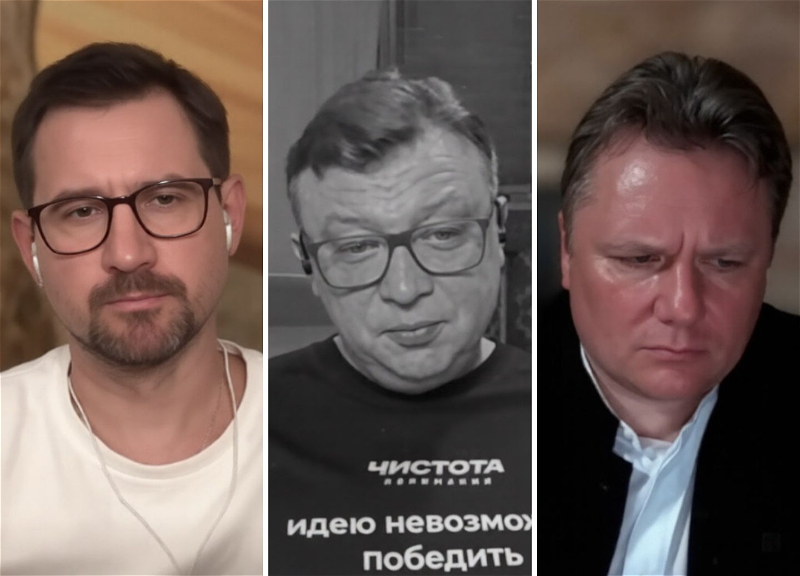
In the course of the investigation, well-founded suspicions arose that citizens of the Russian Federation — the host of the “Moscow 24” TV channel, journalist Ivan Andreyevich Knyazev, Semyon Sergeyevich Uralov, who presents himself in the Russian Federation as a political consultant and media expert, as well as the adviser to the Minister of Transport of the Russian Federation Alexey Alexandrovich Chadayev, working as a television journalist and correspondent — on July 14, 2026, in the program “Clarity of Understanding,” published on the YouTube channel “Semyon Uralov,” made calls for the use of violent methods against the Republic of Azerbaijan, the violent change of the country's constitutional order and the violation of its territorial integrity, as well as for the incitement of national hatred and enmity. In addition, there are well-founded suspicions that on August 13, 2026, in a program published on the said channel, the aforementioned persons, expressing judgments about the use of violent methods against the Republic of Azerbaijan, including about holding certain individuals under the direct threat of physical destruction and their targeted elimination, made public appeals for terrorism.
On this fact, the Prosecutor General of the Republic of Azerbaijan initiated a criminal case under Articles 214-2 (public appeals for terrorism), 281.2 (public appeals directed against the state) and 283.2.1 (incitement of national hatred and enmity) of the Criminal Code of the Republic of Azerbaijan. The conduct of the preliminary investigation was entrusted to the Investigation Department of the Prosecutor General's Office.
On the basis of the collected evidence, decisions were issued to charge Semyon Uralov, Ivan Knyazev and Alexey Chadayev as defendants under Articles 214-2, 281.2 and 283.2.1 of the Criminal Code of the Republic of Azerbaijan. Due to the fact that these persons are outside the Republic of Azerbaijan, they have been put on the wanted list, and by the relevant court decisions a preventive measure in the form of detention has been chosen with regard to them.
At the same time, in order to establish the whereabouts and detain the accused on the territory of partner states, as well as to hand them over to the Republic of Azerbaijan, the Prosecutor General's Office has sent the relevant appeals to the competent state bodies. In addition, the necessary measures are being taken to organize their international search through Interpol channels.
The Prosecutor General's Office of the Republic of Azerbaijan declares that in the future, too, decisive legal measures will be taken with regard to any unlawful acts directed against the sovereignty, constitutional order and territorial integrity of the Republic of Azerbaijan, in accordance with the requirements of national legislation and the international treaties to which the Republic of Azerbaijan is a party.