Ilham Aliyev's security formula: from regional player to self-sufficient middle power
The concept of national security for a modern state extends beyond purely military terminology, having evolved into a comprehensive system in which internal stability, the strength of the state structure, and the mental immunity of society play a key role.
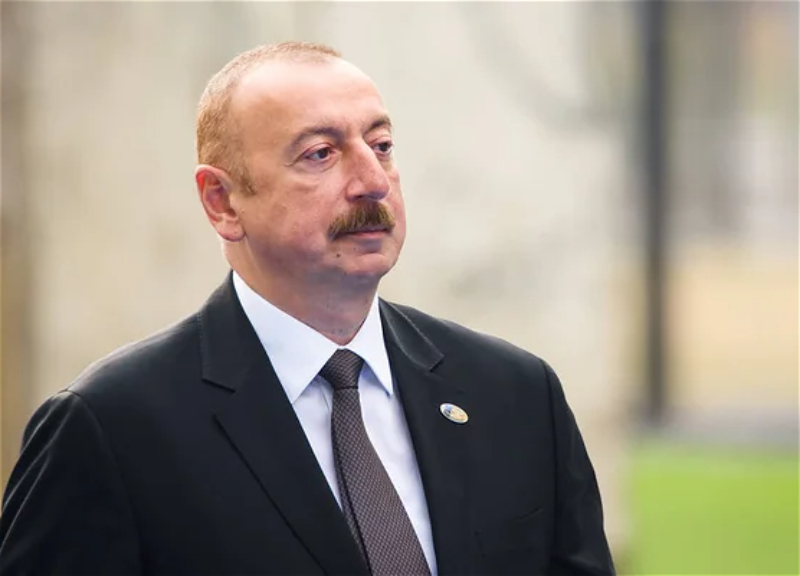
A vivid confirmation of this thesis was the detailed speech by Azerbaijani President Ilham Aliyev at the opening of the IV Shusha Global Media Forum, held under the motto "The Mission of Media in Promoting Peace: Restoring Truth and Reviving Trust."
Analyzing the current geopolitical architecture of the South Caucasus and the contours of global security, the Azerbaijani leader presented a profound analysis of the risks facing the republic and formulated a fundamental conclusion about the current state of the country. The Azerbaijani development model demonstrates a unique balance in which the country's internal perimeter is fully protected from shocks, while the main challenges have shifted exclusively to external borders.
When speaking about the resilience of the state, it is important to emphasize that socio-political stability and the strong, unbreakable union between the political leadership and the people did not emerge in Azerbaijan suddenly or as a result of recent victories. This monolith was laid and strengthened over decades, beginning in 2003, when Ilham Aliyev first led the country, implementing the strategic course of national leader Heydar Aliyev. Throughout these years, despite numerous economic crises, regional upheavals, and the harshest external pressure, the republic remained an island of predictability and security. Mutual trust between the authorities and citizens served as the main shield that allowed the state to consistently develop the economy, modernize the Armed Forces, and prepare for the historic restoration of justice. The long-term development strategy was based on the understanding that without a strong rear and the consolidation of society, it is impossible to solve any major historical task.
However, after the triumphant restoration of the country's sovereignty and territorial integrity, this internal union reached a qualitatively new level previously unattainable. The historic victory and the complete closure of the Karabakh issue erased any potential lines of internal division, turning the unity of the people and the authorities into an absolute constant. Today, Azerbaijani society is experiencing a period of unprecedented patriotic and civic upsurge, which is fundamentally changing the very structure of potential threats. It was this internal monolith that allowed the head of state to make an important statement at the forum in Shusha. Answering a question about potential risks, Ilham Aliyev emphasized that "we, fortunately, have no internal risks—neither existing nor potential": "All risks are formed outside our borders. And as for risks of a political nature, they are negligible. We also do not expect risks associated with ideological subversion, because until today there have been quite a few of them, but none of them have been successful. The authorities and society of Azerbaijan firmly stand on the principles laid down in our Constitution."
This thesis has profound practical significance. The complete absence of internal threats means that state institutions can avoid being distracted by suppressing internal crises or artificially imposed protest sentiments and can fully focus their resources, analytical apparatus, and defense potential on countering external challenges. Azerbaijani society has acquired a powerful collective immunity to any attempts at hybrid interference, information attacks, and attempts to manipulate public opinion by various international centers of power. The fact that the authorities and citizens think in unison and share common strategic values makes the country invulnerable to classic scenarios of destabilization that have destroyed more than one state in various regions of the world in recent years.
At the same time, protection from within does not mean automatic security from without, especially in an era of large-scale breakdown of the entire system of international relations. The head of state openly acknowledged the existence of physical risks from which no one can be insured today. "Taking into account modern realities and modern types of warfare, today no country, well, perhaps with rare exceptions, can feel completely safe," the president noted. For Azerbaijan, this factor is exacerbated by its complex and at the same time strategically important geographical position. The republic is located in close proximity to global conflict zones, including between major warring powers, the consequences of whose clash remain unpredictable for the whole of Eurasia. In such conditions, the key task of national security is to prevent Azerbaijani territory from becoming an arena for someone else's confrontation.
Assessing the nature of external pressure, Ilham Aliyev pointed out that for Azerbaijan today the only risk is certain attempts to involve it in some adventures. "Such attempts were made before, but they were more political in nature. We have always successfully repelled them, and they have practically ceased. Today they are of a more serious and more threatening nature. Therefore, protecting ourselves, as they say, is nothing new to us. Fighting a consolidated community as well, strengthening our security, borders, and systems for countering threats—this is what we have been doing, well, at least since 2003. And apparently I will continue to do so as long as my strength allows. This process will never end," the president emphasized. Such frankness from the country's leader demonstrates that Baku harbors no illusions about the friendliness of the external environment and is prepared for a prolonged confrontation in the diplomatic, information, and military spheres.
Full-fledged sovereign development requires the state to be able to function in a mode of permanent readiness, without expecting the international situation to suddenly normalize. The president dispelled the illusions of those who believed that after achieving the main historical goals, Azerbaijan could slow down the pace of militarization or weaken its vigilance. He stated that there would be "no chance" to catch one's breath, adding that "even in 2020, after the victory in the Second Karabakh War, we did not rest for a second." "There was not even time and, honestly speaking, no desire to celebrate, because you can celebrate in such a way that later you can sleep through everything. We immediately began preparing. And further, after 2023, when clear threats and attempts to sanction Azerbaijan appeared, we have been repelling them practically until now. And on different fronts," the head of state said. In this regard, he formulated an important political science formula, noting that one of the criteria of a middle power is the ability to repel attacks on many fronts.
This ability to protect its national interests simultaneously in several dimensions—from legal battles in international courts and countering sanctions initiatives in European institutions to physical control of its own borders—clearly illustrates Azerbaijan's transformation. From a regional player, the country has become a self-sufficient middle power with an independent foreign policy course. The president recalled how specific the conditions were in which the republic had to defend its case over the past decades. "I do not want to compare our conflict with any other, but in some cases there is a group of countries that supports you and a group of countries that attacks you. In our case, everything was completely different. And we had to repel attacks both physically and politically in all directions, and this continues to this day. Therefore, there will be no peaceful life. Let no one count on that," Ilham Aliyev emphasized.
One of the central factors ensuring Azerbaijan's resilience on the international arena is its well-calibrated, pragmatic, and balanced foreign policy based on mutual respect and the development of transport and logistics links. The president touched on Baku's long-term work to turn transport and geographical advantages into an instrument of geopolitical stability. He emphasized that Azerbaijan had been working on communication issues for quite a long time, actively working for more than ten years, striving to use its geographical advantages and make efforts to create a platform for multilateral cooperation. This strategy has borne significant fruit right now, when global logistics chains have been disrupted due to sanctions and wars. "At present, we are working on expanding the infrastructure related to communications. Because we did not expect that the importance of our geographical position would increase so much recently. Our connection with our neighbors both in the western and eastern directions is excellent," Ilham Aliyev stated.
The ability to build even, predictable, and mutually beneficial relations with all key neighbors is a rare quality in today's divided world. The head of state described this international contour in detail, noting that true stability of transport corridors is possible only when the country has no conflicts on its borders. According to him, the balance of power in the region rests on the fact that Azerbaijan has good relations both with Central Asia and Georgia, and with Turkey and Europe. To combine all this into a working system that brings enormous income and political dividends, Baku had to take many consistent steps that made the transit Eurasian corridors truly viable and useful for dozens of states.
This geo-economic self-sufficiency and reliance on its own resources have formed a solid foundation for pursuing a fully independent foreign policy course. In conditions where many countries are forced to look back at global centers of power, Baku demonstrates remarkable firmness and consistency in observing the norms of international law, even when this causes irritation in one or another world capital. This sovereign approach was most vividly manifested in the position voiced by Ilham Aliyev regarding the ongoing Russian-Ukrainian conflict. The president's response to a question from Ukrainian journalist Dmitry Gordon confirmed that Baku's foreign policy is devoid of opportunism and is based on unshakable principles: "We have always supported, support, and will support the territorial integrity of Ukraine, its sovereignty, and the inviolability of its borders. The borders of no state can be changed by force or without the consent of the people of that country. And here our position is quite consistent and firm."
Drawing historical parallels with the long-term occupation of Azerbaijani lands, the president expressed solidarity with the Ukrainian people's unwillingness to come to terms with the loss of territories. He recalled the colossal pressure Azerbaijan itself faced at one time, when international mediators in the person of the OSCE Minsk Group co-chairs effectively tried to legitimize annexation and force Baku to make territorial concessions. According to Ilham Aliyev, the leading powers of the world wanted to take Karabakh, including the Lachin and Kalbajar districts, offering in return only a partial return of territories, which Azerbaijan could not agree to. Resisting this consolidated position of the permanent members of the UN Security Council was extremely difficult, and even during the 2020 hostilities, Baku was subjected to powerful diplomatic pressure with demands to stop immediately. Nevertheless, the will of the people cannot be broken, and this unique experience allows Azerbaijan to clearly state: the war must be stopped immediately, but without prejudice to the principles of justice and sovereignty.
Ilham Aliyev's speech also highlighted deep problems in the activities of key international institutions and individual Western officials, whose biased position for a long time hindered the normalization of processes in the region. The president stated the existence of coordinated destructive forces in European structures, noting that there was an anti-Azerbaijani group in the European Commission. He expressed hope that with the departure from active politics of certain biased figures whose position hindered constructive dialogue, a trend toward improving relations between Baku and Brussels had emerged. The head of state emphasized that Azerbaijan saw a mutual need to restart these relations on an equal basis and supported this process. At the same time, the topic of corrupt influence and the use of dirty financial instruments by the Armenian lobby was touched upon, victims of which included former representatives of international judicial instances who made biased statements.
Azerbaijan's ability to withstand such coordinated attacks while maintaining internal peace and economic dynamism is precisely based on that very "security formula," where the internal contour is absolutely monolithic. A strong leader relying on the unconditional support of a consolidated society, developed infrastructure, diversified ties with neighbors along the East-West and North-South vectors, as well as an uncompromising readiness to protect its borders—these are what make Azerbaijan a key, independent, and self-sufficient player in the modern geopolitical space. The main conclusion of the presidential speech in Shusha is obvious: external pressure on Baku will continue, since the sovereign policy of middle powers always provokes resistance from major global players, but Azerbaijan's internal foundation is so strong that any attempts at destabilization from outside are doomed to inevitable collapse.
Ali Mamedov