Not an object, but a subject: How Baku is reshaping the geopolitical map of Eurasia
For a long time, classical international relations theory operated with a simplified binary system, dividing states into great powers and all other countries forced to maneuver in the wake of others' interests.
However, the profound transformation of the global security architecture and the shift toward multipolarity have brought a new category of players — "middle powers" — to the forefront. Lacking the status of nuclear giants, such countries are nevertheless capable of exerting decisive influence on macro-regional processes, demonstrating absolute foreign policy autonomy.
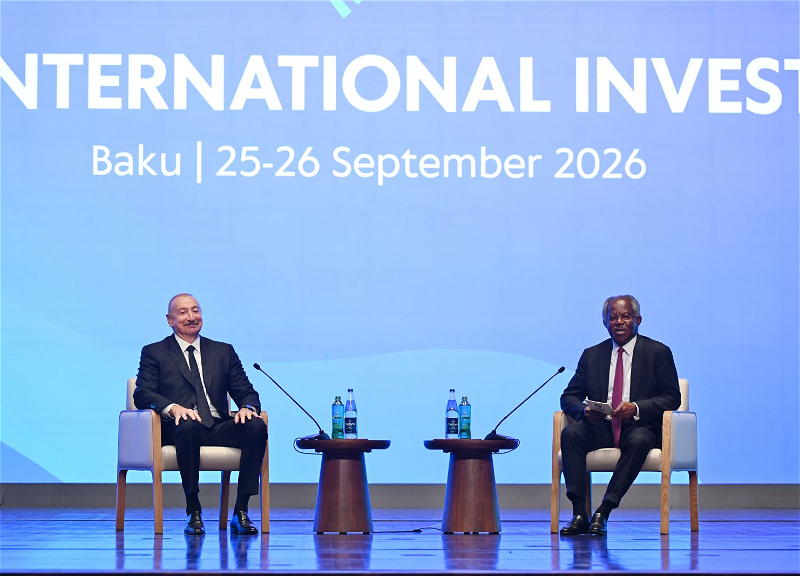
The discussion of Azerbaijan’s new status reached a qualitatively different level during its examination at the Global Media Forum in Shusha. Speaking before international experts and journalists, President of Azerbaijan Ilham Aliyev noted that the expert community increasingly places the country in the category of "middle powers." At the same time, the head of state emphasized that modern political science has not yet developed uniform standards for such classification and proposed viewing this status through the lens of real sovereignty.
"In my view, this term signifies recognition of a country’s potential, its ability to defend its national interests regardless of what major powers think or do, as well as its readiness to deploy its full potential if anyone attempts to harm it," the president said. In his understanding, this status cannot be purely declarative — it requires mandatory practical backing. The most important argument here is not nominal but real state power.
This conceptual approach captures a crucial shift: Azerbaijan has outgrown the framework of purely South Caucasus leadership and entered the top league of states whose sovereign will is a constant that key global players must reckon with.
Formula of sovereignty: Independence from the will of great powers
The first and most significant criterion of a "middle power" in contemporary realities is the ability to pursue a sovereign foreign policy free from external dictates. In conditions where many traditional European states have effectively delegated their sovereignty to supranational structures, Baku demonstrates an uncompromising priority on national interests. This ability to resist pressure from global centers of power has become the calling card of Ilham Aliyev’s diplomacy. Azerbaijan’s capacity to withstand intense sanctions and political pressure coordinated by pro-Armenian lobbying circles in the U.S. Congress and European capitals vividly confirms this thesis. Baku not only endured but also secured a transition from Washington to a format of equal strategic partnership, as recorded in the Declaration on Strategic Partnership signed with Vice President JD Vance during his visit to the Azerbaijani capital.
A credible confirmation of the scale of this sovereignty is Azerbaijan’s four-year chairmanship of the Non-Aligned Movement. Baku not only led the second-largest international organization after the UN, uniting 120 states, but also breathed new life into it amid the COVID-19 pandemic by initiating a Special Session of the UN General Assembly and opposing the "vaccine nationalism" of developed countries. This was a classic step by a middle power assuming the functions of a global coordinator.
Defense capability proven in action and the strategy of "fighting on multiple fronts"
The second integral criterion of the new status is military power. For a middle power, the army is not a paper deterrent but a real, high-tech, and mobilization-ready instrument for protecting statehood.
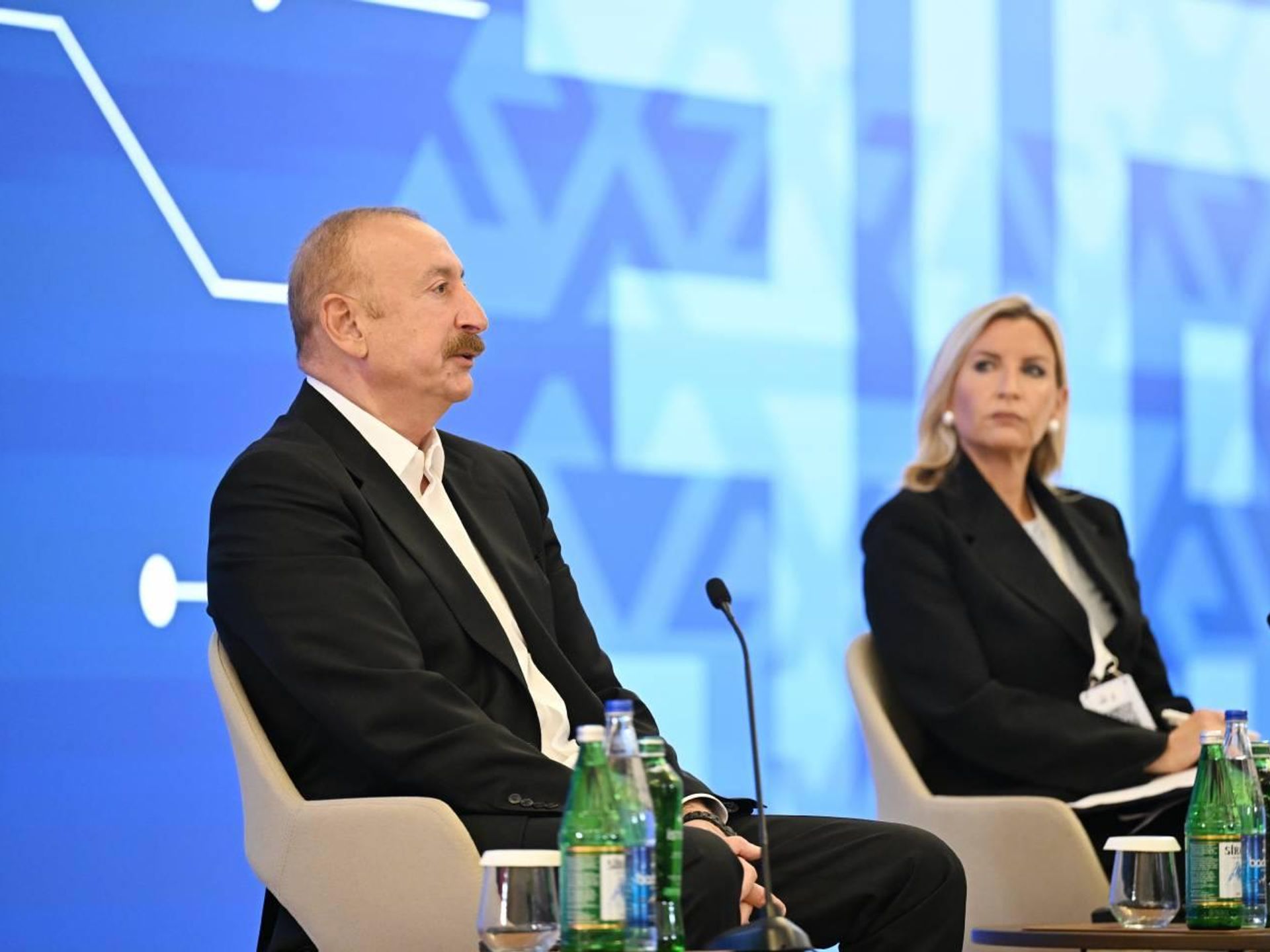
In his speech in Shusha, the Azerbaijani leader highlighted this aspect as key practical proof of the state’s viability.
"Of course, this also includes defense capability, and not only what is demonstrated in military parades, but what is proven on the battlefield," the head of state emphasized, later adding that "another criterion is the ability to fight back on multiple fronts."
The experience of the Second Karabakh War in 2020 and the subsequent local counterterrorism operations in September 2023 has entered the modern military textbooks of the world’s leading armies. Azerbaijan demonstrated a unique model of fifth-generation warfare with the massive use of unmanned aerial vehicles, precision weapons, and special forces in the most challenging mountainous terrain.
However, Baku’s strategic resilience extends far beyond the classical theater of military operations. The ability to "fight back on multiple fronts" mentioned by the president primarily implies the state’s readiness to effectively counter hybrid challenges of our time. For Azerbaijan, these "fronts" have long become reality, as the country must simultaneously repel coordinated information wars, withstand unprecedented political and diplomatic pressure in international institutions, and thwart attempts at external interference in internal affairs. By demonstrating the ability to withstand blows in the media, legal, and political spheres without compromising its strategic course, Baku de facto confirms a key criterion of a "middle power" — systemic viability and invulnerability to any forms of asymmetric pressure.
The creation of its own developed military-industrial complex, which today produces hundreds of types of defense products and actively exports them, allows Baku to minimize dependence on external suppliers in critical moments, which is also a prerogative exclusive to middle powers.
Projection of influence beyond borders: A word that changes the balance
A true middle power possesses the ability to project its political and economic influence far beyond its immediate geographic borders. Its statements are analyzed by leading world chanceries, and its foreign policy initiatives reshape the map of macro-regional connectivity.
"And, of course, one of the important factors, in my view, is the ability to influence — by a mere word or statement — events occurring beyond one’s own borders. Azerbaijan has repeatedly demonstrated such an ability," Ilham Aliyev noted.
The geographic scope of Baku’s influence today stretches from Central Asia and the Middle East to the Balkans and the African continent. Credible confirmation of this influence is the country’s large-scale energy leadership, expressed in the implementation of the Southern Gas Corridor worth more than $40 billion.
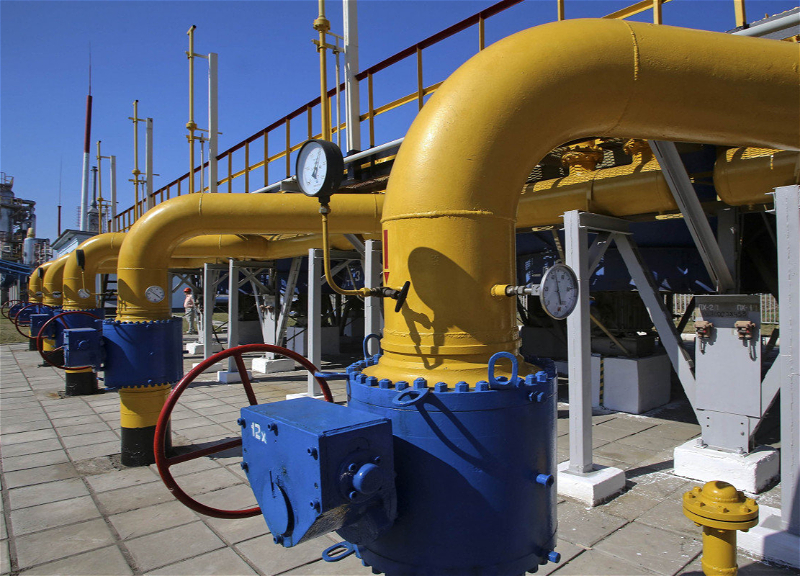
Today, Azerbaijani gas is a critically important factor in ensuring Europe’s energy security, including for Italy, Greece, Bulgaria, Romania, Hungary, and Serbia, which effectively allows Baku to shape the contours of the European energy balance. At the same time, Azerbaijan supplies its gas to Syria, thereby contributing to the recovery of this war-torn Middle Eastern country.
Simultaneously, the global transport connectivity initiative in the form of the Middle Corridor project links China and Central Asia with Europe via Azerbaijani territory. The active expansion of the Baku port’s capacity to 25 million tons and the modernization of the Baku-Tbilisi-Kars railway have turned the republic into an indispensable land bridge of Eurasia amid the crisis of traditional maritime routes.
Finally, Azerbaijan’s influence reaches a transcontinental level through active efforts to combat neocolonialism. The Baku Initiative Group (BIG) has become an effective platform for defending the rights of peoples facing colonial practices in various parts of the world. While the group’s most resonant actions involved exposing Paris’s policies in New Caledonia, French Polynesia, and Martinique, BIG’s agenda is significantly broader. The organization also actively raises issues of combating the colonial legacy of the Netherlands and pays attention to protecting the rights of ethnic and religious minorities, including the situation of Sikhs in India. This activity demonstrated Azerbaijan’s ability to serve as a voice for oppressed communities and effectively oppose the largest geopolitical players, including permanent members of the UN Security Council, on their "historical spheres of influence."
Responsibility for the region: Architecture of peace in the South Caucasus
The transition to middle power status also imposes obligations on the state toward the international community. Strength is measured not only by the ability to win conflicts but also by the readiness to assume the burden of regulating and developing the macro-region.
"Also, I believe one of the factors that can be attributed to this term (‘middle power’ — ed.) is responsibility — responsibility for what is happening inside the country and, to a certain extent, responsibility for the entire region. Perhaps the team will later supplement these criteria, but I believe that everything listed can be applied to Azerbaijan, and that is probably why many experts call us a middle power, and, honestly, I do not object to this," Ilham Aliyev said.
This responsibility is clearly manifested in how Azerbaijan is building the post-conflict reality in the South Caucasus. After restoring sovereignty, Baku did not pursue a path of isolation or the dictate of force but instead initiated a large-scale program for the reintegration of regional communications. As part of this course, Azerbaijan provides direct support for Armenia’s energy stability by unilaterally lifting transit restrictions, which ensured the delivery of more than 40,000 tons of cargo, and by beginning direct supplies of petroleum products totaling more than 10,000 tons to ensure the fuel security of the neighboring country amid a global energy shortage.
New geopolitical reality
Azerbaijan represents a classic example of the successful emergence of a middle power. Possessing a powerful economic foundation, diversified transport and energy infrastructure, a combat-ready army, and, above all, sovereign political will, Baku is confidently reshaping the geopolitical landscape at the junction of Europe and Asia.
The formal frameworks and old stereotypes in which external players tried to keep Azerbaijan are no longer viable. Today’s Azerbaijan is not an object but a subject of global politics, whose decisions determine the stability, security, and economic development — however loudly it may sound — of the entire Eurasian space. And Baku’s readiness to bear this responsibility proves that its new status is not merely an analytical assessment but a long-term historical reality.