
From historical memory to a global mission: Azerbaijan at the head of the fight against colonialism
For a long time, colonialism was portrayed as a phenomenon of the past—a page of history supposedly closed for good with the collapse of the classical empires of the 20th century.
However, the 21st century has shown that colonial thinking has not disappeared but has merely taken on new forms. Political pressure, restrictions on the right of peoples to independently determine their future, and the preservation of territories' dependence on external centers of power—all of this indicates that the problem of colonialism remains one of the most acute and controversial issues in the modern world.
It is under these conditions that Azerbaijan has taken a principled stance: the fight against colonialism and neocolonialism must become part of the global agenda, and the voices of peoples who have faced the consequences of colonial domination for decades must be heard by the international community.
The distinctive feature of Baku's approach is that it is based not only on a political assessment of contemporary processes but also on Azerbaijan's own historical experience. A country that has itself endured periods of external domination and restrictions on national sovereignty views the defense of peoples' right to freedom as a matter of historical justice.
One of the main contradictions in contemporary international politics remains the use of human rights issues as a tool of pressure against certain states while similar problems in other regions of the world are ignored.
For many years, Azerbaijan has faced unsubstantiated accusations in the field of human rights, which, in Baku's view, were often used as a means of political pressure and an attempt to influence the country's independent course. At the same time, when Azerbaijan began raising issues of colonial legacy and the situation of peoples living in dependence, the same political circles responded with the same biased criticism.
President of Azerbaijan Ilham Aliyev, speaking at the IV Shusha Global Media Forum, highlighted the inconsistency of this approach: "I have already said that when we were admitted to the Council of Europe, I was the first head of the Azerbaijani delegation and came to Strasbourg. And the first thing our delegation heard from the leadership of the Council of Europe was that human rights cannot be an internal matter for any country. We were good students and learned this lesson. And now, when the Baku Initiative Group raises the issue of colonial inequality or colonial domination, they are accused."

In essence, this is a question of consistency in international principles. If human rights are truly a universal value, they cannot be applied selectively—only when it suits the political interests of individual states.
The Baku Initiative Group today is one of the key instruments for advancing the anti-colonial agenda. Its activities are aimed at drawing the international community's attention to the problems of peoples who continue to face the consequences of colonial rule.
The Baku Initiative Group is a non-governmental organization, perhaps the first and most effective one to bring this issue to the global agenda—this statement by the head of the Azerbaijani state reflects a broader process: over the past decades, the topic of colonialism has gradually faded from the international political agenda, despite the fact that many territories continue to grapple with this problem.
Azerbaijan has set the task of returning this issue to the center of international attention, creating conditions for dialogue, and providing a platform for those peoples whose voices had previously remained insufficiently heard.
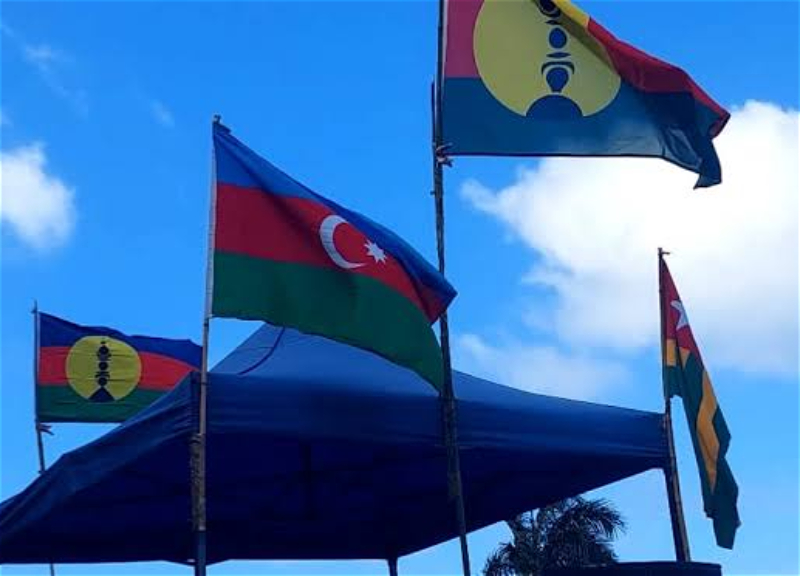
New Caledonia, Polynesia, Martinique, Saint Martin… In Baku's view, the problems of French overseas territories require international discussion because they are linked to issues of preserving national identity and protecting the rights of indigenous peoples. These issues cannot be viewed as interference in the internal affairs of individual states. On the contrary, if the international community recognizes the universality of human rights, then the problems of peoples living under colonial rule become a matter of shared responsibility.
President Ilham Aliyev spoke about this as follows: "For many years, the so-called overseas territories of France, which are de facto colonies, have been under oppression. Various unlawful actions have taken place there, including nuclear tests. How many nuclear tests were conducted in Polynesia? Perhaps 100, or maybe 200 or even more. And this affected a huge number of people. Many lost their lives or their health."
Azerbaijan's support for decolonization processes has deep historical roots. The country's national memory preserves the experience of periods when political decisions were made outside the country and natural and economic resources were exploited by external forces.
Speaking about the country's historical path, the head of state emphasized: "One of the reasons we react so sensitively to such issues is that we ourselves lived as a colony. In the 19th century, Azerbaijan was colonized, and we lived as part of a colony. And later, when the Soviet Union was created, we were not an independent country; we were part of the Soviet Union. A republic? Yes, but without any rights."
"And if you look, for example, at Azerbaijan during colonization in the 19th century, in the 20th century, and at today's Azerbaijan, it is like day and night. We only had resources taken from us. Billions of tons of oil were extracted from Azerbaijan—tons, not barrels. And when the Soviet Union collapsed, we found ourselves without natural gas and without electricity. And to this day, we are cleaning up polluted areas in the suburbs of Baku, spending billions to eliminate the damage done to our nature by those who pumped out our wealth," said Ilham Aliyev.
It is this historical experience that allows Azerbaijan to perceive the problem of colonialism not as an abstract political issue but as a phenomenon directly connected to the destinies of peoples and the right of states to independently determine their future.
As Ilham Aliyev noted: "That is why our historical memory retains an understanding of what it means to be colonized and what it means to be free."
Today, Azerbaijan seeks to form a broader international coalition to combat contemporary manifestations of colonialism. Baku advocates for the issue of decolonization to be discussed not only in a historical context but also as a relevant problem of the 21st century.
"I believe that the attitude toward this issue is an important test for countries and for civil society. And I think that if there are more groups like the Baku Initiative Group in different parts of the world, they could create a kind of coalition of NGOs that could more actively advocate on these issues to put an end to this oppression," the President of Azerbaijan emphasized in this regard.

Thus, Baku views its role as a long-term direction of its international activity. The goal is to increase attention to the problems of peoples striving for liberation from colonial oppression and independent development, and to ensure that the principles of equality and justice are applied equally to all.
In the 21st century, colonialism has not disappeared—it has changed its forms of existence. That is why the fight against it requires new approaches, new platforms, and new voices.
Azerbaijan, drawing on its own historical experience, has become one of the countries that has once again brought the issue of decolonization to the international level. Supporting peoples striving for freedom, defending their right to preserve their identity, and drawing the world's attention to the consequences of the colonial past have become important elements of Baku's foreign policy position. "That is why we advocate for the independence and freedom of New Caledonia, Polynesia, Martinique, and Saint Martin. And, I repeat, all of this has nothing to do with our relations with France," the Azerbaijani leader pointed out.
Baku's position reflects a broad principle: the freedom and dignity of peoples cannot depend on geography, political influence, or the interests of individual states.
The fight against colonialism is one of the key tasks of our time, and Azerbaijan strives to be a platform where the voices of peoples who have long remained without attention have the opportunity to be heard. This is its role in the modern struggle against neocolonialism—a struggle for justice, equality, and the right of every people to independently determine their future.