
From suspension to annulment: Why the U.S. Congress should finally repeal amendment 907
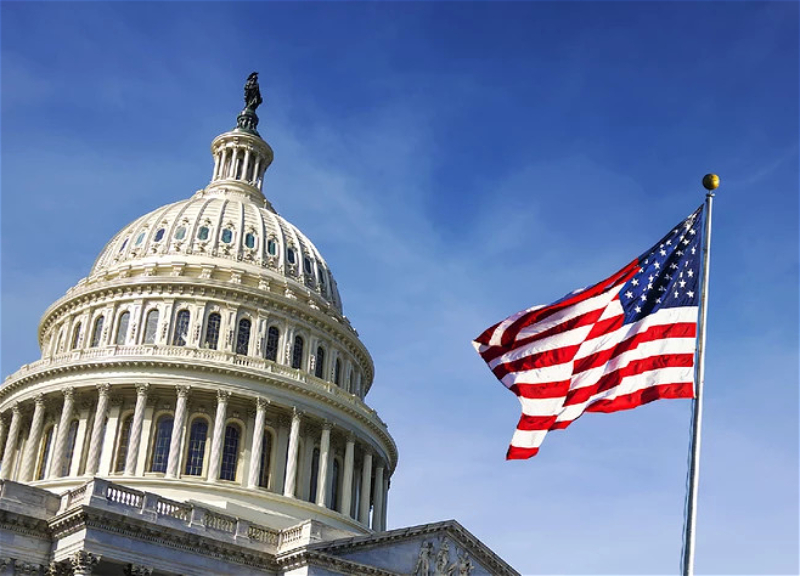
The history of U.S. foreign policy in the post-Soviet space is replete with decisions driven not by geopolitical expediency but by domestic lobbying pressure.
Perhaps the most striking and destructive example of this approach was the famous Amendment 907 to the Freedom Support Act, adopted by the U.S. Congress in 1992. Formulated at a time when Azerbaijan itself was in the grip of a deep domestic political crisis and subjected to external aggression, this amendment for decades substantially limited the scope of possible cooperation between Baku and Washington.
Speaking at the Global Media Forum in Shusha, President of Azerbaijan Ilham Aliyev gave a comprehensive and harsh historical assessment of this document, emphasizing its initial injustice and artificiality. "It was an extremely unfair step by the U.S. Congress toward Azerbaijan in 1992. When the U.S. Congress adopted the Freedom Support Act to provide financial assistance to the newly independent states that emerged after the collapse of the Soviet Union, Amendment 907 was introduced by senators who held a pro-Armenian position. Incidentally, among them was President Biden. At that time he was a senator—and this probably explains the numerous difficulties we faced in relations with the Biden administration. This amendment deprived Azerbaijan of access to American financial assistance," the president said.
This move by the American legislative body not only restricted economic interaction between the two countries but also de facto entrenched a biased approach by Washington in assessing the Armenian-Azerbaijani conflict at the very outset of Azerbaijan’s independent path.
Myths about the "blockade" and the reality of thirty years of occupation
The official pretext for imposing strict sanctions restrictions against Baku in 1992 was Azerbaijan’s alleged "blockade" of Armenia. This formulation, actively promoted by the Armenian lobby in Washington, completely ignored the harsh reality on the ground. That reality was that Armenia itself was conducting full-scale offensive operations on the territory of Azerbaijan, occupying district after district and creating a humanitarian catastrophe for hundreds of thousands of Azerbaijani refugees.
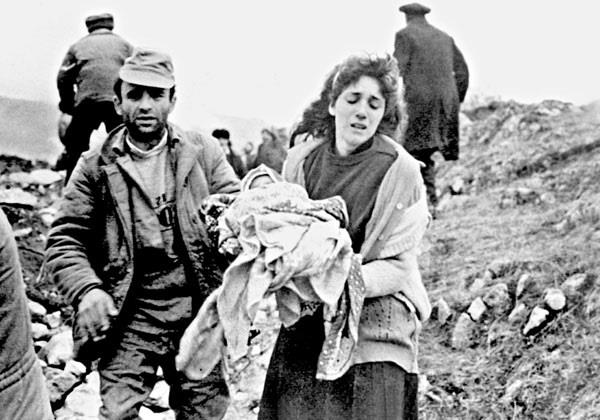
Ilham Aliyev described those events in his speech: "The reason for this, as stated, was supposedly Azerbaijan’s blockade of Armenia. First of all, this did not correspond to reality. We were not blockading Armenia. Armenia occupied our territory, and the occupied territories were precisely located between Armenia and Azerbaijan. Thus, if not for the occupation, there would have been no so-called blockade. Secondly, for us this was undoubtedly extremely painful at that time: the country was very poor, and we turned out to be the only republic of the former Soviet Union against which the U.S. Congress imposed discriminatory measures."
The double standards of that time dealt a serious blow to the young Azerbaijani statehood, depriving it of support at a critical moment of existential threat. However, contrary to the calculations of the amendment’s authors, it failed to halt Azerbaijan’s economic and military development, which ultimately independently restored its territorial integrity and sovereignty.
New realities: Azerbaijan as guarantor of Armenia’s energy and transport security
Today, decades later, the geopolitical configuration in the South Caucasus has changed beyond recognition. Azerbaijan has become a key economic leader of the region and an indispensable transit hub of Eurasian scale. Under these conditions, the arguments of thirty years ago on which Amendment 907 was based are not merely outdated—they appear absurd against the backdrop of Baku’s real steps toward reintegrating regional communications and providing direct economic support to Armenia.
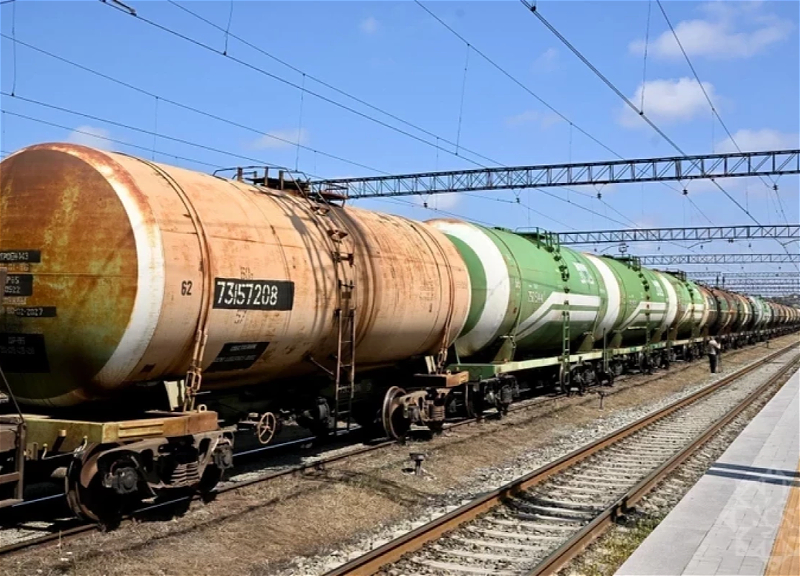
"Today this amendment has completely lost its relevance. First, because Azerbaijan and Armenia initialed a peace agreement at the White House in the presence of President Trump. Second, Azerbaijan unilaterally lifted all transit restrictions with respect to Armenia, and since that moment more than 40 thousand tons of various cargoes have been transported through our territory to Armenia—from Russia, Kazakhstan, and other directions. Moreover, Azerbaijan itself has begun supplying petroleum products to Armenia—the volume of supplies to date, as far as I recall, has exceeded 10 thousand tons. This is especially important now, when many countries are experiencing difficulties accessing fuel sources; Armenia has a reliable supplier in the person of Azerbaijan. If not for this, they would probably have to search for gasoline and diesel fuel all over the world today," the head of the Azerbaijani state emphasized.
These figures and Baku’s actions clearly demonstrate who is truly acting as the constructive party in the region, a party focused on long-term peace.
Illusions of the Minsk Group and the pragmatism of the Trump administration
A special place in the analysis of the thirty-year deadlock belongs to the activities of the mediators. For nearly three decades the OSCE Minsk Group, co-chaired by the United States, France, and Russia, simulated a negotiation process. As Ilham Aliyev emphasized, the real task of this format was not a just settlement based on international law but the freezing of the occupation: "Their goal was to freeze the existing situation and use it as a lever of pressure on Azerbaijan, and to a certain extent on Armenia as well. They all acted very cohesively, and the entire activity of the OSCE Minsk Group was aimed not at resolving the conflict but at making the occupation endless."
A qualitative shift in Washington’s approaches emerged only when the administration of Donald Trump came to power in the United States, demonstrating a fundamentally different style of conducting foreign policy—one oriented toward achieving real results rather than endlessly prolonging diplomatic procedures.
"President Trump’s approach, however, was completely different. He is a peace-loving man who establishes peace in many corners of the world. As he himself says, he achieved peace by settling eight conflicts. This is the essence of his character. Such is his vision and such is his policy," the Azerbaijani leader noted.
Breakthrough to strategic partnership: Washington–Baku
Interaction between Baku and the Trump administration in a short time elevated bilateral relations to an unprecedentedly high level, effectively nullifying the legacy of destructive lobbying from past years.
President Aliyev elaborated on the stages of this rapprochement, which led to the creation of a solid foundation for long-term cooperation.

"I must say that relations between the Trump administration and Azerbaijan are developing excellently, and we are sincerely glad that they have reached the level of strategic partnership. Our historic meeting with President Trump in August last year in Washington, the subsequent meeting in Davos in January of this year, the invitation to Azerbaijan to become one of the founders of the Peace Council initiated by President Trump, the visit of Vice President J.D. Vance, the signing in Baku of a joint declaration with the vice president on the establishment of strategic partnership, as well as many other facts testify that our relations are now at the highest, unprecedented level—such as never existed before," Ilham Aliyev pointed out.
This breakthrough is expressed not only in declarations but also in concrete practical steps, including the complete lifting of defense restrictions, which opened new horizons for military-technical cooperation.
"We are currently actively working on implementing all provisions of the declaration on strategic partnership. In particular, the working groups that have been established are working very actively in such areas as trade and investment, digital transformation and artificial intelligence, energy security and transport connectivity, defense and defense product supplies. At the same time, the United States has lifted all embargoes on arms supplies to Azerbaijan, and shortly thereafter the United Kingdom and European Union member states took similar steps. In my opinion, this very clearly characterizes the spirit of our bilateral relations, their format, as well as their potential for the future," the president stated.
Architecture of the new world: The TRIPP Corridor and the historic role of the Trump team
The signing of the Joint Declaration at the White House and the subsequent initialing of the peace agreement by the foreign ministers in the presence of the American leader became a turning point in the recent history of the South Caucasus. The Trump team demonstrated a deep understanding of Azerbaijan’s national interests, including the fundamental issue of transport connectivity with Nakhchivan.
Ilham Aliyev revealed the details of this intense diplomatic work: "In our case he played a very significant role when Azerbaijan and Armenia were at the final stage of negotiations on a peace agreement. President Trump and his team joined the process, creating conditions under which peace became possible. They fully understood our concern regarding the peace process. They clearly recognized the need to create the Zangezur Corridor, which would connect Azerbaijan with its exclave—Nakhchivan. They worked very effectively to convince Armenia that it too needed this peace. A historic meeting took place at the White House, during which the prime minister of Armenia, President Trump, and I signed the Joint Declaration, and in the presence of President Trump the foreign ministers of both countries initialed the peace agreement."
Particular attention should be paid to the exceptionally high executive discipline of the American partners, which sharply contrasts with the working style of previous U.S. administrations that for years delayed fulfilling their obligations under the influence of domestic political circumstances.

"President Trump, in my presence, signed a document on the suspension of restrictions and sanctions, and we also signed a document on the creation of a joint working group to prepare within six months an Agreement on Strategic Partnership. And exactly six months later this work was completed. Based on my experience, for the first time American officials so strictly kept their word. From August to February this work was underway, and then Vice President Vance arrived in Baku, and we signed the Declaration on Strategic Partnership. This is amazing. This is incredible. This is what we could only dream of. We have always strived for good relations with the United States, but because of the Armenian lobby and other stereotypes, a mistaken perception of Azerbaijan and an underestimation of its potential, this could not be achieved," Ilham Aliyev stated.
Time for a responsible step by the U.S. Congress
The difference between Donald Trump’s pragmatic approach and the ideologized policy of his predecessors, including the administration of Joe Biden, is obvious. While the previous line was aimed at freezing dividing lines, the new U.S. strategy views the South Caucasus through the prism of stability, development, and the creation of transit opportunities of global significance.
"As I have already said, when President Biden was a senator, he was one of the initiators of the introduction of sanctions against Azerbaijan, and this was precisely his vision of the situation in the region—so that the region would be torn by conflicts and confrontations! After all, under such conditions it is always easier to achieve the set goals. But President Trump is a completely different person, with a completely different character. He strives for peace and views peace as an opportunity. And now that Azerbaijan and Armenia have already achieved peace, many opportunities are opening before us. For example, the TRIPP Corridor, which bears the name of President Trump and connects Azerbaijan with its exclave Nakhchivan. As far as we know, practical work on the corridor, we hope, will begin already this year. The launch of the corridor will completely change the map of transport links within the region, which will lead to the strengthening of security throughout the South Caucasus. We are in acute need of this. This will also contribute to the growth of optimism regarding cooperation in the South Caucasus."
Today Amendment 907 has turned into an empty political artifact, devoid of real economic content thanks to the willful decisions of the White House. However, its formal existence in American legislation continues to remain an irritant and a symbol of outdated stereotypes.
The final resolution of this issue lies with the U.S. Congress, which must demonstrate political maturity and bring the legislative framework into line with new geopolitical realities.
"I believe that the sooner Congress completely repeals this amendment, the better it will be for everyone: for Azerbaijan—because we will cease to be subjected to discrimination, and for the U.S. Congress—because this will demonstrate its responsibility, its ability to acknowledge mistakes made, as well as its readiness to act in accordance with the current geopolitical situation. We hope that this will happen," the Azerbaijani leader said, while assuring that "under the current administration Amendment 907 does not have any negative impact."
The successful completion of work on strategic projects, the launch of the TRIPP Corridor, and the efforts of the current U.S. administration have proven that a durable peace in the South Caucasus is possible only when leading world powers abandon discriminatory sanctions instruments in favor of equal, pragmatic, and mutually beneficial partnership.