"Such friends are almost gone": Why Israel decided to halt the vote on the "Armenian genocide" - interview
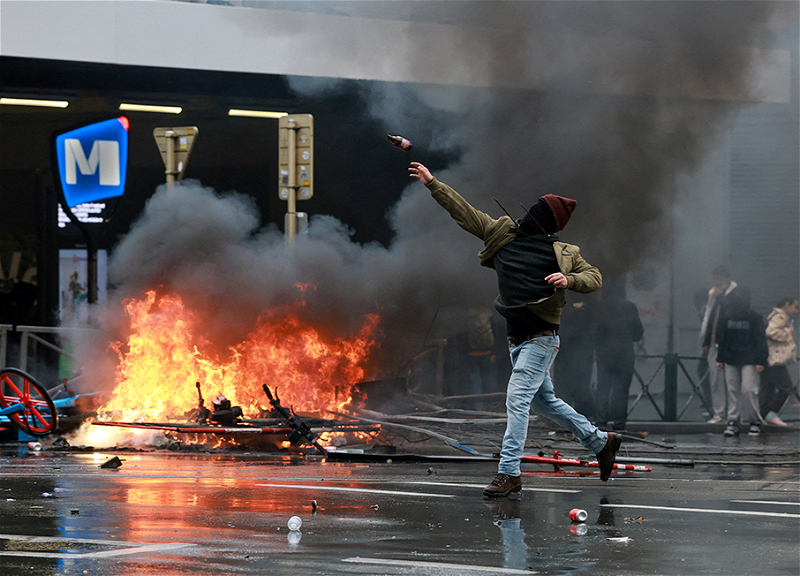
The question of recognizing the so-called "Armenian genocide," which for decades remained one of the most sensitive topics in Middle Eastern diplomacy, unexpectedly found itself at the center of Israel's domestic political agenda. However, just days later it became known that consideration of the initiative in the Knesset had been suspended.
Coincidence or belated realization of possible consequences?
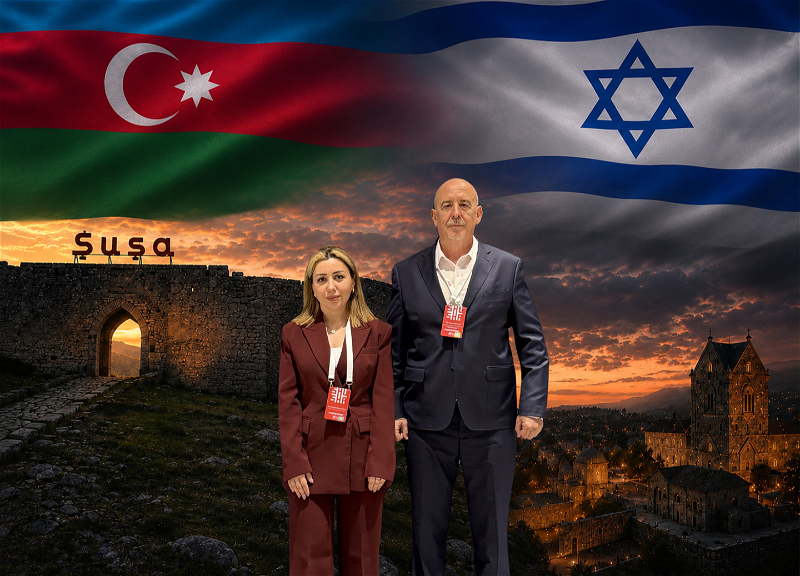
The author of an article in Jewish News Syndicate, writer and honorary ambassador of the Jewish Agency "Sochnut" in Azerbaijan, Baku resident Roman Gurevich, is convinced that the issue is not about historical justice but about political expediency that could harm Israel's own interests.
In an interview with 1news.az he discusses the cost of political expediency, the significance of the Azerbaijan-Israel partnership, double standards in historical memory, and why trust between allies sometimes proves more important than any political declarations.
Mr. Gurevich, what was the main motivation for you to write this article right now - after Israel's decision to recognize the so-called "Armenian genocide"? In your opinion, to what extent does this step serve Israel's national interests and what risks does it create for its foreign policy?
You know, I really dislike when actions are taken that, in my view, instead of bringing benefit could harm Israel and Azerbaijan - my two native countries.
When I learned about this decision, I had a persistent feeling that it had nothing to do with historical truth or real facts. The reason is banal: elections are approaching, and possibly internal party primaries in "Likud." This topic was raised solely for political PR - to demonstrate to voters at least some "achievements" and show that the authorities are capable of something. But it has nothing to do with real diplomacy.
Azerbaijan's position on this issue is well known. Israel's position also remained unchanged for a long time: Jerusalem always refrained from such steps. Now Israel finds itself in an extremely difficult international situation, and the initiative of our foreign minister to push through such a decision causes genuine bewilderment. It personally stunned me. We already have an extremely severe crisis in relations with Turkey - and with whom do we not have tensions now? There are more than enough problems, and plenty to do. Instead, a decision is being made that looks like a painful slap on the nose for Ankara.
The question is: why? What do we want to achieve with this step, if we assess it from a practical point of view?
After the fall of the Assad regime in Syria, forces supported by Ankara came to power, and in effect Turkey has now become our immediate neighbor on the northern border.
Yes, our relations are currently at their lowest point, and resolving this crisis is not working out yet. But the stronger the passions boil, the colder and more professional the work must be. If our goal is to stabilize the situation and benefit Israel, then we should not wave a red rag in front of the bull. We need to act smarter, calculate the options. Of course, Turkey's statements toward Israel were absolutely unacceptable. But to think that a retaliatory "slap on the nose" will calm Ankara or frighten it is a huge mistake.
Let's look at the facts. Turkey was not frightened. Of course, any words can be answered in the spirit of "you can talk too," but this only launched another round of escalation.
Moreover, it was known in advance that a NATO summit would be held in Turkey. It is known that the U.S. president has a warm attitude toward Erdogan. It is also known that Turkey is requesting the latest fighters from America, and Washington is now deciding whether to supply them. In such a sensitive situation, one must think a hundred, a thousand times before taking any steps. That is why I consider this decision fundamentally wrong.
If we set Turkey and the geopolitical context aside, the figure of yet another player emerges, about whom very little is undeservedly said even in Israel itself. However, specialists in our agencies know Baku's position well and understand why Azerbaijan opposed this decision.
Why does Azerbaijan object so actively, although it has no direct relation to the events of a century ago between Turks and Armenians? First, Azerbaijan is convinced that using historical facts to suit momentary political expediency is categorically unacceptable. Also, Azerbaijan rightly believes: if such historical decisions are to be made, then why not recall the tragedy in Khojaly?
But who in the world knows about it? No one. And not because there is no information, but because they do not want to know. Here we encounter obvious double standards, which we definitely need to discuss in more detail.
So, you consider this decision not fully thought through?
Israel today has a whole range of top-priority, vital problems on the international arena that require immediate resolution. And events of a century ago should definitely not be at the top of our agenda right now.
Our foreign minister, commenting on this step, stated: "It is never too late to make the right decision." Well, it is hard to argue with that - if the decision is truly right and if it is not being made on the eve of an election campaign. It is never too late to take the "right" step, especially when elections are around the corner and political points need to be scored urgently.
Therefore, I am convinced that this was an absolutely opportunistic, hasty decision, made without deep analysis of possible consequences and without understanding what reaction would follow from our key allies - and first of all from Azerbaijan.
Yes, I believe this decision was not sufficiently thought through from all sides. In this regard, I will share a small exclusive: according to internal, not yet officially confirmed information, this decision is now frozen. The government adopted it, and this week the Knesset was supposed to discuss the issue. I repeat, the information is still unofficial. (Editor's note: after the interview, information was circulated in the media that the Israeli Knesset suspended consideration of the issue of recognizing the "Armenian genocide")
It is frozen, although, unfortunately, it can no longer be withdrawn. This week the Knesset has only three working days left. If the decision is not adopted by parliament in these days, the issue will close by itself, since the Knesset is being dissolved, and elections have already been scheduled for October 27.
What will happen after the elections - no one knows. That is the situation that is taking shape.
.jpeg)
In the article you ask to what extent it is permissible to ignore the position of one of Israel's most reliable strategic partners. Do you believe that the Israeli leadership underestimated Azerbaijan's possible reaction?
Azerbaijan is one of the few countries in the world with which Israel maintains truly reliable relations. It is no secret that we are currently in an extremely difficult position, but Baku has been and remains our reliable strategic partner.
Finally, there is also a purely human, value-based aspect. After the tragedy of October 7, Baku residents brought flowers and memorial candles to the Israeli embassy. Azerbaijan is a country that has always supported Israel, despite the colossal pressure exerted on it both within the Muslim world and beyond. Such allies on the international arena are practically nonexistent, and they must be cherished.
Baku clearly and promptly clarified its position: Israel's adoption of such a decision is extremely undesirable. Nevertheless, it was adopted. And here the discussion moves into an entirely different plane. It is not so much about the essence of the step itself, but about whether it is permissible to disregard the interests of such important partners.
Unfortunately, in Israel I sometimes encountered the position - I will formulate it carefully: "Don't worry, they are our friends, they will understand everything and forgive everything. After all, we trade: they have oil, we have technology and weapons." All of that is, of course, true. But friends and allies must be valued. Business is business, money is money, and politics is politics - these pragmatic ties will not go anywhere. However, the foundation of any strong relations has always been trust and confidence that in a difficult moment you can rely on your partner.
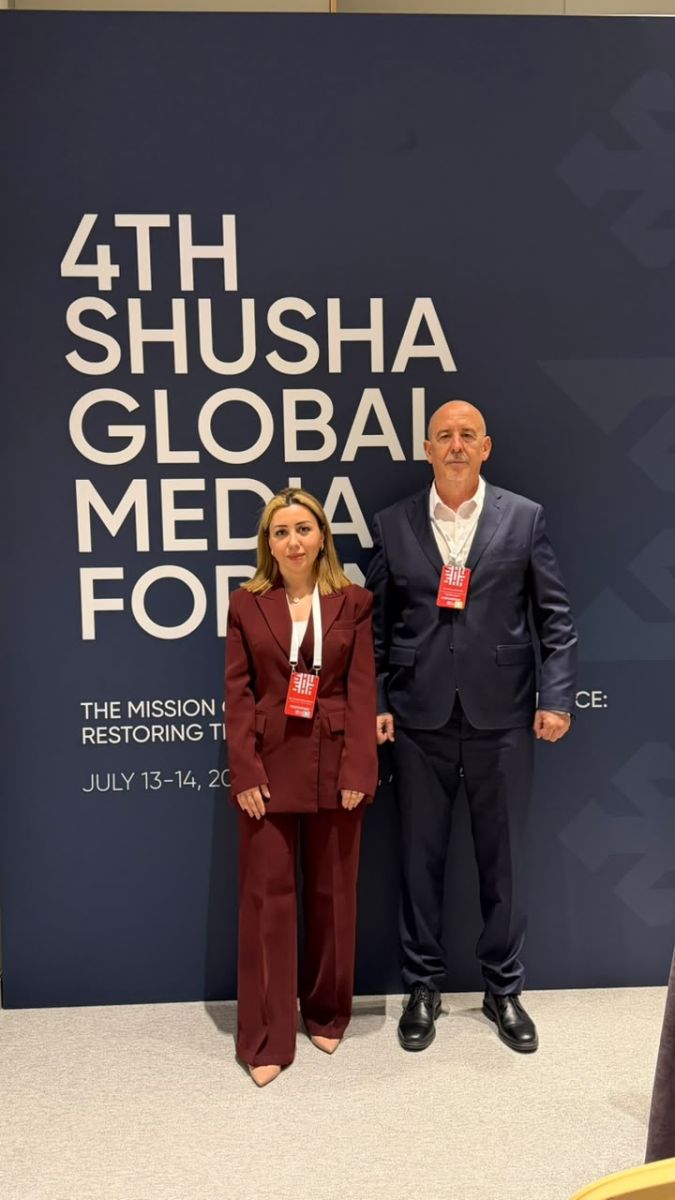
By the way, that is exactly what the president said in response to my question at the Shusha Global Media Forum: trust is the basis of everything. In my opinion, Israel's decision dealt a blow to this foundation. And if the promotion of this bill is indeed now suspended, then that is absolutely the right step. It is a great pity that because of momentary political interests this document appeared at all, but the fact that it was ultimately frozen is the only correct decision.
In your article you recall the tragedy in Khojaly and speak about the problem of a selective approach to historical memory. And you yourself earlier mentioned double standards. Why, in your opinion, does the international community apply double standards in assessing mass crimes against civilians?
And, to the extent of your observations, how aware is Israeli society of the tragedy in Khojaly and Azerbaijan's position on issues of historical memory?
Now let us talk about double standards. Unfortunately, the world is structured in such a way that it often treats the same situation completely differently. We regularly see an absurd picture: when a terrorist attacks a victim, and the victim defends itself and fights back, the world community suddenly begins to express outrage at the actions of the defender. We Israelis know this all too well from our own experience. But Azerbaijan faces exactly the same biased attitude. There is a persistent feeling that objectivity and justice in this world exist for everyone except Israelis and Azerbaijanis.
Who in the West today knows about the tragedy in Khojaly? Practically no one. I have excellent contacts in the media at various levels. I often turn to foreign colleagues, tell them about it, but in response I hear: "Roman, who is interested in this now? After all, it was more than thirty years ago. And today there are completely different events on the agenda."
But wait! The topic that they are now so persistently trying to raise in Israel concerns events of a century ago. Tragedy is always tragedy, but one cannot use historical pain for momentary political expediency. If you are truly fighting for historical truth, then tell the world about Khojaly.
Tell about the city that in 1992 was surrounded and its inhabitants were essentially all destroyed. People who tried to escape were shot right on the way - the road was literally paved with bodies. Everyone perished: the elderly, women, children, infants. But the world does not want to know about it. And this is deeply unfair. That is why Azerbaijan insists: if we are talking about historical memory at all, then the approach must be objective, and justice must prevail for Khojaly as well. In Israel itself, the Khojaly tragedy is also known extremely little. What can one say - until recently, in our country, except for narrow specialists, there was only a vague idea even about Azerbaijan.
I constantly bring people here: both businessmen and just close friends. I show them the country. And there has not been a single person - whether Israeli, European, or American - who has not admitted: "I could not even imagine that Azerbaijan is so amazing." Forget about outsiders - even my close friends, who for years listened to my stories and saw photographs, upon arriving here personally admit that reality exceeded all their expectations.
Tourism is now actively developing, people are discovering Baku. Many Israelis are amazed by simple things: for example, that one can calmly speak Hebrew on the street here, and synagogues have no armed guards. Tourists coming from Europe share bitter experience: "We have just come from Germany (or Belgium, France - it's the same everywhere). There, Jewish quarters have turned into real guarded ghettos. The only difference is that previously no one was allowed out of the ghetto, and now the police do not let anyone in from outside for security reasons, to prevent terrorist attacks."
Could Israel's decision affect the peace settlement process between Azerbaijan and Armenia, as well as the prospects for normalizing relations between Turkey and Armenia?
I repeat, in my view this decision was extremely unprofessional from various points of view.
Currently, with active support from the United States, the process of advancing toward a peace treaty between Azerbaijan and Armenia is underway. Signing this document serves the fundamental interests of both the Azerbaijani and Armenian peoples. But if from Baku's side everything is perfectly clear - Azerbaijan from the very beginning acted from a position of strength, guided by the principle of the "iron fist" (we are ready for peace, but we will respond to any provocations with a hard blow, which ultimately happened, opening the way to real negotiations) - then the situation for the Armenian leadership is much more complicated. Inside the country the opposition is strong, the so-called "Karabakh clan" and radical forces are active, which categorically oppose any normalization of relations with Baku. The Israeli side's initiative could have given these forces a tailwind, fueling already dangerous revanchism.
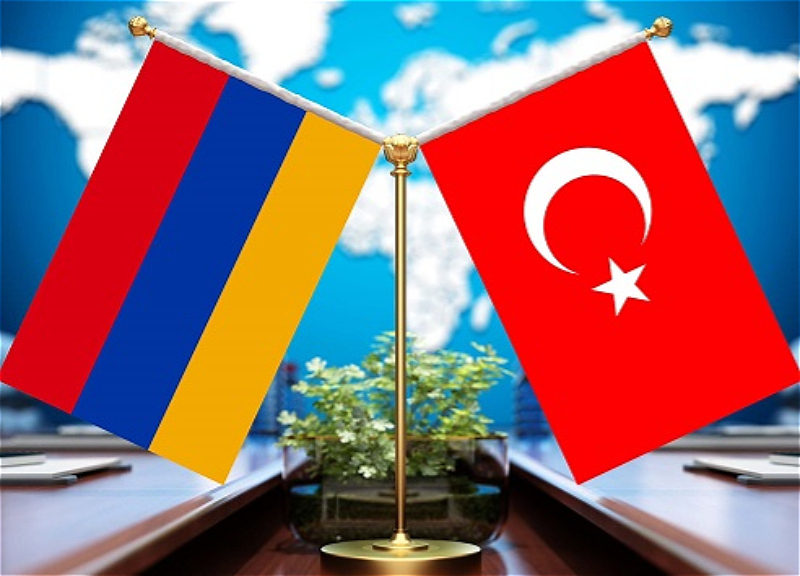
Parallel to this, a consistent process of normalizing relations between Armenia and Turkey is underway, which is also actively supported by Washington. And here the discussed Knesset decision is capable of causing serious harm. When Turkey is struck in its most painful spot - and on a topic directly connected with the Armenian question - this inevitably projects onto the entire negotiation process and complicates it.
Yet what the region needs most acutely today is stability, predictability, and normal good-neighborly relations, from which ultimately all sides will benefit: Azerbaijan, Turkey, and Armenia itself.
Despite the disagreements that have arisen, Azerbaijan and Israel over many years have built a strategic partnership covering energy, security, economy, and the humanitarian sphere. Do you believe that the current situation could damage bilateral relations, or will the accumulated level of trust allow the sides to overcome this crisis?
I am convinced that the friendship between Israel and Azerbaijan is not just partnership at the government level. Of course, the position of the leadership of both countries is of enormous importance, but at the basis of our relations lies sincere friendship between the peoples. This is a bond that was forged over centuries and passed from generation to generation.
Azerbaijan is a unique country in which there has never been antisemitism. Jews know this, remember it, and deeply appreciate it. Here the Jewish community and the State of Israel itself have always been treated with enormous respect and warmth, and this attitude has invariably been mutual. Any Jew - a native of Azerbaijan, wherever he lives today, whether in Haifa, Tel Aviv, or New York - will forever keep the warmest corner in his heart for his homeland.
This strong people's diplomacy is reinforced by strategic partnership and mutual support in all key spheres. But the foundation of everything is precisely the centuries-old traditions of good-neighborliness.
That is why I very much hope that the current unfortunate political misunderstanding will not be able to spoil our relations. And yet, if such reckless steps on our part had not been taken at all, it would have been much better for our common cause.
In the conclusion of the article you write about the concept of "kişilik," calling it one of the foundations of Azerbaijan's political culture. How did you come to understand this word, and why, in your view, did it turn out to be the most accurate metaphor for talking about trust, alliance, and responsibility in international relations?
You know, in Russian there is no such word - "muzhchinstvo." There is no direct translation, but essentially that is exactly what it is. It is a special male code: a code of conduct for a man, a protector, and a loyal comrade. It is a code of honor, nobility, sincere attitude toward friends, and unconditional trust. Perhaps this is the most precise definition of how genuine partnership should manifest itself in our situation.
Thank you for the interview!
Interviewed by: Kyamala Mamedova