Hikmet Hajiyev: Azerbaijan lives in real-world conditions with Armenia but demands it change its constitution
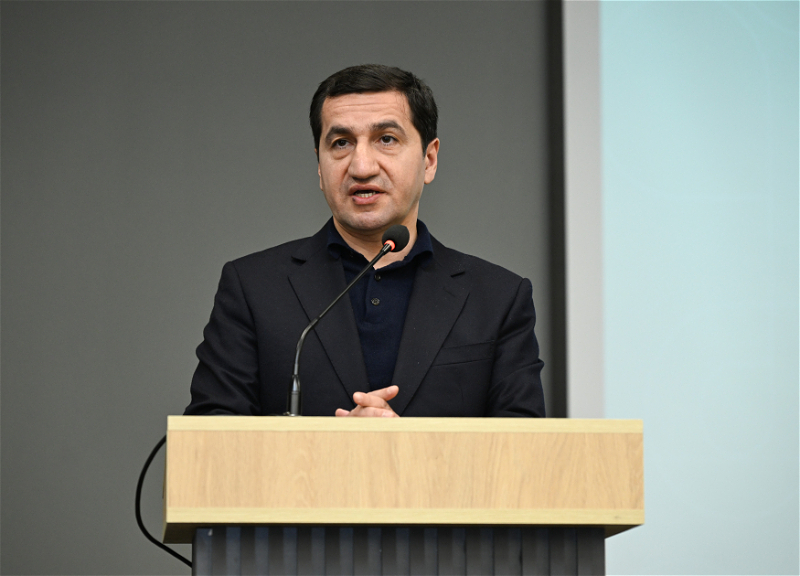
Azerbaijan and Armenia live in real-world conditions and are restoring trade links after decades of conflict, President Ilham Aliyev's foreign policy aide Hikmet Hajiyev told Reuters.
Hikmet Hajiyev praised the progress the two countries have made toward peace, including the growth of direct contacts and bilateral trade.
"We live in real-world conditions. For Azerbaijan and Armenia, peace is not just something written on paper or contained in a declaration, it is reality," he said in an interview, pointing to increased supplies of Azerbaijani oil products to Armenia.
Despite the progress achieved, he stressed that Baku remains firm on its position regarding Armenia's constitution.
"The form of constitutional changes is an internal matter for Armenia," Hajiyev noted. "What matters to Azerbaijan is that the provisions we view as territorial claims against our country be officially removed — whether through the adoption of a new constitution or through another legal mechanism."
"Once this issue is resolved, we believe there will be no obstacles left to signing a final peace agreement," Hajiyev said.
Armenian Prime Minister Nikol Pashinyan has previously stated that he wants to hold a referendum on changing the constitution and that a draft of the new basic law will be published by the end of this year.
Hajiyev stressed that merely publishing the draft will not be enough for a peace agreement to be signed.
He also said Azerbaijan has received "serious and positive signals" from the United States that construction work on the planned transport corridor, backed by Washington, could begin this fall.
The proposed 43-kilometer (27-mile) corridor, named the "Trump Route for International Peace and Prosperity" (TRIPP), is to run through Armenian territory. It would connect the main part of Azerbaijan with Nakhchivan.
"Our position is that this project (TRIPP) should be implemented as soon as possible," Hajiyev said.
He added that infrastructure leading to the Zangilan district in southwestern Azerbaijan will be largely completed by the end of 2026, after which it can be connected to the planned infrastructure in Armenia and Turkey.