Azerbaijan's potential as a 'middle power' and the contours of the future South Caucasus
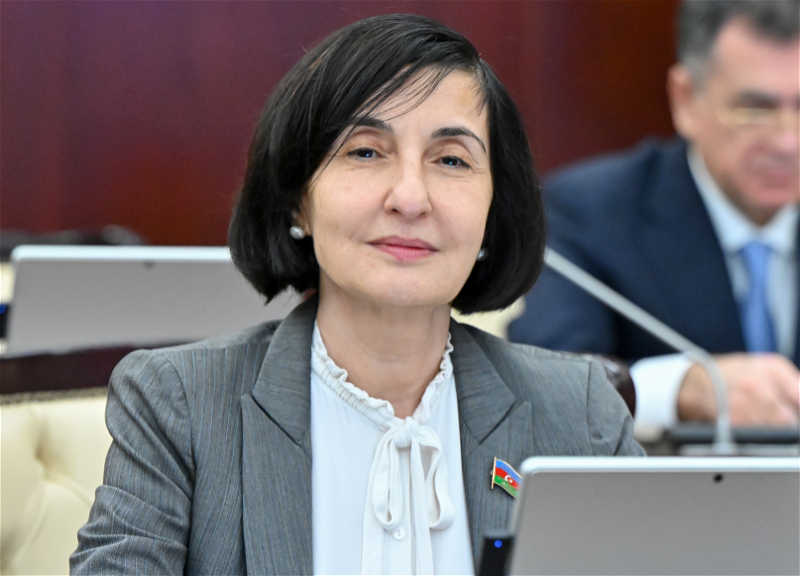
Gulshan Pashayeva
Member of the Milli Majlis of the Republic of Azerbaijan,
member of the board of the Center of Analysis of International Relations
The IV Shusha Global Media Forum, held under the slogan "The mission of the media in promoting peace: restoring truth and reviving trust," became not just a major expert event but also a vivid demonstration of the intellectual and foreign policy potential of modern Azerbaijan.
Today, the Shusha platform is increasingly perceived by the international community as a traditional space for open dialogue among experts and journalists from many countries of the world, outlining the contours of a new regional and global agenda free from disinformation and externally imposed narratives. At the same time, the city of Shusha, transformed from a zone of destruction into a flourishing center of international diplomacy, clearly demonstrates to forum participants the scale of constructive work in the liberated territories, including the revival of villages and the accelerated construction of modern infrastructure.
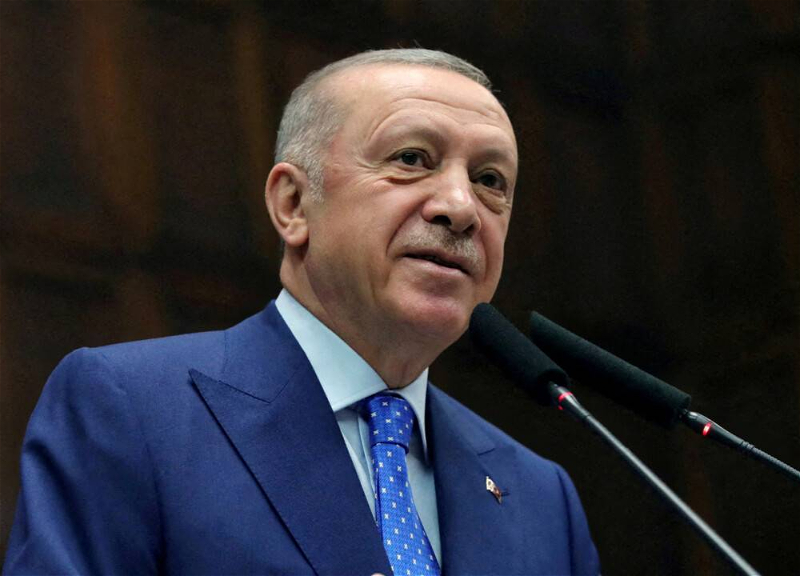
Special significance is given to this forum by the participation of the President of the Republic of Azerbaijan I. Aliyev. This time, responding to one of the numerous questions, the President of Azerbaijan shared his vision of why Azerbaijan is perceived by many experts as an independent middle power. He noted that, although there is still no single criterion allowing a country to be classified as a middle power, in his opinion this "term means recognition of a country's potential, its ability to defend its national interests regardless of what major powers think or do, as well as readiness to use its full potential if anyone attempts to harm it." Adding that this list also includes defense capability, demonstrated both in military parades and on the battlefield, he also particularly highlighted such factors as "the ability to influence—by a single word or statement—events occurring beyond one's own borders" and "responsibility for what happens inside the country and to a certain extent responsibility for the entire region."
It is worth mentioning that in world practice, classical examples of middle powers are traditionally considered states such as Canada, Australia, and Norway, which in the second half of the 20th century built a model of "niche diplomacy," acquiring the status of peacekeepers and authors of global humanitarian initiatives. In the 21st century, this club has been joined by the so-called "new middle powers" of the Global South and Eurasia, among which experts note Kazakhstan, which has secured its status as a mediator thanks to multi-vector diplomacy and providing a platform for the most complex international negotiations.
President Ilham Aliyev's speech at the opening of the Shusha Forum confirmed that Baku has also de facto secured this status. Possessing a diversified economy, a powerful energy base, and unquestioned authority after the full restoration of state sovereignty, Azerbaijan has become even more effective in resisting pressure from global centers of power, offering the international community a model of pragmatic sovereignty that excludes blind adherence to the wake of others' geopolitical interests.
The material dimension of this status is inextricably linked with Azerbaijan's unique geographical position and its natural resources. The country has established itself as a key and predictable partner in ensuring the energy security of the European space, systematically expanding natural gas supplies to the countries of Central and Southern Europe, including Germany and Austria. In parallel, Baku acts as a central hub in the development of the Middle Corridor (Trans-Caspian International Transport Route), connecting the natural wealth and production capacities of Asia with European markets. Converting geographical position into transregional logistics and energy projects creates a strong network of interdependence between Azerbaijan and the world's leading economies, making any attempts at external isolation of the region ineffective and economically disadvantageous for the global actors themselves.
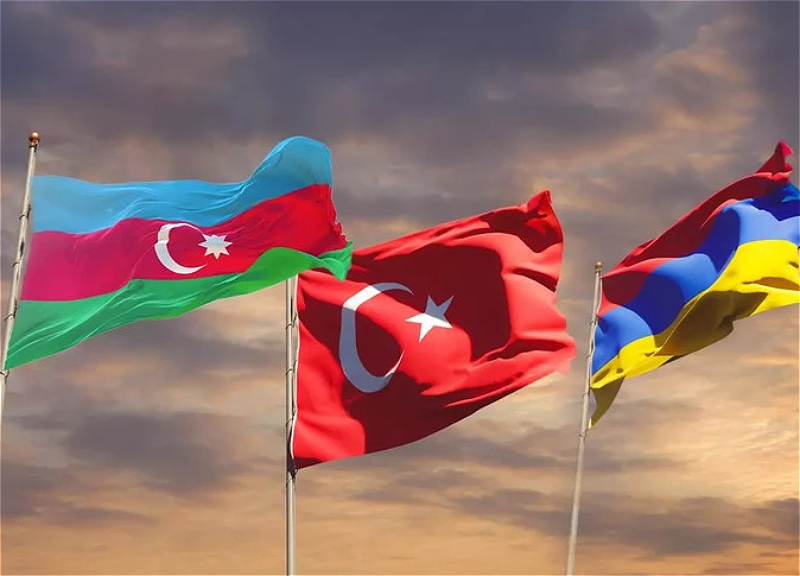
As is known, historically the Caucasus was often viewed by external forces as a "chessboard" for proxy confrontations, which artificially preserved conflicts and divided peoples. The current position of official Baku is that all internal issues of the South Caucasus should be resolved exclusively by the states of the region itself. Addressing this topic, President of Azerbaijan I. Aliyev during the IV Shusha Global Media Forum, in particular, noted that the South Caucasus is not yet consolidated as a region; it is not integrated either politically, economically, or in transport terms. In his opinion, at one time Azerbaijan did not allow itself to be drawn into geopolitical intrigues and did not allow any external players to use it for their purposes or against other countries. He added that now the same must be done by our neighbors, and not in words but in deeds, and most importantly, that all who want to cooperate should proceed first of all from the fact that this should be a region of peace and interaction, completely free from geopolitical competition.
Thus, today attempts by non-regional players to impose their mediation or attempts to dominate the region encounter firm and reasoned opposition from Azerbaijani diplomacy, which advocates the formation in the South Caucasus of a regional configuration in which no center of power would be able to monopolize its influence.
Incidentally, the rejection of externally imposed mediation has already proven its viability in practice. It was the direct bilateral dialogue between Azerbaijan and Armenia without the participation of third parties that made it possible to achieve real progress on issues of border demarcation and peaceful settlement. This approach opens the way to the creation of an inclusive regional security system, where the economic benefits of joint transport and trade projects will outweigh any revanchist sentiments.
In conclusion, it should be noted that Azerbaijan's potential as a middle power, based on absolute sovereignty, economic indispensability, and the ability to generate peaceful initiatives, today serves as the main guarantee that in the future the South Caucasus may have every chance to finally rid itself of the burden of geopolitical competition and become a safe, prosperous bridge between civilizations.