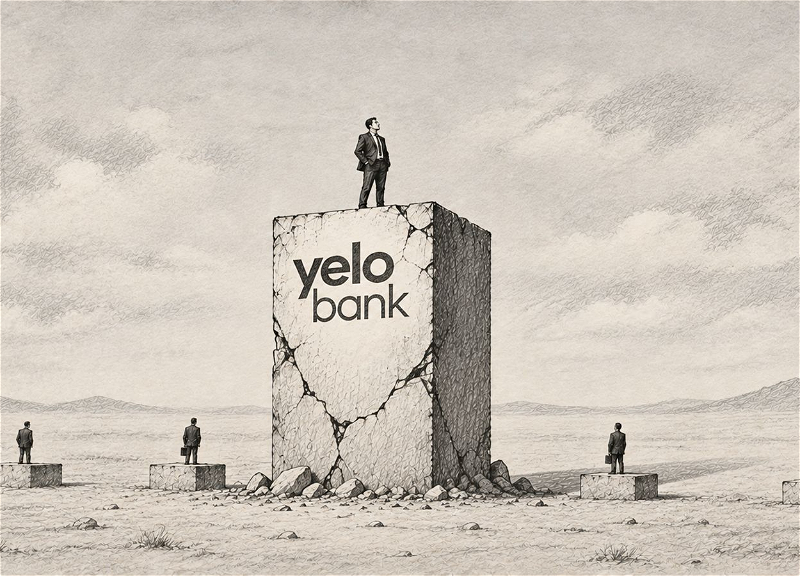
AI, Reputational Scandals, and Consulting Without Consultants: Can McKinsey, BCG, and the Rest Survive the New Era?

The consulting industry is weathering a perfect storm.
On one side, artificial intelligence now accomplishes in minutes what McKinsey, BCG, and other elite firms once charged millions of dollars to deliver. On the other hand, a cascade of scandals—from complicity in America's opioid crisis to allegations of involvement in potential violations of international law in Gaza—has shattered the industry's aura of infallibility.
When analytics becomes a commodity and a prestigious brand risks becoming a toxic asset, what exactly are clients paying for?
This is the story of how two forces are simultaneously undermining an industry built on selling certainty and delegated responsibility.
The End of Magic—and the End of Infallibility
It is no secret that a presentation bearing the McKinsey & Company logo has traditionally commanded a seven-figure fee.
For decades, strategy consultants from the "Big Three" (McKinsey, BCG, Bain) and audit-consulting giants (Deloitte, KPMG, and others) built their business model on two pillars: exclusive analytical capabilities and an impeccable brand reputation.
By early 2026, both pillars are showing serious cracks.
The first blow comes from technology. Over the past three years, generative artificial intelligence has evolved from a curious experiment into an enterprise-grade tool. Competitor benchmarks, scenario models, executive summaries, and strategy drafts—work that once occupied consulting teams for weeks—can now be produced in-house within minutes. The uniqueness of the analytical product is rapidly becoming a commodity.
The second blow is reputational. The past two decades have delivered an unprecedented series of scandals, investigations, and multimillion-dollar penalties.
McKinsey paid $574 million to settle claims related to its role in America's opioid crisis.
Bain received a ten-year ban on government contracts in South Africa for its involvement in schemes that gutted the country's tax authority. BCG returned more than $14 million following a bribery investigation in Angola. KPMG paid $456 million for illegal tax shelters and was placed under Justice Department oversight.
These two trends reinforce each other. When AI devalues the analytical product, the only remaining justification for premium pricing is brand reputation. When reputation is undermined by scandal, clients begin to question what exactly they are paying for.
Together, this creates an existential challenge for an industry that has long considered itself invulnerable.
What Do Consulting Giants Actually Sell?
To grasp the scale of the transformation underway, one must first understand what clients have actually been buying from consulting firms. The popular notion of consultants as "clever people with MBAs who dispense advice" captures only the surface layer of reality.
First and foremost, consultants served as translators—not in the linguistic sense, but in the cognitive one. The corporate environment generates a vast volume of conflicting signals, competing interests, and unstructured data. The consultant's task was to convert this chaos into a comprehensible structure: a priority matrix, a roadmap, a set of recommendations. Value was created not through unique knowledge, but through the ability to impose order on the client's view of the world.
Yet the second function mattered more: the legitimization of decisions. A chief executive (or a minister, in the public sector) presenting a major restructuring plan to the board (or to senior government officials) occupies a vulnerable position. If the plan fails, the consequences fall on him personally.
The appearance of a McKinsey, Boston Consulting Group, Bain, or Deloitte logo on a presentation fundamentally alters the power dynamic: it is no longer the CEO's personal initiative but the recommendation of "the world's leading experts." Responsibility is distributed; the executive's risk is reduced. In essence, the client is purchasing a career insurance policy.
This logic explains the maxim "nobody gets fired for hiring McKinsey."
Engaging a prestigious consulting firm demonstrated that an executive had acted prudently. Even if the recommendations proved ill-advised, no one was formally to blame—the consultants had "merely advised." Thus emerged a market for delegated responsibility, in which clients paid not for outcomes but for the opportunity to share the burden of uncertainty.
Governments around the world took this logic to its extreme. An official deciding on a reform bears political accountability to superiors or voters. Bringing in consultants allows him to claim the reform was developed by "independent, world-class experts."
Little wonder, then, that government contracts became a goldmine: according to parliamentary inquiries in Australia, the United Kingdom, and elsewhere, public spending on consultants has multiplied many times over in the past fifteen years.
Consulting sold certainty and cover, not merely analysis. This product had no substitutes so long as two conditions held: the consultants' analytical capabilities remained inaccessible to the client, and brand reputation ensured that engaging consultants signaled sound management.
It is precisely these conditions that are now eroding.
What Exactly Is AI Killing?
The debate over AI's impact on professional services often suffers from excessive optimism. Consulting firms prefer to talk about how AI "augments" consultants' capabilities. Such a narrative sidesteps an uncomfortable question: which components of the consulting product does AI replace entirely, rendering their production economically pointless?
Data analysis and research—traditionally among the most labor-intensive parts of a consulting engagement—can be automated by 70 to 90 percent. The latest AI models and features (such as Deep Research in ChatGPT) can extract information from public sources, reports, financial filings, and industry databases; synthesize conclusions; and present them in a structured format. Benchmarking and competitive mapping, once requiring weeks of manual work, can be completed in minutes. Scenario modeling is now available to anyone capable of formulating queries in natural language.
Particularly telling is the situation with presentations and executive summaries. The format of a consulting presentation—the pyramid structure, logical transitions, "so what" formulations—was for decades the hallmark of expensive consultants. Training newcomers in this format took months. Today, generative models replicate it with accuracy sufficient for most practical purposes.
For the economics of consulting firms, these changes carry far-reaching consequences. The traditional business model of consulting giants is a pyramid: partners sell engagements; managers oversee teams; a broad base of junior consultants performs analytical work. Margins derive from the spread between the price of team hours and actual labor costs.
When AI assumes the functions of the pyramid's lower tiers, this economics collapses. The number of billable hours a firm can sell shrinks. Junior positions become redundant. The pyramid flattens, and with it, the potential for scaling the business.
Clients who see how quickly and cheaply a basic analytical product can be obtained begin to perceive pricing differently.
The question "Why does this cost three million dollars when ChatGPT or SuperGrok for thirty dollars a month does something similar—and, by the way, no worse?" is heard ever more frequently. The thesis that consulting firms prefer not to discuss publicly: AI does not "help consultants"—it destroys their economics at the lower levels, and the pressure propagates upward.

Consultants Use AI Too (Not Always Successfully!)—and This Erodes the Brand Premium
The irony of the situation is that consulting firms themselves have become active users of AI. All the major players have invested in developing in-house AI platforms. Consultants use models to accelerate research, generate drafts, and prepare presentations.
From an operational efficiency standpoint, this is rational. From a pricing standpoint, it is problematic.
The first problem is transparency. A client paying several million dollars for an engagement is entitled to expect that the work is performed by people with years of expertise. Many firms do not disclose the extent to which their product is AI-generated. If a client learns that 60 percent of a report was produced by AI, his attitude toward pricing may change.
The second problem is a new category of reputational risk. Generative models are prone to "hallucinations"—they can produce plausible-sounding but factually incorrect assertions. In the context of strategic recommendations, such errors are potentially catastrophic.
Consider just one illustrative example.
In the autumn of 2025, Deloitte vividly demonstrated these risks—twice within two months. First, the Australian government discovered that a $290,000 report Deloitte had prepared analyzing the welfare payments system was riddled with fabrications: references to nonexistent academic papers, an invented quote from a federal court judge, and the names of real researchers attributed to work they had never produced.
A researcher at the University of Sydney who checked the footnotes could not locate a single one of the cited sources—because they simply did not exist. Deloitte was forced to acknowledge its use of Azure OpenAI GPT-4o and to refund part of the fee.
Weeks later, a similar scandal involving Deloitte erupted in Canada: a $1.6 million report on healthcare staffing shortages exhibited the same hallmarks of AI hallucination—fictitious papers, nonexistent co-authors, references to journals in which the cited publications had never appeared.
Australian Greens Senator Barbara Pocock summed it up: "They misquoted a judge, used nonexistent sources—a first-year university student would be in deep trouble for that."
When a consulting giant with $70 billion in revenue cannot verify the footnotes in its own report, the question of premium-service value becomes even sharper.
The third problem is logical: if the models consultants use are also available to the client, what is left to pay for? Consulting firms attempt to answer by emphasizing "proprietary methodologies" and "institutional knowledge." Yet a significant portion of these methodologies is described in open sources, and AI replicates them with high fidelity. The gap between what a consulting firm can offer and what a client can obtain independently is narrowing.
When the uniqueness of the analytical product disappears, the only remaining justification for premium pricing is trust in the brand. And here, reputational scandals take center stage.
Scandals as a Reputational Crisis for Consulting
For most industries, a reputational scandal is unpleasant but transient. For consulting, the situation is fundamentally different. Because the industry sells precisely trust and legitimization, a reputational blow strikes directly at the price of services and at consultants' right to "sit at the table of power."
When a CEO presents to the board a strategy developed by expensive consultants, he is relying on the assumption that the firm's name lends weight to his arguments. If, however, that name is publicly associated with the opioid crisis, with recommendations to cut food costs for immigrants in detention centers, with abetting corruption schemes in South Africa, or with alleged violations of international law in Gaza, the logic of legitimization works in reverse.
Engaging such a consultant becomes an invitation to uncomfortable questions.
The same logic applies in the public sector. After the Zondo Commission characterized the Bain & Company scandal as "one of the most glaring examples of state capture," the South African government imposed a ten-year ban on working with the firm. The United Kingdom suspended Bain from government contracts for three years. Australia's parliament initiated reforms to the rules governing the engagement of consultants.
Reputational losses convert into direct losses—the forfeiture of access to the largest market segments.
The Origins of Systemic Risk
It would be inaccurate to view these scandals as a series of isolated incidents. An analysis of cases over the past two decades reveals structural factors that make such incidents a predictable pattern.
The first factor is influence without accountability. Consultants' recommendations shape the fates of companies, industries, and government institutions. The aggressive expansion strategy McKinsey developed for Swissair is considered one of the causes that led to the bankruptcy of Switzerland's national airline—the company aggressively acquired loss-making carriers and lost hundreds of millions of francs.
The reorganization of South Africa's tax authority, designed by Bain, weakened key departments and removed inconvenient officials—undermining the state's capacity to collect taxes.
Audits certified by Deloitte failed to detect multibillion-dollar fraud at Malaysia's 1MDB fund—ultimately, the firm paid enormous settlements.
Yet legally, consultants are protected by the formula "we merely advised." Such asymmetry creates incentives for risk-taking.
The second factor is conflict of interest as a business model. The largest consulting firms work simultaneously with regulators and with the companies those regulators oversee.
For instance, wide attention was drawn to the case of McKinsey consultants advising the FDA on drug approvals—while simultaneously working for opioid manufacturer Purdue Pharma.
The third factor is scale and speed at the expense of quality. The consulting business operates as an expertise factory: standardized methodologies, templates, and knowledge bases enable rapid report generation. Such a model creates risks of errors and ethical lapses.
Anatomy of Scandals: From Bribes to Violations of International Law
The chronicle of recent years reveals a striking diversity of failures. Each is unique in its own way, but together they form a picture of systemic dysfunction.
McKinsey and the opioid crisis (2021). Consultants developed for Purdue Pharma strategies to "turbocharge" sales of OxyContin, a powerful opioid painkiller. Recommendations included incentivizing physicians to write more prescriptions and targeting high-volume pharmacies. When the scale of the opioid-addiction epidemic became clear—hundreds of thousands of deaths—McKinsey agreed to pay $574 million in settlements with state attorneys general. But money cannot bring back the dead or repair shattered families.
McKinsey and U.S. immigration detention centers (2018). According to a ProPublica investigation, while working for Immigration and Customs Enforcement (ICE), consultants proposed cost-cutting measures that shocked even agency staff: reducing spending on detainees' food and transferring them to remote locations to lower expenses. After a New York Times exposé, McKinsey hastily terminated the contract, but the reputational damage was done.
McKinsey and tax evasion in France (2022). The French Senate established that McKinsey had paid no corporate income tax in the country for approximately a decade, while receiving record government contracts under the Macron administration. Prosecutors opened two cases: one on tax fraud and one on the possible illegal financing of the president's election campaigns with consultant involvement. McKinsey's offices were raided. The scandal dealt a serious blow to the government on the eve of elections.
BCG and bribery in Angola (2011–2017). An investigation revealed that BCG's Lisbon office, through an intermediary, paid bribes to Angolan officials to secure consulting contracts. The intermediary received $4.3 million, part of which he funneled to government officials. BCG's leadership knew of the agent's ties to the upper echelons of Angolan power and attempted to conceal his role—contracts were backdated, fictitious reports prepared. In 2024, the U.S. Justice Department issued BCG an official warning for violating anti-corruption law, and the firm returned $14.4 million in illicitly obtained profits.
BCG and the Gaza scandal (2025). A fresh and perhaps the most resonant scandal. According to the Financial Times, BCG secretly helped establish the "Gaza Humanitarian Foundation"—an organization whose stated purpose was to distribute food to civilians during the conflict. But according to media reports, the foundation was in fact coordinated by military authorities and used as an instrument of blockade. BCG reportedly participated in logistics modeling, including cost estimates for the potential displacement of Gaza's population—a step that contravenes international law. It was also reported that several hundred Palestinians died near food distribution points designed with BCG's involvement. The firm dismissed the partners implicated, stating the work had been conducted without leadership approval. Major humanitarian organizations—Save the Children and others—suspended cooperation with BCG.

Bain and South Africa (2015–2018). The Zondo Commission found that Bain, in collusion with the head of the South African Revenue Service (a Zuma appointee), developed a reorganization plan that deliberately weakened key departments and removed inconvenient officials. The commission's report called this "one of the most glaring examples of state capture"—when a private firm, in collusion with those in power, destroys an institution for gain. Bain repaid 164 million rand in fees, received a ten-year ban on government contracts in South Africa and a three-year ban in the United Kingdom. Under pressure, the firm closed its South African office.
KPMG and U.S. tax shelters (2005). KPMG developed offshore "tax shelters" for wealthy clients that generated fictitious losses to evade taxes. Four schemes helped more than 600 clients reduce their tax liabilities by $2.5 billion. Facing the threat of criminal prosecution—on the Arthur Andersen model—KPMG cooperated with the Justice Department, admitted criminal violations, and agreed to pay $456 million. Eight former executives were charged; several received prison sentences. For three years, the firm operated under an independent monitor.
KPMG and the PCAOB regulator (2017). KPMG executives in the United States conspired with employees of the Public Company Accounting Oversight Board to obtain confidential information about upcoming inspections. Three former employees of the regulator (ex-KPMG staff) passed along insider data on which client reports had been selected for review. KPMG partners used this intelligence to "clean up" documentation retroactively. Six individuals were convicted of fraud and conspiracy, and the firm paid a $50 million penalty.
Deloitte and 1MDB (2013–2021). While auditing Malaysia's sovereign wealth fund 1MDB, Deloitte failed to detect massive fraud amounting to $4.5 billion. Malaysia's securities commission fined the firm for "serious breaches." In 2021, Deloitte agreed to pay the government $80 million—the largest settlement by an audit firm in Southeast Asia.
Why AI Amplifies the Scale of Scandals
Artificial intelligence adds new dimensions of risk. AI accelerates the production of "expertise"—and thus the scale of errors. A report that once took a month to prepare and underwent multilevel review is now generated in days, with reduced quality control. AI lowers barriers to entry for new players, intensifying competition and creating more opportunities for comparison and exposure. Finally, AI spawns specific reputational risks: the undisclosed use of generative models; the inclusion of "hallucinated" data in reports.
Thus, AI not only competes from the outside; it also makes consulting less distinctive from the inside while rendering scandals more dangerous. Both trends undermine clients' willingness to pay a premium for services that increasingly resemble commodities and are less associated with an unblemished reputation.
Where Is Consulting Still Needed?
It would be inaccurate to claim that AI and reputational crises will annihilate the consulting industry entirely. Certain categories of work remain difficult to replace with external consultants.
Politically complex transformations and stakeholder coalition management represent the first bastion. A large corporation executing a merger faces not only analytical questions but also organizational-political challenges: How to persuade the board? How to neutralize management resistance? How to negotiate with regulators and unions?
These tasks require an understanding of human psychology, negotiating experience, and the ability to build coalitions. AI can offer recommendations but cannot sit at the negotiating table.
Intra-corporate conflicts are another zone where consultants retain value. When disagreements exist between company divisions or board members, an outside consultant serves as an arbiter. His recommendations are perceived as more objective. Here, the brand still functions as a source of legitimization—provided it has not been compromised.
Change management and implementation remain in demand. The gap between strategy on slides and its execution in reality is vast. AI can generate a roadmap but cannot conduct hundreds of working sessions with middle managers or overcome employee resistance.
Finally, there are situations in which the legitimization of a decision matters more than its optimality. If a company is planning mass layoffs, the presence of a recommendation from an external consultant softens the political fallout. If a government launches an unpopular reform, citing "independent expertise" deflects some criticism.
These zones of survival share a common characteristic: they require physical presence, people skills, and the capacity to bear responsibility for outcomes. The market for such services will be smaller than the current consulting market as a whole—but it will persist.
A New Model: Consulting Without Consultants?
The erosion of the traditional business model raises the question of what will replace it. Several alternative models are already emerging.

Internalization of strategic functions. The largest corporations are building in-house strategy teams staffed by former consultants and augmented by AI tools.
This shift is already evident in the technology sector: many giants now rarely use external strategy consultants.
Boutique experts paired with AI. Instead of armies of consultants under an umbrella brand, small teams of recognized specialists in narrow fields are forming. The experts bring personal reputation and deep expertise; routine analytics is delegated to AI systems. This implies market fragmentation: in place of global giants, a multitude of niche players.
The subscription model ("advice on demand"). Instead of discrete multimillion-dollar engagements, companies subscribe to access expertise, paying a fixed fee per consultation. Such a model already exists in adjacent industries.
Consulting as a product. Instead of selling person-hours, firms sell software platforms embodying their methodologies. The client receives a system capable of generating analysis automatically. The marginal cost of serving an additional client approaches zero.
A provocative question arises: Could the next McKinsey, Bain, or BCG be not a firm with 40,000 employees but a software system available by subscription?
Technologically, this is already nearly possible. Institutionally, not yet—because clients still need human contact and the ability to cite external authority.
But as generations of executives turn over, the balance may shift.
Conclusion: A Question of Power, Not Technology
On the surface, the transformation of the consulting industry looks like a story of technological disruption: artificial intelligence is destroying markets built on information asymmetry. Such an interpretation misses a deeper layer.
AI does not "kill consulting"—it kills the monopoly on interpretation. For decades, McKinsey, BCG, Bain, and their competitors held the exclusive right to translate business reality into structured knowledge. They determined which questions counted as strategic, which analytical frameworks were correct. This epistemic control gave them influence disproportionate to their headcount. Today, the tools of interpretation are being democratized: any manager with access to a modern AI model can conduct analysis that once required external experts.
Scandals, meanwhile, kill the second pillar—the monopoly on trust. Consulting brands were built as quality markers: a McKinsey, BCG, or Deloitte logo on a report guaranteed that the work had been performed diligently. Yet each new scandal undermines that guarantee. Clients understand that a brand does not protect against errors, negligence, or abuse. And if the brand does not protect—why pay so much for it?
The combination of these trends creates an unprecedented situation. Consulting firms that intend to remain relevant must redefine their value proposition.
Selling "certainty and cover" is a strategy of the past. The future belongs to those who can offer: the use of AI as an open tool rather than a hidden assistant; radical transparency about methods and conflicts of interest; a willingness to bear responsibility for outcomes, not merely for process.
An industry built on delegated responsibility must learn real accountability. It is a painful transition, and not everyone will survive. We will likely see market consolidation, the exit of some players, and the emergence of new formats. The market's volume will probably shrink, and its structure will change beyond recognition.
In an era when algorithms generate answers in seconds, the most valuable skill is not "knowing the answers" but knowing how to ask the questions—and accepting the consequences. Consulting firms that learn this lesson have a chance at survival.
The rest will join the list of industries destroyed by technological progress.
Author: First News Intelligence Unit
Read in other languages: