Strike on Iranian gas field exposes fundamental differences in Tel Aviv and Washington strategies
On the third week of a war with no visible prospects for resolution, a rift has emerged between the United States and Israel that Washington had preferred to keep under wraps: the allies are operating under fundamentally different strategic scenarios. The trigger was an Israeli airstrike on one of Iran’s largest offshore gas fields, South Pars in the Persian Gulf, after which global energy markets surged, and Iran promptly retaliated with a strike on Qatar’s energy hub, Ras Laffan.
“I told him not to do it”
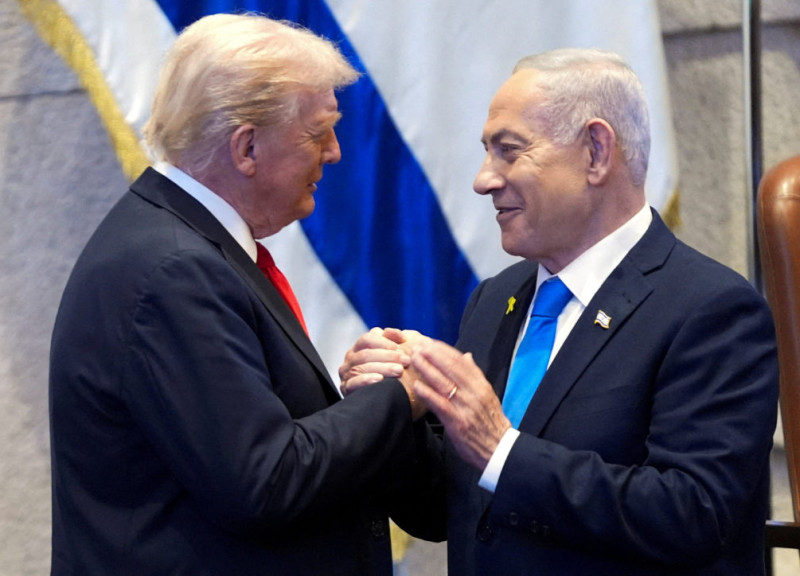
President Trump, hosting Japanese Prime Minister Sanae Takaichi in the Oval Office, did not hide his dissatisfaction. According to him, he directly conveyed his disagreement with the strike to Benjamin Netanyahu. “I told him not to do it,” the American president told reporters, adding that Netanyahu “won’t do it again.”
At the same time, Trump attempted to maintain the appearance of unity: “We are independent, but we get along great,” he said, insisting that American and Israeli approaches are “coordinated.” This statement immediately contradicted his own post on Truth Social, where he implied he had no prior knowledge of the strike and emphasized that the United States did not participate in the operation.
Three Israeli officials familiar with the details of the operation stated that the American side was notified before the strike began.
The discrepancy between official American statements and the Israeli version of events proved telling: Trump’s public diplomatic discomfort—an unusual phenomenon in his relations with Israel—points to a deep strategic divide.
Two strategies, two horizons
The essence of the disagreement is simple. Israel is pursuing a goal that its officials openly call “state collapse”: the systematic destruction of the Iranian regime’s revenue sources and the decentralization of its political, military, and intelligence leadership.
The strike on South Pars—a joint Iranian-Qatari field—fits precisely into this logic: to deprive Tehran of oil and gas revenues.
Washington, on the other hand, seeks to preserve Iran’s energy infrastructure intact—to prevent further spikes in oil prices and to deter Tehran from striking energy facilities in Gulf states. Trump, in this configuration, is a hostage to economic priorities: each escalation translates into rising oil prices, and rising prices translate into political losses.
European diplomats, speaking on condition of anonymity, warn that Israel’s strategy of economic strangulation will likely backfire. Iran, stripped of infrastructure, will not capitulate—it will shift to asymmetric warfare, directing surviving drones and missiles at vulnerable targets in neighboring states. According to the Europeans, this is no longer a proxy conflict but an existential struggle.
Oil as a tool and a vulnerability
The Trump administration faces a rare dilemma. Treasury Secretary Scott Bessent announced the potential release of reserves from the Strategic Petroleum Reserve—stocks that the administration has not had time to replenish since the war began. A more radical measure, also under discussion by Bessent, is a temporary suspension of sanctions on Iranian oil already at sea—about 140 million barrels. This, in his words, is “using Iranian barrels against the Iranians themselves” to curb prices in the next two weeks.
The paradox is evident: lifting sanctions on Iranian oil would mean an influx of currency into the state treasury of a country against which a war is being waged.
Meanwhile, the Pentagon reports successes. Defense Secretary Pete Hegseth stated that over the course of the campaign, more than 7,000 targets have been hit on Iranian territory and within its military infrastructure. On Thursday, he said, the “largest package of strikes” of the entire operation was scheduled to take place. Among the objectives is the suppression of Iran’s military-industrial capacity to prevent the adversary from restoring missiles, launchers, and drones. For this purpose, the latest bunker-busting bombs, GBU-72/B, weighing 2,270 kg, are being used against cruise missile storage facilities near the Strait of Hormuz.
However, the speed with which Iran retaliated against Qatar after the attack on South Pars indicates that the US has not achieved “escalation dominance”—the ability to prevent the adversary from escalating retaliatory actions. Hegseth declined to provide “specific timelines” for announcing the achievement of set goals.
Powder keg of the Gulf
While Washington and Tel Aviv debate strategy, tension spreads across the region. On Wednesday, shortly after the Israeli strike on South Pars, two waves of ballistic missiles were intercepted over Riyadh, as reported by the Saudi Ministry of Defense.
Riyadh’s response was firm. The kingdom’s Foreign Minister, Prince Faisal bin Farhan, warned that the government reserves the right to “military action if it deems it necessary.” “We will not back down from defending our country and our economic resources,” he stated at a press conference. When asked how long Riyadh is prepared to exercise restraint, the prince avoided specifics: “A day? Two? A week? I won’t specify.”
He also noted that “the little trust” that existed between Riyadh and Tehran has been “completely destroyed”—despite the restoration of diplomatic relations in 2023.
Illusion of control
In the unfolding situation, a systemic contradiction stands out: Trump and Bessent continuously signal “full control over the situation,” while evidence to the contrary mounts.
Calls to find allies for patrolling the Strait of Hormuz have so far gone unanswered. Oil prices continue to react to each new escalation. Iran’s asymmetric strikes—based on the principle of “rising oil prices, falling American stock indices”—demonstrate a keen understanding of the administration’s vulnerabilities.
“From time to time, he’ll do something,” Trump said of Netanyahu, “and if I don’t like it, we don’t do it again.” Whether this formula works in reality remains an open question.
This material was prepared based on publications from The New York Times.