Axios: Mojtaba Khamenei played a key role in truce negotiations
While Donald Trump threatened Iran with the destruction of an "entire civilization," intense diplomatic efforts were underway behind the scenes, the outcome of which was unknown even to sources close to the U.S. president.
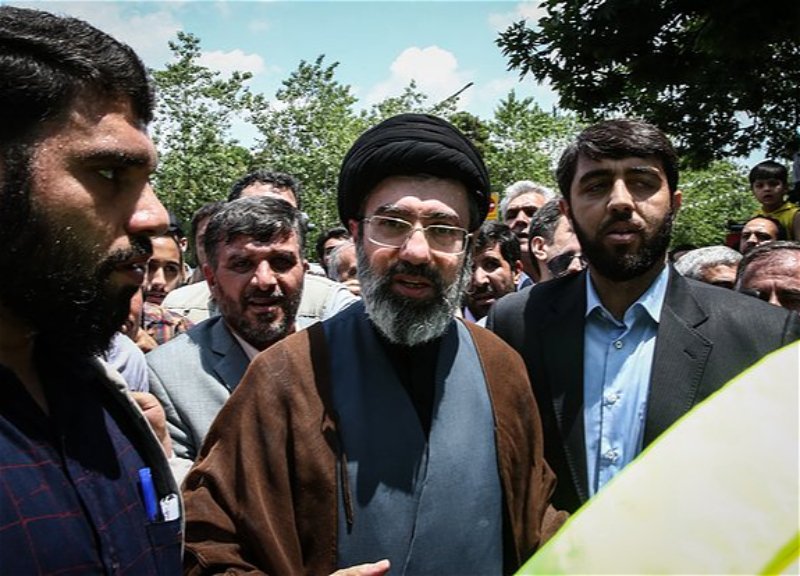
In these negotiations, Iran’s new Supreme Leader Mojtaba Khamenei actively participated for the first time, according to Axios. Sources told the outlet that, for security reasons, Khamenei communicated via notes delivered by couriers, but it was his approval that proved crucial to reaching an agreement. Meanwhile, Pentagon officials and U.S. forces in the Middle East were preparing for a large-scale bombing of Iranian infrastructure until the last moment, receiving the order to stand down just a couple of hours before the expiration of Trump’s ultimatum. Axios details how the truce negotiations unfolded.
On Monday, April 6, while Trump was addressing the public at an Easter event at the White House, his special envoy Steve Witkoff—described as "very angry"—was holding phone discussions. According to an Axios source, in a conversation with mediators, Witkoff called a 10-point proposal received from Iran a "disaster" and a "catastrophe."
This was followed by a series of revisions: Pakistani mediators relayed new drafts from Witkoff to Iran’s Foreign Minister Abbas Araghchi, while the foreign ministers of Egypt and Turkey worked to bridge differences. By evening, an updated proposal for a two-week ceasefire was approved by the U.S. side. The decision rested with Iran’s new Supreme Leader Mojtaba Khamenei. Axios sources say he "actively participated in the process"—though his involvement was shrouded in the strictest secrecy, and he mostly communicated through notes delivered by couriers.
On Tuesday morning, Axios reports, progress emerged—but this did not stop Trump from issuing new threats, promising the demise of an "entire civilization," which he said would occur on the night of Wednesday, April 8. At that moment, U.S. Vice President J.D. Vance, who was visiting Hungary to support Prime Minister Viktor Orbán ahead of elections, was also conducting phone negotiations, primarily with Pakistan, the main intermediary between Washington and Tehran.
By around noon on April 7, Eastern Time (7:00 PM Moscow time), the parties reached a "general understanding," and three hours later, Pakistani Prime Minister Shehbaz Sharif publicly urged the U.S. president to delay his deadline by two weeks and called on Iran’s leadership to reopen the Strait of Hormuz. Trump began receiving calls and messages from hawkish allies urging him to reject the proposal. As Axios notes, the chaos was such that many who had spoken with Trump just an hour or two earlier believed he would reject the offer—but he ultimately accepted it.
Shortly before Trump announced the truce, he spoke with Israeli Prime Minister Benjamin Netanyahu to secure his commitment to adhere to the ceasefire agreement. The U.S. president then contacted Pakistani Field Marshal Asim Munir to finalize the deal. American troops received the order to stand down 15 minutes after Trump posted about the truce on his social media platform Truth Social.
Two Axios sources described Khamenei’s blessing of the deal as a "breakthrough." According to them, all key decisions during those two days went through Iran’s Supreme Leader. "Without his green light, there would have been no deal," a regional source told the outlet. However, Axios sources did not mention Khamenei’s condition or whereabouts—although the day before, The Times, citing U.S. and Israeli intelligence, reported that the new Supreme Leader was undergoing treatment in Qom, in critical condition, and "unable to participate in any decision-making."
Now, the U.S. and Iran are planning official negotiations, tentatively set to begin on April 10. According to Axios, the American delegation will be led by U.S. Vice President J.D. Vance. Speaking in Budapest on April 8, he called the truce "fragile." He noted that within Iran, attitudes toward the truce proposal varied—while the foreign minister viewed it positively, others "lied" about U.S. military outcomes and the terms of the plan. "There are people who genuinely want to sit at the table and work with us to make a good deal, and there are those who lie even about the fragile truce we’ve already achieved," Vance said.
Significant differences remain between the positions of the U.S. and Iran, leaving a real possibility of renewed conflict, Axios notes.
Source: Meduza