Digital sovereignty and the architecture of the future: how Baku is shaping the region's most large-scale innovative reform

Technological transformation of the state has long ceased to be a matter of prestige or purely applied modernization of the service sector.
In modern realities, the depth of digitalization and the ability to adapt artificial intelligence technologies directly determine the level of national security and economic sovereignty.
The first meeting of the Council for Digital Development, held under the chairmanship of First Vice President Mehriban Aliyeva, marked an important milestone, signaling the country's transition from piecemeal automation to a comprehensive, fundamental restructuring of the entire state and legal ecosystem.
The “Action Plan for Accelerating Digital Development for 2026-2028” presented in Azerbaijan and the reforms launched under it are already being assessed by experts as the most large-scale and conceptual initiative in the field of digital environment regulation across the entire post-Soviet space. Baku is betting on a systemic approach in which technology, legislation, and human capital are combined into a single three-year roadmap.
Artificial intelligence and cybersecurity: shield of national interest

Opening the meeting, Mehriban Aliyeva clearly outlined the key strategic contours of the new state doctrine, addressing the participants.
“A specific Roadmap has been defined for the next three years, ensuring the development of digitalization, artificial intelligence, cybersecurity, and the innovation ecosystem. The main task of the Council is to coordinate the activities of various state structures, form a unified approach, and ensure the timely and effective implementation of adopted decisions. Our goal is not only to introduce new technologies, but also to give a powerful impetus to the country's economy, form a new modern innovation ecosystem, attract local and foreign investments to the country, support local startups, and create a more efficient system of public administration.
Artificial intelligence is no longer a question of the future, but a key factor in today's development. At the same time, the role of artificial intelligence in ensuring the security of states is growing, and it already occupies a central place in this sphere. It is no secret that the development of artificial intelligence in the world's leading states is proceeding faster than expected, which in turn creates both new opportunities and new threats. We must be prepared for new challenges, especially risks arising in the field of cybersecurity and information security,” said the first vice president.
Particular emphasis in the concept of state development is placed on combining global experience with sovereign priorities. Mehriban Aliyeva stressed that Baku's accelerated technological leadership must rest exclusively on its own state interests: “Our activities require the joint active and effective work of all state structures. Our goal is to turn Azerbaijan into one of the leading states in the region in the field of digital development and artificial intelligence. We must study foreign, international experience and use successful models. However, all decisions must be made taking into account factors that meet the national interests and needs of Azerbaijan.”
Technological framework: National data pool and the evolution of Mygov

The specific contours of the implemented strategy were presented by Minister of Digital Development and Transport Rashad Nabiyev, who detailed the architecture of technological changes. The infrastructural backbone of Azerbaijan’s new digital reality is the creation of a National Data Pool, as well as the systematic migration of state information systems to the government cloud, supported by the construction of a new data center. At the same time, there is an explosive growth in citizens’ trust in digital institutions. The main state ecosystem — the Mygov platform — has increased its number of users from 2.7 million to 3.5 million in just the last three months. Smart solutions based on artificial intelligence are being actively introduced into the system, including a full-fledged virtual assistant for citizens. By the end of the year, seven more state applications will be made available to citizens, turning citizen-state interaction into a seamless process. To protect this colossal infrastructure, Azerbaijan is deploying a comprehensive security perimeter. Active work is underway to create a National Security Operations Center, a National Cyber Incident Response Center, and a Digital Research Center, and the result of this work will be the formation of a single national cybersecurity platform that will ensure prompt information exchange between the public and private sectors.
Legislative breakthrough: creating an ideal jurisdiction for talent
Any technological innovations are doomed to stagnation if they are squeezed into the vise of an outdated legal field. Presenting a report on profound legislative reforms that will create a flexible regulatory framework, Presidential Assistant Shahmar Movsumov stated that digital transformation is consistently pursued as one of the priority directions of state policy. He noted that, in accordance with the strategic priorities and instructions defined by the Council under the leadership of First Vice President of Azerbaijan Mehriban Aliyeva, comprehensive reforms are being prepared aimed at forming a modern legislative base in the field of digital development. The Presidential Assistant emphasized that this is the most large-scale and fundamental reform initiative for the development and regulation of the digital ecosystem in the post-Soviet space.
The new transformations, based on the best global experience, will cover ensuring legal certainty, forming a competitive tax environment, financing innovation, encouraging scientific research, attracting talent, expanding market access opportunities, and improving regulation in the field of cybersecurity.
An important step in this direction was also the creation of the Azerbaijan Resilience Cluster, aimed at uniting companies operating in areas that strengthen the country’s technological sovereignty.
Human capital: from “Digital School” to the knowledge economy

The ultimate beneficiary and at the same time the main driver of the digital revolution is the individual, since without training qualified personnel, investments in infrastructure lose their meaning. In this regard, the education reform, reported by Minister of Science and Education Emin Amrullayev, is fully synchronized with the overall state plan.
The country is moving from the stage of document automation to the full digitalization of the educational process itself. All educational institutions of the republic are being transferred to a single internet network within the framework of the “Digital School” project. Scaling up the already proven “Digital Skills” and “STEAM Azerbaijan” programs makes it possible to prepare a new generation of specialists from the school bench. The head of the department particularly emphasized the importance of long-term investments in the generation of the future: “At the next stage, the digitalization of education is envisaged. Ensuring the development of human capital in this direction is also one of the main priorities.”
It is precisely this renewed human capital that, in the medium term, will ensure the sustainability and global competitiveness of Azerbaijan’s new innovation ecosystem.
Strategic horizon: from digitalization to the knowledge economy
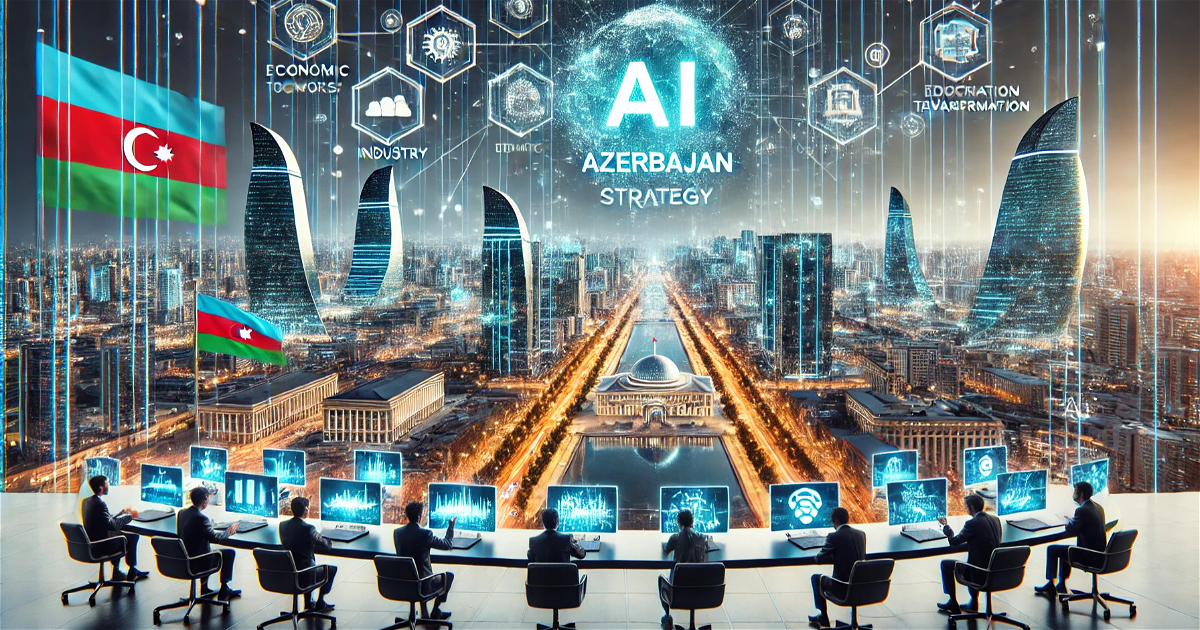
The first meeting of the Council for Digital Development demonstrated that Azerbaijan is transitioning from the status of an importer of ready-made technological solutions to the role of a sovereign developer of its own digital ecosystem. The implementation of the three-year action plan lays a long-term foundation for deep diversification of the national economy. In the medium term, the synergy of strong legal protection, AI infrastructure, and prepared human capital will reduce dependence on traditional raw-material sectors, creating powerful export potential in the field of high technologies and digital services.
The main prospect of the large-scale transformations that have begun is the creation of a highly competitive regional center of attraction for global IT business. The speed and depth of the reforms being carried out show that Baku is forming a new model of public administration capable of promptly responding to the technological challenges of the 21st century and confidently acting as the main architect of the digital agenda for the entire region.
Farhad Huseyn