Journey along the Silk Road: why von der Leyen is going to Baku and Yerevan
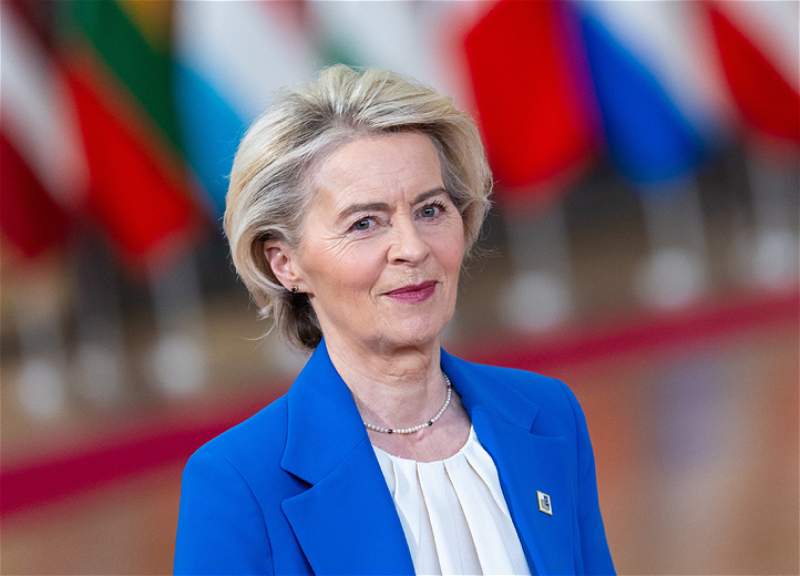
World, transport connectivity, economic integration – the European Commission defines these topics as the main ones on the agenda of the upcoming visit of its President Ursula von der Leyen to the South Caucasus.
The visit will take place already this week – on July 1 Ursula von der Leyen will arrive in Baku and then head to Yerevan, reported earlier at a briefing in Brussels European Commission press service head Paula Pinho. According to her, the trip to the South Caucasus countries is intended to demonstrate the European Union’s desire to strengthen partnership in the region and express Brussels’ support for achieving a lasting peace between Azerbaijan and Armenia.
European media have already described the upcoming trip as a “journey along the Silk Road.” Sources speak of plans to discuss in the region “the changing balance of power and transport connectivity,” the importance of which has grown due to the war in the Middle East. Therefore, it is not surprising that special attention during the talks, as Pinho said, is planned to be devoted to the development of transport links between Europe, the South Caucasus and Central Asia, in particular EU investments in the transport infrastructure of the two countries. In this regard, it is hard not to notice the coincidence in timing of today’s meeting of Ursula von der Leyen in Brussels with the heads of Europe’s largest financial institutions. As the European Commission spokesperson reported, among its participants are Banco Santander Executive Chair Ana Botín, BNP Paribas Chair Jean Lemierre and Société Générale CEO Slawomir Krupa. It is possible that along with other issues the European Commission President discussed with them the investment component of the upcoming visit, including possible financing of infrastructure projects in the South Caucasus.
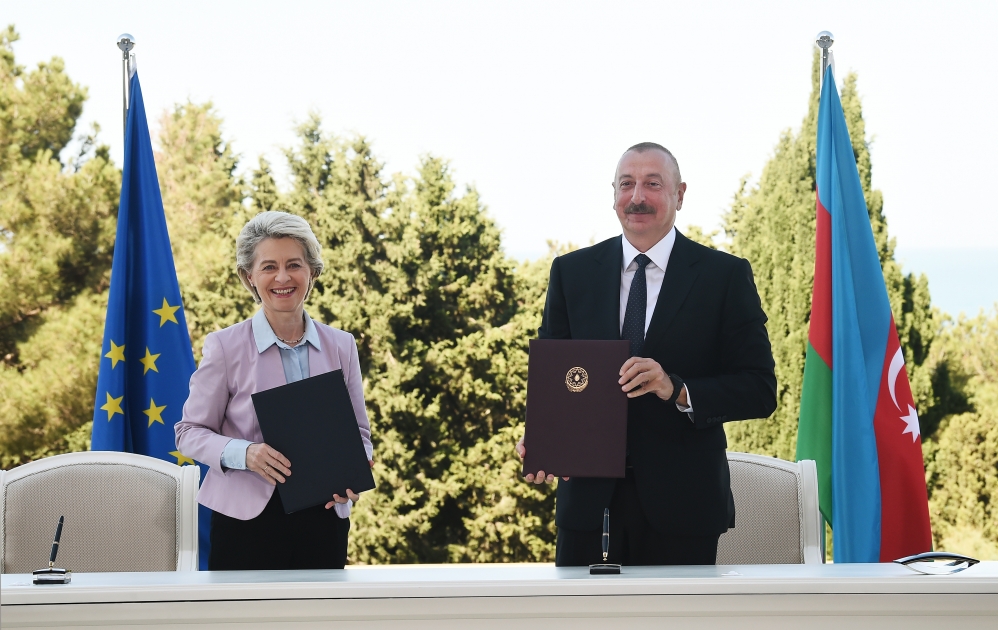
The visit to Baku will be Ursula von der Leyen’s second since July 2022, when together with Azerbaijani President Ilham Aliyev a memorandum on strategic partnership in the energy sphere was signed.
Since then Azerbaijan’s role in ensuring Europe’s energy security has grown significantly and continues to strengthen. President Ilham Aliyev emphasizes that today Azerbaijan ranks first in terms of geography of pipeline gas supplies: “We supply natural gas to 16 countries, and their number is growing year by year and will continue to grow. Oil supplies cover even more countries, and everything is carried out for the benefit of producers, transit countries and consumers.” As the head of state notes, “the European market accounts for half of our total gas exports and has potential for growth”: “This year we plan to increase gas production. We will begin gas production at a new field. And in two or three years, if everything goes according to plan, we will have an additional at least 10 billion cubic meters of gas – more than we have today.”
At the same time energy cooperation is by no means the only priority in relations between the EU and Azerbaijan. President Ilham Aliyev names connectivity as another important component of the bilateral portfolio, “especially now, after we have reached a peace agreement with Armenia, which has been initialed”: “It is clear that new opportunities for expanding the Middle Corridor strengthen our optimism.”
For its part, the European Union views Azerbaijan as a key participant in transport links between Central Asia and Europe. The importance Brussels attaches to the South Caucasus is evidenced by recent statements by EU Commissioner for Enlargement Marta Kos. Literally these days she called the Middle Corridor through the South Caucasus a vital alternative to traditional routes connecting Europe with Asia. According to her, in conditions of growing geopolitical instability reliable transport, energy and digital connectivity is becoming one of the key elements of European economic security. Kos noted that habitual routes through Russia and the Red Sea have lost their former reliability, citing as an example the change in air routes after the escalation in the Middle East: today a significant part of flights passes through the Caucasus. “Look at the flight map: after the start of the war in Iran almost all planes began flying through the Caucasus. It is here, through the Middle Corridor, that we can ensure the security of our trade, energy and digital links. It connects Europe and Asia through Turkey and the South Caucasus,” she stated. According to the Commissioner, the volume of traffic along the Middle Corridor has increased fourfold since 2022. Now the European Union’s task is to reduce cargo delivery times from the current 45 to 15 days through modernization of roads, railway infrastructure, ports and border procedures.
Marta Kos named the development of the Middle Corridor one of the European Commission’s priorities, emphasizing that reliable trade, energy and digital links are becoming a strategic factor in Europe’s competitiveness. This concept fits into the European Union’s broad strategy – the Global Gateway program, which is viewed in Brussels as a key tool for developing transport, energy and digital infrastructure in partner countries. Essentially, it is about forming alternative and sustainable connectivity chains between Europe and other regions of the world, including the South Caucasus and Central Asia. A practical expression of this strategy was the first EU–Central Asia summit held in Samarkand in April last year, which marked the beginning of a new stage of interaction between the regions. In this regard, Azerbaijan’s full participation in the format of consultative meetings of Central Asian heads of state lays the foundations for closer economic and infrastructure interaction, effectively forming a single space of transport and energy interconnectedness between Europe, the South Caucasus and Central Asia.
An important role in the European connectivity strategy is also assigned to Turkey as another key link in the transport architecture between Europe and Asia. An important element in this process can be considered the Connectivity Agenda Platform launched by the European Union. It refers to a coordination platform for the development of transport, energy and digital projects along the Middle Corridor connecting China, Central Asia, the South Caucasus, Turkey and Europe. At the conference on the launch of the platform EU Commissioner Marta Kos stated that the initiative should unite disparate projects into a single strategy for the development of transport and logistics connectivity in the region and form a portfolio of priority infrastructure solutions. According to her, the platform is also intended to facilitate the attraction of financing, uniting governments, international financial institutions and private investors around a common investment agenda. The Middle Corridor is viewed by the EU as a key alternative to traditional routes between Europe and Asia, however, according to her, its development is still limited by infrastructure gaps, differences in border procedures and insufficient capacity. To eliminate these limitations the European Union intends to invest in the modernization of transport infrastructure, digitalization of customs procedures and harmonization of regulation between the countries of the region. According to Kos, within the framework of the initiative the EU envisages the allocation of more than 80 million euros and the possibility of mobilizing over 2 billion euros in investments in transport, energy and digital infrastructure.
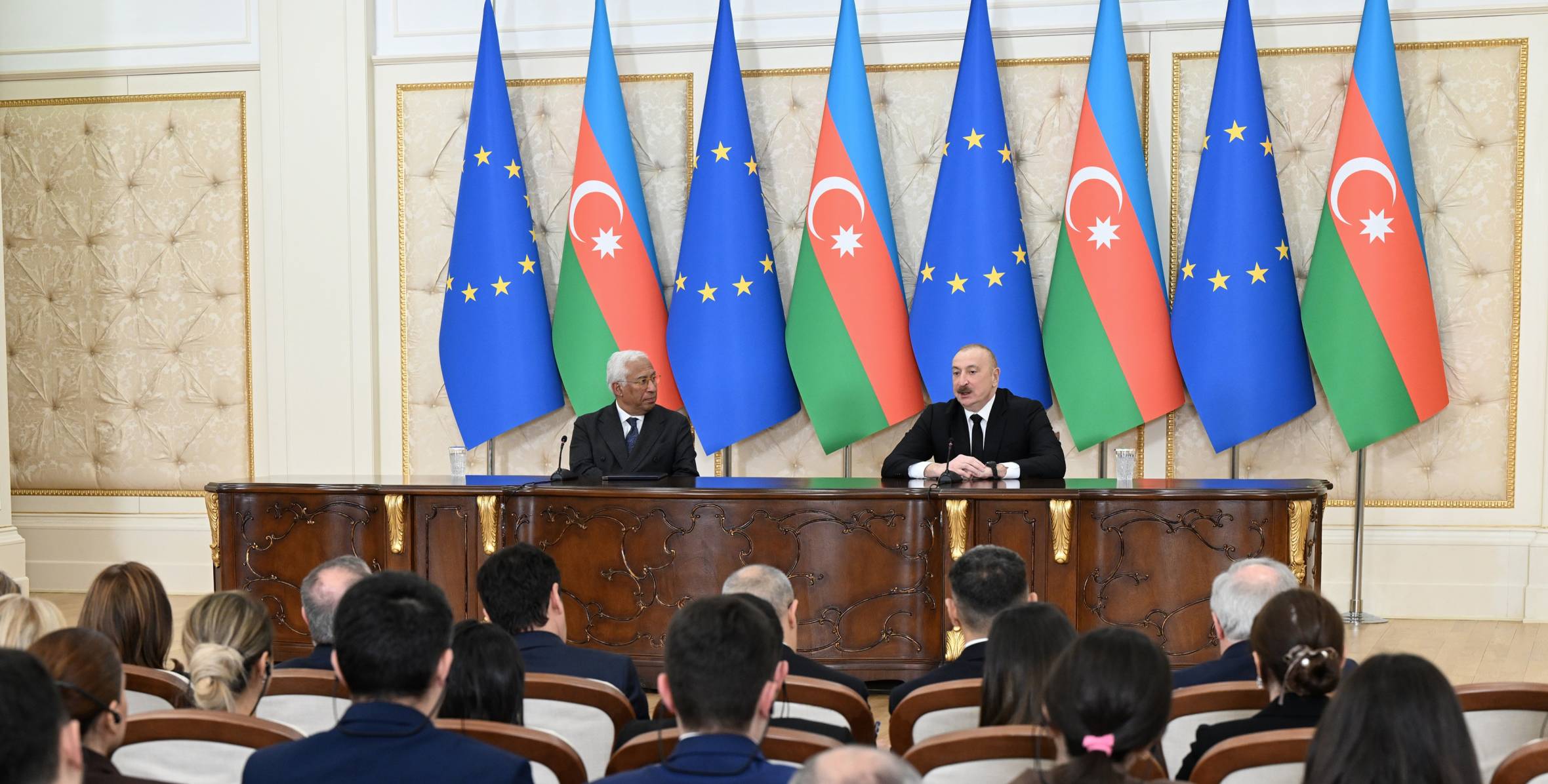
In the context of Azerbaijan’s growing importance for the implementation of the European connectivity strategy, the statement by European Council President António Costa made during his visit to Azerbaijan in March this year is also indicative. Noting that transport infrastructure along with energy cooperation is one of the key areas of bilateral interaction, he emphasized: “The development of the Middle Corridor represents a strategic opportunity to create new transport links. In this regard, the completion of the construction of the Baku–Nakhchivan railway branch will be of utmost importance. By increasing the resilience of trade between Europe and Asia, together we can create jobs, stimulate growth and strengthen our economies. The European Union shares Azerbaijan’s aspiration for a peaceful, stable, interconnected and prosperous South Caucasus.”
Taken together, the European Union’s initiatives under consideration form a long-term strategy for rethinking connectivity between Europe, the South Caucasus and Central Asia. It is about the gradual formation of a new architecture of Eurasian routes, in which transport, energy and digital infrastructure become elements of a single politico-economic system.
However, the implementation of this architecture inevitably goes beyond the technical agenda and directly depends on political stability in the region. In these conditions, the establishment of a lasting and sustainable peace between Azerbaijan and Armenia acquires system-forming significance as a key factor determining the possibility of long-term integration of the South Caucasus into the emerging Eurasian connectivity chains.
It is the presence of sustainable peace that turns the South Caucasus into a full-fledged hub of interaction between Europe and Asia. In this configuration Azerbaijan secures for itself the role of one of the key connecting links of the new Eurasian architecture, toward which the European Union is today consistently oriented in its foreign economic and geopolitical strategy.