Crisis of Western democracy: why principles have ceased to be universal
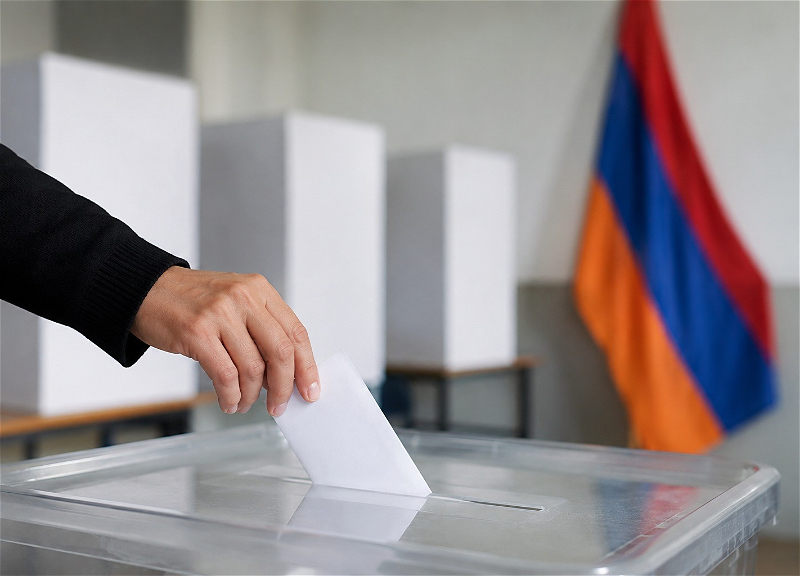
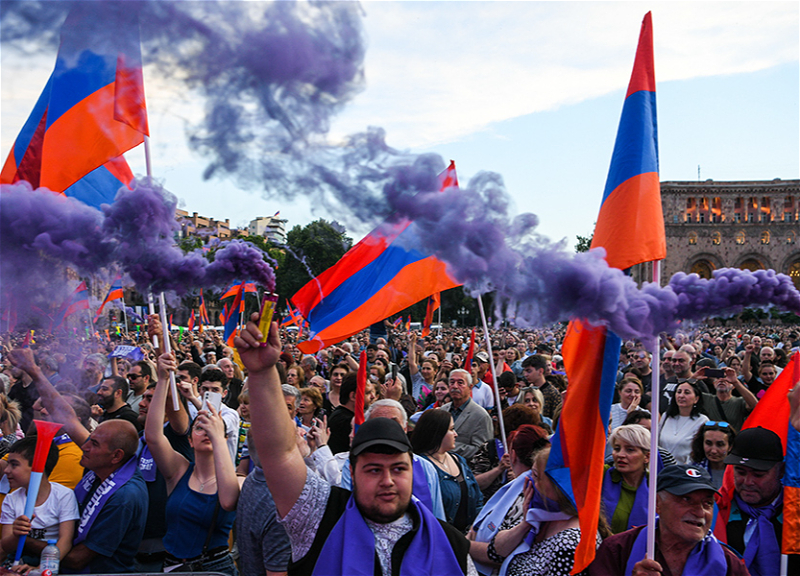
Parliamentary elections in Armenia, held on June 7, left behind a persistent sense of staged chaos, where each side had its own, far from the most noble role.
Today, as Armenia’s Constitutional Court is actively reviewing a collective lawsuit from seven opposition forces demanding the annulment of the voting results, an outside observer has no reason to sympathize with any of the participants in this process. Armenia’s current political landscape is a confrontation between populists in power and revanchists in the opposition, where the methods of struggle are equally far from clean.
Against the backdrop of statements about numerous violations, the reaction of Western institutions looks strange, which, in the opinion of critics, showed surprising leniency toward phenomena that in other states invariably become a reason for harsh political assessments. This situation forces us to return again to the question of how universal the standards of democracy, the rule of law, and fair elections declared by the West remain.
If some states are subjected to years of pressure even for minor procedural violations, in other cases not only similar but more serious claims are given the status of secondary technical issues that do not affect the overall assessment of the electoral process. It is this contrast that today is becoming one of the most noticeable elements of the international discussion around Armenia.
Arguments exposing the underside of the electoral process, which the West stubbornly prefers to ignore, are being heard today outside the courtroom doors. One of the central episodes of the ongoing proceedings was yesterday’s speech by lawyer Aram Orbelyan, representing the interests of the Prosperous Armenia party, in the Constitutional Court, which is due to issue a ruling by July 4. According to him, as reported by Armenian media, an analysis of official data revealed significant discrepancies between the number of citizens who voted and the number of ballots. According to Orbelyan, at 103 polling stations (including electronic voting) there were 269 more ballots in the boxes than people who voted there. Conversely, at 308 polling stations (out of 2,005) the number of ballots in the ballot boxes was less than the number of voters who voted. “Thus, if we add to this figure the above-mentioned 103 polling stations, we get a deviation of approximately 20% from the total number of polling stations,” Orbelyan said. He also said that after processing the data according to the Six Sigma quality management standard, it turned out that there were significant deviations in the voting results at the stations where violations were detected. This method, originally developed in big business to identify manufacturing defects and systemic failures, in the context of the Armenian vote, judging by the analysis presented, clearly demonstrated the artificial origin of the final figures. In almost all polling stations (98%-99%) with a greater than average difference, Pashinyan’s Civil Contract won. “In all other polling stations, the number of votes for the Civil Contract is 40-50%. That is, where there were no deviations, the distribution of votes between the other parties and the Civil Contract corresponds to the 50% mark,” Orbelyan said. The analysis of all these data, according to him, indicates that the identified violations call into question the voting results as a whole. At the same time, Orbelyan noted that this is only one parameter; there are inconsistencies in other parameters as well.
This entire mathematics takes on concrete meaning if we look at the official distribution of mandates. According to the election results, three political forces entered parliament: the ruling Civil Contract party received 49.7456% of the votes, the opposition blocs Strong Armenia — 23.2710% and Armenia — 9.9231%. Thus, in the new parliament, Civil Contract received 64 mandates, the Strong Armenia bloc — 29, and the Armenia bloc — 12. Thus, the ruling force retained a parliamentary majority, but does not have the constitutional majority necessary for unilaterally amending the country’s constitution.
Of course, the statements of the election critics themselves do not automatically mean that their results should be declared invalid. This is exactly what the judicial procedure exists for, designed to determine the extent to which the detected violations could have affected the final result. However, the very scale of the claims presented objectively makes them the subject of serious discussion, rather than a formal legal procedure.
An additional international dimension to the case was added by a statement from international lawyer Robert Amsterdam. His law firm Amsterdam & Partners LLP, representing the interests of the Armenian opposition, sent an appeal to European Commission President Ursula von der Leyen, raising the question of Brussels’s political responsibility for its unconditional support of the current Armenian authorities.
The letter claims that the European Union provided Pashinyan with unconditional political support, despite a protracted campaign against opponents, religious structures, and independent media, mass political arrests, and election fraud. “The European Union may be held legally liable for supporting Nikol Pashinyan,” the statement from Amsterdam reads. Continuing to call Armenia a “success story,” characterizing it as a successful democratic example, and legitimizing elections whose results are still being challenged in the Constitutional Court, Brussels violated its own standards by refusing the strict oversight it usually demands in other countries. It is noted that EU officials conducted dialogue exclusively with the Armenian authorities, ignoring the opposition, which predetermined the desired outcome even before the results were verified. But even with large-scale EU intervention and violations by the authorities, Pashinyan did not receive majority support: the government did not receive even half of the votes, while the majority of voters voted for the opposition. Robert Amsterdam further notes: “The EU was not a neutral observer, but supported a government that practices mass arrests and attacks on the Church. Brussels cannot claim the role of defender of democracy by ignoring abuses and silencing the voice of the opposition. The EU’s actions only relieved this regime of responsibility. Under the pretext of countering Russian interference, Ms. von der Leyen led a campaign of double standards that damaged the rule of law and threatens the very existence of Armenia,” the letter says.

Such criticism touches on a much broader issue than the specific Armenian elections. It concerns the very logic of modern European policy of promoting democracy. If EU institutions truly seek to act as universal defenders of democratic values, then the same criteria must be applied regardless of whether a particular government is an ally or a political opponent of Brussels.
It is consistency that has always served as the main source of trust in international institutions. Despite the ongoing judicial proceedings, many European structures quite quickly recognized the past elections as meeting democratic standards. Critics of this approach point out that in relation to other states, similar circumstances often become the basis for harsher assessments, expanded observation missions, additional checks, and months-long political discussions.
Any impression of selectivity inevitably reduces the authority of even the most authoritative organizations. It is here that the problem of double standards arises. It is not about the fact that violations automatically make any elections illegitimate, but about the fact that identical facts must be assessed by equal criteria. If numerous appeals to the courts, statistical anomalies, criminal investigations, complaints from observers, and statements from the opposition require thorough verification in one country, a similar approach must be applied in another. Otherwise, democracy begins to be perceived not as a universal system of values, but as a tool of political expediency.
Fairness requires noting that the Armenian opposition has compromised itself no less. On the eve and on election day, according to the Armenian press, law enforcement agencies recorded the massive use of shadow financial resources. 156 proceedings were initiated on corruption manifestations, an investigation was conducted against 258 persons in 74 cases, and on the eve of the vote, six candidates from the Strong Armenia alliance were behind bars, accused of large-scale voter bribery and money laundering. Thus, we are faced with a picture where one side tried to simply buy votes, and the other tried to rewrite the final protocols using the vertical of power.
Regardless of what decision the Constitutional Court makes, Armenia has already entered a phase of deep systemic crisis. For European institutions, accustomed to examining any, even the most insignificant and far-fetched shortcomings in individual electoral systems literally under a magnifying glass, large-scale anomalies in Armenia have become a zone of selective blindness.
Democracy ceases to be a universal value at the moment when its criteria begin to depend not on the law, but on political expediency. It is then that international observation turns from a tool for protecting electoral rights into a mechanism of foreign policy pressure. The elections in Armenia once again showed that it is not only the Armenian electoral system that is experiencing a major crisis today. Much more serious testing is being subjected to trust in the international institutions themselves, which claim the role of impartial arbiters. As long as the same violations receive fundamentally different assessments depending on political sympathies, accusations of double standards will sound increasingly convincing, and the authority of Western democratic institutions will inevitably decline.