The Guardian: Ukraine hopes to conclude “drone agreements” with seven NATO countries by the end of the year
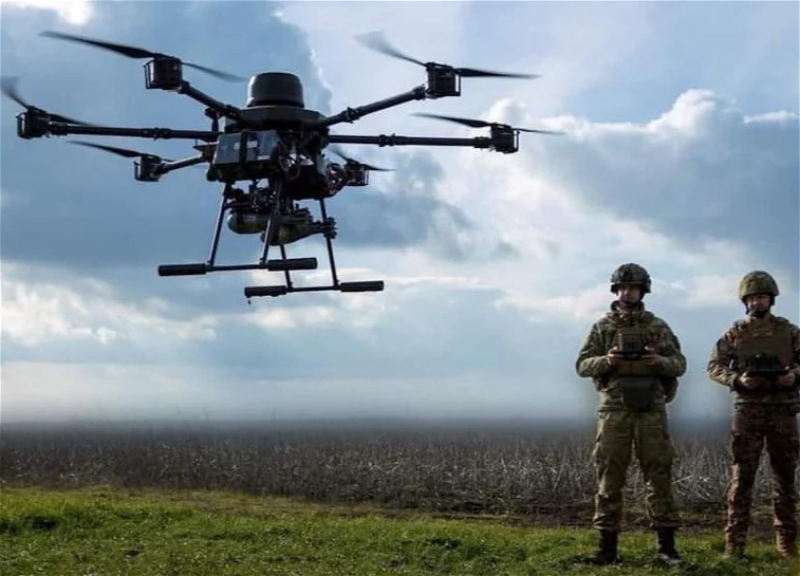
Ukraine expects to conclude major defense agreements with at least seven NATO countries by the end of this year.
A senior Ukrainian official said this. It signals a new direction in Kyiv’s foreign policy, as it seeks to show that it can act not only as a recipient but also as a supplier of military equipment, technology and expertise.
In recent months Kyiv has already signed so-called “drone agreements” with six countries. Three of them are Middle Eastern states that became interested in Ukrainian experience after coming under attack from Iranian long-range Shahed drones during the U.S.-Israeli war against Iran that began in the spring. These same drones have regularly struck Ukrainian cities over the past four years. Agreements have also been signed with Azerbaijan and with the NATO members Latvia and Lithuania.
“This initiative is called a ‘drone deal,’ but in reality it covers much more than just drones. Even more important is the accumulated experience, knowledge and access to all the components that make up the integrated system created here in Ukraine,” said David Aloyan, deputy secretary of Ukraine’s National Security and Defense Council, who oversees the implementation of these agreements.
According to him, “drone diplomacy” began to develop actively during the Donald Trump administration’s war against Iran, when Tehran struck U.S. allies in the Middle East. Most Persian Gulf countries were unprepared for the drone threat, even though Iran used less advanced versions of the Shahed compared with the modernized models Russia employs against Ukraine.
In some cases expensive Patriot surface-to-air missiles were used to destroy Shahed drones, although Ukrainian specialists say the task could be performed by far cheaper interceptor drones—if they are properly integrated into an air-defense system.
“An interceptor drone by itself is just a drone. That does not mean you will be able to shoot down Shaheds with it,” Aloyan noted.
According to him, not only the aircraft themselves are needed, but also accompanying components, sensors, ground control stations and, especially important, modern radar systems.
After a series of attacks, Aloyan said, one country in the region purchased interceptor drones from a Western company that had developed them jointly with Ukrainian manufacturers. After the delivery, Ukraine repeatedly received requests for consultations on the most effective use of these systems.
As a result, three Persian Gulf states—Saudi Arabia, the United Arab Emirates and Qatar—signed agreements with Ukraine. Kyiv offered these countries a comprehensive expert assessment of the operational and tactical measures needed to ensure effective employment of the relevant weapons systems.
Michael Kofman, an analyst at the Carnegie Endowment for International Peace in Washington, believes that this comprehensive approach is Ukraine’s main advantage.
“Ukraine is able to provide an entire ecosystem of solutions for organizing air defense or creating drone strike capability,” he noted.
The supply of the drones themselves is not yet part of the agreements, because Ukraine’s defense industry operates under strict state control and is primarily oriented toward supplying its own armed forces.
Diplomats and analysts believe “drone diplomacy” has also become a way to strengthen new international partnerships and keep global attention on Ukraine at a time when the international agenda has gradually shifted toward the Middle East.
At the same time, Kyiv believes that, possessing the world’s richest experience both in repelling drone attacks and in using them against Russian forces, Ukraine has unique competencies that are in demand by other states.
“At the initial stage, a group of our experts assesses the situation and provides the partner with a detailed report containing recommendations on the capabilities it needs,” Aloyan explained.
After that, the partner state independently decides whether to place future orders for Ukrainian products (if the corresponding production capacities exist) or to purchase similar equipment from other manufacturers.
According to Aloyan, the main focus will now be on NATO countries, especially those located closer to Russia or Ukraine that in recent years have paid increasing attention to protection against drone threats.
As an example he cited Latvia, where in May the government resigned after a political scandal triggered when two Ukrainian long-range drones that had deviated from course because of Russian electronic warfare struck an oil depot on the country’s territory.
Source: The Guardian