From Washington to a new regional architecture: a year of historic changes
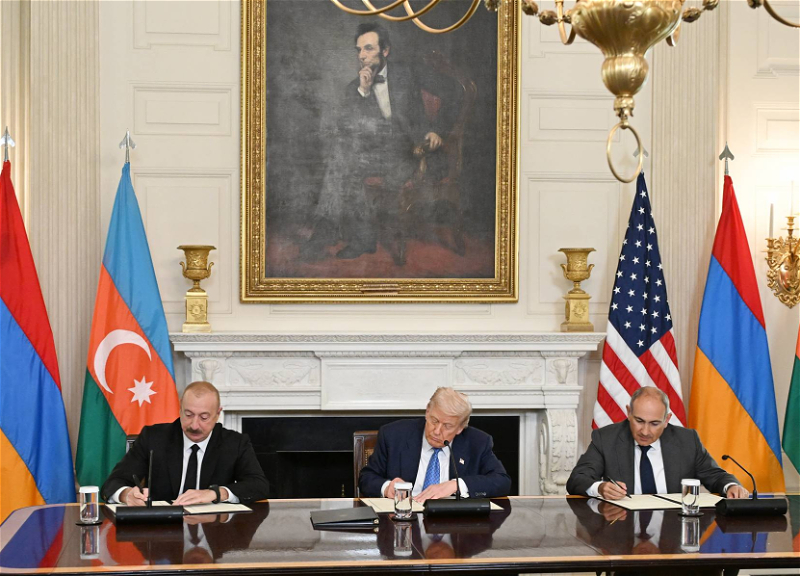
August 8 marks one year since the Washington summit — one of the key diplomatic events in the recent history of the South Caucasus.
The Joint Declaration signed at the White House by the leaders of Azerbaijan and Armenia with the participation of the U.S. president, as well as the initialing of the text of the peace treaty, launched a qualitatively new architecture of regional cooperation. This event was not just an important political step but a historic milestone marking the region’s transition from years of confrontation to the practical building of peace.
Over the past year, this system has been filled with real substance: the lifting of transit restrictions, the launch of large-scale transport and logistics projects, and the abolition of outdated external institutions are today shaping a model of independent and sustainable regional development.
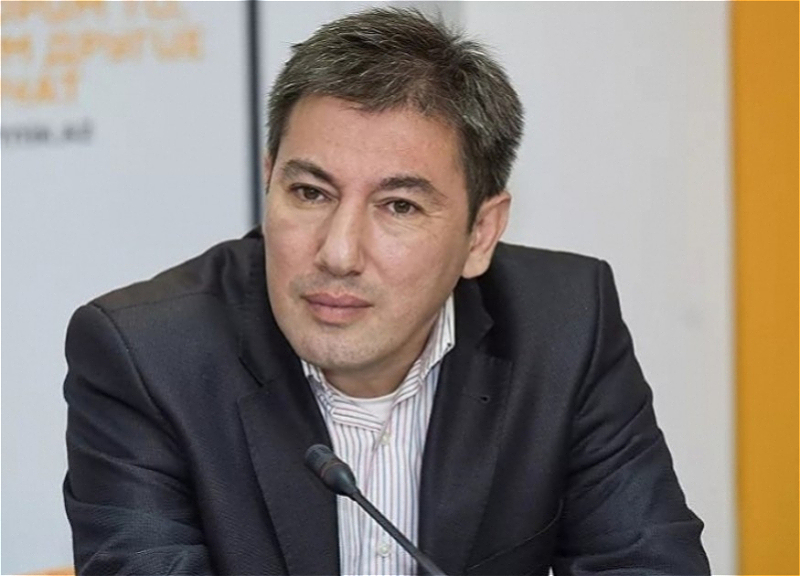
Political analyst, head of the South Caucasus Political Scientists Club Ilgar Velizade specially for 1news.az sums up the past year, assesses the dynamics of normalization of relations and explains how irreversible the changes that have taken place are: “Future generations will truly appreciate the historic and geopolitical significance of this event. We may not yet fully realize its true scale, as only the coming years will reveal it. Global wars are raging across Greater Eurasia, claiming more and more lives. Uncertainty and unpredictability hanging in the air today shape the actions not only of entire states but also of individual families and people. It is completely unknown where the next blow will come from. The conflicts in Ukraine, around Iran and across the Middle East as a whole are developing in such a way that another escalation could occur at any moment. The parties are intensifying missile strikes, employing increasingly sophisticated military technologies, resulting in massive destruction. Against this backdrop, peace and stability in the South Caucasus are especially valuable — the region could easily have become part of this global uncertainty, since any smoldering conflict during world wars can instantly grow into their continuation. The historic significance and real value of what happened a year ago lies precisely in the fact that we did not become part of global uncertainty and the conflicts I mentioned. For the residents of our region — both Azerbaijan and Armenia — the question of how to behave during another artillery barrage or how to live when your workplace could be physically destroyed tomorrow no longer exists. They no longer need to think about how to build a future for their children when war is raging and they could at any moment become direct participants in the conflict. They could have been called up to the army in a few years and become victims of the conflict. This is a real tragedy, and today we see its true, serious scale. We managed to avoid it. Of course, the role of the individual in history is undeniable, and it was the balanced policy of Azerbaijani President Ilham Aliyev that brought us to where we are today. The entire text of the peace treaty is in fact based on the five Azerbaijani principles and our approach to conflict resolution. This was spoken about for decades in virtually every speech by both the national leader and President Ilham Aliyev: we will not allow the creation of a second Armenian state, we will restore territorial integrity, and internally displaced persons will return to their native lands. Everything they spoke about is now being put into practice. This is a unique case in modern history when the main goals of the state and the promises of leaders are being realized almost completely. In the years to come, we will see even more clearly the fullness and true meaning of what happened. As for the architecture of the region, we are talking about a long process. It can be compared to Gaudi’s monumental work — the Sagrada Familia cathedral. The architecture of the temple was planned so brilliantly that its construction continued even after the death of the great architect. The cathedral was built over decades, and even today some of its elements continue to be refined. This suggests that the architects of the new regional order have laid a solid foundation of security for years and decades to come. What we are seeing now is only the beginning of this stage. For now, the process of unblocking communications is proceeding through the territory of Georgia, but in the future we expect it to take place directly between Azerbaijan and Armenia. A new logistics scheme will be formed in our region and new energy configurations will be created. Stable supply chains linking Turkey, Armenia, Azerbaijan and Georgia will emerge. All of this is a long process of transformation both in interstate relations and in public consciousness. In Armenia, we see how painful this turning point is, but it is inevitable. We sincerely hope for the recovery of Armenian society after the long years of hatred and outright fascism that reigned there. We are now seeing the renewal of Armenian society — also painful and ambiguous, but the process is gaining momentum. The world is changing, wars continue and have a negative impact, yet for non-participating countries they become an important lesson. Our example, however, is a ready-made model of how to find solutions in the most difficult conditions: independently, rather than according to the templates of external players. These are the historic lessons of what happened. None of this would have been possible without the victory in the Second Karabakh War, without the results of the local anti-terrorist measures in Khankendi and its surroundings, and without the titanic efforts Azerbaijan made on the diplomatic and economic fronts. We had a united front — in diplomacy, in the economy and in all other spheres. Without these comprehensive efforts, the results achieved would not have been possible. Taken together, all of this has led to the renewed region we see today, as well as a new architecture of security and political relations. There is almost no doubt that these positive trends will continue to develop further.”