Sexual violence as a system: Europol uncovers international network of rapists
An international police operation spanning several countries has uncovered the activities of organized criminal networks whose members systematically drugged women with psychoactive substances, committed sexualized violence against them, and coordinated their actions through closed online communities.
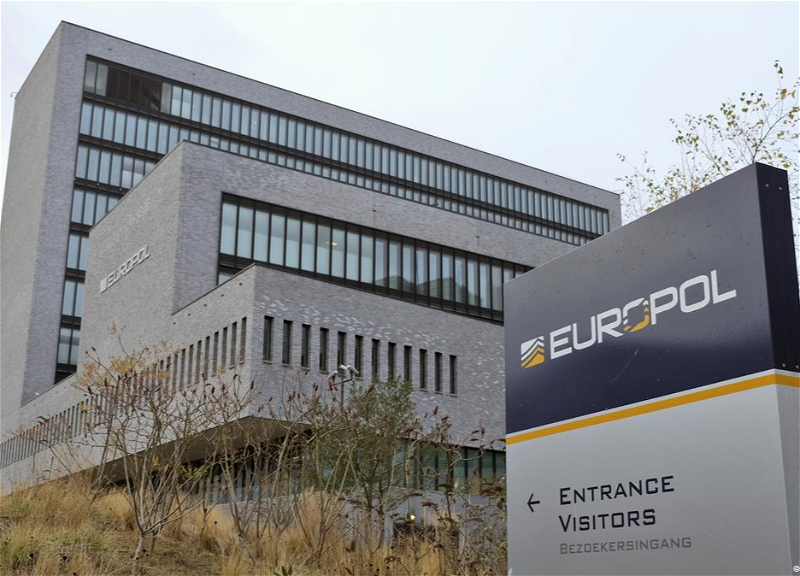
Europol and the United Kingdom's National Crime Agency reported the results of the investigation.
According to law enforcement agencies, the criminals used specialized online groups to exchange instructions, discuss methods of committing crimes, recommend drugs to render victims helpless, and share ways to conceal evidence. Photographs and videos of sexualized violence were also distributed in these communities.
The investigation is being conducted as part of an international operation called "Project Medusa," which began in April. Law enforcement agencies from Germany and the United Kingdom are participating, with support from colleagues in the United States, Brazil, Canada, France, Hungary, the Netherlands, and Spain.
According to investigators, the victims of such crimes were most often women who were secretly given sedative drugs.
In many cases, the victims did not suspect they had been subjected to sexualized violence until contacted by police. Investigators note that the crimes were frequently committed by people the women knew and trusted. In some cases, the attacks were organized by several connected perpetrators.
The impetus for intensified international cooperation came from a high-profile case in France that sparked widespread public reaction.
It emerged that a woman's husband had kept her unconscious with drugs for an extended period and invited dozens of strangers to commit sexualized violence against her. The case triggered a broad public debate about gender-based violence and the need to strengthen protections for victims.
Since the start of the operation, law enforcement agencies have identified more than 150 suspected offenders and victims, obtained over 270 new operational materials, and detained 57 suspects. Investigators emphasize that the true scale of such crimes is significantly larger.
The United Kingdom's National Crime Agency estimates that existing statistics reflect only a portion of cases, as many incidents remain unsolved and victims often do not know a crime was committed against them.
Deputy Director of the National Crime Agency Nigel Leary noted that drug-facilitated sexualized violence has ceased to be isolated and is increasingly carried out by organized groups using digital platforms to coordinate their actions.
According to him, this transformation of criminal activity requires new approaches to investigations and international cooperation among law enforcement agencies.
The agencies also warn that people of any age and social status can become victims of such crimes. Citizens who suspect they may have been subjected to sexualized violence involving psychoactive substances are advised to contact law enforcement immediately.
Human rights activists and specialists working with victims, in turn, call on digital platforms and regulatory bodies to more actively identify and block online resources that distribute materials related to exploitation and sexualized violence. Experts also note that criminals are constantly refining their methods of committing such crimes, which significantly complicates investigations and subsequent prosecutions.