Responsible Statecraft: Azerbaijan transforms its geopolitical identity and becomes a key force in the region
The American-Israeli war against Iran and the closure of the Strait of Hormuz caused a shock in the energy market that reverberated around the world, triggering, according to the International Energy Agency, the "largest supply disruption in the history of the global oil market," writes the American publication Responsible Statecraft.
The closure of the strait underscored its status as one of the planet's most important energy arteries, through which about 20% of the world's oil and liquefied natural gas (LNG) passes. Meanwhile, Iran's retaliatory strikes and blockade demonstrated Tehran's ability to disrupt supply chains, drive up inflation, and turn the Strait of Hormuz into a commercially unviable trade corridor. The outcome of this crisis could well be a large-scale change in the routes of all Eurasian trade, the article notes.
It says that Europe, which was seriously affected by the closure of the strait, is particularly interested in supporting new commercial corridors, as a result of which two alternative trade routes have gained special momentum: the "Middle Corridor" (or Trans-Caspian International Transport Route) — a multimodal land, rail, and sea route between China and Europe passing through Central Asia, the Caucasus, and Turkey; and the "Four Seas" initiative — a conceptual framework linking the Persian Gulf with the Caspian, Mediterranean, and Black Seas through the Syria-Turkey transit corridor.
"While Europeans are sounding the alarm, other states see new opportunities in this. The closure of the strait has opened a window of opportunity for traditionally smaller players in Central Asia, the Caucasus, and the Levant — three regions directly bordering Iran — and has also provided a breakthrough for Turkey's sphere of influence in Eurasia," the material notes.
In Central Asia, the main beneficiary of both Iran's closure of the strait and the conflict in Ukraine has been Kazakhstan, writes Responsible Statecraft. "For a landlocked region that has long relied on trade with Russia via the 'Northern Corridor,' the 'Middle Corridor' provides Kazakhstan with a colossal opportunity to deepen ties with the United States, reduce dependence on Russia, and reap the economic benefits of its vast reserves of critical minerals needed for the modern technological transition."
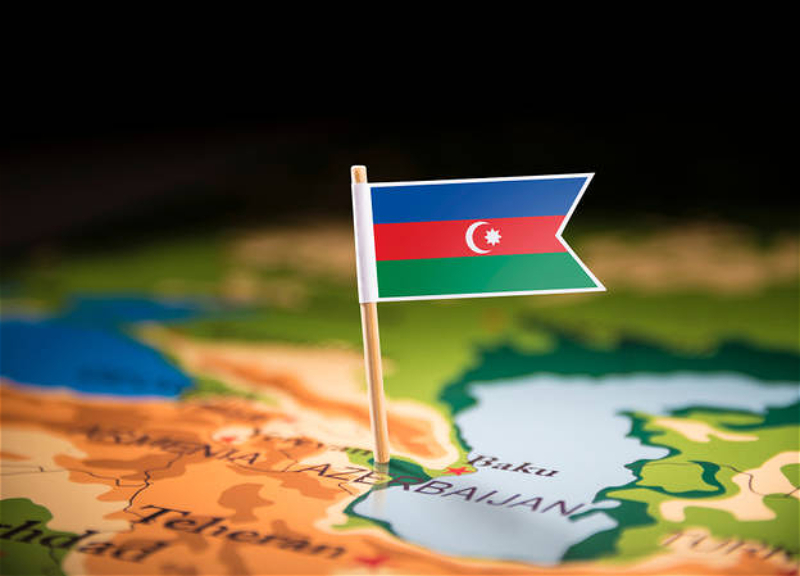
The weakening of the "Northern Corridor" and the closure of the Strait of Hormuz, according to the author, have also opened new opportunities for Azerbaijan. "Since the initialing of the peace agreement with Armenia in 2025, Baku has sought to transform its geopolitical identity and establish itself as the main force in the region. A key component of the peace treaty was the construction of a corridor between the two territorially separated parts of Azerbaijan through Armenia (known as the 'Trump route'). This route … ensures seamless regional integration between Central Asia and Turkey. In 2025, Azerbaijan officially joined the C5 summit as the first non-Central Asian state, turning the format into C6," the article states.
In the Levant, post-Assad Syria is trying to position itself as a potential transit state for energy resources and another alternative to the Strait of Hormuz — a vision endorsed by U.S. Special Envoy to Syria Thomas Barrack. The "Four Seas" initiative gives Damascus an excellent chance to realize this plan. Ultimately, after the official lifting of most U.S. sanctions in 2025, Syria's new leadership is determined to stimulate its postwar economy and reconstruction through transit revenues.
Turning Syria into a stable regional link also serves the interests of the Persian Gulf countries. Local states view the "Four Seas" initiative as a way to move away from vulnerability associated with Hormuz, notes Responsible Statecraft.
"However, no state will benefit from these shifts more than Turkey, which lies at the intersection of both alternative trade corridors. Ankara is positioning itself as an indispensable transit hub between Europe and Asia, benefiting simultaneously from Europe's desire to replace Russian energy resources, the Gulf states' search for export routes bypassing Hormuz, and Central Asian states' attempts to overcome their economic constraints with land corridors. Turkey is using the overlapping crises to consolidate its status as a hub that no Eurasian power can bypass," the publication emphasizes.
While the "Middle Corridor" allows Turkey to strengthen its strategic partnership with the Turkic states of Central Asia and Azerbaijan through deepening social and economic ties, the "Four Seas" initiative contributes to the expansion of its regional influence and "soft power" tools, strengthening Ankara's positions in the Persian Gulf and the Levant, shaping the balance of power in relations with Iran, the author notes.
According to him, unlike Europe, the United States did not suffer significant losses from the closure of the Strait of Hormuz: "Nevertheless, both the 'Middle Corridor' and the 'Four Seas' initiative open up an opportunity for Washington to undermine Iran's influence on a key maritime trade route (as well as in the Red Sea), weakening its ability to threaten the economies of adjacent regions. For Washington, both alternative trade corridors would ultimately allow the achievement of three interrelated strategic goals: to free Europe's energy sovereignty from Russian and Iranian dependence; to ensure America's commercial dominance in the most strategically important infrastructure of the Middle East; and to create a strong geopolitical architecture that encourages rapprochement with the West."