Apostolic by Name: Mythology and Reality of the Armenian Church
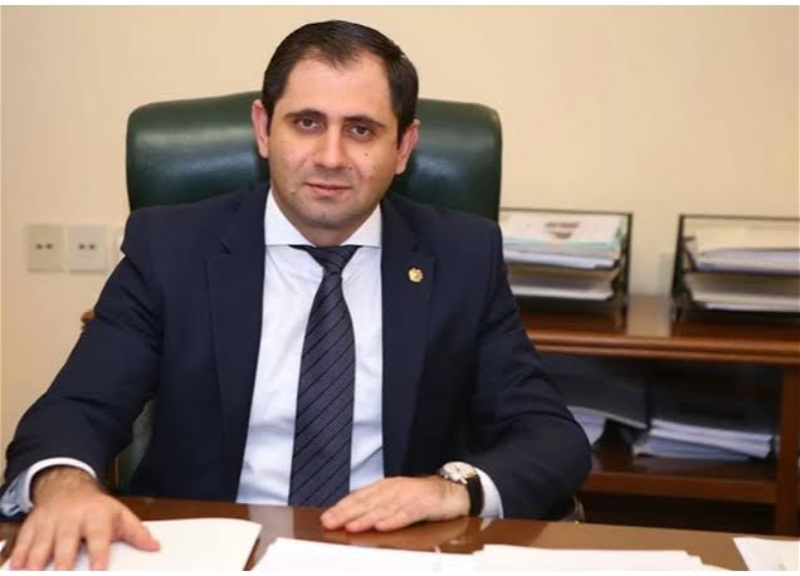
The Deputy Head of the Office of the Prime Minister of Armenia, Taron Chakhoyan, commented on the information that in 2018, Ktrij Nersisyan (Garegin II) signed and approved the charter of the Armenian community in Russia, in which the official name of the Armenian Church was registered as the "Armenian Apostolic Orthodox Church":
"The opposition, playing the role of 'defenders' and 'saviors' of the Church, has nothing to say to Ktrij Nersisyan, who changed the name of the millennia-old Church, turning Apostolic into Orthodox? Without giving each other a chance, they rushed to 'save' the Throne, but do they not want to save the name of the millennia-old Church? In reality, the Church needs to be saved from Ktrij and from such 'saviors.'"
The story of the charter of the Armenian community in Russia, signed in 2018 by Garegin II (Ktrij Nersisyan), unexpectedly revealed a deep-seated issue that for decades was preferred to be left unspoken. The fixation of the name "Armenian Apostolic Orthodox Church" provoked a sharp reaction within Armenia itself, including from Taron Chakhoyan. However, behind the emotional controversy lies a far more fundamental question: how accurate are both of these definitions—"apostolic" and "orthodox"—when applied to the Armenian Church?
After all, we clearly remember that until recently, the Armenian Church was called "Gregorian"—after Gregory the Illuminator.
Apostolic Origin Without Apostles
A key element of Armenian church identity is the claim of its apostolic origin, supposedly tracing back to the apostles Thaddeus and Bartholomew. However, as scientific research and media reports show, there is neither documentary nor canonical evidence of an uninterrupted apostolic succession in the Armenian Church.
Under the term "apostolic," a church is understood to meet the following criteria: 1) the church was founded by one or more of Jesus Christ's apostles or by a person to whom an apostle delegated ministry, a close disciple; 2) there exists an uninterrupted succession of ministry (ordination) from the apostles to subsequent bishops; 3) the church preserves the continuity of apostolic teaching, liturgical practice, and traditions; 4) the church is recognized as apostolic by other traditionally Christian churches based on its history, succession, and mission.
In the case of not meeting the listed criteria, a church is not recognized as "apostolic."
Unlike the Roman, Constantinopolitan, Antiochian, or Alexandrian sees, where apostolic heritage is confirmed by early sources, lists of bishops, and decisions of Ecumenical Councils, the Armenian version relies predominantly on late traditions formed centuries after the described events. Historical scholarship views these narratives more as elements of religious mythology than as proven fact.
In the Armenian Church, there is no documented uninterrupted succession of the episcopate from the apostles to the present day.
Monophysitism and the Break with Mainstream Christianity
Even more problematic is the use of the term "orthodox." Historically, the Armenian Church adheres to miaphysite (often simplistically called monophysite) Christology, which was rejected by Chalcedonian Christianity.
At the Fourth Ecumenical Council of Chalcedon (451 AD), the Christological formula of the two natures of Christ was established: "unconfused, unchangeable, indivisible, and inseparable." The Armenian theological tradition rejected this approach, did not recognize the decisions of the Council of Chalcedon, and after 451, the Church of Armenia not only refused to accept its dogmas but also definitively distanced itself from Byzantine Orthodoxy. As a result, the Eastern (Orthodox) Church, including the Russian Orthodox Church, for a long time considered the Armenian Church heretical, classifying it among monophysite movements.
Monophysitism asserts that in Jesus Christ, there is only one—divine—nature, while the human nature disappears or is absorbed.
As a result, the Armenian Church was deemed heretical from the perspective of both Eastern Orthodoxy and Catholicism. This fact is recorded in the decisions and polemics of late antique and early medieval councils and theologians. Therefore, from a dogmatic standpoint, it cannot be considered orthodox, regardless of modern formulations in charters and registration documents.
The anathema imposed in the 9th century by Patriarch Photius of Constantinople cemented this status for many centuries. Only in the 1990s did the Russian Orthodox Church and the Armenian Church sign agreements recognizing each other as traditionally Christian, despite dogmatic differences.
Politics Instead of Theology
Against this backdrop, the reaction of the Armenian opposition and church circles, as pointed out by Taron Chakhoyan, appears particularly telling. Defenders of the Church, rallying under the slogans of "saving spiritual values," are effectively ignoring the key question: why does the head of the Church allow the use of clearly incorrect theological definitions?
Experts rightly note that such steps are not mere legal formalities but attempts to adapt church identity to external political and cultural contexts, primarily in Russia and the post-Soviet space. However, such adaptation only exacerbates internal contradictions and undermines trust in the church institution itself.
A Crisis That Cannot Be Hidden by a Name
The attempt to enshrine the name of the Armenian Church as the "Armenian Apostolic Orthodox Church" in the charter of the Armenian community in Russia is more a result of politico-ideological interpretation, an unsuccessful attempt to rename the Armenian Church.
The scandal surrounding the name of the Armenian Church is not a dispute over terms. It is a symptom of a deeper crisis in which historical truth is replaced by convenient ideology, and theology by political expediency. The attempt to simultaneously be called both apostolic and orthodox, without canonical grounds for either, only intensifies criticism from external observers and provides additional arguments to those who point out the untenability of these claims.
Ultimately, the question is posed starkly: can trust in a religious institution be maintained if its fundamental identity is built not on verifiable history but on assertions repeated from generation to generation that do not withstand critical analysis?
And, judging by the escalating discussions, this question is becoming not only increasingly uncomfortable but also increasingly unavoidable.
Namik Aliyev,
Doctor of Legal Sciences, Professor,
Extraordinary and Plenipotentiary Ambassador,
Head of Department at the Academy of Public Administration under the President of the Republic of Azerbaijan