In the run-up to parliamentary elections in Armenia, political rhetoric is noticeably intensifying
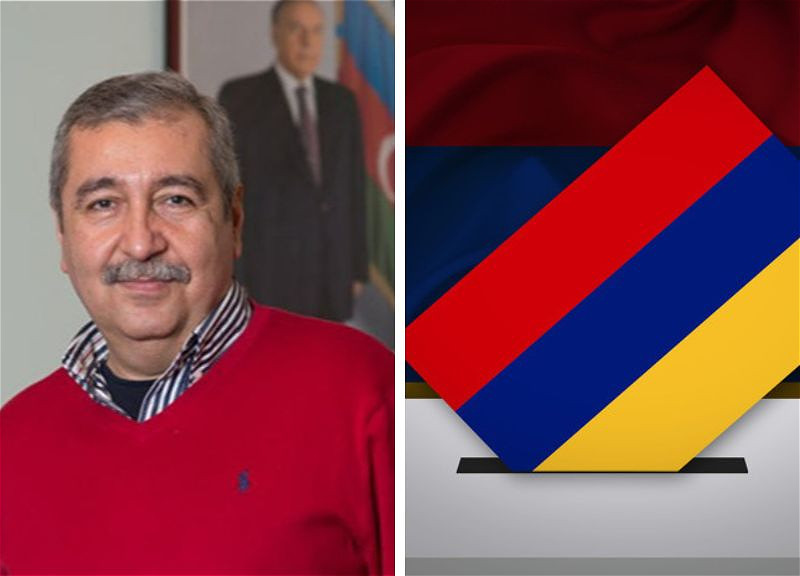
Statements by Prime Minister Nikol Pashinyan about 'parties of war' and the risk of conflict as early as this fall are not merely election polemics but a signal of deep internal divisions within Armenian society and elites. The outcome of the vote could determine not only the configuration of power but also the trajectory of the country’s security for the coming years.
Politics on the edge: rhetoric as a crisis indicator
Pashinyan’s sharp statements during a briefing have become one of the harshest signals in recent times. They reflect the main trend in Armenian politics over the past few years—severe polarization between advocates of a peace agenda and revanchist sentiments. Essentially, the prime minister has outlined the central conflict of the campaign: the confrontation between supporters of a peace agenda and forces ready to reconsider it. After the events of recent years, the issue of war and peace has ceased to be an abstract topic and has become the central axis of political struggle.
On one side is the current government, attempting to promote a pragmatic strategy: normalizing relations with neighbors, reducing confrontation, and transitioning to economic development. On the other are opposition forces, for whom concessions are seen as defeat and compromise as a threat to national identity.
This escalation of rhetoric indicates not only an election battle but also a profound crisis of strategic choice. The question of 'war or peace' once again becomes a central element of domestic politics.
Let’s consider possible scenarios for the situation’s development
Scenario 1: Pashinyan retains power
The most likely scenario at the moment appears to be one in which the current team maintains control over parliament. Despite criticism, Pashinyan retains several key advantages, including control over state institutions, support from a segment of society weary of conflicts, and an image as a politician capable of conducting negotiations.
In this case, the peace agenda, albeit with difficulties, will continue. However, even with a victory, Pashinyan will have to account for pressure from radical opposition, which will limit his room for maneuver.
Under this development, the country will likely remain in a state of fragile stability: without sharp foreign policy moves but with persistent internal tension.
Risk: growing internal instability and street activity by the opposition.
Scenario 2: Opposition strengthens without a change in power
A more realistic intermediate option is that the opposition significantly strengthens its position in parliament but does not form a government.
This will lead to the blocking of government initiatives, an increase in aggressive rhetoric, and a rise in the influence of 'hawks' in politics.
In such a case, the foreign policy course may become less predictable. Even without a formal change in power, pressure on the government could lead to a hardening of positions.
Risk: a gradual drift from a peace agenda to a more confrontational line.
Scenario 3: Opposition victory and change in power
The most alarming scenario, which Pashinyan directly mentions, is the rise to power of forces oriented toward revising the current policy.
If such forces do form a government, it becomes realistic to expect a rejection of existing agreements, a revision of the negotiation process, an increase in military rhetoric, and an attempt to mobilize society based on the idea of revenge.
However, a key question arises: how realistic would such a course be?
Even if desired, a new government would face objective limitations, expressed in: 1) the country’s economic vulnerability, 2) dependence on external actors, and 3) a lack of resources for large-scale conflict.
This means that loud rhetoric may not necessarily lead to immediate military action but will significantly increase the likelihood of escalation.
Risk: a chain reaction in which political statements themselves become a factor of instability.
Scenario 4: Political crisis and turbulence
One cannot rule out a more complex scenario—a protracted political crisis manifested in disputes over election results, mass protests, and the paralysis of institutions.
In such a situation, the role of non-political factors increases, and any provocations or incidents could quickly escalate into a broader conflict.
'Parties of war'—rhetoric or reality?
The rhetoric about 'forces preparing for war' may serve a dual function. On one hand, it is a tool for electoral mobilization aimed at consolidating the government’s supporters. On the other, it reflects real sentiments within a segment of the political class.
Most likely, the truth lies somewhere in between. Radical sentiments do exist, but their ability to transform into actual policy depends on the election results and the balance of forces.
The main choice: security or revenge
The June elections in Armenia are effectively turning into a referendum on the country’s strategic course.
Society faces a fundamental dilemma: continuing the policy of gradual normalization or shifting to a tougher and riskier line.
Particular attention is drawn to the time horizon outlined by the prime minister—fall as a possible period of escalation. Regardless of whether this is an element of political rhetoric or a risk assessment, the very fact of its mention heightens the level of anxiety.
Conclusion
The upcoming elections go far beyond a typical electoral process. The rhetoric of recent days shows that the stakes in these elections are exceptionally high. Their outcome will determine not only the alignment of political forces but also the level of regional tension. Regardless of the results, Armenia will remain in a zone of political turbulence in the coming months.
Amid high polarization, limited resources, and a complex foreign policy environment, any scenario other than the most moderate carries elements of instability. Thus, the key intrigue remains not only who will win but also what the country’s course will be the day after the vote.
The likelihood of immediate war is not inevitable, but the risk of escalation directly depends on which forces receive the political mandate. In this sense, Nikol Pashinyan’s warnings are not only an element of the election campaign but also a reflection of the real uncertainty in which the country finds itself today.
Author: Namik Aliyev,
Doctor of Legal Sciences, Professor,
Extraordinary and Plenipotentiary Ambassador,
Head of Department at the Academy of Public Administration under the President of the Republic of Azerbaijan