From Ukraine to the Middle East - the world is at a deadlock of wars. Azerbaijan has shown the way out
The modern architecture of international security, established decades ago on the ruins of global catastrophes, has finally entered a state of irreversible deformation in 2026.
The world as we knew it has ceased to exist, giving way to an era of total uncertainty, where armed conflict has become not the last resort of diplomacy, but its primary and often sole instrument.
Global threats to stability today take the form of protracted wars that drain economic resources, destroy infrastructure, and call into question the very right of the international community to manage crises. Against this grim geopolitical backdrop, the world is witnessing two types of military clashes: those that persist for years, turning into unhealing wounds on the planet's body, and those that erupt suddenly.
An example of the first category is the tragedy of the Russian-Ukrainian war, now in its fourth year. This conflict has long ceased to be local, transforming into a global economic black hole. The scale of losses—both human and material—defies final calculation, and the destruction of critical infrastructure has set an entire region back by decades.
The most terrifying aspect of this situation is the absence of even a faint hope for peace in the foreseeable future. Both sides are locked in an exhausting war of attrition, where each new day only widens the gap between past prosperity and future chaos.
Parallel to this, we are witnessing dramatic developments in the Middle East.
The war between Iran on one side and the coalition of the United States and Israel on the other, which in its initial hours seemed to many experts like a brief episode that could end with a swift strike, has stretched over forty days, after which the parties reached a truce. These forty days became a cold shower for proponents of 'high-tech blitzkriegs.' Instead of a quick resolution, the world gained a new zone of destabilization. The damage inflicted on the global economy, the blockade of trade routes in the Strait of Hormuz, and the general uncertainty affect not only the direct participants in the hostilities but also countries located thousands of kilometers from the epicenter of the explosion.
In this atmosphere of universal helplessness and protracted crises, only one example stands out for its completeness, logic, and effectiveness—Azerbaijan's victory in the 44-day Patriotic War and the subsequent anti-terrorist operation of 2023. Against the backdrop of four-year and forty-day deadlocks worldwide, the Azerbaijani model appears as the only example in modern history of an absolute victory achieved in the shortest time with minimal collateral costs to regional stability. While global powers struggle for years to find a way out of the labyrinths of their own contradictions, Azerbaijan has demonstrated to the world what it means to have the will to restore justice, backed by real strength. The factors that made this victory inevitable deserve the closest study in international political institutions. First and foremost, it is the unparalleled heroism and valor of the Azerbaijani soldier, whose motivation—the liberation of native land—proved stronger than any defensive lines of the occupier.
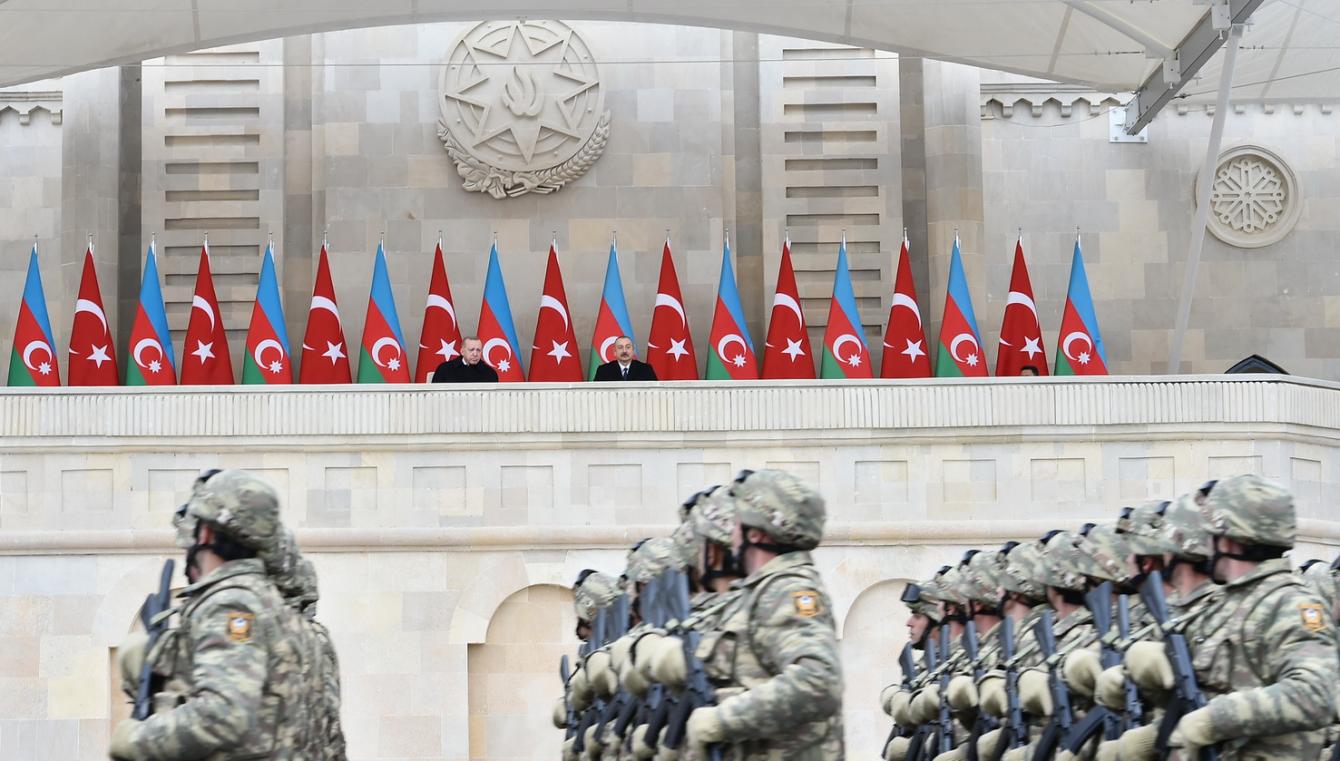
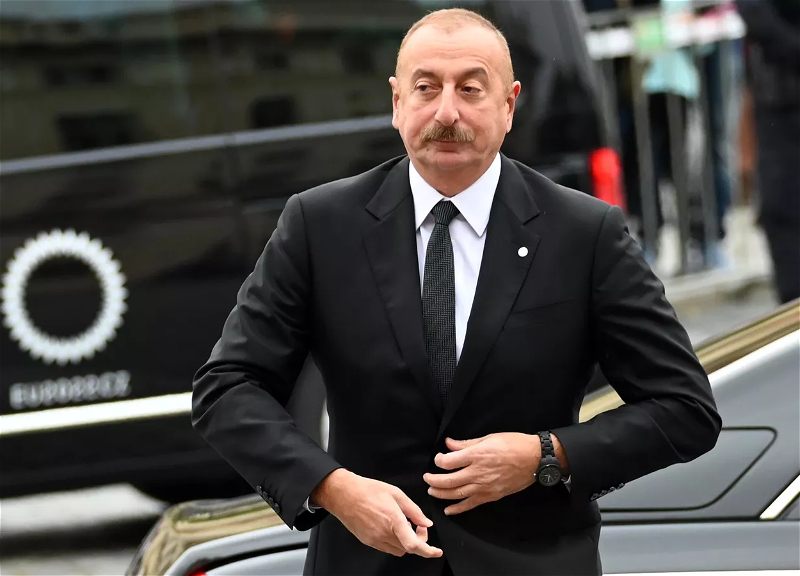
However, military valor is only part of the equation. The decisive factor in this success was strategy, leadership, and the iron determination of President Ilham Aliyev. The head of state built a unique political vertical that allowed the consolidation of all the people's resources toward a single goal. Azerbaijan's principled stance on territorial integrity was not mere rhetoric but a long-term course that remained unchanged for decades, despite external pressure.
Analyzing the ideas and theses of the President that became the foundation of this victory, we see a deep understanding that international law without strength remains just paper. Ilham Aliyev has repeatedly emphasized in his speeches that Azerbaijan itself ensured the implementation of UN Security Council resolutions that had remained unfulfilled for thirty years. His position, 'justice exists, but it must be fought for,' today resonates as a motto for a new era.
The President of Azerbaijan has shown the world that leadership is the ability to take responsibility at moments when others prefer endless and fruitless negotiations. He proved that it is possible to bring an aggressor to its knees and force it to capitulate if truth, a strong army, and the unity of the people stand behind you. While other examples are mired in prolonged uncertainties, losing control over the situation and the economy, Ilham Aliyev is leading Azerbaijan on a path of rapid revival of Karabakh and Eastern Zangezur. The fact that today, just a few years after the war, airports are being built, roads are being laid, and 'smart villages' are being constructed on the liberated lands is the best proof that Azerbaijan's victory was also the beginning of a new era of development.
The world of 2026 urgently needs examples of how conflicts can be resolved definitively and justly. In this sense, Azerbaijan's experience, its military professionalism, and the political leadership of President Aliyev serve as a benchmark for all those who value sovereignty and real security. As the head of state himself emphasized, 'there has been no other country in history that has achieved such a brilliant, complete, and absolute Victory as ours.'
While global players search for ways out of the crises they themselves created, Azerbaijan is already in the future, demonstrating that determination and loyalty to national interests are the only path to true, lasting, and just peace. The result of this process has been a complete transformation of the geopolitical landscape of the South Caucasus, where Azerbaijan, from a country whose territories were occupied, has become a key player dictating the agenda of peace, stability, and cooperation throughout the region and beyond.