Ilgar Niftaliyev: Kocharyan's bloody decade
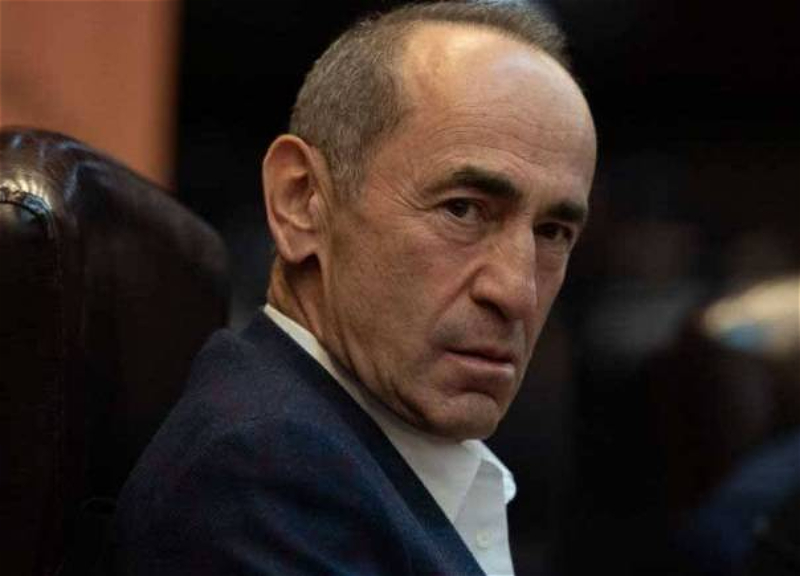
Azerbaijani scholar and Doctor of Historical Sciences Ilgar Niftaliyev posted a piece on his Facebook page about the tenure of former Armenian President Robert Kocharyan.
We present excerpts from the publication to our readers.
In the history of Armenia, the figure of Robert Kocharyan perhaps occupies the most unsavory place. At the same time, society's attitude toward Kocharyan, who practiced an aggressive and brutal style in politics, did not form overnight.
Kocharyan's move to Armenia in 1997, as the leader of separatists, for the offered position of prime minister was perceived by some circles in the country as a betrayal of 'Artsakh' [referring to the Nagorno-Karabakh region of Azerbaijan – 1news.az] for the sake of personal career advancement.
Distrust grew after the 1998 presidential elections, when Kocharyan won in the second round against Karen Demirchyan: 'The election results in no way reflected the sentiments of the population. Some experts found it strange that more voters turned out in the second round than in the first.'
Robert Kocharyan's election as president in February 1998 marked the beginning of a bloody decade in the country's history. Before turning the page to this bloody decade, let us recall an event that occurred in Karabakh even before Kocharyan's move to Yerevan. Some politicians and observers link the name of Robert Kocharyan to the death of the 'parliament speaker' of the puppet entity, the so-called 'Nagorno-Karabakh Republic (NKR),' Artur Mkrtchyan.
In the article 'The Start of Robert Kocharyan's Bloody Rule: The Murder of Artur Mkrtchyan,' published by 1in.am, it is noted that it was after the unexpected death of A. Mkrtchyan from a bullet to the temple that Robert Kocharyan became the master of power in the so-called 'NKR' – first heading the 'State Defense Committee' and then becoming the 'president' of the 'NKR.' Citing statements from some of the deceased's party comrades, the publication writes that Kocharyan came to power in the 'NKR' over Mkrtchyan's corpse.
However, these are merely speculations and insinuations by the author of the aforementioned article: to this day, the death of A. Mkrtchyan remains a mystery, and unfortunately, there is no evidence against Kocharyan in this case. Moreover, Kim Balayan, a party comrade of the deceased, participated in the investigation of his death and, at least in 1992, did not refute the version of an accidental suicide.
Often, emotional speculations, suspicions, hints, and substantiated accusations regarding one murder or another directed at Kocharyan, voiced by some journalists and experts, take on an entirely different weight and quality in the context of Robert Kocharyan's 10-year rule, which was rife with political assassinations and mysterious deaths.
For instance, on August 6, 1998, Armenia's Prosecutor General Henrik Khachatryan died of a gunshot wound in his office. According to the official version, he was shot by former transport prosecutor Aram Karapetyan with his personal weapon, who then committed suicide after the murder (somewhat reminiscent of the plot surrounding the assassination of U.S. President John F. Kennedy, where suspect Lee Harvey Oswald was killed by Jack Ruby, who later died of cancer in prison).
Interestingly, just an hour after Henrik Khachatryan's murder, Robert Kocharyan made a 'revelation' that it was indeed A. Karapetyan who killed the prosecutor general, and this version became the main theory of the investigative team. The crime was considered solved.
Deputy Minister of Defense, Colonel Vahram Khorkhoruni, was killed by gunfire on December 10, 1998, in the entrance of his home. The crime remains unsolved.
Deputy Minister of Internal Affairs and National Security, Major General Artsrun Margaryan, died on February 9, 1999. According to the official version, he committed suicide by shooting himself in the head and then a second time in the heart (!).
As a result of a terrorist act committed by a group led by Nairi Unanyan in the National Assembly (parliament) of Armenia on October 27, 1999, the following were killed: Prime Minister Vazgen Sargsyan, Speaker Karen Demirchyan, two deputy speakers Yuri Bakhshyan and Ruben Miroyan, State Minister Leonard Petrosyan, and deputies Armenak Armenakyan, Henrik Abrahamyan, and Mikael Kotanyan. The investigation and subsequent trial focused only on the perpetrators, and the true organizers of the attack, which brought Armenia to the brink of an internal state crisis, remain unidentified. The already tense atmosphere was further exacerbated by open accusations from the victims' associates implicating Kocharyan in the attack.
Some politicians, experts, and media outlets pointed out that it was after the parliamentary attack that Robert Kocharyan's power, previously playing a secondary or even tertiary role, began to noticeably strengthen.
The passions surrounding the parliamentary massacre intensified further when former chief advisor to the president on national security, Ashot Manucharyan (1991-1993), citing well-informed sources, stated that shortly before the attack, representatives of the special services of state 'X' had warned President Robert Kocharyan of an impending assassination attempt on Vazgen Sargsyan and Karen Demirchyan. This statement by Ashot Manucharyan has never been refuted by anyone. Meanwhile, official propaganda did everything to ensure that society forgot about this statement. The indifference of law enforcement agencies to it is also noteworthy.
It is also symptomatic that after the attack in the Armenian parliament, the series of mysterious political murders continued.
On December 11, 2001, Gagik Pogosyan, an advisor to Prime Minister Andranik Margaryan, was killed by a grenade explosion rigged to the front door of his apartment. The crime remains unsolved.
Under strange circumstances, the head of the Arzni district branch of the 'Electricity Distribution Networks' company, Ashot Mkhitaryan, and the head of the administration of Dalar village in Ararat Province, Garegin Avasavyan, among others, were killed. Curiously, their killers received minimal prison sentences, often conditionally.
This series also includes the high-profile murder of Georgian citizen Pogos Pogosyan in the 'Parus' café in Yerevan on September 25, 2001. Pogosyan was beaten to death by Kocharyan's bodyguards merely for greeting the president, who was in the café, with the words: 'Hello, Rob!' The bodyguard Harutyunyan, nicknamed 'Kuku,' was sentenced by the court to two years of conditional imprisonment (!).
Unresolved political murders and mysterious suicides, such as the suicide of former Prosecutor General Vladimir Nazaryan, who held the position before the collapse of the USSR, accompanied both of Kocharyan's presidential terms.
The final chord of this bloody decade was the events of March 1-2, 2008, when, as a result of disproportionate force used by police during the dispersal of a peaceful demonstration in central Yerevan, 10 people were killed and over 200 were injured.
The primary person responsible for the crime committed is the then-president Robert Kocharyan, who, along with his successor Serzh Sargsyan, did everything in his power to cover it up. Over the course of 10 years, not a single one of the ten murders was solved, many of those injured on that tragic day were not registered as victims, and no one received compensation. Alongside the murders on March 1 in central Yerevan, numerous other crimes were committed, such as store robberies and car arsons, yet no one was held accountable here either, just as there was no objective investigation into the disproportionate and illegal use of force by law enforcement against peaceful demonstrators.
The criminal authorities, attempting to shift the blame onto the opposition, arrested and imprisoned dozens of innocent people: activists and opposition leaders, including the current Prime Minister Nikol Pashinyan.
Robert Kocharyan's son claimed that during his father's presidency, Armenia's budget increased eightfold, and the economy grew sixfold.
Let us debunk the myth of 'brilliant' economic results. Yes, mathematically, the budget grew almost eightfold over these ten years, and the economy sixfold. But let us pose just two questions to Kocharyan's supporters. First: by how much did the Kocharyan family's budget and the scale of their business increase during this period? Undoubtedly, we are talking not about six or eight times, but about 600 or 800 times.
Kocharyan's 'economic miracle,' if you recall, began with the sale of Armenia's strategic enterprises. For negligible prices, the Cognac Factory, 'ArmenTel,' 'Zvartnots' airport, strategic infrastructures, and more were sold. Even gold reserves were sold – down to the last gram. Would you say that previous authorities were unaware of these assets? Or that there were no buyers? Of course, there were; it's just that the previous leaders believed that all of this should remain part of Armenia's economy as a guarantee of further economic development and a certain degree of sovereignty for the country.
But Kocharyan was not particularly concerned with the future; he needed cash. For what exactly became clear later. No, it was not about enhancing the security of Armenia and 'Artsakh' (even the funds from the pan-Armenian 'Armenia' fund, which before Kocharyan were directed toward solving one or another strategic task, were spent under Kocharyan, say, on building the 'Lovers' Park' in central Yerevan).
Kocharyan needed the illusion of economic growth in the form of a construction bubble (development in central Yerevan), as it was the most profitable. And, of course, it provided double-digit economic growth, but only on paper.
The fact is that only a few dozen families benefited from this growth (usually representatives of Kocharyan's inner circle, who received development rights and 'earned' tens of millions in the shortest time), while thousands of ordinary citizens lost their homes during the same period.
This was Kocharyan's 'economic miracle,' which, by the way, collapsed before everyone's eyes just a few months after his resignation. And if his supporters today think that people have forgotten all this, they are deeply mistaken. Propaganda, funded by a negligible sum from a family budget that grew 600-800 times, will not help here.
Source: I. Niftaliyev's Facebook page