Airlines slash flights as fuel shortage fears mount
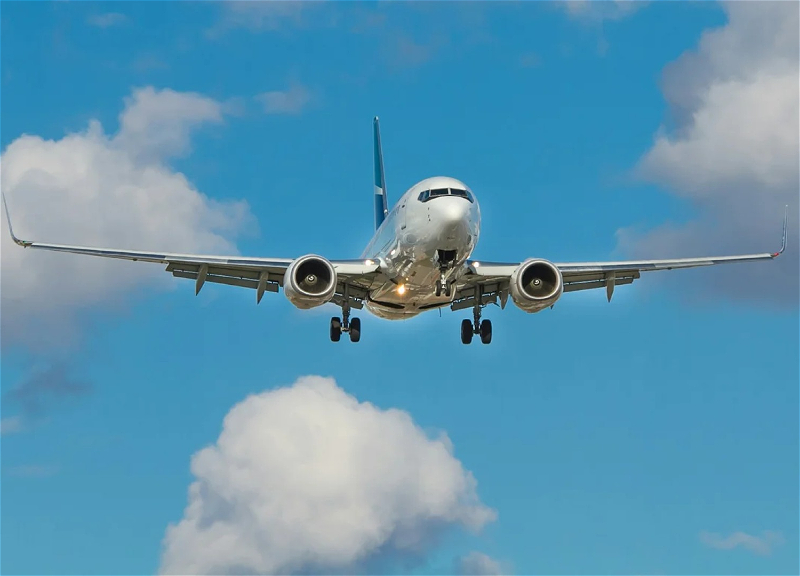
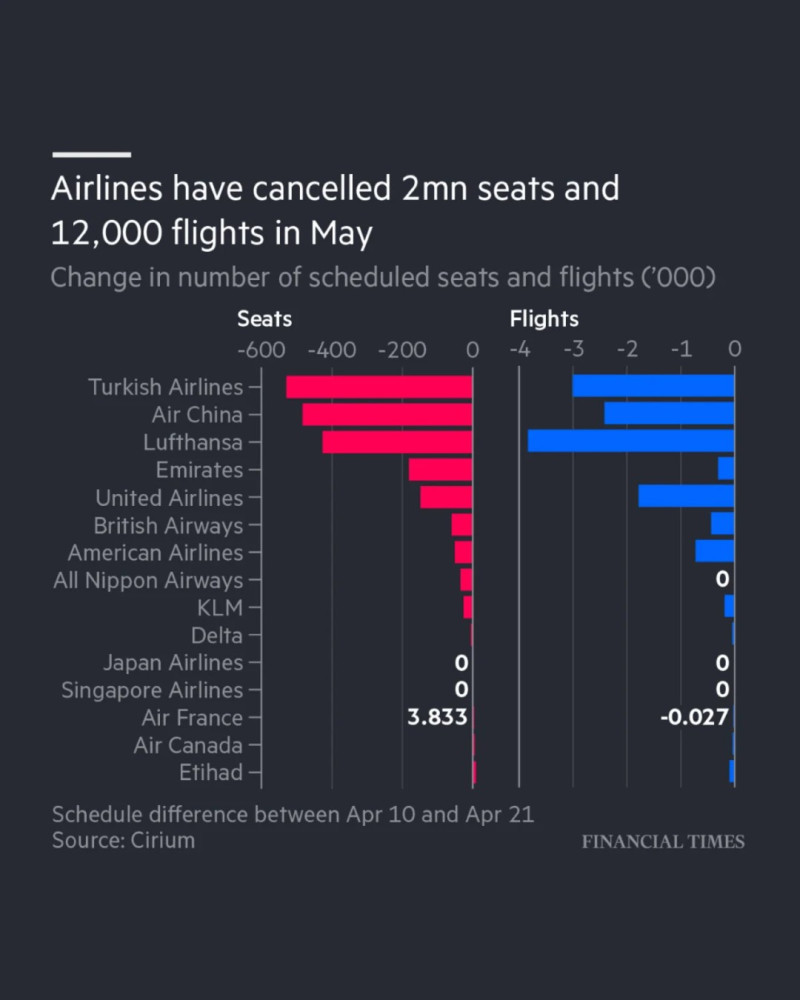
Global airlines have cut 2 million seats from their May schedules within the past two weeks, as concerns about fuel availability in the coming weeks intensify, Report informs via Financial Times.
Thousands of flights have been cancelled and several services have switched to smaller or more fuel-efficient aircraft to conserve fuel as they brace for supply disruption, according to data from analytics company Cirium.
Since the start of the Iran war in late February, the cost of jet fuel has doubled, forcing airlines to raise ticket prices, while the closure of Gulf airports that connected a third of European journeys to Asia has thrown global travel into disarray.
Gulf carriers, including Emirates, Etihad and Qatar - whose flights are still recovering after halting in the early weeks of the conflict - have redrawn their May schedules, including cancelling flights, Cirium data shows.
The total number of seats available on all airlines during May has fallen from 132 million to 130 million between mid and late April, according to the figures. International carriers from British Airways and United to China Air and Japan's ANA have also cut or added significant capacity, reshuffling their network to ease bottlenecks in global travel.
"No European airline is going to send a plane off to Asia to mop up demand from the Gulf, and find it's stuck there without fuel to go back," said aviation analyst John Strickland. "Jet fuel pricing has always been intermittent, but I don't think in my time there has ever been the question of shortages."
Air France said that it had been asked not to add extra services to Singapore or Tokyo's Haneda, as the two big connecting hubs in Asia seek to limit their jet fuel use. The region has been hardest hit by the supply disruption because it is more reliant on fuel from the Strait of Hormuz, which remains close to a standstill because of the threat of Iranian attacks and a US naval blockade.
"The disruption of these flows has created significant imbalances in global travel supply and demand," said Ben Smith, chief executive of Air France-KLM. "Price and demand" for fuel has become "much more significant" since the conflict began, Bum-ho Kim, acting chief executive of Seoul's Incheon airport, told the FT. "We are trying to seek any solutions for passengers," he said. Vietnam has already introduced some jet fuel rationing.
Japan's airlines have benefited from increased European demand, but have also warned they will be hit by much higher fuel charges. Carrier ANA said it will spend an extra £650 million until next March on fuel, while Japan Air said its profits would fall by a fifth because of higher costs.
US carrier Delta Air Lines has cut 3.5 percent of its network in the second quarter to save fuel, while EasyJet and Virgin Atlantic have both warned about their profitability during the crisis. Germany's Lufthansa accounted for the most cancellations in recent months, cutting 20,000 flights between May and October because fuel costs have made them unprofitable.
Air China had the second-highest number of seat cancellations, after cutting flights, including internal services between Chengdu and Beijing, Cirium found. Emirates, which is running about two-thirds of its pre-conflict capacity but with lower passenger numbers, has cut the number of aircraft operating some major routes. It is still running A380s, a double-decker airliner that carries up to 615 passengers, from Dubai to Brisbane, but has removed Boeing 777s from the route, Cirium data shows.
Both weaker demand and greater cost pressure have driven airlines to switch to smaller or more fuel-efficient aircraft. Etihad has switched from using an Airbus A350, which carries almost 400 passengers, to a Boeing 787 that has between 220 and 300 seats, depending on the exact configuration, on its service between Abu Dhabi and Hong Kong.
However, some routes have switched to larger planes to meet increased demand for direct flights between Europe and Asia. Air France now uses a larger version of Boeing's 777 on its Mumbai route, while Air China has deployed a larger 777 on its route from London Heathrow to Beijing.
Ryanair CEO Michael O'Leary warned on May 1 that some European airlines may face bankruptcy as early as the fall if high fuel prices persist throughout the summer.
"I think there will be failures," O'Leary added. "If it continues at $150 a barrel into July, August, September, then you'll see European airlines fail and that, in the medium term, would probably be good for Ryanair's business."
European Energy Commissioner Dan Jorgensen also warned that European airlines may face fuel supply disruptions as early as early June, posing risks to summer air travel.
"Already now we see companies canceling flights and routes and we see prices going up," Jorgensen said in an interview with Politico.
According to The Independent, fuel prices have risen by almost 84% since the US and Israeli air strikes against Iran began on February 28 and the blockade of the Strait of Hormuz.