Between the EAEU and the EU: trade deadlock and Yerevan's political choice
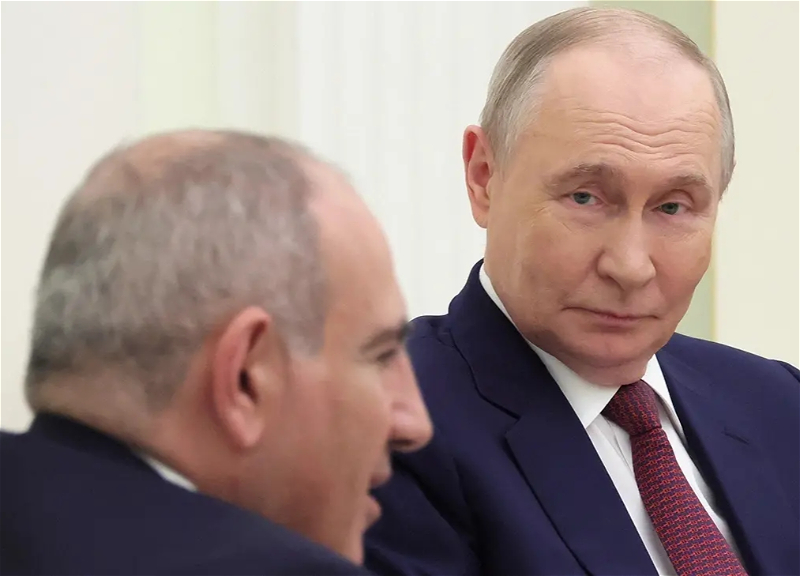
Systemic contradictions between Yerevan and Moscow that had been accumulating in recent months culminated in an emotionally and politically tense phone conversation between Prime Minister Nikol Pashinyan and Russian President Vladimir Putin.
This conversation, held at the initiative of the Armenian side, or more precisely the way its content was presented by the press services of the Kremlin and the Armenian government, demonstrated a substantial difference in priorities and interpretations of the current state of bilateral relations. The polarity of the official press releases reflected not merely technical disagreements on trade issues but also a deep crisis of Armenia's self-determination on the international stage.
According to Yerevan's official statement, the key subject of discussion was the problem of trade barriers faced by Armenian exporters when supplying products to the Russian market. Nikol Pashinyan directly pointed out that the restrictions imposed by the Russian side on goods of Armenian origin directly contradict the legal framework of bilateral cooperation and the fundamental regulations of the Eurasian Economic Union (EAEU).
In turn, the Kremlin's official communique shifted the emphasis to the political component of the meeting. The Russian side stressed adherence to the Joint Statement of the leaders of the EAEU member states — Russia, Belarus, Kazakhstan and Kyrgyzstan — adopted in Astana on May 29, 2026. In this document, the four states effectively presented Yerevan with a demand to determine its final development vector as soon as possible and to hold a nationwide referendum on joining the European Union or confirming its status as a full-fledged EAEU participant.
The difference in agendas exposed the strategic model of behavior of the Armenian authorities, which EAEU partners increasingly characterize as an attempt to combine mutually exclusive integration processes. Over the past years, Armenia has continued to actively extract economic dividends from participation in the Eurasian integration bloc. This refers to access to a large duty-free market, preferential prices for energy carriers fixed in long-term agreements, freedom of movement of capital and labor, as well as large volumes of re-exports and cross-border transfers. At the same time, official Yerevan has pursued accelerated rapprochement with EU institutions, adopting a law on the ratification of agreements with the European Union and publicly declaring its European aspirations. When the issue of holding a referendum on EU membership was raised during yesterday's negotiations, Pashinyan put forward a procedural condition according to which holding such a vote in practice is possible only after Armenia submits an official application to Brussels and the process acquires a substantive character. Thus, the Armenian leadership is trying to postpone the final decision in order to buy time and retain the benefits of the Eurasian market.
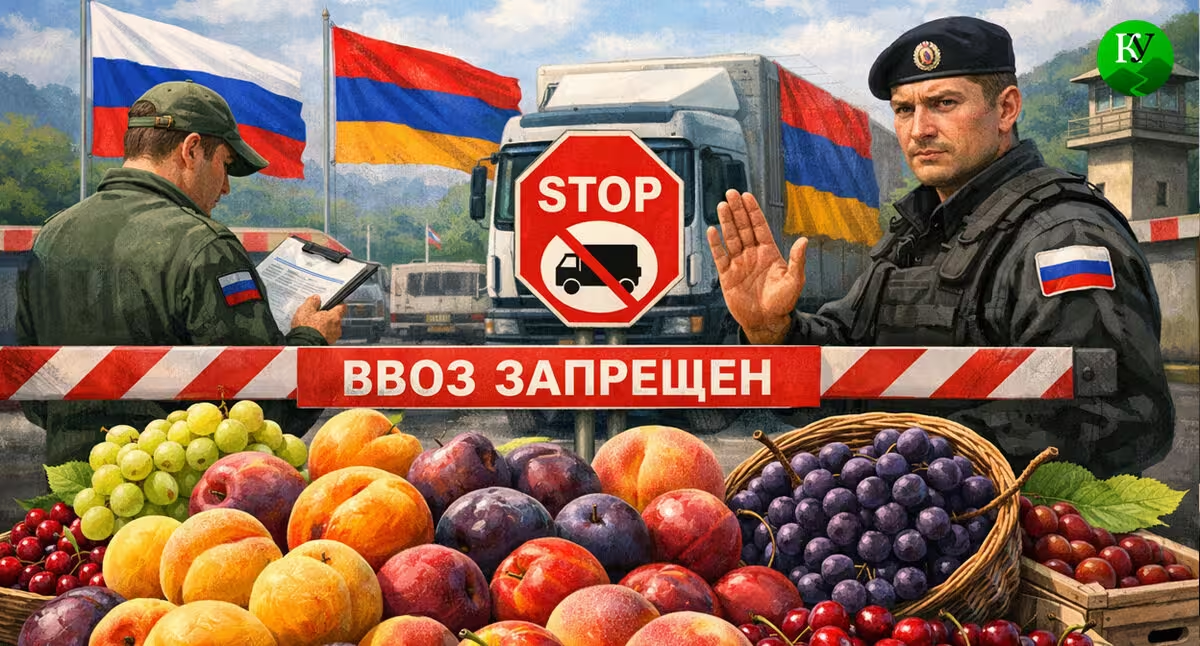
Moscow's reaction to the uncertainty maintained by Yerevan in recent months is known. Its response to this ambiguity has been a consistent tightening of phytosanitary and customs controls. The instrument of pressure on Yerevan has been regulatory measures by Rosselkhoznadzor and the Federal Customs Service of the Russian Federation, which, under the pretext of detecting pests, exceeding pesticide standards and non-compliance with EAEU regulations, have suspended or significantly restricted the import of key categories of Armenian exports. The main articles of the Armenian agro-industrial complex have been subject to bans and enhanced inspections: fresh fruits and vegetables, dairy products, fish, canned goods, flower products, mineral water and even the famous Armenian cognac. Russian customs authorities have also increased lengthy inspections of cargo vehicles at the Verkhny Lars checkpoint — still the only direct road land route connecting Armenia with Russia — leading to multi-day delays and spoilage of perishable goods.
The restrictions imposed by Russia have dealt an immediate and extremely painful blow to the Armenian economy. Armenia's dependence on the EAEU market and specifically Russia in the sphere of agriculture and the food industry is critical. Unlike the mining industry, whose exports are oriented toward other regions of the world, the Armenian agricultural sector is almost entirely tied to consumers in the Russian Federation. The import ban instantly devalued the labor of tens of thousands of farms, processing enterprises and logistics companies. Agriculture in Armenia is traditionally characterized by a high level of indebtedness: most farmers take out large seasonal loans against the future harvest. The inability to sell the harvested products on the main market threatens mass defaults by farmers, bankruptcy of procurement enterprises and a sharp drop in the country's foreign exchange earnings, which creates a heavy burden on Armenia's financial system and budget.
The reaction to the resulting trade deadlock has been growing social and economic discontent inside Armenia itself. Farmers and small producers facing financial catastrophe due to goods stuck at the border or rotting in warehouses have begun openly protesting against the authorities' policies. Against this backdrop, government promises to compensate for losses by reorienting exports toward the European direction have collided with harsh economic reality. Although the European Union has indeed taken steps toward Yerevan by granting certain trade preferences, simplifying certain procedures and opening its market to Armenian goods, the European direction cannot replace the Russian one.
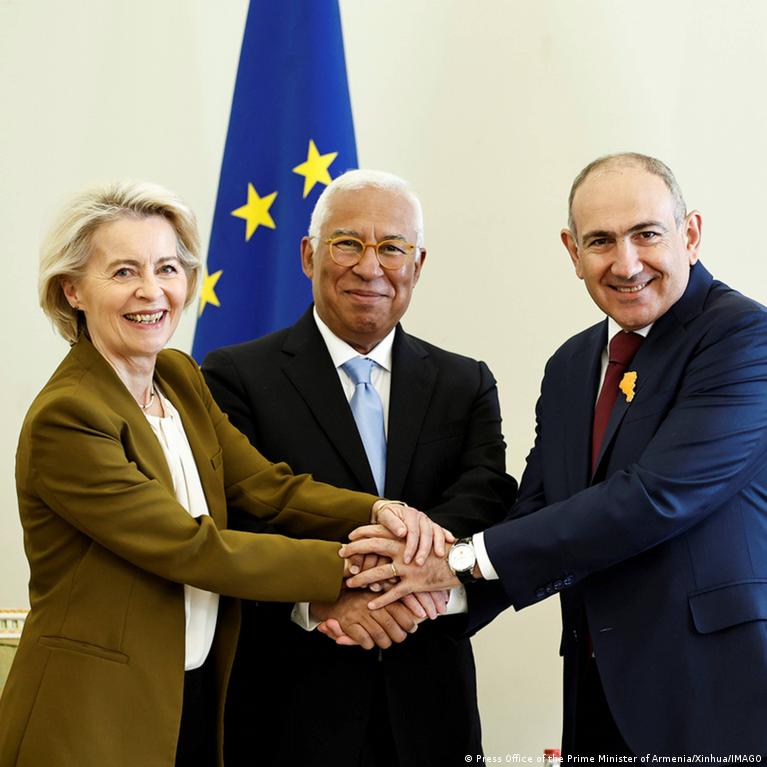
The reason for this is the EU's strict non-tariff regulation. For Armenian agricultural and food products to be sold in large quantities in European retail chains, they must comply with complex regulations on standardization, certification, environmental friendliness and packaging. Most small and medium-sized farms in Armenia lack the resources and technologies to undergo such costly and lengthy quality control procedures. In addition, logistics for delivering goods to Europe through third countries and by sea significantly increases the final cost of Armenian products, making them uncompetitive compared to subsidized European producers. As a result, Armenian farmers find themselves in a situation where the traditional and familiar EAEU market is closing while the EU market, open on paper, remains practically inaccessible, which only intensifies social tension in the agricultural regions of the republic.
Initially, the Armenian authorities tried to adhere to a tactic of ignoring or downplaying the scale of the problem. In public statements by representatives of relevant ministries and agencies, the sanctions imposed by Rosselkhoznadzor were presented as technical working issues, phytosanitary formalities or temporary disruptions at logistics hubs. Yerevan sought to demonstrate outward calm and show that the country's economy could adapt to local shocks without intervention at the highest political level. However, as trade restrictions acquired a systemic character and damage to the real sector of the economy reached critical amounts, maintaining the illusion of normality became impossible.
The severity of the economic sanctions and the threat of a large-scale social explosion among farmers forced the Prime Minister of Armenia to change tactics. The need to personally initiate a conversation with the Russian president and directly appeal to the norms of the Eurasian Economic Union was in fact an acknowledgment that all alternative levers of influence had been exhausted. Pashinyan's statement that Moscow's actions violate the basic EAEU agreements sounded like an attempt to use the union's legal mechanisms against its leading member. However, the Kremlin's response, recalling the decision of all other bloc members on May 29, clearly indicated that economic integration and free trade cannot exist in isolation from political loyalty, and Yerevan will no longer be able to postpone the choice between the Eurasian vector and European integration.