Systemic crisis: How Macron burned France's trust
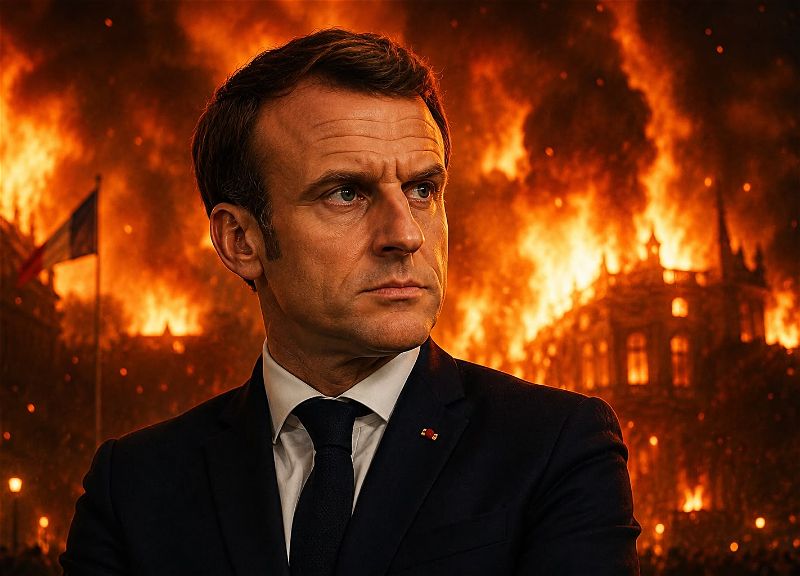
Natural disasters that hit Europe this summer instantly tore the glossy wrapper off the myths about the flawlessness of Western governance systems.
Abnormal heat, drought and hurricane-force winds turned forests and nature reserves in the southern part of the continent into a giant torch within weeks, triggering a large-scale humanitarian catastrophe. The scale of the disaster took on a truly dramatic character from the Iberian Peninsula to the Mediterranean, but it was in France, which claims the status of leader of the European Union, that the situation exposed the deep helplessness of state institutions.
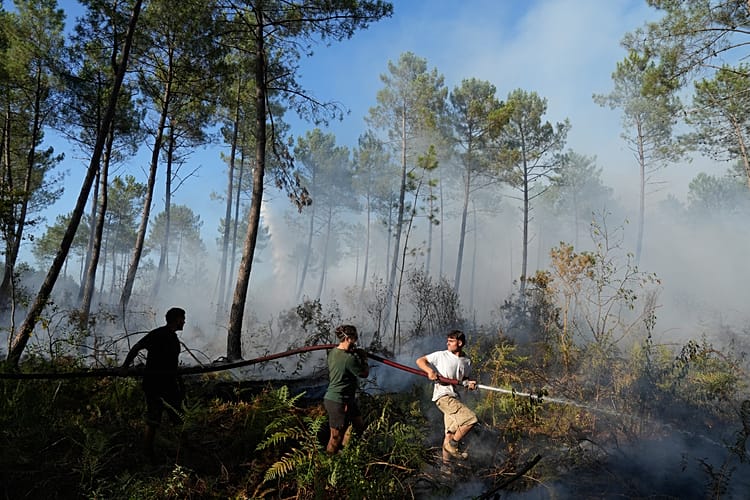
Fires in the departments of Gironde, Landes and along the Atlantic coast escalated into an unmanageable firestorm that burned forest areas, approached the outskirts of Bordeaux and came close to facilities of the largest enterprises of the French military-industrial complex. The fire destroyed about 50 thousand hectares of forests, forcing authorities to evacuate more than 220 thousand people from danger zones.
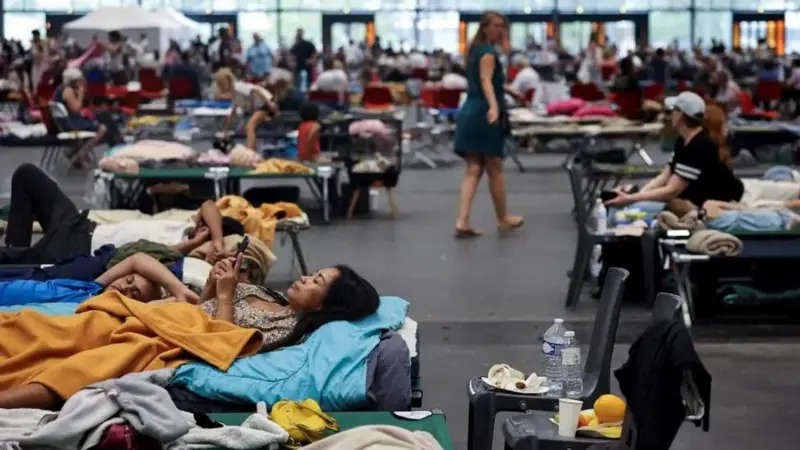
This crisis revealed the catastrophic results of years of budget austerity and administrative voluntarism by the Élysée Palace. The president repeatedly spoke from the podiums of international summits, declaring France's leadership in environmental protection. However, the real natural onslaught exposed a catastrophic shortage of basic resources: the country faced an acute lack of firefighting aviation, worn-out special equipment and extreme depletion of rescue services holding the front line on the brink of their capabilities with the forces of overworked volunteers.
The situation was aggravated by the lack of long-term prevention — programs for clearing forests and arranging reservoirs had not received the necessary funding for years. Against the backdrop of destroyed ecosystems and mass evacuations, Macron's visits to the disaster zones accompanied by film crews only highlighted the main gap: the Élysée Palace has masterfully mastered the art of extinguishing information fires in the media, but turned out to be completely unprepared to protect the country from a real natural disaster.
However, the failure in fighting the fire turned out to be only the visible part of a much larger decline of French statehood, the origins of which lie in the very style of governance of the current president.
When in 2017 the thirty-nine-year-old Emmanuel Macron walked to the podium at the Louvre to the sounds of the EU anthem, he was proclaimed the savior of the Fifth Republic. The president promised to overcome the old division into right and left, transform the ossified economy, unite Europe and turn France into an advanced environmental power. After years of rule, youthful technocratic zeal gave way to harsh reality: the country found itself plunged into a protracted political paralysis, social crisis and power deadlock. Macron's failure is not an accident, but the logical outcome of a governance style that systematically ignored citizens' demands, replacing reforms with loud PR and dialogue with administrative voluntarism.
Political paralysis: From absolute power to institutional deadlock
Macron's main political fiasco was the gradual but inexorable disintegration of the very political system he had promised to modernize. Having destroyed the traditional system-forming parties — the Republicans and the Socialists — the Élysée Palace built a system that, without a reliable foundation, turned out to be extremely fragile.
The loss of an absolute majority in the National Assembly in 2022 was the first serious alarm bell. Instead of building compromises with parliamentarians, the presidential camp relied on the regular use of Article 49.3 of the Constitution, which allows laws to be passed bypassing a vote by deputies. This step finally undermined the legitimacy of the executive branch.
The final chord of political deafness was the emotional and ill-considered decision to dissolve parliament. Hoping for the effect of surprise, Macron plunged the country into the deepest constitutional crisis, resulting in a completely fragmented legislative assembly where key roles were taken by irreconcilable far-right and radical left forces. The attempt to demonstrate strength turned into the status of a "lame duck," when the president finally lost the ability to push through any significant initiatives through parliament.
Social ashes: Erosion of the social contract
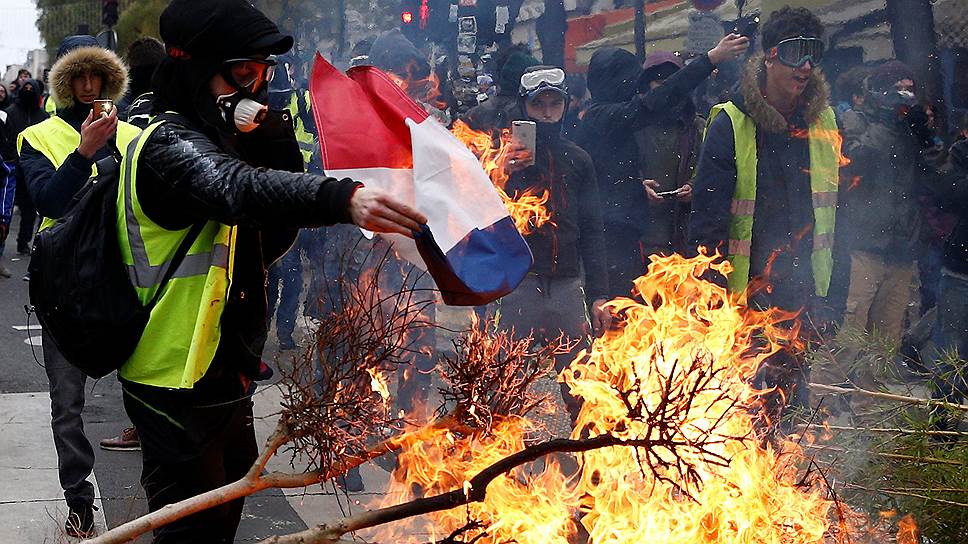
In the social sphere, Macron's rule will be remembered for the constant escalation of street protests and the consistent curtailment of citizens' rights under the pretext of increasing economic competitiveness. The wave of "yellow vests" uprisings against rising fuel prices met with harsh force pressure from the authorities, demonstrating the Élysée Palace's unpreparedness for dialogue with the regions.
Later, the unpopular pension reform was effectively pushed through despite multimillion-dollar strikes, clearly showing disregard for the opinion of the majority of workers. Parallel cuts in funding for social services hit medicine, education and provincial infrastructure. As a result, the traditional social contract was broken: the French stopped seeing the state as a protector, perceiving it as a punitive mechanism acting in the interests of big business.
South Caucasus ashes: How French diplomacy lost the region
The foreign policy catastrophe of the Macron administration in the South Caucasus became another telling evidence of the decline of French diplomacy.
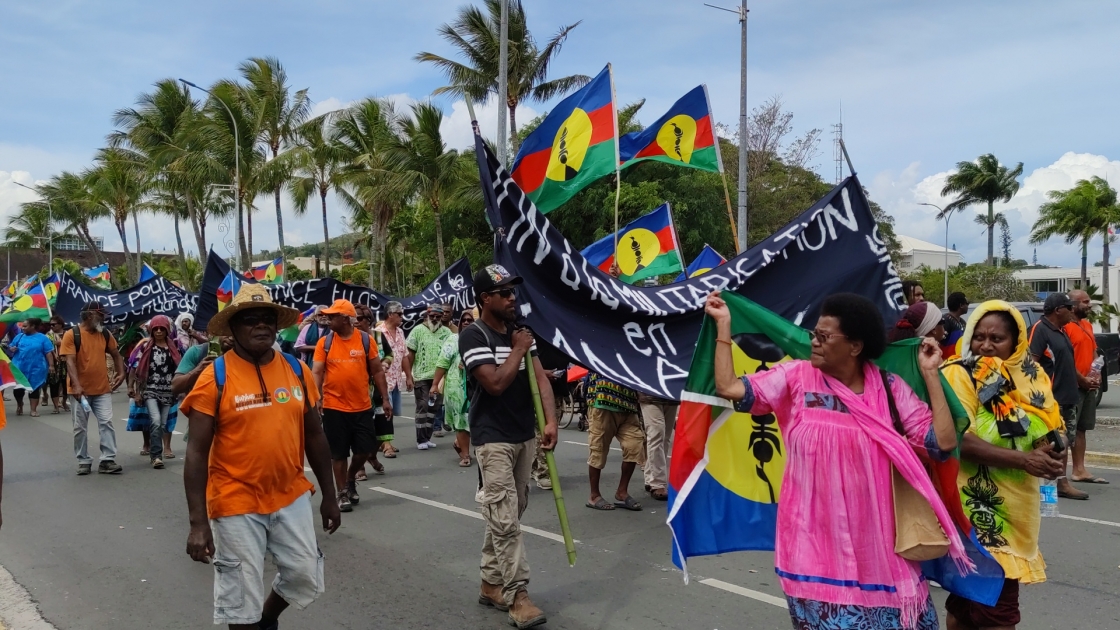
Having lost decisive influence in West Africa and provoked a severe crisis with the loss of control in New Caledonia, the Élysée Palace tried to compensate for these geopolitical defeats in the South Caucasus by assuming the role of Armenia's patron and chief arbiter in the region. However, instead of strengthening Paris's positions, French intervention only finally undermined trust in French diplomacy.
The bet on loud anti-Azerbaijani declarations and arms supplies to Armenia completely nullified Paris's status neutrality, excluding it from the negotiation process between Baku and Yerevan. As a result, France found itself completely isolated from key processes in the South Caucasus: the Élysée Palace fed Armenian society unfulfillable promises, but at decisive moments of the crisis could offer nothing but rhetorical appeals. By replacing deep diplomacy with journalistic theater and attempts at open pressure, Macron not only lost the struggle for influence in the region but also turned the Caucasian direction into another ash heap of his foreign policy.
Why the ideal technocrat suffered a fiasco
The main reason for all these defeats was Emmanuel Macron's own managerial philosophy. Believing in his own intellectual superiority and the power of marketed formulations, the French leader built a leadership style that completely excludes feedback.
He deliberately distanced himself from local authorities — mayors of cities and heads of departments, who are the first to take the blows of crises. Instead of decentralization and strengthening local services, Paris continued to concentrate all powers at the top of the executive branch. As a result, a catastrophic gap emerged between beautiful presentations in the capital and the harsh reality on the ground. The state machine turned out to be incapable of working ahead, responding to challenges only when the situation was already out of control.
The era of Emmanuel Macron is coming to an end amid deep disappointment. Having taken office under slogans of renewal and strength, he leaves behind a divided society, a dysfunctional parliament, lost foreign policy positions and state institutions left exposed to the elements. The failure of Macronism has become a vivid proof that politics devoid of empathy, saving on vital services and replacing systemic work with PR actions, is inevitably doomed to collapse.