U.S. ready to lift sanctions on Turkey and transfer F-35, but there is a condition: what is known about the negotiations
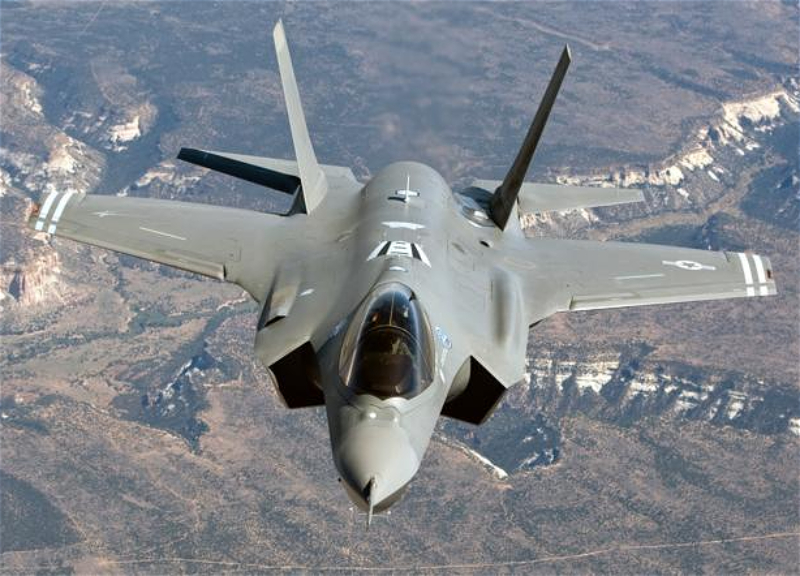
Against the backdrop of optimistic statements by U.S. President Donald Trump at the NATO summit in Turkey, two key issues remain in relations between Washington and Ankara today: the practical lifting of sanctions under the CAATSA law and the sale of F-35 fighters, as well as Turkey's possible return to their production program.
As the newspaper Hürriyet writes, although these topics are closely linked, the lifting of CAATSA sanctions does not automatically resolve the F-35 issue, although it removes one of the main political and legal obstacles to possible resumption of cooperation.
That is why the U.S. president's statement after talks with the Turkish leader that "sanctions will be lifted, and the F-35 issue will be considered" is of particular importance. Today, the discussion is not only about lifting sanctions, but also about whether Turkey can reintegrate into the American defense cooperation system.
How can CAATSA sanctions be lifted?
CAATSA sanctions were imposed on Turkey after the purchase of Russian S-400 surface-to-air missile systems. On December 14, 2020, the United States imposed restrictions on Turkey's Defense Industry Agency (SSB), including:
- a ban on issuing new American export licenses;
- restrictions on the provision of loans;
- sanctions against a number of senior officials in the Turkish defense industry.
U.S. law provides for the possibility of lifting these sanctions — CAATSA gives the U.S. president the right to waive the application of sanctions or terminate their effect for reasons of national security, but only if the conditions established by law are met.
At the same time, not only CAATSA applies to Turkey. The second key document is the National Defense Authorization Act for Fiscal Year 2021 (FY2021 NDAA), which contains special provisions specifically for Turkey.
Therefore, when the U.S. president appeals to Congress to lift the sanctions, he must confirm that the requirements of both CAATSA and FY2021 NDAA have been met.
What conditions must Turkey fulfill?
According to the special provisions of FY2021 NDAA, to lift the sanctions it is necessary to confirm that:
- the S-400 systems are no longer in service with Turkey;
- there are no S-400 or similar systems on Turkish territory;
Ankara has provided guarantees that it will not acquire similar air defense systems from Russia in the future.
Once the U.S. president officially certifies to Congress that these conditions have been met, the procedure for lifting CAATSA sanctions provided for by current legislation is considered complete.
What will happen to the S-400?
The main unresolved issue remains the fate of the purchased Russian S-400 surface-to-air missile systems.
Until now, various options have been discussed, including storing the systems in warehouses, dismantling launchers (or key mechanisms) and placing them at a joint facility, as well as transferring the systems to a verifiable inactive status.
However, according to available information, the American side believes that options such as storing S-400 in Turkey under U.S. control or dismantling individual mechanisms and subsequently storing them at a joint facility do not meet current legal requirements.
Washington's position remains unchanged: the S-400 systems must no longer be listed as part of Turkey's armament.
Therefore, the issue of selling the S-400 has come to the fore. For some time, bilateral consultations have been ongoing between Ankara, Washington, and Moscow. According to American officials, the option of selling the systems to a third country is being worked out. The most likely scenario in Washington is considered to be the transfer of the S-400 to one of the Persian Gulf countries.
However, the Russian factor comes into play here. According to the end-user agreement, the transfer of the systems to a third state is possible only with Russia's consent. According to available data, Ankara is already discussing this issue with Moscow, and the Russian side does not object in principle to such an option.
And what about the F-35?
Turkey's exclusion from the F-35 program was linked to CAATSA sanctions, but was not their automatic consequence. The U.S. Congress included separate provisions in defense legislation limiting F-35 deliveries to Turkey.
Therefore, even if sanctions are lifted, Ankara's return to the program will require separate political, legal, and technical procedures.
In particular:
- the lifting of CAATSA sanctions and the resumption of the F-35 process are two different legal procedures;
- while the first concerns the termination of the sanctions regime, the second includes issues of arms exports, congressional oversight, and technical assessment by the Pentagon.
How will the procedure in Congress proceed?
To lift restrictions on F-35 deliveries, it is necessary to overcome provisions previously adopted by Congress. This can be done by amending legislation, including a new exclusion provision in the defense budget law, or changing the application of existing norms by the executive branch.
If the roadmap being discussed between Washington and Ankara is implemented, the White House will have to notify Congress that Turkey has fulfilled the requirements of FY2021 NDAA and that there are no longer legal obstacles to reconsidering the F-35 issue.
After that, the standard 15-day congressional review procedure applied to the sale of American weapons to foreign states will begin.
According to information received by Ankara from the American administration, no new political obstacles from Congress are expected at this stage.
Pentagon approval is also required
But even after the procedure in Congress is completed, the process will not be finished. The Pentagon and the F-35 Joint Program Office must conduct their own technical security assessment.
In addition, the question remains open in what status Turkey will be able to return to the program: to become an industrial partner again or to participate only as a buyer country. This issue will also be the subject of separate negotiations.
Turkey may first receive six already paid-for F-35s
If all procedures are successfully completed, the first step could be the transfer to Turkey of six F-35 fighters for which it has already paid.
The first aircraft was produced in 2018, the sixth in mid-2019. However, after Turkey's exclusion from the program, all aircraft remained in the United States and were never delivered to the customer.
Washington is considering an option in which the delivery of these six aircraft would become an interim solution until Turkey's full return to the program.
Before delivery, the aircraft will need to undergo maintenance after years of storage. In addition, new pilots will need to be trained, since some previously trained pilots have already completed their service, technical personnel will need to be recertified, and necessary infrastructure will need to be updated.
According to sources from the publication, Turkey needs fifth-generation fighters not only to perform tasks within NATO, but also to obtain technologies, engineering experience, and practical knowledge that will be useful in the development of the national KAAN fighter.
Turkey expects deliveries for its own KAAN
The issue of supplying engines for the KAAN is progressing most rapidly, since it depends mainly on U.S. export licenses, company approvals, and executive branch decisions.
According to sources, the process is already in the final stage.
Today marks the expiration of the period during which Congress could raise objections.
Under a contract worth more than $700 million, Turkey expects to receive 80 aircraft engines.
Since each KAAN aircraft is equipped with two engines, this will be sufficient for the production of the first 40 fighters.
At the same time, Turkey continues development of its own engine. According to Turkish authorities, serial production with a fully national powerplant is realistically expected after 2035.
Washington emphasizes that approval for the export of these engines is not only a technical but also a political decision.
In effect, the United States is signaling: "We are ready to cooperate with Turkey again in the defense industry. However, we will start not with the most sensitive issue, such as the F-35, but with less sensitive areas."
A pause remains on the F-16 for now
Turkey has refused to purchase upgrade kits, but the contract for the supply of 40 new F-16 fighters remains in force, and an advance payment has already been made.
At the same time, the American side seeks to include in the cost of the deal additional expenses related to the production line and new onboard computers, which has led to new negotiations.
High cost remains the main point of disagreement for now. If CAATSA sanctions are lifted and talks on the F-35 advance, the likelihood of revising the terms of the F-16 deal will increase significantly.
In conclusion
For nearly twenty years, Turkey has not acquired new combat aircraft. Accelerating KAAN production after engine deliveries and continuing development of its own engine are of strategic importance. However, during the transition period, the Turkish Air Force objectively needs new fighters.
Therefore, the lifting of CAATSA sanctions will not be the final point, but the beginning of a new stage in relations between Ankara and Washington. The removal of restrictions will mean overcoming an important psychological and legal threshold and will significantly reduce pressure on the Turkish defense industry.
Source: Hürriyet