"Our dictator": why the West forgives Pashinyan for what it punishes Georgia for

Parliamentary elections held in Armenia on June 7, 2026, clearly demonstrated the profound transformation of the political regime in this South Caucasus republic and exposed the obvious crisis of the value guidelines that its leadership had declared over the past several years.
The process that external observers had long presented as the strengthening of democratic institutions has in fact resulted in the formation of a rigid vertical of power that uses the entire arsenal of authoritarianism to maintain its positions. The ruling Civil Contract party, led by Nikol Pashinyan, approached the election campaign not as an honest competition of political programs but as an administrative and coercive operation whose goal was the complete suppression of any alternative agenda and the dismantling of the remaining elements of real opposition. The methods employed by the current authorities both during the pre-election agitation phase and directly on voting day force observers to speak of a systemic degeneration of the state apparatus, in which the law and security structures have become instruments for the personal survival of the ruling elite.
The atmosphere surrounding the pre-election period was marked by an unprecedented level of pressure on the regime’s opponents. Instead of substantive discussions and debates, society faced a wave of repression that affected hundreds of activists, regional leaders, and representatives of opposition associations. Mass detentions and arrests became routine practice, with law enforcement agencies using charges of vote buying and preparing to destabilize the situation as the main legal pretext. This formulation allowed the authorities to isolate the most dangerous competitors without presenting substantial evidence, paralyzing the work of local campaign headquarters.
Regional elites and representatives of local self-government who had retained autonomy from the central government came under particular pressure. Security forces followed established patterns, conducting searches and nighttime detentions that created an atmosphere of fear and uncertainty in the country, ruling out the possibility of a free expression of citizens’ will. On voting day these trends only confirmed their dominance, when voters encountered open abuse of administrative resources. Civil servants, employees of educational and medical institutions, and staff at large enterprises dependent on budget funding were subjected to direct coercion to vote for the ruling party under threat of immediate dismissal. Numerous violations were recorded at polling stations, including the presence of unauthorized persons and control over the voting process by representatives of the authorities, turning the plebiscite into a formal procedure for legitimizing a predetermined result.

The days following the announcement of the election results were marked by an even greater tightening of the screws, finally dispelling any illusions about Nikol Pashinyan’s intentions. The most vivid and telling act of post-election suppression was the arrest of major businessman and Prosperous Armenia party leader Gagik Tsarukyan. This step demonstrated that the authorities are prepared to dismantle not only small political groups but also large-scale systemic business capable of mounting financial and organizational competition. The arrest of a figure of this magnitude sent a clear signal to the entire Armenian business community that any loyalty to opposition ideas or even an attempt to remain neutral would be punished with criminal prosecution and loss of assets. Thus, under the guise of fighting corruption and oligarchy, a banal redistribution of spheres of influence and a purge of the political field of any potential sponsors of alternative movements is taking place.
This process of forceful suppression would have been impossible without the preliminary and complete dismantling of the independent judicial system. In recent years the authorities have effectively eliminated the autonomy of the courts, turning the Supreme Judicial Council and the Constitutional Court into obedient instruments of the executive branch that rubber-stamp arrest warrants at the first call from above. At the same time, a total campaign to strangle the independent press was launched in the country. Under the pretext of combating “hybrid threats” and “foreign interference,” the authorities introduced strict legislative restrictions on the media, blocking access to opposition resources and criminalizing any criticism of the government’s course.
The cynicism of the situation lies in the fact that this open censorship and destruction of legal institutions is not merely ignored by Western human rights organizations but is often coordinated and sponsored through an extensive network of specialized foundations operating in the republic under the aegis of “strengthening the resilience of civil society.”
The historical context of the development of Armenian statehood shows that the current situation largely repeats the worst practices of the past, yet with a far more cynical ideological content. During the eras of Robert Kocharyan and Serzh Sargsyan, a military-bureaucratic dictatorship effectively dominated the country. The authorities at that time relied on the security bloc and the Karabakh clan, without concealing their harsh style of governance. The collective West at that time preferred to turn a blind eye to gross human rights violations and election fraud in Armenia, proceeding from pragmatic considerations and so-called strategic interests connected with the regional balance of power. Today history is repeating itself with striking accuracy, but with the sole difference that Western capitals continue to stubbornly call Pashinyan, unlike his predecessors, a “beacon of democracy” in the region. This allows him to carry out far more large-scale repressions while enjoying a complete carte blanche from European and American partners, who prefer to maintain a deathly silence amid the mass arrests in Yerevan.
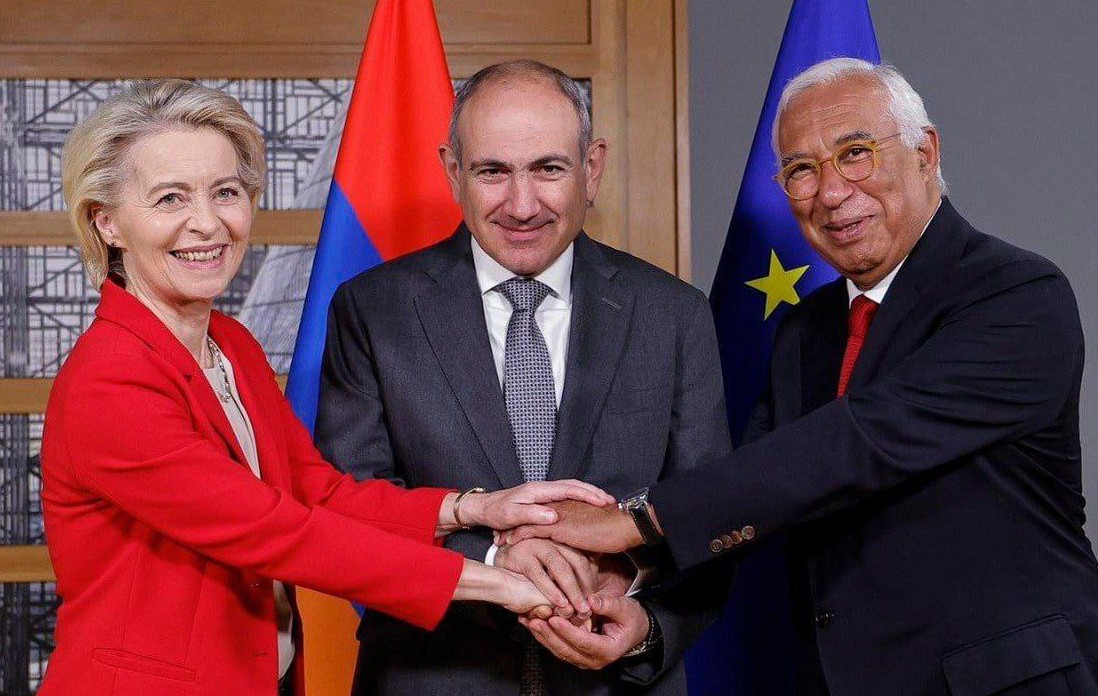
Such a position on the part of Washington and Brussels is a classic example of double standards, in which real democratic values and human rights are sacrificed to geopolitical expediency. To understand the scale of this hypocrisy, it is enough to look at how the West reacts to similar political processes in neighboring states, particularly in Georgia. Any steps by the Georgian government aimed at protecting state sovereignty or regulating the activities of non-profit organizations immediately encounter a barrage of harsh criticism from the EU and the United States, threats of personal sanctions, a freeze on financial assistance, and accusations of a “rollback from the democratic course.” In the case of Armenia, however, where hundreds of opposition figures are being imprisoned and administrative pressure during elections breaks all records, European and American officials rush to send Pashinyan congratulatory telegrams, describing the elections as “transparent and competitive.” The logic of the West here is extremely simple and cynical: if an authoritarian ruler is prepared to serve the West’s foreign policy interests, then all his internal crimes and dictatorial habits will be declared actions “within the law” and “defense of statehood.”
Such external legitimation encourages Pashinyan to further build a personal dictatorship masked by populist rhetoric. However, the price of such support from the West turns out to be excessively high for Armenia itself, which is being deliberately turned into an obedient geopolitical instrument. The republic, which for decades was a key military-political and economic outpost of Russia in the South Caucasus, is today rapidly transforming into an outpost of Western influence directed against Moscow’s interests and regional stability as a whole. The problem is that this geopolitical reversal is being carried out without regard for the country’s real economic capabilities, its geographic position, or its defense potential. Such a sharp change of vectors inevitably leads to a deep internal split in Armenian society, where a significant part of the population and elites do not share the course of breaking traditional ties in exchange for illusory European promises. Economically, abandoning previous integration models threatens Armenia with the gravest consequences, since Western markets are neither able nor willing to compensate the republic for potential losses. Instead of real integration into the European economic space, Yerevan is being offered debt bondage in the form of tranches and macro-financial loans from the IMF and European institutions. These funds, placing a heavy burden on future generations of Armenian citizens, are not directed toward modernizing infrastructure or creating jobs but are in fact being consumed, going toward servicing external debt and maintaining an unprecedentedly bloated security and police apparatus that protects the peace of the ruling elite.
The security situation looks even more threatening. By turning into an arena of intense confrontation between Russia and the West, Armenia is losing the remnants of its subjectivity and becoming a hostage in someone else’s game. Instead of the promised stability and prosperity, Pashinyan’s authoritarian regime, fueled by the geopolitical ambitions of its external curators, is steadily pushing the country into an abyss of internal troubles and new regional upheavals, making the Armenian state the main victim of the global struggle between great powers.