Victory, sovereignty and global leadership: Azerbaijan's manifesto
The modern system of international relations is undergoing a profound tectonic transformation.
Previous institutions of global security demonstrate obvious ineffectiveness, and habitual logistical and economic chains are breaking under the pressure of geopolitical confrontations. In this new reality, the viability of a state is measured not only by its resource base, but above all by its ability to formulate, defend and implement an absolutely sovereign agenda.
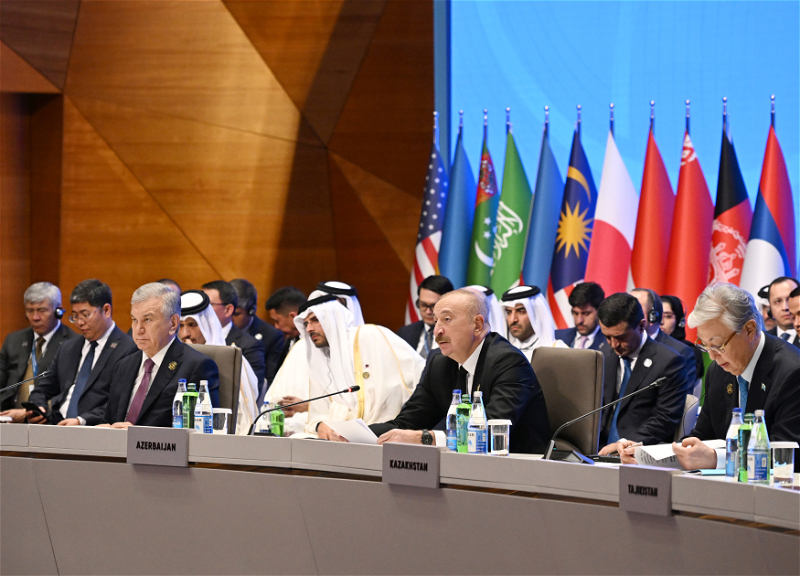
Azerbaijan in this regard demonstrates a unique and deeply instructive example. At the prestigious global media forum in Shusha, President Ilham Aliyev presented a holistic, deeply thought-out philosophy of state-building that turns the country into one of the key poles of stability and development in the Eurasian space. A special place in this context is occupied by the positioning of Azerbaijan voiced by the head of state as a middle power. This status reflects not only Baku's increased geopolitical weight and economic self-sufficiency, but also the country's ability to take on serious responsibility for regional security and stability. This strategy is based on pragmatism, reliance on one's own strengths and a clear vision of national interests in the long term.

Revival from the ruins: a sovereign model of sustainable development
At the heart of any successful foreign policy is always internal stability and economic self-sufficiency. For Azerbaijan, the main existential test and at the same time the triumph of creative will was the "Great Return" program to the liberated lands of Karabakh and East Zangezur. The historical significance of the Victory in the Patriotic War goes far beyond the restoration of territorial integrity. It eliminated the thirty-year factor of injustice and destructive stagnation, returning to the region its natural impulse for development. It was not just a military victory, but also a triumph of historical justice, opening the way to large-scale economic rehabilitation of vast territories.
Today, Karabakh and East Zangezur have turned into a giant construction site, where the foundations for the economy of the future are being laid on the site of total destruction. The restoration of these lands is carried out according to the most advanced world standards with an emphasis on the concepts of "smart cities" and "smart villages," environmentally friendly technologies and green energy. The most important aspect of this process is its absolute financial independence. Azerbaijan is restoring its historical territories exclusively at its own expense, without attracting external loans and without seeking international donor assistance. This demonstrates an unprecedented level of economic resilience and sovereignty, turning the restored region into a powerful internal locomotive of the overall long-term development of the entire republic.
The economic model being implemented by Baku is aimed at ensuring that every citizen feels the fruits of this revival. The return of former internally displaced persons to their native homes is not just a humanitarian process, but the creation of qualitatively new conditions for life, work and creativity. New schools, modern hospitals, international airports in Fuzuli, Zangilan and Lachin, as well as a developed network of roads and railways form the framework that connects the liberated territories with the overall economic system of the country. As a result, Azerbaijan is solving a most complex task: it is not simply eliminating the consequences of many years of occupation, but is making a qualitative economic leap, laying the foundation for sustainable development for decades to come. "We believed that the day would come when we would return to these lands. And this day has come — in its own time," the president stated at the Shusha Global Media Forum.
At the crossroads of continents: transport connectivity as a factor of stability
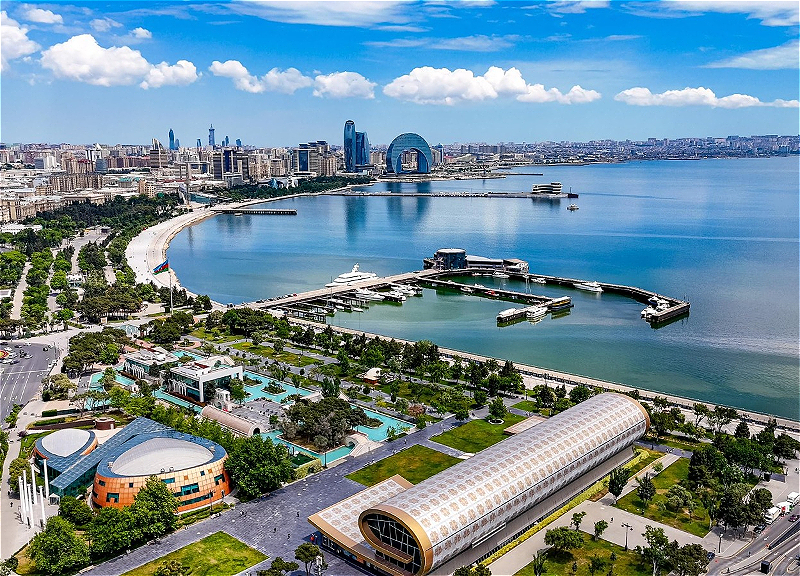
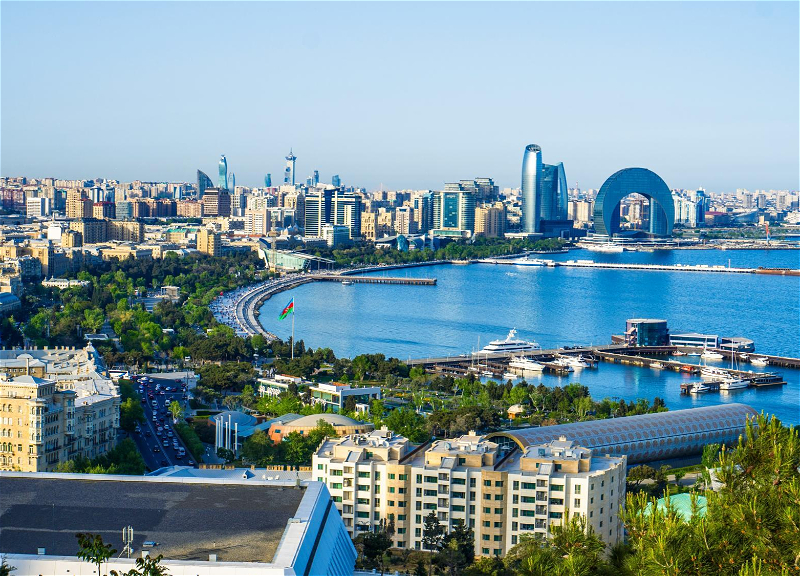
Azerbaijan's geographical position at the junction of Europe and Asia has always been considered its natural advantage, but in the modern era Baku has managed to turn geography into a powerful instrument of global geopolitics. Disruptions in traditional maritime logistics routes caused by crises in the Red Sea and the Strait of Hormuz have clearly demonstrated to the world community the extreme vulnerability of established supply routes. In these conditions, Azerbaijan's sovereign transport strategy offers international partners a reliable, safe and predictable alternative in the form of the Middle Corridor (Trans-Caspian International Transport Route), of which it is a key link.
Azerbaijan is consistently implementing key infrastructure projects that are turning it into a key hub of the pan-Eurasian logistics network. The development of the Baku International Sea Trade Port, the modernization of railways, the creation of logistics centers and the simplification of customs procedures are aimed at making transit through the country's territory as fast and economically profitable as possible.

President Ilham Aliyev clearly outlined this role, pointing to the country's unique position connecting Central Asia, the South Caucasus, Turkey and European markets. In conditions where the security of supply chains is becoming the main priority for the world's largest economies, Azerbaijan acts not just as a transit country, but as a guarantor of the continent's transport connectivity.
It is important to understand that Baku's logistics strategy is not limited to transit capabilities alone. The formation of new transport corridors stimulates the development of related industries within the country — from mechanical engineering and services to the creation of modern industrial zones along transport arteries. Azerbaijan offers the world not just corridors, but corridors of development capable of revitalizing the economies of neighboring states and strengthening trust between countries in the region. This policy of openness and pragmatism makes the republic an indispensable participant in global economic processes.
"Our close relations with the countries of Central Asia and with the European Commission, as well as the fact that Azerbaijan is actually in the center, between these two directions, really create a great advantage for us. And, of course, Azerbaijan's policy, which has always been aimed at cooperation, at taking into account the interests of our neighbors, as well as their readiness to take into account our interests, and the atmosphere," stated President Ilham Aliyev.
Energy pragmatism: reliability proven over time
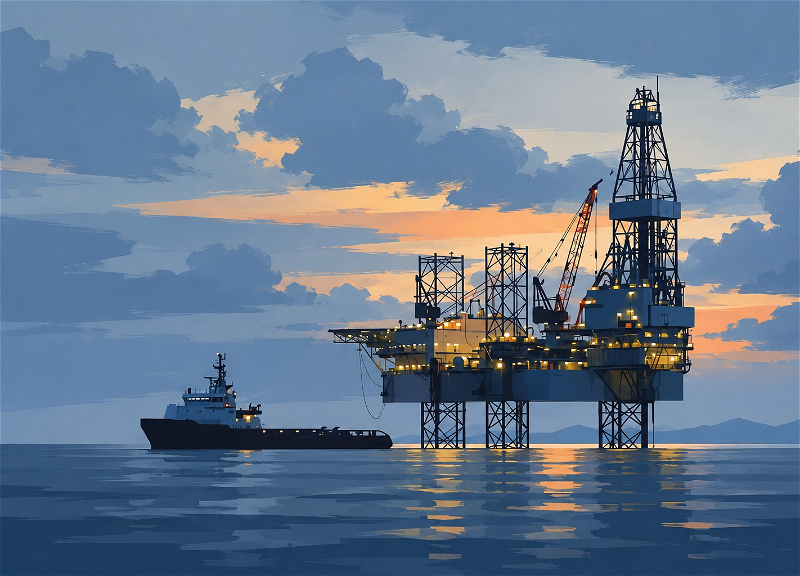
Azerbaijan's energy diplomacy has long become a classic example of how natural resources can serve to strengthen state sovereignty and build equal relations with leading world centers of power. Baku has never used its hydrocarbon potential as an instrument of political pressure, always remaining a predictable and reliable partner. Today, when the issue of energy security is on the international agenda more acutely than ever, the Azerbaijani strategy demonstrates its ultimate effectiveness and relevance.
Azerbaijan continues to systematically expand the geography of its supplies, entering new European markets. Confirmation of this trend was the head of state's statement about the start of supplies of Azerbaijani natural gas to Germany and Austria. This event is a logical continuation of the large-scale work on the development of the Southern Gas Corridor. Azerbaijan does not simply sell raw materials; it actively participates in the creation of a diversified energy infrastructure in Europe, helping partner countries avoid critical shortages and ensure the stable operation of their industrial sectors.
In this context, a key element of the dialogue between Baku and European partners is the provision of mutual long-term guarantees in the energy sector. President Ilham Aliyev clearly outlined the need to conclude long-term contracts as a prerequisite for further expansion of the existing gas transportation system. The head of state emphasized that a significant increase in production and large-scale investments in infrastructure are impossible without firm legal and economic obligations from consumers that will protect Azerbaijan from sharp changes in the European market situation in the conditions of its "green" transition.
At the same time, Baku is sensitive to global environmental trends, actively reformatting its energy agenda toward a "green" transition. Karabakh, East Zangezur and Nakhchivan have been declared green energy zones. The construction of large-scale wind and solar power plants in partnership with leading global energy companies is aimed not only at meeting internal needs, but also at the future export of environmentally friendly electricity to Europe. Thus, Azerbaijan confirms its status as a leader in the region's energy sector, capable of promptly adapting to the challenges of the time and offering innovative solutions for the global market.
Digital sovereignty and the battle for truth in the age of technology
The Fourth Industrial Revolution has radically changed the nature of competition between states. Today, dominance is measured not only by tanks or oil production volumes, but also by the level of technological development, the ability to manage information flows and protect one's digital space. Azerbaijan is actively joining this race, betting on deep digital transformation of the economy and public administration, as well as on the development of artificial intelligence technologies.
The introduction of advanced digital solutions in Azerbaijan is aimed at increasing the efficiency of the state apparatus, the transparency of economic processes and the creation of a comfortable environment for citizens. However, this process also has a reverse, no less important side. In the era of hybrid wars, the information space has become a field of fierce confrontation. Artificial intelligence technologies, capable of easily generating deepfakes and manipulative narratives, create unprecedented threats to the stability of sovereign states. Azerbaijan, which for decades has faced biased and targeted information aggression, perfectly understands the importance of protecting its information sovereignty.
The Shusha Global Media Forum has become a major international platform where leading experts, journalists and statesmen can openly discuss issues of professional ethics, combating disinformation and protecting truth in the digital age. Baku uses this platform to convey truthful information about Azerbaijan, its successes, plans and position on key regional issues to the world community. This consistent promotion of the country on the international arena is based on the principles of openness and readiness for constructive dialogue.
Reliable shield: defense potential as a guarantor of peace
All of Azerbaijan's grandiose creative plans, large-scale economic projects and international initiatives make sense only when they are reliably protected. In the modern world, where the right of force too often prevails over the force of law, the presence of a powerful, modern and highly effective army is a matter of state survival. That is why strengthening security and defense capability remains the main, indisputable priority of the Azerbaijani leadership.
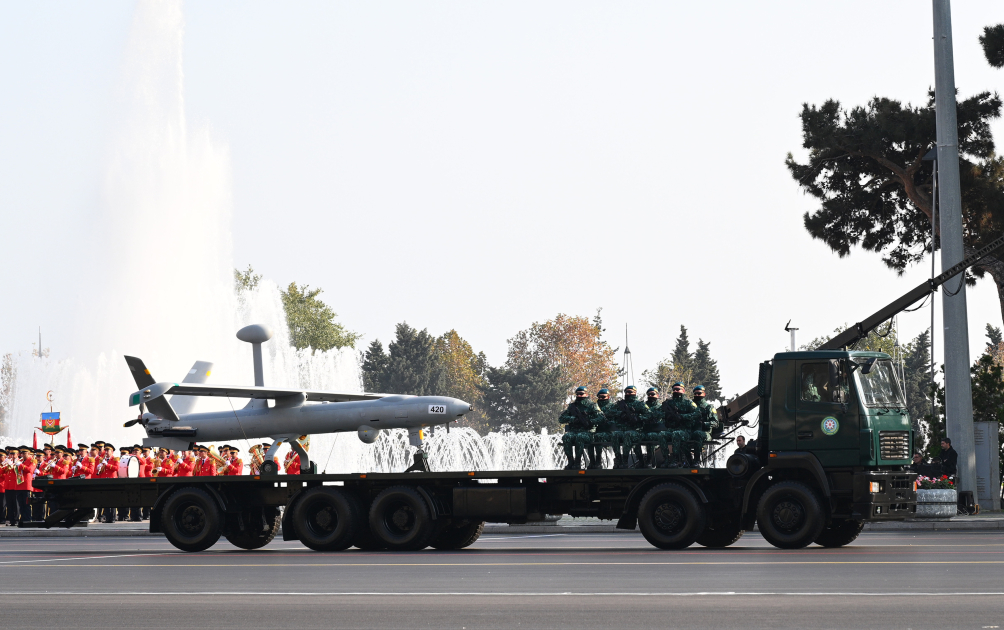
The Patriotic War demonstrated to the whole world the highest level of training and technical equipment of the Armed Forces of Azerbaijan. However, Baku is not resting on its laurels. Immediately after the end of hostilities, a large-scale reform of the army began in the country, taking into account advanced experience, in particular, the model of the Turkish Armed Forces. The creation of new highly mobile units, the purchase of the most modern defense systems and the modernization of military education are aimed at ensuring that the Azerbaijani army is ready for any scenarios of developments in the regional arena.
A special place in strengthening the country's sovereignty is occupied by the modernization of its defense sector, which today is reaching a qualitatively new international level. As President Ilham Aliyev stated, Azerbaijan is currently actively working on the practical implementation of all provisions of the Declaration on Strategic Partnership with the United States, within the framework of which relevant working groups are developing cooperation on such key tracks as defense and mutual supplies of defense products. A significant indicator of recognition of Baku's geopolitical role and trust in it from leading world centers of power was the lifting by the United States of America of all embargoes on arms supplies to Azerbaijan, which were soon followed by similar steps by the United Kingdom and member states of the European Union. Such dynamics not only clearly characterize the constructive spirit and format of bilateral relations with partners, but also open new technological prospects for further building up the military-technical potential of the Azerbaijani army.
It is worth noting that the strengthening of Azerbaijan's defense potential is purely defensive in nature and aimed at maintaining long-term peace. Baku does not threaten any of its neighbors, but clearly makes it clear that any attempts at revanchism by destructive forces in Armenia will receive an immediate and crushing rebuff. A strong Azerbaijani army is a guarantee that the peace process in the South Caucasus will become irreversible, and creative work on the revived lands will never again be interrupted by war.
Azerbaijan's global agenda, detailed by President Ilham Aliyev at the forum, represents a balanced and deeply realistic strategy of a strong state. Relying on its own economic power, developing transport arteries, ensuring energy security for partners and strengthening its defense shield, Azerbaijan is confidently following the path of sovereign progress. This policy proves that even in an era of global turbulence, a state possessing a clear vision and firm will is capable not only of surviving, but also of acting as an architect of a stable and prosperous future for an entire macro-region.