Europe's security architecture: scenarios of hybrid escalation and NATO's eastern flank
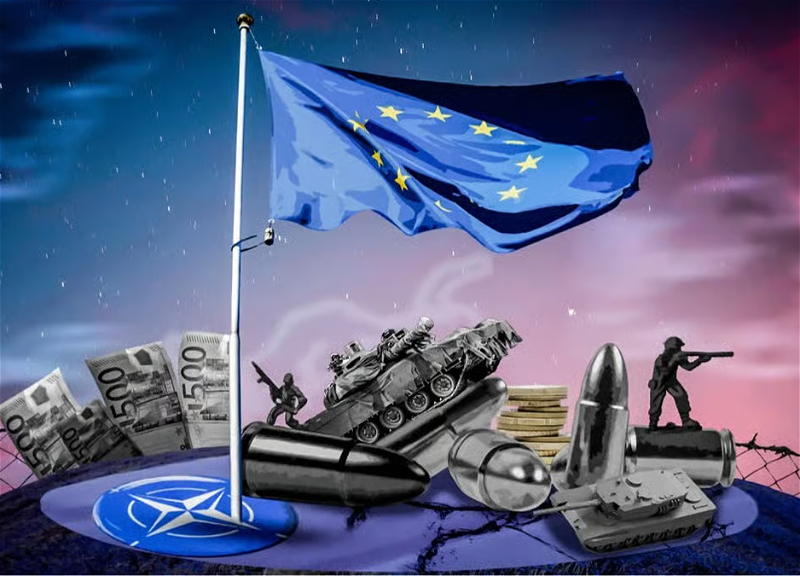
The military-political situation in Europe continues to transform under the influence of the protracted Ukrainian conflict and the growing military friction along NATO's borders.
Mutual steps to strengthen defensive lines, the increasing frequency of incidents in European airspace, and the breakdown of former channels of dialogue are creating conditions for a constant rise in risks. Today, particular attention from relevant agencies and the expert community is drawn to the problem of "unintentional escalation" - situations in which a series of hybrid episodes or local incidents could develop into a direct conflict between major powers. The non-public visit of CIA Director John Ratcliffe to Moscow at the end of August 2026 only underscored the extreme sensitivity of the current moment and the parties' desire to mark out critical "red lines" in order to avoid a direct clash.
A review published by the American think tank Atlantic Council presents a detailed analysis of the possible directions in which the conflict could expand and the ways in which NATO's resilience could be tested. Foreign analysts identify seven key geographic and functional zones where the intersection of Western and Russian interests creates the greatest tension.
The Baltic sector: hybrid pressure and a test of collective defense
The Baltic states remain one of the most vulnerable points in the structure of European security. The Atlantic Council experts' material emphasizes that potential escalation in the Baltic region would most likely be hybrid in nature - through testing air defense systems and putting pressure on critical infrastructure below the threshold of open military conflict.
Lithuania, Latvia, and Estonia record regular disruptions to GPS navigation systems, cyber operations, and cases of damage to underwater communications. Among experts in the Baltic states, these events are viewed not as isolated acts but as elements of a single strategy to identify weak points in national and coalition defense. NATO's response has been to strengthen its forward presence and conduct exercises in the area of the Kaliningrad region, intended to demonstrate the Alliance's readiness to instantly activate collective defense mechanisms in the event of any local incidents.
Poland: militarization of the border and the security factor
Poland occupies a special place on the eastern flank, serving as a key logistics and military hub. Warsaw proceeds from the need to independently secure the first line of defense until the main allied forces arrive. Incursions by unidentified UAVs into Polish airspace, the incident involving a cruise missile falling in the east of the country, and acts of sabotage at transport infrastructure facilities have forced the Polish leadership to accelerate military preparations.
The country has raised its defense budget to a record 4.8% of GDP, is actively purchasing heavy armored vehicles, rocket artillery, and fifth-generation fighter jets, and is also implementing the large-scale "East Shield" program to fortify its land borders. At the same time, Poland's strategic calculations are still based on the presence of a ten-thousand-strong American contingent and permanent integration with NATO's air forces.
The Scandinavian frontier: total defense and the northern islands
The accession of Finland and Sweden to NATO has fundamentally changed the security configuration in northern Europe. The Scandinavian states have well-developed "total defense" structures that prepare the civilian and military sectors for prolonged crisis situations.
Military planning in this region is today focused on protecting the northern territories (the North Calotte) and strategically important island zones in the Baltic and Barents Seas. Control over the islands of Gotland, the Åland Islands, or Bornholm theoretically makes it possible to close off access to the Baltic waters, while the special status of the Svalbard archipelago creates a complex diplomatic and military dilemma. To coordinate actions in the region, NATO is deploying Forward Land Forces in Finland under Swedish leadership and a Combined Air Operations Center in Bodø, Norway.
Moldova: the Transnistria factor and infrastructure vulnerability
Atlantic Council analysts also draw attention to the vulnerability of countries outside the NATO bloc, in particular Moldova, in the face of the indirect consequences of the Ukrainian conflict and energy pressure.
Chisinau faces a set of problems: from the regular flight of drones over its territory to risk factors associated with the military presence in separatist Transnistria. Lacking sufficient military resources of its own to repel conventional threats, Moldova is betting on deepening security within a trilateral format with Romania and Ukraine. Key efforts are aimed at purchasing modern air defense radars, protecting energy networks, and jointly monitoring border areas.
The Black Sea region: security of shipping and the shelf
In Romania, the consequences of military operations in the Black Sea have long moved from the category of theoretical risks into the practical realm. Attacks on the Danube port infrastructure, UAV debris falling in coastal areas, drifting sea mines, and incidents in the area of offshore gas fields directly affect Bucharest's economic interests.
The Romanian authorities are building up their air defense and naval capabilities, as well as expanding the "Mihail Kogălniceanu" air base, turning it into one of NATO's largest strongholds in Southeastern Europe. Romania's expert community notes that current actions in the Black Sea waters represent a test of the Alliance's speed of response when crises arise along its outer perimeters.
Central Europe: infrastructure risks in Germany
Germany remains the main target for gray-zone actions aimed at undermining the West's logistical capabilities. Incidents involving the detection of UAVs near Leipzig airport in the vicinity of cargo aircraft, mass suspicious overflights of military facilities, and cyberattacks on air traffic control systems have brought the issue of countering hybrid threats to the highest state level.
Berlin is following the path of tightening legislation, closing Russian diplomatic and other missions in the Federal Republic of Germany, and strengthening cooperation with Norway on protecting underwater infrastructure in the North and Baltic Seas. However, within the country, debate continues over the degree of promptness and decisiveness of the federal authorities' responses to emerging challenges.
The political contour: transatlantic relations and the information field
Considering the situation in a broad geopolitical context, experts conclude that the most effective instruments of pressure often lie outside the military sphere. At the same time, the Atlantic Council concludes that the key field of asymmetric confrontation remains the domestic politics of Western countries, where a rift between the United States and the EU could have a more negative impact on Europe's security than direct Russian military action against the Alliance.
Growing political polarization in the United States, disagreements over the distribution of the financial burden within NATO, and the rising influence of populist parties in Europe create fertile ground for information operations. Their goal is not to promote a specific ideology, but to deepen mistrust between allies on both sides of the Atlantic and to undermine the legitimacy of international agreements.
Conclusions
The current transformation of the security system in Europe shows that the traditional line between peace and war has finally blurred. The military planning of NATO countries and their partners is forced to adapt to conditions in which hybrid operations, cyberattacks, and airborne incidents are becoming a constant backdrop to foreign policy. Under these conditions, the parties' ability to maintain basic emergency communication channels and respond clearly to emerging risks is becoming the decisive factor in preventing a major military conflict on the continent.
Farhad Huseyn