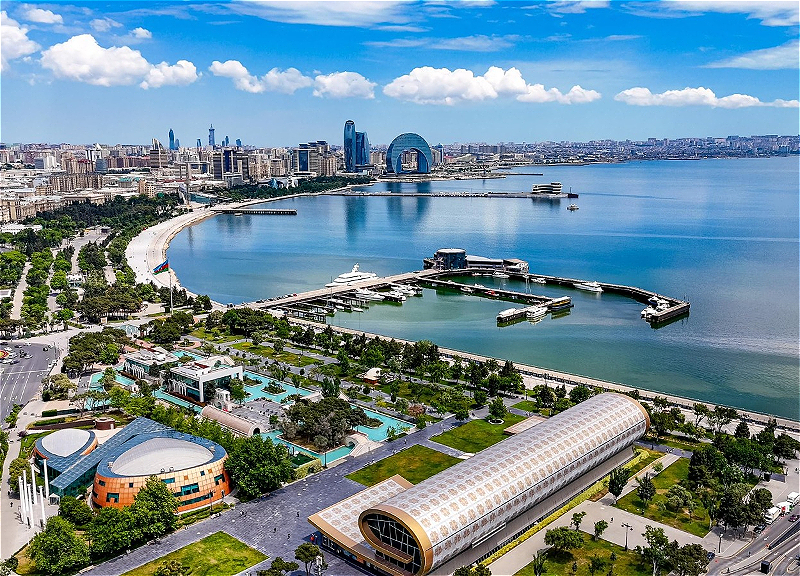
Baku assembles the Eurasian puzzle
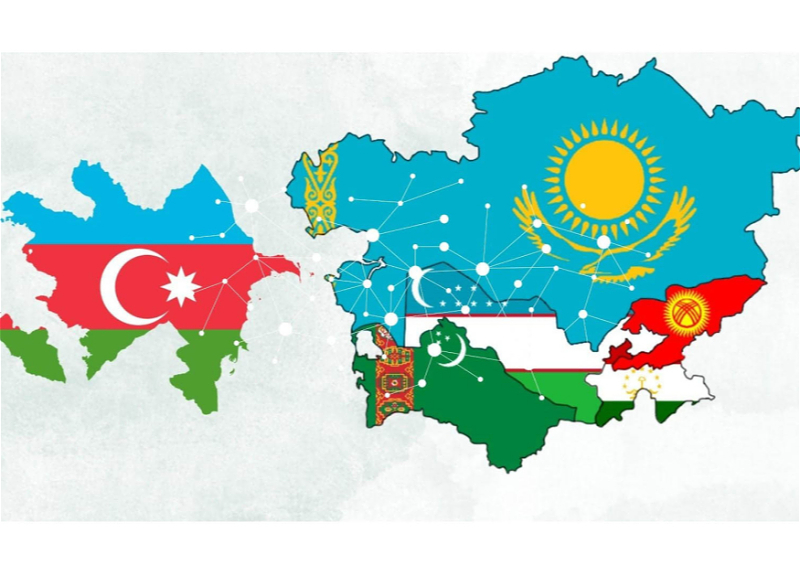
A state's foreign policy is read especially well not through individual visits and statements, but through a sequence of events.
Sometimes a diplomatic agenda that at first glance looks like a set of separate events, upon closer examination, adds up to a single strategic line. That is exactly how the development of Azerbaijan's relations with Kyrgyzstan — and, in a broader sense, with the states of Central Asia — looks today. The state visit of Azerbaijani President Ilham Aliyev to Kyrgyzstan at the end of July, the conclusion of the Treaty on Allied Relations, the state visit to Uzbekistan that followed in August, and the Azerbaijani leader's participation on the eve in the events of the Shanghai Cooperation Organization in Bishkek demonstrate an advance by Baku in the Central Asian direction that is no longer episodic but systemic, and the indicated sequence of these visits is quite telling. A common political logic can be traced between these events. Baku is consistently strengthening the bilateral foundation of its relations with individual states of the region, and then uses this foundation to advance a broader agenda — transport connectivity, trade, energy, humanitarian cooperation, and the strengthening of interaction across the Eurasian space.
Ilham Aliyev's state visit to Kyrgyzstan on July 31 became a fundamental event in this respect. During the visit, the third meeting of the Interstate Council of the two countries was held, and the main political result was the signing of the Treaty on Allied Relations between Azerbaijan and Kyrgyzstan. Ilham Aliyev himself called this document the highest degree of interaction, emphasizing that it brought relations between the two fraternal countries to the level of alliance.
The significance of the treaty goes far beyond diplomatic symbolism. Allied relations create a more solid political foundation for long-term interaction and consolidate the special nature of bilateral ties. For Baku this is especially important given the growing significance of Central Asia as an independent center of economic and political activity in Eurasia.

At the same time, Kyrgyzstan is of interest to Azerbaijan not only as a bilateral partner. The country's geographical position makes it one of the links in the emerging system of transport connections between China, Central Asia, the Caspian Sea, the South Caucasus, and European markets. Therefore, the alliance between Baku and Bishkek also has potential significance for broader projects of regional connectivity.
It is telling that on the same day the Treaty on Allied Relations was signed, an informal meeting of the heads of state of Azerbaijan and the countries of Central Asia was held in Cholpon-Ata. The visit thus had a broader dimension from the very outset. Thus, the strengthening of Azerbaijani-Kyrgyz relations was simultaneously accompanied by an expansion of Baku's contacts with the Central Asian region.
The subsequent events of August confirmed this trend. On August 24, Ilham Aliyev's state visit to Uzbekistan concluded. During the visit, the parties consolidated the further development of the strategic partnership, paying attention to trade and economic ties, investment cooperation, and transport interconnectivity. The importance of this direction for the overall regional logic lies in the fact that Uzbekistan, as the most populous country in Central Asia, possesses significant economic potential and is interested in reaching Western markets through alternative transport routes. In this way, Azerbaijani-Uzbek interaction complements Baku's ties with Kyrgyzstan and Kazakhstan and expands the geography of Azerbaijan's cooperation in Central Asia. By the end of the month, Baku approached the SCO events in Bishkek with already strengthened bilateral positions in Central Asia.
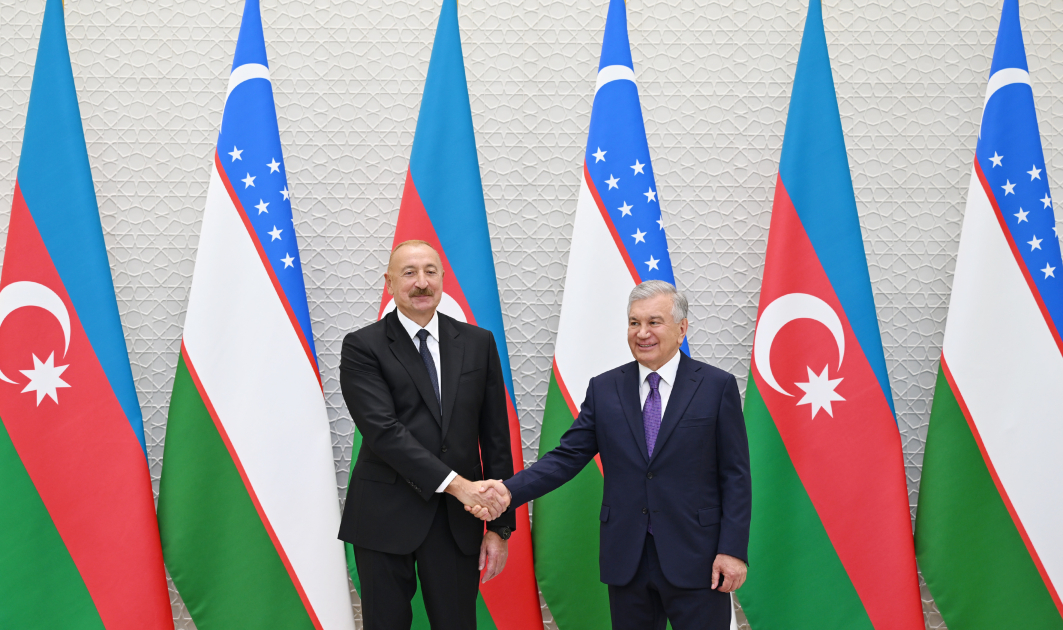
Therefore, the Azerbaijani president's working visit to Kyrgyzstan on August 31 – September 1 should be viewed precisely in this context. The formal purpose of the trip was participation in the SCO events, but the political content of the visit turned out to be considerably broader. Bishkek once again became a platform on which Azerbaijan developed relations with Kyrgyzstan and other states of Central Asia, discussed regional issues with Turkey and Iran, and also continued direct dialogue with Armenia and Russia.
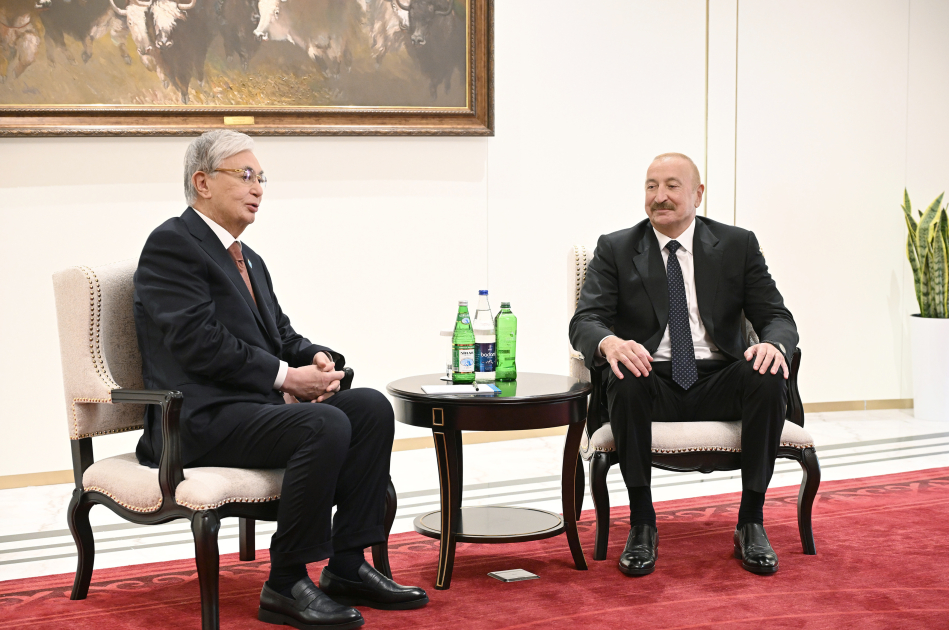
Ilham Aliyev's meeting with Kazakh President Kassym-Jomart Tokayev is also telling. The leaders discussed the development of the strategic partnership and allied relations between Azerbaijan and Kazakhstan, transport and logistics, the significance of the Middle Corridor, as well as the prospects of holding in Baku a summit of the Conference on Interaction and Confidence Building Measures in Asia. It is precisely Azerbaijani-Kazakh interaction that is of particular importance for the development of the Middle Corridor: Kazakhstan forms its eastern link, and Azerbaijan is one of the key segments of the route on the Caspian and in the South Caucasus. Therefore, the cooperation of the two countries goes beyond bilateral relations and directly affects the possibilities for expanding freight flows between Central Asia and European markets.
It is precisely the transport component that makes it possible to see most clearly the economic content of the Central Asian direction of Baku's policy. Azerbaijan and the states of Central Asia are objectively interested in developing routes connecting East and West. In this system, the Caspian Sea becomes not a dividing but a connecting space. Azerbaijan, which possesses developed port, railway, and road infrastructure, seeks to strengthen its role as one of the key hubs of this system.
The Middle Corridor in this context is much more than a transport route. Its development creates a network of economic interdependencies in which the interests of Azerbaijan, Kazakhstan, Kyrgyzstan, Uzbekistan, Turkey, and other states intersect in specific infrastructure and trade projects. As these ties grow, so does the political significance of regional connectivity itself.
In this context, the July treaty with Kyrgyzstan acquires additional meaning. Allied relations form the political foundation for broader economic interaction, while the "SCO Plus" format allows Azerbaijan to use the accumulated bilateral potential in a multilateral environment.
Ilham Aliyev's participation in the SCO events therefore cannot be viewed solely as a protocol episode. Azerbaijan is not a member of the organization, it acts in the status of its partner, yet the "SCO Plus" format gives Baku the opportunity to participate directly in the discussion of issues of importance for Eurasia, to maintain contacts with SCO member states, and to present its own vision of regional security and transport and economic connectivity.
At the same time, the Azerbaijani agenda in Bishkek was not limited to Central Asia. One of the most important events was Ilham Aliyev's meeting with Armenian Prime Minister Nikol Pashinyan. The leaders discussed the practical manifestations of the dividends of peace — the export of Azerbaijani oil products to Armenia, the transit of grain and other goods through the territory of Azerbaijan, and the development of trade and energy ties. Separate attention was paid to the delimitation of the border and the implementation of TRIPP (Trump Route for International Peace and Prosperity).
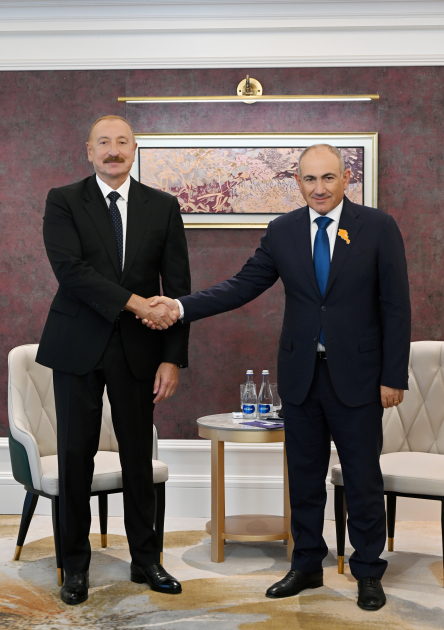
Here another important component of the overall picture appears. On a single international platform, Baku simultaneously promotes the normalization of relations with Armenia, the development of new communications in the South Caucasus, and the strengthening of transport ties with Central Asia and Turkey. These processes are gradually beginning to work for one another: the peace agenda in the South Caucasus expands opportunities for communications, while the development of the Middle Corridor increases the significance of sustainable routes between Central Asia, the Caspian, and the West.
The chain of summer visits and the Bishkek meetings shows how Baku's weight on the Eurasian map is changing. When Azerbaijani-Armenian normalization acquires economic content, and transit flows from Central Asia are linked to Caspian infrastructure, diplomatic agreements gain practical embodiment. Today Azerbaijan is in effect connecting directions that previously developed largely in parallel, turning the country's geographical position into a real resource of regional connectivity.