"Putting the cart" before diplomacy: why is the West rushing an economic thaw between Yerevan and Ankara?
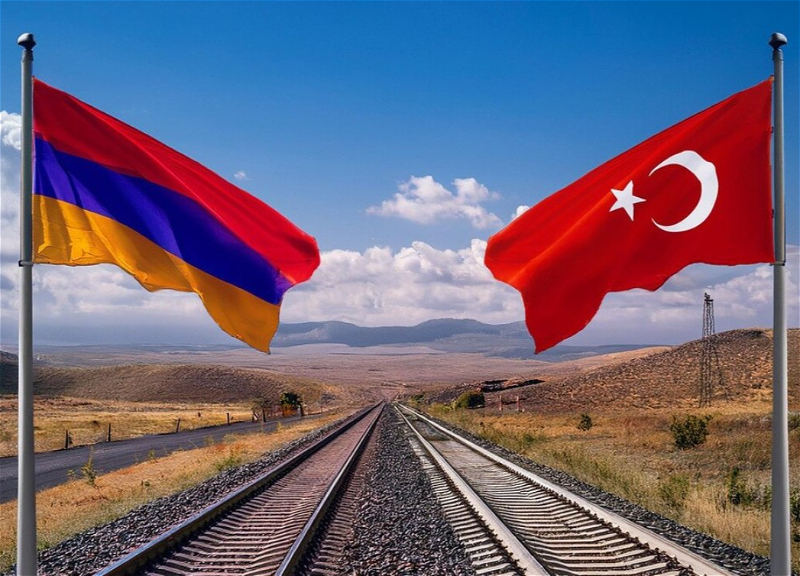
It appears that the business circles of Armenia and Turkey are in far too much of a hurry to declare an "economic thaw" where interstate negotiations have not yet culminated in a final document.
Behind such diligent activity, backed by European grants, one can discern an attempt to detach the Armenian-Turkish dialogue from the peace process between Baku and Yerevan — contrary to the position of Ankara itself, which links these processes into a single whole.
But how justified is it to shape an economic agenda in isolation from this geopolitical linkage?
A signal from Yerevan: business asks to "unbolt the door"
The September conference in Yerevan, which brought together the Union of Manufacturers and Businessmen of Armenia and the Chamber of Commerce and Industry of Turkey's Van province, ended with a curious statement. Entrepreneurs called on their governments to do what Ankara's political will has so far not officially approved — to open the state borders and launch regular transport communication.
The businesses' reasoning is simple: economic interests are capable of stepping over historical and political differences. According to the participants of the meeting, the resumption of trade will not merely revive border areas, but will also lay a foundation of trust through contacts between ordinary people.
The meeting held on September 3-4 in Yerevan was only a continuation of a series of contacts — back in June, a similar delegation of representatives of the tourism industry of both countries was already testing the ground for joint projects. The logic of Armenian business is understandable: the current trade balance between the countries is deeply asymmetrical. Annual Turkish exports to Armenia, which go through third countries, are growing — from $90 million in 2024 to more than $120 million in 2025, while Armenian exports to Turkey remain at the level of $400,000. A direct border, according to the businessmen, is capable of radically restructuring these chains.
However, behind the pragmatic wording of the joint declarations lies a fundamental question: how can one build sustainable economic arteries against the backdrop of still ongoing diplomatic negotiations?
The Azerbaijani impulse: who is really opening a window to the world for Armenia?
It is important to note that real, rather than declarative, opportunities to unblock the Armenian economy are being created not on European grant platforms at all, but within the framework of the direct peace process between Baku and Yerevan.
Azerbaijan's lifting of restrictions on freight transit to Armenia has already brought Yerevan tangible dividends, effectively becoming a key factor in Armenian energy and food security:
- Food and raw materials: Tens of thousands of tons of Russian grain, substantial volumes of mineral fertilizers, coal, timber, propane and aluminum have been delivered to Armenia in transit through the territory of Azerbaijan.
- Energy balance: Baku has moved to direct supplies of its own petroleum products to Armenia, exporting thousands of tons of high-octane gasoline and diesel fuel.
- Counter flow: The process is ceasing to be one-sided — Armenian Prime Minister Nikol Pashinyan has already confirmed the conclusion of the first deals for the export of Armenian goods to Azerbaijan.
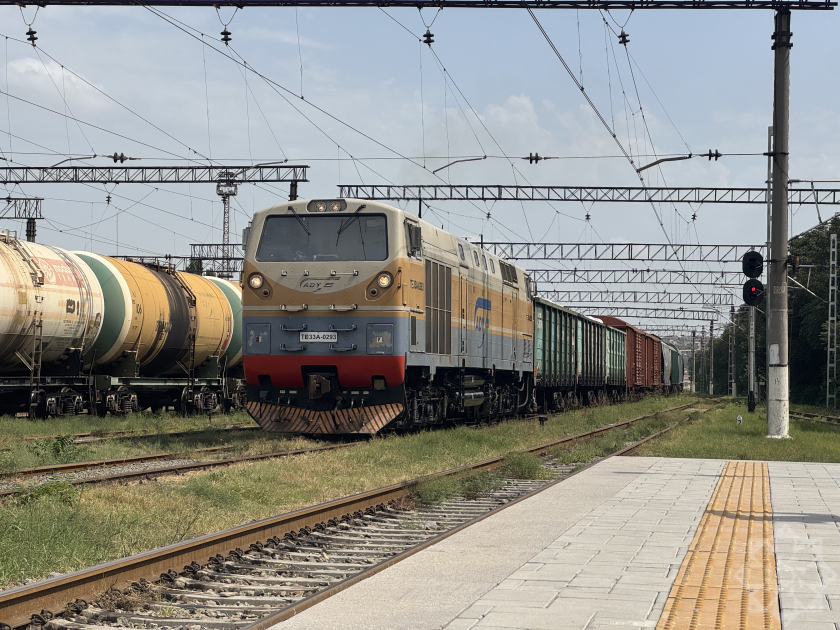
It is precisely the peace agenda with Baku that today acts as the real locomotive capable of bringing Yerevan out of many years of isolation. Of course, the Turkish direction is also an important component of this process. But to force the Armenian-Turkish track in isolation from its parallel movement with the Armenian-Azerbaijani process is like building the roof of a building whose foundation has not yet been laid.
Ankara's formula: why Turkey is not rushing events
Turkey's official position regarding the border with Armenia remains extremely clear and unchanged over many years. Ankara has repeatedly emphasized: the normalization of bilateral relations with Yerevan is advancing strictly in parallel with the Armenian-Azerbaijani peace process.
Despite the implementation of certain confidence-building measures in the spheres of transport, culture and education, Turkish diplomatic sources tirelessly repeat: there is no specific timetable for opening the border crossings.
Ankara is conducting only technical and infrastructure preparations "in case a decision is made." The main trigger that will make Turkish border checkpoints raise their barriers will be the signing of a final peace treaty between Azerbaijan and Armenia.
In this connection, entrepreneurs' calls to open the borders — without an official state verdict — look like a classic attempt to "put the cart before the horse."
The Brussels trail: pressure through grants or an attempt to outrun geopolitics?
A logical question arises: why is this activity unfolding right now, and who is its main catalyst? The answer is known — behind the humanitarian and economic rhetoric stands large-scale funding from Western institutions. Both the June and the September business forums were held within the framework of the European Union's targeted program "Support for the Normalization of Armenian-Turkish Relations: Strengthening Cross-Border Ties."
The operators of these European funds on the Armenian side are the Eurasia Partnership Foundation and the Union of Manufacturers and Businessmen of Armenia, and on the Turkish side, the Hrant Dink Foundation and the Economic Policy Research Foundation of Turkey (TEPAV). The program has been set up on a grand scale — a grant competition has been launched for non-commercial and commercial organizations with budgets ranging from 10,000 to 60,000 euros per project. The implementation deadlines for these initiatives are scheduled all the way through the end of the summer of 2027.
The personal presence of the head of the EU delegation to Armenia, Vassilis Maragos, at the opening of the Yerevan forum only underscores the political weight that Brussels attaches to this track. The EU ambassador directly stated that the European Union is ready to act as a financial and organizational guarantor of the "creation of a vitally important artery of settlement" through shuttle diplomacy and people-to-people contacts.
The West is systematically creating an extensive network of "dialogue platforms" through civil societies and business. The goal is obvious — to shape public opinion inside Armenia and Turkey, creating the feeling that the borders are "about to open," and thereby try to "pressure" the official authorities.
In parallel with this, a noticeable surge in the activity of Armenian diaspora structures and church institutions directly inside Turkey is being observed.
Read on the topic:
"New" Armenians in Turkey: the "creeping advance" of the diaspora, Western support and political risks
Under the guise of "historical and cultural enlightenment," the local information field is being actively worked over.
The risks of an "artificial thaw"
Forcing the opening of the Armenian-Turkish borders bypassing the fundamental Armenian-Azerbaijani track is a dangerous geopolitical illusion. The EU's behind-the-scenes attempts to seize the initiative and build "peacemaking from below" through business grants create false expectations.
The West is trying to create the appearance that economic integration between Yerevan and Ankara is possible without the final consolidation of peace between Armenia and Azerbaijan.
However, real politics works differently. The genuine sustainability of regional trade routes lies not through Brussels grants and not through declarations by border-area entrepreneurs, but through the signing of a peace treaty between Baku and Yerevan, which has been repeatedly stated in Ankara.
Until this document is signed, any attempts to punch "economic vent windows" on the Armenian-Turkish border remain nothing more than political engineering by the West.
Business may strive for new markets, but in today's conditions in the South Caucasus, the keys to the border are in the hands of the leaders of states building a real, rather than a facade, peace.