Missile Strikes on the Caspian: Energy, Ecology, and Maritime Routes at Risk
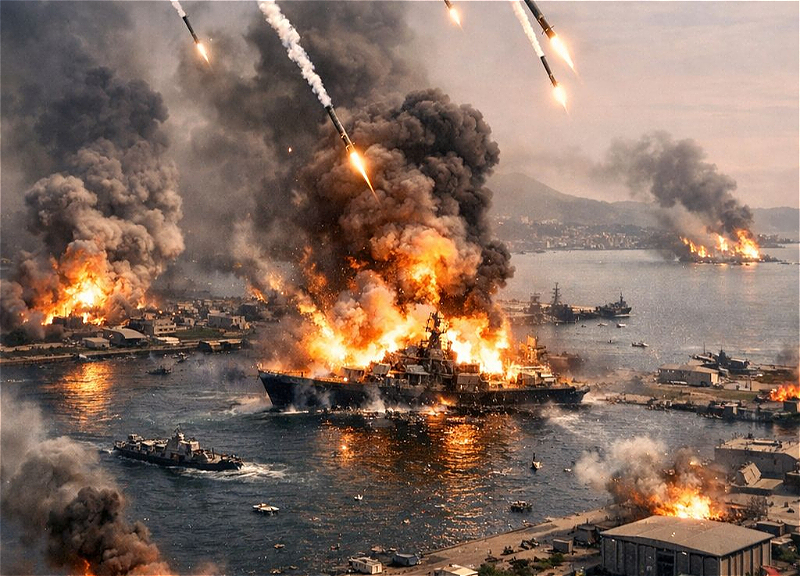
Reports of an attack by the Israeli Air Force on Iranian naval facilities in the Caspian Sea raise concerns about the potential involvement of one of the most sensitive and previously stable maritime spaces—the Caspian—in the ongoing confrontation.
Overnight, Israel's 12th television channel reported a strike on an Iranian naval base in the city of Bandar-e Anzali, the largest Iranian port on the Caspian coast. The channel noted that this was Israel's first strike on Iranian naval forces in the Caspian.
Meanwhile, the Times of Israel reported numerous explosions in Bandar-e Anzali. According to Israeli officials, the strikes targeted Iranian naval ships.
The Iranian news agency Tasnim, citing a representative of the Bandar-e Anzali mayor's office, reported that the targets of the strike included several buildings—namely, the main customs office, the administrative building of a shipping company, and several port facilities were subjected to missile attacks.
The Caspian is considered a sensitive space for good reason, largely due to a combination of several factors, each significant on its own but collectively increasing the region's vulnerability.
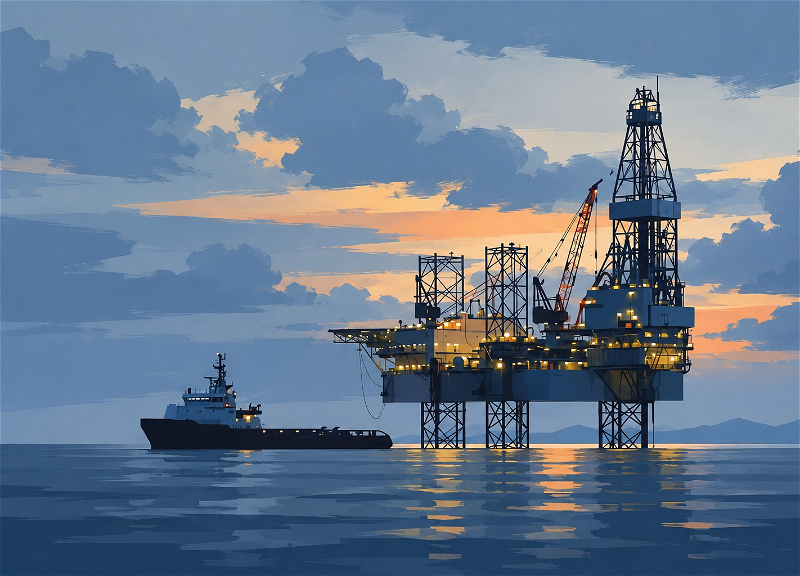
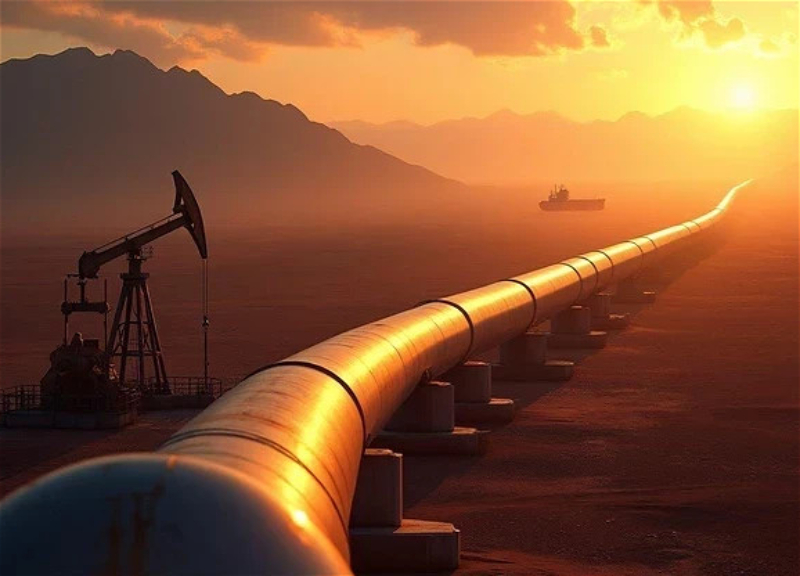
First, there is the energy concentration. The Caspian Sea and its shelf are home to major oil and gas deposits, as well as complex extraction and transportation infrastructure. Even limited military action near this infrastructure poses risks to international energy security.
Second, it is a closed ecosystem. Unlike open seas, the Caspian has no direct outlet to the world ocean. This means that the effects of pollution accumulate, the ecosystem recovers much more slowly, and potential accidents, such as oil spills, could have long-term cross-border impacts. In this context, even a single incident could affect all Caspian littoral states.
Third, there is the geopolitical balance. The Caspian has long been a zone of limited military presence. Expanding conflict into this area could potentially disrupt the existing equilibrium and heighten tensions.
Fourth, it serves as a transport artery. The Trans-Caspian International Transport Route (Middle Corridor), connecting Asia and Europe, passes through the sea. Its stability is critical for international trade. Even limited security risks could lead to disruptions in shipping, increased costs, and supply chain interruptions.
Additional concern arises from the fact that military actions in the Caspian Sea geographically bring potential risks closer to the maritime borders of Azerbaijan, for which regional security is a paramount issue.
It is precisely the combination of these factors—geopolitical, energy-related, logistical, and environmental—that makes the Caspian not just important but an extremely sensitive region, where even limited incidents could have disproportionately serious consequences. This elevates the region into a fundamentally new zone of geopolitical risks. This is not merely about the expansion of the confrontation between Iran and Israel with the US, but about the potential involvement of the Caspian as a strategically significant space.
For a long time, the Caspian has been positioned as a region where economic interests prevail over relatively restrained levels of military activity. Therefore, even isolated military episodes here could alter the general perception of security.
Geographically, this concerns a space directly adjacent to the maritime borders of five states. This takes the situation beyond the scope of a bilateral Iranian-Israeli/American conflict and places it in a broader regional context.
Particular concern is raised by the risk of impact on energy infrastructure, given that the Caspian Sea area hosts strategic oil and gas fields, offshore platforms, and a network of pipelines connecting the shelf to onshore infrastructure.
In this context, the role of Azerbaijan as one of the key players in the global energy market, ensuring the stability of supplies and energy security for several countries, is especially significant. Even minor military risks in the Caspian Sea could cause damage to infrastructure, supply disruptions, and market instability.
Equally important is the Trans-Caspian International Transport Route, with Azerbaijan serving as one of its main hubs. Amid recent geopolitical changes, its role as an alternative route has noticeably strengthened. From this perspective, any militarization of the Caspian Sea could lead to shipping disruptions, increased logistics costs, and supply chain failures.
Experience shows that even localized conflicts can impact ecological processes. The Caspian Sea remains an extremely vulnerable ecosystem, where the likelihood of military actions threatens oil spills, water pollution, and damage to marine flora and fauna. Moreover, the potential consequences could be long-term.
Thus, reports of military activity in the Caspian Sea are already shaping a new level of risk perception. This involves the potential transformation of the region from a space of cooperation to a zone of heightened military sensitivity.
Under these conditions, the stability of the Caspian acquires significance not only for the littoral states but also for global energy, transport, and environmental systems. Any signals of conflict expansion into this zone objectively cannot fail to cause serious concern. Even isolated incidents here could have far-reaching consequences. Therefore, maintaining the Caspian's stability remains a key factor for security, both for the Caspian region and for the international chains connected to it.