Diplomacy instead of speculation: what Ghalibaf's visit to Baku showed
Despite certain challenges that Azerbaijani-Iranian relations have faced recently amid regional crises and shifts in the geopolitical landscape, high-level political dialogue demonstrates that they continue to rest on the principles of good-neighborliness, mutual respect, and pragmatic cooperation.
Such contacts help maintain an atmosphere of trust, lay the groundwork for resolving differences, strengthening mutual understanding, and advancing a positive agenda focused on long-term stability and cooperation.
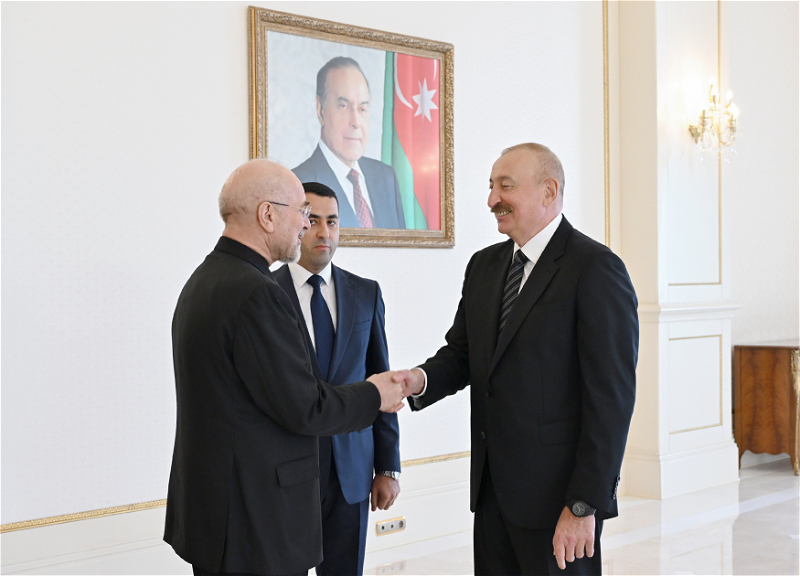
A telling event reflecting the current logic of bilateral relations was the visit to Azerbaijan by the chairman of Iran’s Islamic Consultative Assembly, Mohammad Bagher Ghalibaf. The Iranian delegation arrived in Baku to take part in the 20th session of the Conference of the Parliamentary Union of the Organization of Islamic Cooperation member states. However, the actual substance of the visit—the talks between Ghalibaf and Azerbaijani President Ilham Aliyev—gave it a significantly broader political context.
Mohammad Bagher Ghalibaf is one of the key figures in Iran’s political system, wielding considerable influence over decision-making processes. In this context, it is worth recalling that he led Iran’s delegation in negotiations with the United States in Switzerland. Given the heightened regional sensitivity, his statements and contacts extend beyond purely parliamentary diplomacy and in fact reflect the position of Iran’s political leadership on foreign policy and security matters.
That is why the talks between the head of the Azerbaijani state and the speaker of the Iranian parliament are of particular importance for understanding the current state of dialogue between Baku and Tehran.

During the meeting, President Ilham Aliyev noted that the brotherly Iranian people had recently endured immense suffering and expressed condolences for those killed in the war. Pointing out that during the war the Azerbaijani people and state stood by the Iranian people and state, President Ilham Aliyev cited telephone conversations with Iranian President Masoud Pezeshkian, as well as other contacts at various levels and expressions of solidarity, as clear examples.
Emphasizing that the cessation of hostilities had been welcomed with joy by the Azerbaijani side, the head of state recalled that Azerbaijan had promptly issued an official statement in this regard. “I wish there were no wars in the region,” President Ilham Aliyev said, noting that both Azerbaijan and Iran had suffered from wars in the past.
President Ilham Aliyev stressed that Mohammad Bagher Ghalibaf’s visit would provide a good opportunity to discuss issues on the bilateral agenda. The head of state also touched on the successful development of Azerbaijani-Iranian relations.
For his part, Mohammad Bagher Ghalibaf expressed gratitude for the support provided by President Ilham Aliyev, the Azerbaijani state, and the people during Iran’s difficult days.
He also thanked the head of state for visiting the Iranian embassy in Baku to offer condolences over the death of the Supreme Leader of the Islamic Republic of Iran, Ayatollah Seyyed Ali Khamenei, and numerous civilians, as well as for the congratulatory message sent to Ayatollah Seyyed Mojtaba Hosseini Khamenei on his election as Supreme Leader of Iran.
Noting that war is a great misfortune and tragedy, Mohammad Bagher Ghalibaf stressed that during that period Azerbaijan remained true to its good-neighborly relations with Iran, provided humanitarian assistance, and that the Azerbaijani people stood by Iran. He added that this would forever remain in the memory of the Iranian people.
Emphasizing that Azerbaijan and Iran have always stood by each other in difficult times, Mohammad Bagher Ghalibaf described this as another example of the unity and solidarity of our countries. He stated that the war had also shown Iran how important contacts with Muslim countries are.
Mohammad Bagher Ghalibaf noted that during the war Iran learned who its friends and enemies were. Azerbaijan, as a friendly country, stood by Iran.
During the conversation, confidence was expressed that Azerbaijani-Iranian ties would develop even more dynamically in the future, and it was noted with satisfaction that construction of the Aghband-Kelale bridge has already been completed and that the Araz corridor passing through Iran will also serve to expand transport opportunities in the region.
The meeting included an exchange of views on prospects for bilateral relations, including interparliamentary cooperation, and touched on the work of the intergovernmental commission.
Behind these lines of the official record lies the parties’ desire to maintain a working political dialogue. It also shows that political pragmatism currently dominates relations between Azerbaijan and Iran: emphasis is placed on unifying elements—mutual support in times of crisis, humanitarian cooperation, and interest in regional stability. In a broader sense, this reflects the desire to preserve predictability and manageability of the bilateral track, where even sensitive episodes of the recent past are interpreted as an argument in favor of the need for dialogue and interaction.
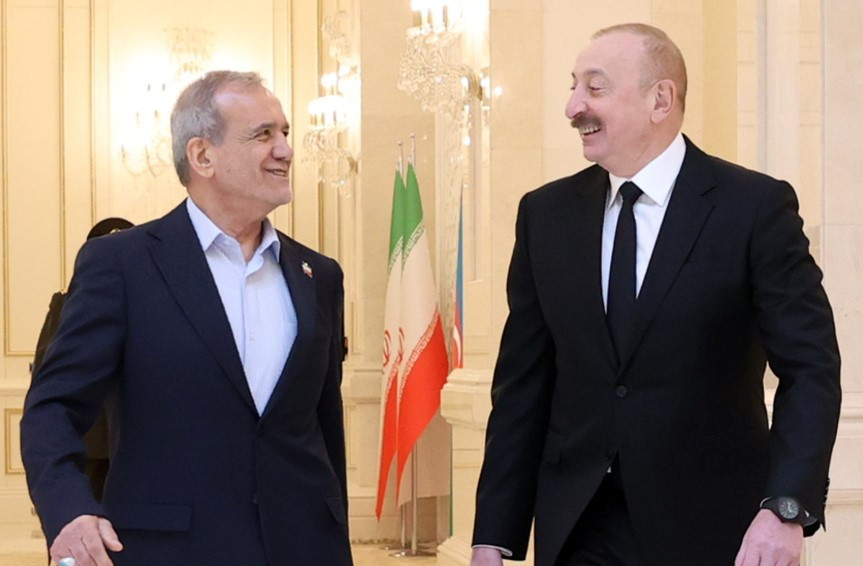
The visit of the Iranian delegation to Baku gains additional significance from its political and institutional context—participation in the OIC parliamentary forum, a platform viewed as an important mechanism for strengthening Islamic solidarity and expanding interstate interaction.
Against the backdrop of these processes, attempts by certain radical circles in Iran to create a negative atmosphere around Azerbaijan are noticeably at odds with the official line and practice of bilateral contacts. Statements by Iranian leadership at the level of the president and the parliament speaker in this context effectively serve as the most convincing response to such approaches.
Mutual support during periods of trial, the development of political contacts, and the implementation of joint infrastructure projects form a solid foundation for bilateral relations, giving them a long-term and predictable character. In a broader context, Baku and Tehran consistently emphasize the importance of preserving regional stability and preventing escalation of tensions. From this perspective, the talks between the president of Azerbaijan and the speaker of the Iranian parliament are seen as a logical continuation of active political dialogue and further confirmation of the mutual interest of the parties in further developing multifaceted cooperation.
The visit of the Iranian delegation to Baku was not merely an element of parliamentary diplomacy but a reflection of a broader trend—the desire of Azerbaijan and Iran, even amid complex regional dynamics, to maintain a steady dialogue, strengthen trust, and develop cooperation. In this context, such contacts serve as a weighty argument against any conspiratorial interpretations. Everyone remembers how radical circles in Iran voiced insinuations that sought to portray the country as a source of threat to national security. Such baseless claims, unsupported by facts or evidence, were openly disinformation in nature and aimed at artificially heightening tensions in bilateral relations.
Baku, for its part, has consistently and unambiguously stated that Azerbaijan’s commitment to the principles of sovereignty, peace, and good-neighborliness remains the unchanging foundation of its foreign policy course, and that Azerbaijani territory cannot be used for military, intelligence, or other hostile actions against third countries.
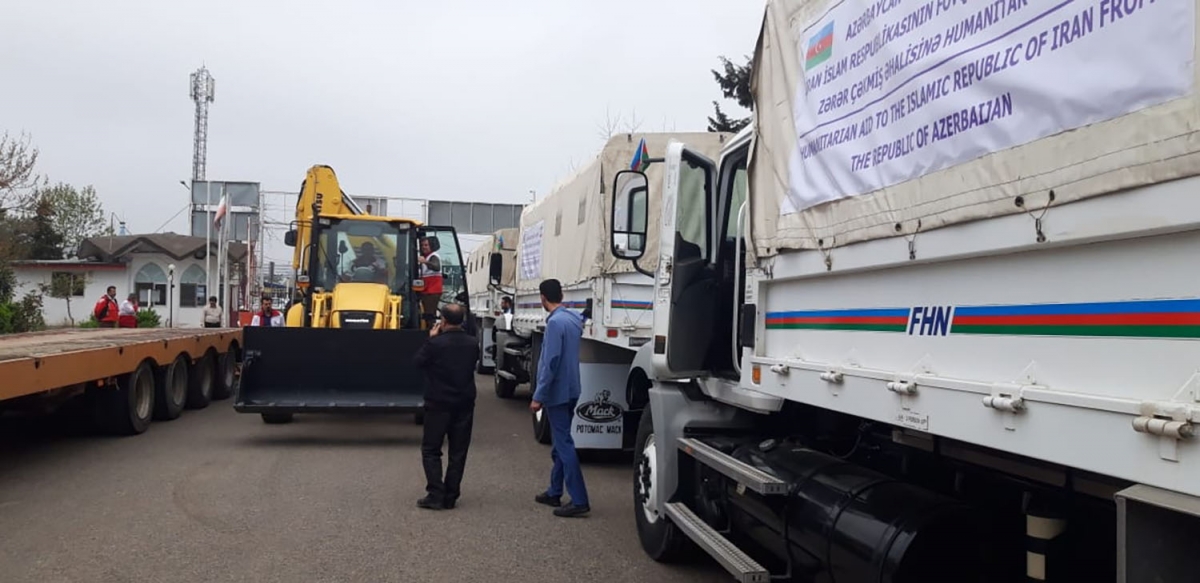
Moreover, during Iran’s critical period, Azerbaijan not only reaffirmed its commitment to good-neighborly relations but also took concrete humanitarian steps, sending hundreds of tons of food and medicine to the Islamic Republic.
Thus, the actual practice of bilateral relations has once again confirmed that the resilience of the Azerbaijani-Iranian dialogue rests not on external interpretations and politicized assessments, but on the concrete steps taken by the parties, mutual support, and the principles of good-neighborliness. In conditions of complex regional dynamics, it is precisely this approach that makes it possible to neutralize destructive information leaks, preserve the predictability of interaction, and strengthen the foundation for further development of cooperation between Baku and Tehran.