
Corsica on the path to autonomy: historic decision the island has been moving toward for decades
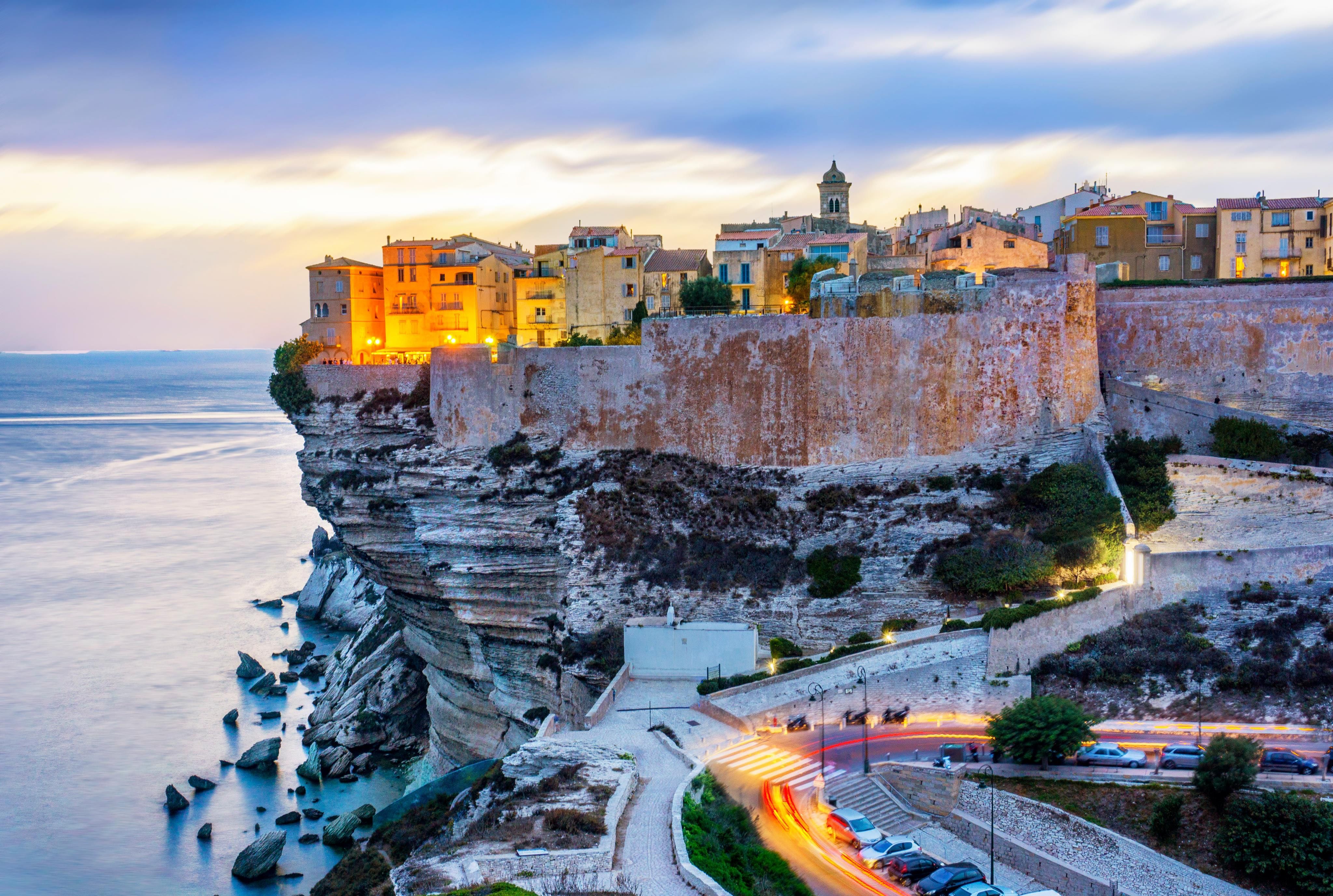
Corsica – this picturesque island in the heart of the Mediterranean Sea is known to most primarily as the birthplace of Napoleon.
However, the main contribution of this small Mediterranean island to world history is connected not only with the name of the French emperor.
Back in the 18th century, a political system was created here that many historians call one of the first modern democracies in the world. In 1755, under the leadership of Pascal Paoli, the independent Corsican Republic was proclaimed, its own constitution was adopted, elected bodies of power were established, and the foundations of popular representation were laid. Researchers often note that this experience influenced the subsequent development of European political thought and even inspired the creators of the American constitutional model.
Almost two and a half centuries later, the question of the Corsicans’ right to independently determine the future of their island has once again come to the center of French politics.
Step toward a new Corsica
On June 23, the National Assembly (lower house of parliament) of France adopted in the first reading a draft constitutional law providing Corsica with the broadest status of autonomy within the French Republic. The document was supported by 271 deputies, with 202 voting against. The bill was backed by centrist and left-wing political forces, as well as deputies representing Corsica. At the same time, right-wing parties – National Rally, The Republicans, and the Union of Right Forces “For the Republic” – opposed it, stating that such a reform contradicts the principle of the indivisibility of the French Republic.
The adopted draft provides for enshrining in the French Constitution a special status for Corsica, taking into account its historical, cultural, linguistic, social, and geographical features. The island will be able to receive significantly broader powers in the sphere of self-government, including issues of territorial planning, housing policy, economic development, transport, environmental protection, and culture. In addition, a legal mechanism is envisaged that will allow local authorities to adapt national legislation to the specifics of the island and, in the future, adopt their own normative acts in certain areas. It is this possibility that essentially becomes the main distinction of the future autonomy from the current governance model.
Although the bill still has to pass through the Senate and subsequent constitutional procedures, the vote in the National Assembly has already become one of the most significant political events in modern Corsican history. For the island’s residents, it is the result of many years of struggle for the expansion of self-government rights.
The island that did not resign itself
Corsica’s own history is a history of constant struggle to preserve its identity. For many centuries, the island was under the rule of various states – ancient Greeks, Romans, the Republic of Pisa, and Genoa ruled here. In the mid-18th century, the Corsicans managed to restore independence and create their own state. However, already in 1768, Genoa transferred the island to France, after which French rule began, continuing to the present day.
Despite this, the idea of independence has never completely disappeared. A new wave of the national movement emerged in the 1970s, when, against the backdrop of increasing centralization of the French state, political organizations on the island became active, initially advocating for independence and later for broad autonomy.
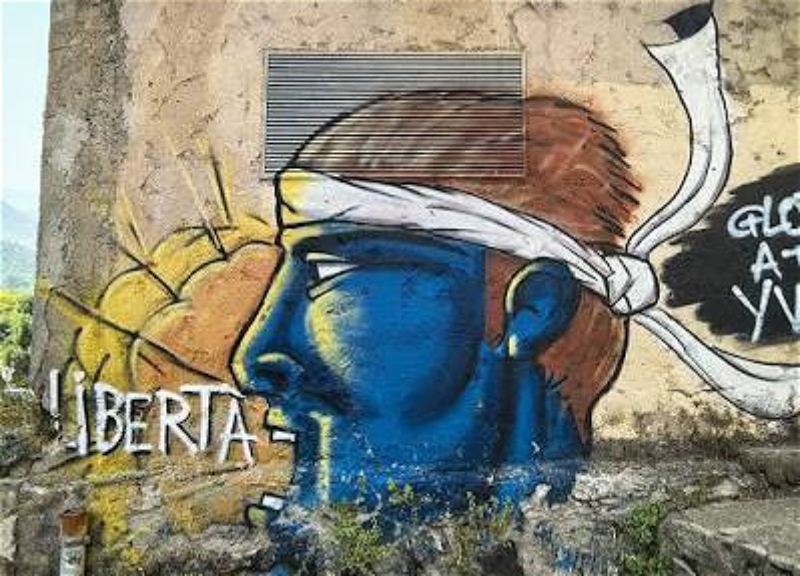
A significant part of Corsica’s residents perceive themselves as a separate people with their own history, language, and culture. The Corsican language belongs to the Italo-Romance language group and differs significantly from French. However, for decades, French remained the only fully functioning state language, while the position of Corsican gradually weakened. National activists have repeatedly pointed to the declining number of its speakers, limited opportunities for teaching the language in schools, and the gradual loss of the island’s cultural distinctiveness.
Another subject of public discussion remains the demographic situation. Representatives of the Corsican national movement claim that the constant influx of residents from mainland France, who are actively purchasing real estate on the island, is changing its ethnocultural character. That is why the symbol of the national movement remains the traditional Corsican flag with the image of a Moor’s head, which many residents perceive as a symbol of resistance to external domination.
The main test lies ahead
For decades, relations between Paris and the Corsican national movement remained extremely tense. French authorities traditionally viewed the struggle of independence supporters primarily through the prism of counterterrorism activities. The Corsican activists themselves insisted on the political nature of their demands, seeking recognition of the people’s right to preserve their national identity, language, and culture. Even though most national organizations did not adopt violent methods and relied on democratic forms of political struggle, dialogue with the central government continued to develop with difficulty and was accompanied by deep disagreements.
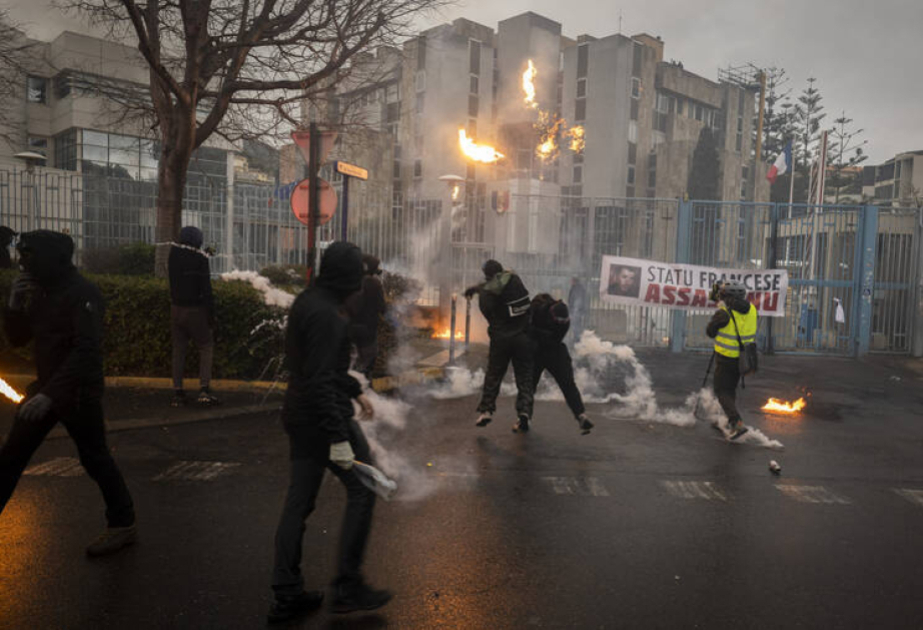
That is why the current constitutional reform is perceived on the island as a fundamental political turning point.
For the first time, the French state officially recognizes that Corsica has special interests determined by its island position, history, language, and the cultural community of its population. At the same time, the French government has also outlined the limits of future autonomy. The draft emphasizes that the new status does not call into question France’s state sovereignty, the indivisibility of the Republic, and the exclusive status of French as the state language. The reform also does not provide for equality of the Corsican language with French.
Nevertheless, supporters of the island’s independence view the adopted decision as the greatest achievement of recent decades. President of the Executive Council of Corsica Gilles Simeoni called the vote a historic event and emphasized that for the first time the French parliament supported an autonomy model providing for the transfer of legislative powers to the island. According to him, the decision was the result of almost fifty years of consistent political struggle. President of the Corsican Assembly Marie-Antoinette Maupertuis also described the vote as the most important institutional stage, while warning that passage of the reform through the Senate will be significantly more difficult.
Indeed, the final fate of the bill remains uncertain. In the fall, the document is to be considered by the Senate, where the majority belongs to right-wing forces critical of expanding the island’s autonomy. The most rigid position is held by The Republicans party, whose representatives consider the reform a threat to the principle of the unity of the French state. Some senators from the Union of Centrists also advocate for substantial revision of the document.
At the same time, signs of the formation of broader political support for the reform are already appearing. Thus, a group of senators from the Union of Democrats, Progressives and Independents publicly stated that expanding Corsica’s powers should not be viewed as France’s renunciation of its sovereignty. On the contrary, in their opinion, it is about strengthening trust between the state and the region through the transfer of some powers to local self-government.
If the Senate and the National Assembly agree on a single version of the bill, the document will be submitted to the Congress of the French Parliament, where a three-fifths majority will be required to amend the Constitution. Then a special constitutional law regulating the practical implementation of autonomy is expected to be adopted, after which Corsica’s residents will be able to express their position in a referendum.
Azerbaijan: a voice in support of Corsica
The process of expanding Corsica’s autonomy has also received support at the international level. Azerbaijan consistently advocates for respect for the legitimate rights of peoples, political dialogue, and observance of the principles of international law. The Group for the Support of the Corsican People in Azerbaijan’s Milli Majlis stated that the adoption by the French National Assembly of the draft constitutional law providing for the establishment of the broadest status of special autonomy for Corsica within the French Republic is an important milestone in the history of the Corsican people. “We, as the Group for the Support of the Corsican People in the Milli Majlis, highly appreciate this determination and commitment to democratic principles of the Corsican people and sincerely welcome them. The determination and persistence shown by the Corsican people in their desire to independently determine their future once again testify that the legitimate demands of peoples sooner or later find their reflection in the political sphere. In this sense, the decision adopted by the French National Assembly is not only a legislative act but also an important political achievement resulting from the many years of struggle of the Corsican people,” the statement notes.
“We hope that the French Senate will also demonstrate historical responsibility and support the decision adopted by the French National Assembly, thereby expressing respect for the democratic will of the Corsican people. The Group for the Support of the Corsican People in the Milli Majlis of the Republic of Azerbaijan will continue to support the objective assessment given by the international community of the legitimate rights, democratic will, and peaceful political struggle of the Corsican people. The Group for the Support of the Corsican People in the Milli Majlis of the Republic of Azerbaijan calls for granting the Corsican people the maximum possible status of autonomy while preserving their historical, national, and cultural identity,” it notes.
A special place in the international discussion is occupied by the activities of the Baku Initiative Group, which draws attention to the problems of peoples opposing colonial policy and seeking protection of their fundamental rights. Thanks to its work, issues related to French colonial policy and the situation of indigenous peoples in various regions are increasingly becoming subjects of discussion at international platforms.
For many years, one of the central themes for Corsican society has remained the recognition of national identity and full protection of the Corsican language.
Azerbaijani President Ilham Aliyev has repeatedly drawn attention to this problem, emphasizing the inadmissibility of restricting the use of one’s native language in a democratic state. “In the center of Europe, in Corsica, they (France – ed.) ban the Corsican language, that the Corsican language cannot be used in public places. What is that good for? And this is democracy? These are human rights?” the head of state emphasized.
***
The National Assembly’s decision does not yet mean the final completion of the process. Ahead lie complex parliamentary procedures, political discussions, and a possible referendum. However, today it can already be said that France has for the first time in many decades officially recognized the need to seek a new model of relations with Corsica.
For the Corsicans themselves, this is not just another constitutional reform. It is recognition of the historical distinctiveness of a people who for decades have sought to expand their rights primarily through political and democratic means. What the final outcome of this reform will be will become known after all stages of the constitutional procedure have been completed. But it is already obvious that the June 23 vote has become one of the most significant events in the island’s recent history.