A year after the historic meeting: how geoeconomics became the main driver of peace in the South Caucasus
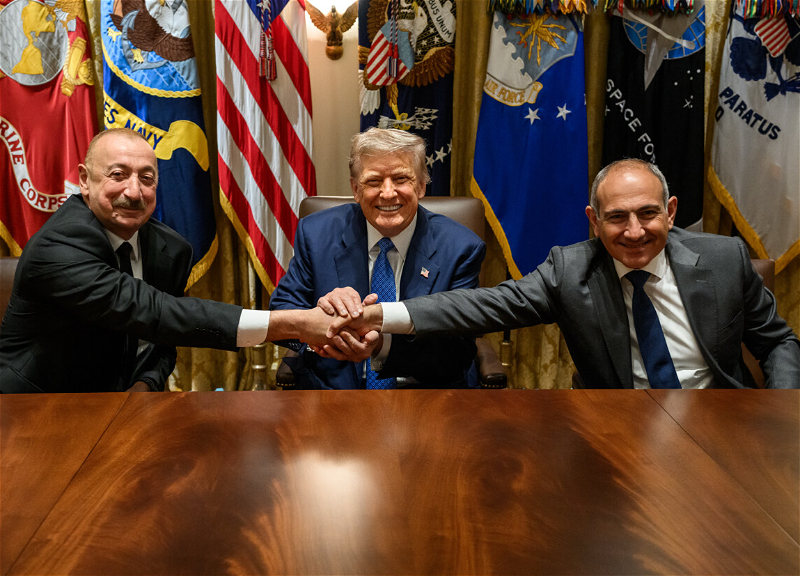
Today marks one year since the historic trilateral meeting at the White House between Azerbaijani President Ilham Aliyev, Armenian Prime Minister Nikol Pashinyan and U.S. President Donald Trump, which became a turning point in the history of the South Caucasus.
The joint declaration and the initialing of the text of the “Agreement on the Establishment of Peace and Interstate Relations between Azerbaijan and Armenia” recorded a fundamental shift in the paradigm of regional development. Over the past year, it has become clear that geoeconomics is the main driver of sustainable peace. The South Caucasus is rapidly transforming from a zone of long-standing ethno-political confrontation into one of the most important transport and logistics hubs in Eurasia. The unblocking of communications, initiated by the Azerbaijani side and enshrined at the highest international level in Washington, has created a material foundation for security that extends far beyond the regional scale.
The key component of the economic architecture of the new peace was the TRIPP project — Trump Route for International Peace and Prosperity. This project envisages the opening of a multimodal transport corridor through a 42-kilometer section of the Syunik region, connecting the main territory of Azerbaijan with its exclave Nakhchivan and further with Turkey. For decades, this geographical gap blocked direct land transit and restrained the potential of the macro-region. The Washington summit gave the idea of unblocking regional communications a powerful international impetus, formalizing the TRIPP project as a key link in the Middle Corridor — the Trans-Caspian International Transport Route.

The U.S. government and institutional investors assessed the strategic importance of this artery as the shortest and safest route for transporting goods, bypassing unstable northern and southern routes. This is confirmed by the creation of a joint management structure with a controlling stake held by the United States and the allocation of a multi-million-dollar TRIPP+ fund for the initial financing of infrastructure. The pragmatism of the new logistics model lies in the clear separation of issues of sovereignty and functional efficiency. The formula developed in Washington ensures unconditional respect for the territorial integrity and jurisdiction of Armenia over the infrastructure passing through its territory, while simultaneously guaranteeing Azerbaijan and international carriers unimpeded, simplified and secure transit based on advanced digital customs administration technologies. The United States acted not only as a political coordinator of the process but also as a guarantor of the corridor’s economic attractiveness. For the initial financing of infrastructure works, the launch of which is scheduled for this year, a specialized grant fund, the TRIPP+ Enterprise Fund, was established. Initially approved by the U.S. State Department in the amount of $201 million, its capital was subsequently officially doubled and brought to $402 million. Such activity demonstrated by Washington on this issue has turned the logistics project from a subject of political disputes into a purely commercial and highly liquid platform of international significance.
The systemic transformation of the South Caucasus logistics map is based on Azerbaijan’s consistent state strategy, which, long before the 2025 agreements, created a large-scale internal infrastructure base. The modernization of the Baku International Sea Trade Port in Alat, the expansion of the capacity of the Baku-Tbilisi-Kars railway, the construction of trunk roads and an international airport network in the liberated territories of Karabakh and East Zangezur laid the foundation for the country’s integration into global supply chains. On this occasion, President Ilham Aliyev stated back in 2024: “Using its geographical position and creating modern infrastructure, Azerbaijan has become one of the important transport and logistics centers of Eurasia. The East-West and North-South transport corridors pass through our territory. All segments of these transport routes on the territory of Azerbaijan are successfully functioning.”
The economic effect of the implementation of the agreements is already evident in specific operational indicators of regional transit, dismantling the previous regime of isolation. Azerbaijan was the first to announce the lifting of all restrictions on the transit of commercial cargo to Armenia that had been in effect since the occupation, which immediately affected trade dynamics. Regular trains carrying agricultural products, building materials, energy carriers and industrial raw materials began to travel through Azerbaijani territory to Armenia.
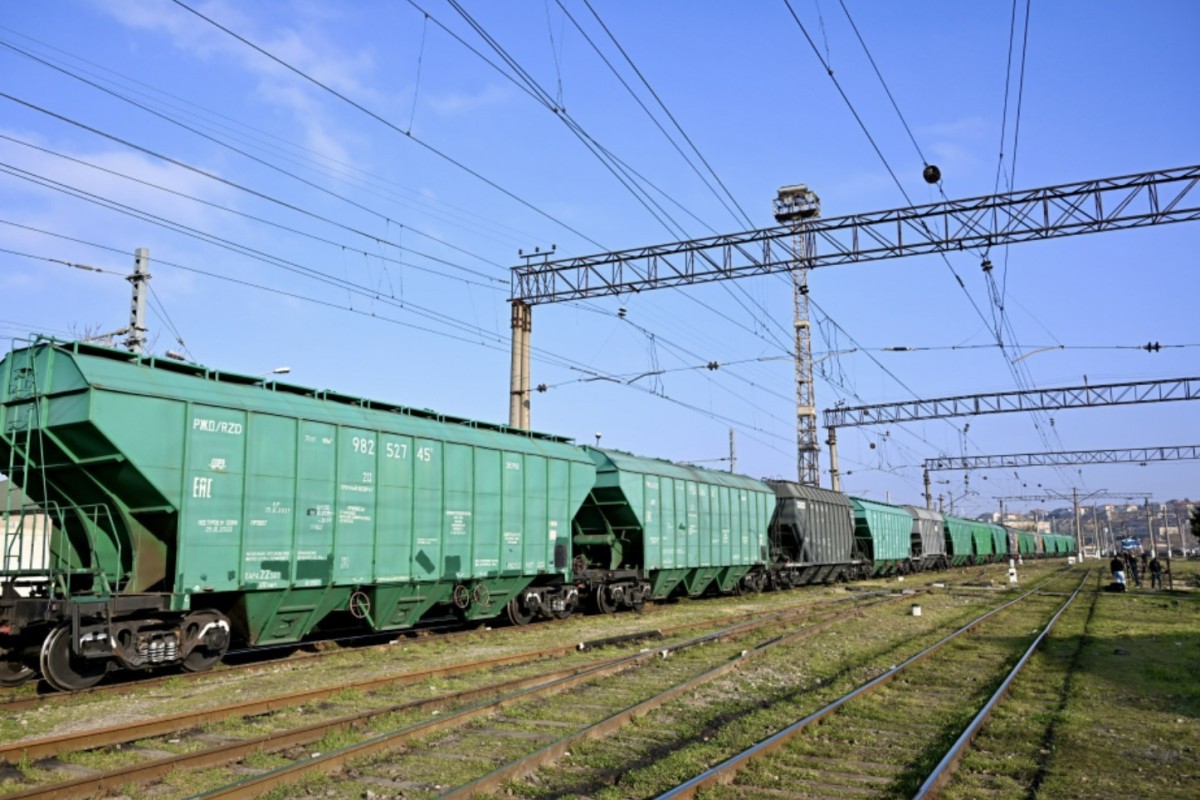
The supply of critically important fuel to the Armenian market, including AI-92, AI-95 gasoline and diesel fuel produced in Azerbaijan, demonstrated the direct benefit of peaceful coexistence for end consumers and economic entities. The region’s dependence on external shocks and logistics failures has significantly decreased due to the emergence of a predictable and short delivery leg.
The inclusion of TRIPP as a section of the strategic Zangezur Corridor in the international transport system completes the formation of an end-to-end transit framework, the benefits of which extend to the entire region. Turkey gains direct land access to the Turkic world and the markets of Central Asia, Azerbaijan is reliably connected to its exclave Nakhchivan and fills a long-empty cell with the most important element of its own logistics mosaic, and Armenia gets the chance to emerge from thirty years of isolation, into which it was driven by previous rulers, and transform from a dead-end territory into a transit country. Official Washington has repeatedly emphasized that the unblocking of transport arteries in the South Caucasus and the implementation of the TRIPP project open up colossal economic opportunities, creating conditions for attracting long-term investments in infrastructure and integrating the region into global logistics chains.
In parallel with the development of land routes, the importance of energy dialogue is growing. Azerbaijan’s connection to ensuring the energy security of European states through the Southern Gas Corridor and the prospects for exporting “green” energy via the Black Sea submarine cable create an additional contour of stability. The integration of the TRIPP transport route with existing and prospective energy communications is turning the South Caucasus into a multifunctional infrastructure corridor.
The year that has passed since the Washington summit has proven the viability of the peace concept proposed by Baku, based on international law and mutual economic benefit. The TRIPP project and related logistics initiatives have demonstrated that sustainable peace is built not only on diplomatic paper but also on rails, highways, customs terminals and financial agreements. The South Caucasus is confidently closing the page of historical instability and taking its rightful place as one of the key centers of world geoeconomics of the 21st century.