A bust of Charents in the Blue Mosque? An Armenian-Iranian act of ethnocultural forgery

Within the walls of the Blue Mosque in Yerevan — the only surviving mosque in Armenia and the main Muslim architectural monument of the capital of the former Irevan Khanate — yet another act of ethnocultural appropriation has unfolded.
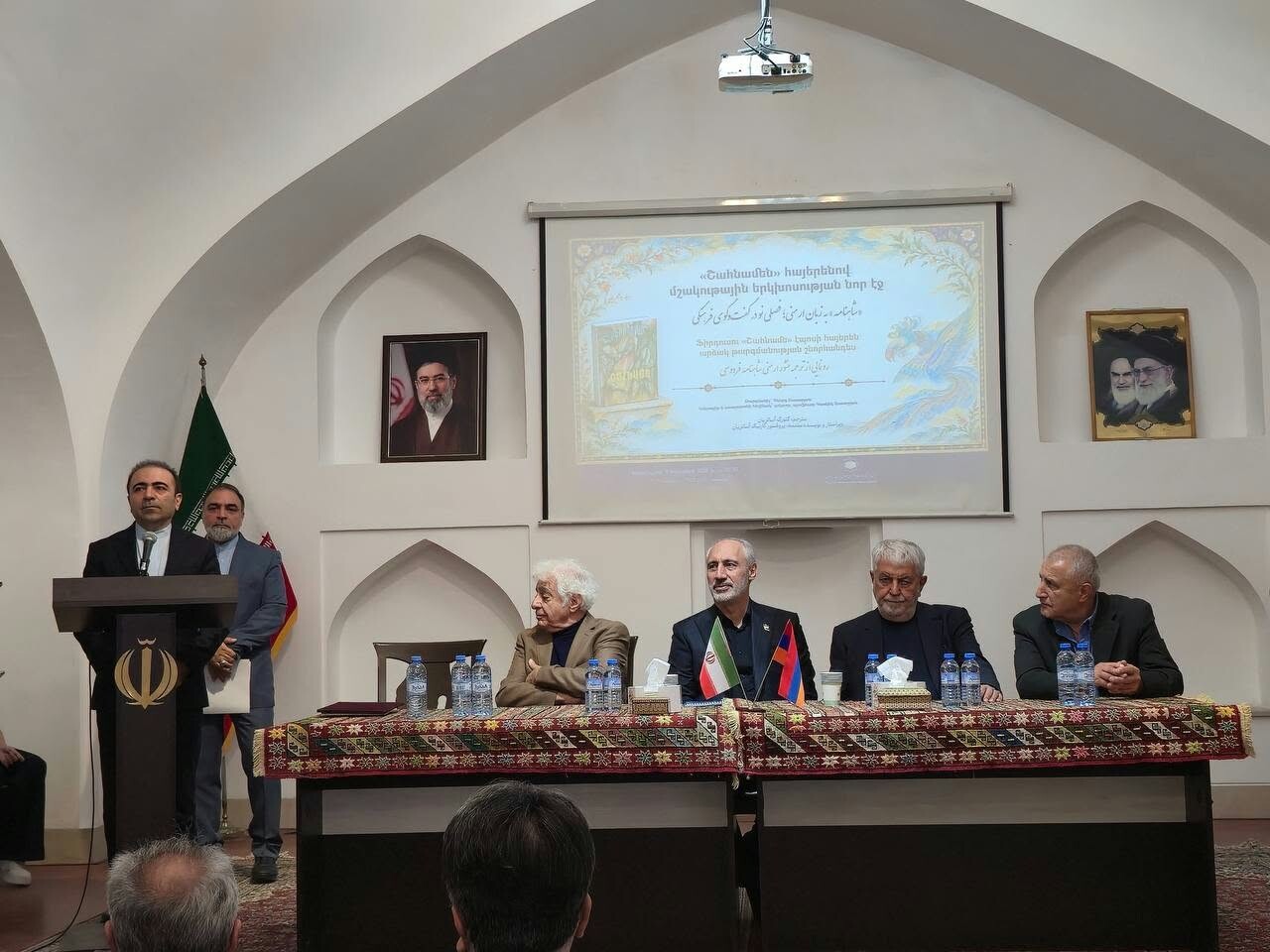
The conference hall of this complex was ceremoniously named after the Armenian poet Yeghishe Charents. Iranian Vice President Seyed Hamid Pourmohammadi, who is on a visit to Armenia, personally took part in the unveiling of the memorial plaque, and as part of the event a presentation was held of the translation of Ferdowsi's poem "Shahnameh" into Armenian. In the near future, the installation of a bust of the Armenian figure is also planned here.
Behind the diplomatic rhetoric about "fostering cultural ties" lies an attempt to cement the result of a years-long revision of history. The Blue Mosque, erected by the Azerbaijani ruler Huseyn Ali Khan Qajar in the 1760s, is being methodically cleansed of its authentic identity.
State sanction for rewriting history
An action of such scale could not have taken place without direct coordination between government offices in Yerevan and Tehran. When the vice president of the Islamic Republic of Iran personally unveils a memorial plaque to an Armenian poet within the walls of an ancient mosque, this becomes an official political act.
The government of Armenia, which declares its aspiration to normalize relations in the region, in practice gives the green light to steps that directly provoke historical tension. The admission of symbols of Armenian literature into the space of a Muslim place of worship, erected by Azerbaijani architects, is openly sanctioned by the executive authorities.
The removal of the Azerbaijani historical layer is a consistent joint line, designed to create a reality in which there is no place left for the Azerbaijani heritage of Irevan.
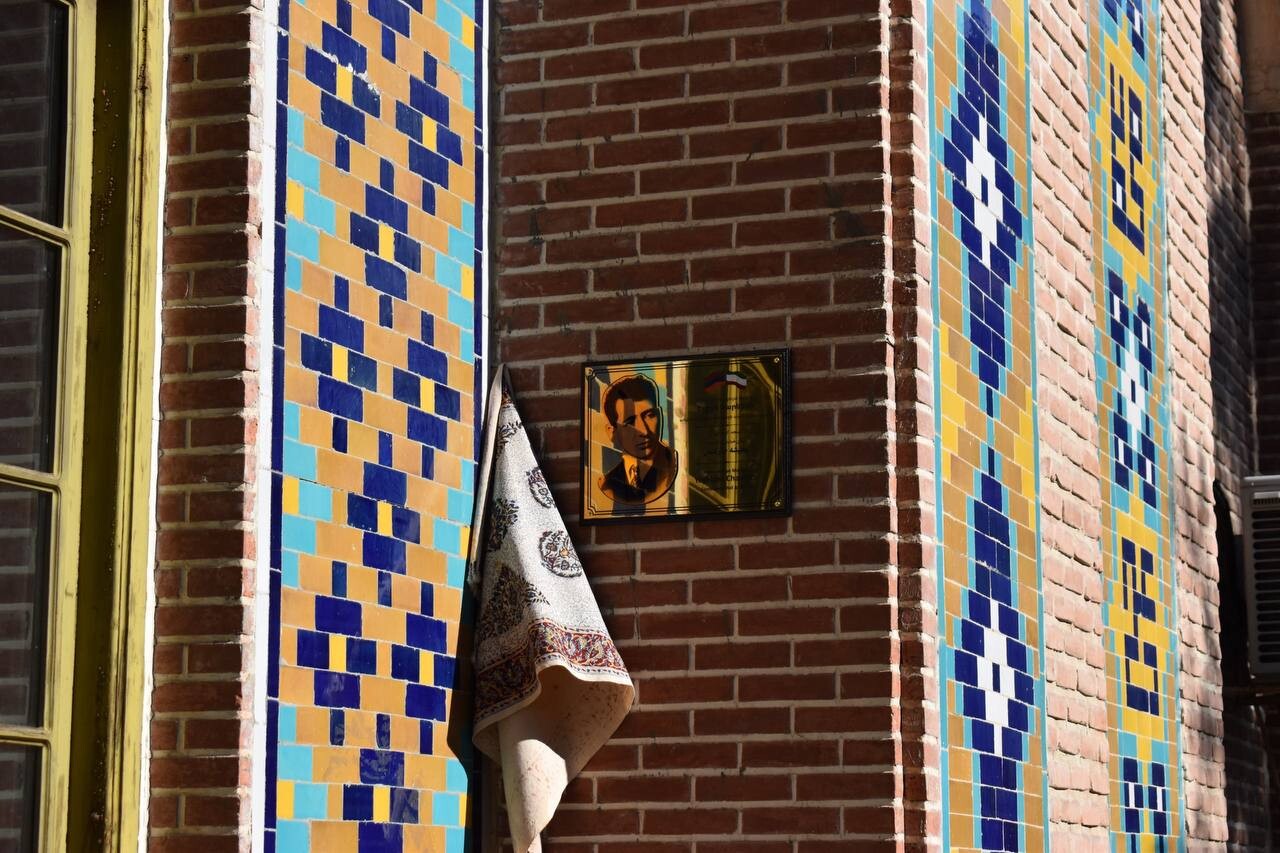
Yeghishe Charents as an instrument for legitimizing appropriation
The argument of the Iranian Embassy in Yerevan is built around Charents's "merits in preserving the mosque" during the Soviet years. However, turning his figure into the central symbol of the Blue Mosque is a substitution of concepts. The Soviet poet has no relation whatsoever to the creation, spiritual tradition, or original purpose of the complex, built a century and a half before him by an Azerbaijani khan for the Muslim community.
Naming the conference hall after Charents and the planned placement of his sculptural image pursue a transparent goal — to marginalize the Muslim and Azerbaijani identity of the site by layering alien symbols over someone else's historical memory.
An architectural monument of the Irevan Khanate and Iranian revisionism
The Blue Mosque (Göy məscid) was built in 1764–1768 during the reign of Huseyn Ali Khan as the city's largest spiritual and educational center, reflecting the traditions of Turkic-Muslim architecture of the Caucasus.
However, over the past decades a systematic process of falsification has been under way:
- Erasure of the Azerbaijani trace: references to the Irevan Khanate and its rulers have been completely removed from materials;
- The thesis of a "Persian mosque": the Iranian side, with the assistance of the Armenian authorities, replaces the ethnic origin of the creators with a politically convenient term;
- Armenization of the interior: Armenian cultural elements in the form of names, busts, and book presentations are being introduced into the space of the place of worship.
Instead of acting as an impartial custodian of Islamic heritage, Tehran is taking part in political performances that devalue the Muslim culture of the region for the sake of momentary opportunistic considerations.
Tehran's double standards
Particular cynicism is lent to what is happening by the position of Iran, which positions itself as the chief defender of the Islamic world and Shiite heritage. In practice, however, Iranian officials personally take part in events that turn a Muslim place of worship into a secular cultural venue.
This is explained by pragmatic geopolitics. First, the Iranian concept seeks to replace the notion of Muslim and Shiite heritage with the term "Persian," since recognizing the Turkic-Shiite origin of the Blue Mosque would mean recognizing the Azerbaijani historical factor in the region. Out of fears of the growth of national self-awareness among the multimillion Azerbaijani population within Iran itself, Tehran prefers to hand Islamic sites over to an Armenian protectorate.
Second, the desire to preserve Armenia as a regional counterweight compels Iranian diplomacy to turn a blind eye to the de-Islamization of monuments. By refusing to defend the true creators of the mosque, Iran is moving toward the loss of the site's Islamic identity. Tehran's tacit consent and direct participation in the Armenization of the Blue Mosque definitively strip it of its mask as a defender of Islamic values.
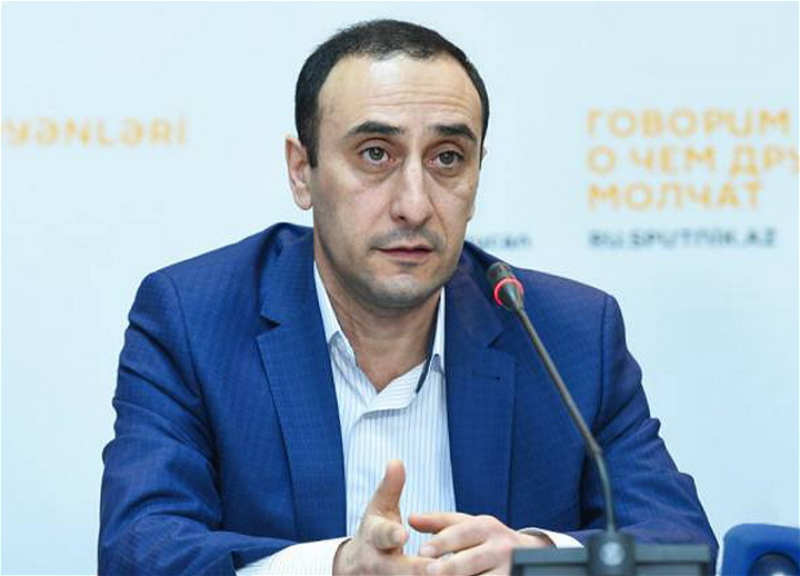
An assessment of what is happening was given by the director of the Center of Caucasian History Rizvan Huseynov in an interview with 1news.az:
"This event is an unambiguous and planned Armenian-Iranian provocation directed against Azerbaijan.
Yeghishe Charents has not the slightest relation to the Blue Mosque. Moreover, his creative legacy is extremely ambiguous: in his works he harshly criticized Armenian society for betrayal and treachery. If it is so important for the Armenian authorities to immortalize his memory, it would be far more appropriate to demolish the monument to Garegin Nzhdeh in the center of Yerevan and erect in its place a bust of Charents, who exposed the vices of the nationalist intelligentsia.
As for Iran, the actions of official Tehran are an outright destructive step. Iran positions itself as the chief custodian of Islamic and Shiite heritage, but in fact the Blue Mosque has long since turned into an instrument of political manipulation for it. Naming the mosque's hall after an Armenian figure and the planned installation of his bust inside the complex is not merely a historical forgery, but also a direct violation of the basic norms of Sharia and Islamic law, which strictly prohibit such things in Muslim places of worship."
A mirror contrast: Baku's multiculturalism versus Yerevan's revisionism
Amid such provocations, a question may arise about the need for a mirror response — for example, renaming the Armenian Church of St. Gregory the Illuminator in the center of Baku.
But the main strength of Azerbaijan's position lies in maintaining absolute moral and diplomatic superiority. On Fountain Square in Baku, a 19th-century Armenian church stands to this day. It has not been renamed, its inscriptions have not been destroyed, and inside it an archival collection with thousands of books in the Armenian language is preserved. This is a fundamental argument for Baku on international platforms, demonstrating fidelity to the principles of multiculturalism.
In addition, there is a fundamental difference between these sites: the Blue Mosque was erected by an Azerbaijani ruler for Azerbaijanis, and today attempts are being made to appropriate its history. The church in Baku, on the other hand, was built by the Armenian community, and Azerbaijan has never tried to change the authorship of this structure, protecting it as an architectural monument.
History is not rewritten with memorial plaques and the installation of busts. The Blue Mosque was and remains in history a monument of Azerbaijani architectural art and a legacy of the Irevan Khanate. Any attempts to change its status only underscore the weakness of the positions of those who are trying to appropriate someone else's history.
The authorities of Armenia and Iran should be aware: such steps do not strengthen trust in the region, but merely record their direct contribution to the falsification of the cultural space of the South Caucasus.