A possible Democratic revenge on Capitol Hill: what do the U.S. election results mean for Baku and the region? – OPINION

Based on the results of the U.S. midterm elections, the Democrats have managed to gain control of both the Senate and the House of Representatives of Congress.
The Senate — the Democrats will win 55 seats in the U.S. Senate, while the Republicans will have 45 seats, the New York Times predicts. A minimum of 51 mandates is required for a majority in the chamber.
The House of Representatives — the NBC television network has downgraded its forecast for the Republicans regarding the number of seats in the lower house of Congress to 177 seats, giving the Democrats 258 seats.
Governors — the Republicans receive 19 posts, the Democrats 25 posts.
Donald Trump has acknowledged these preliminary results.
These results are capable of radically reshaping the balance of power on Capitol Hill and noticeably influencing Washington's foreign policy agenda.
The transfer of control over Congress to the Democratic Party may lead to a reformatting of U.S.-Azerbaijani relations and to the intensification of pro-Armenian lobbying on issues of the peace process with Armenia, as well as on the fate of key regional projects, including TRIPP.
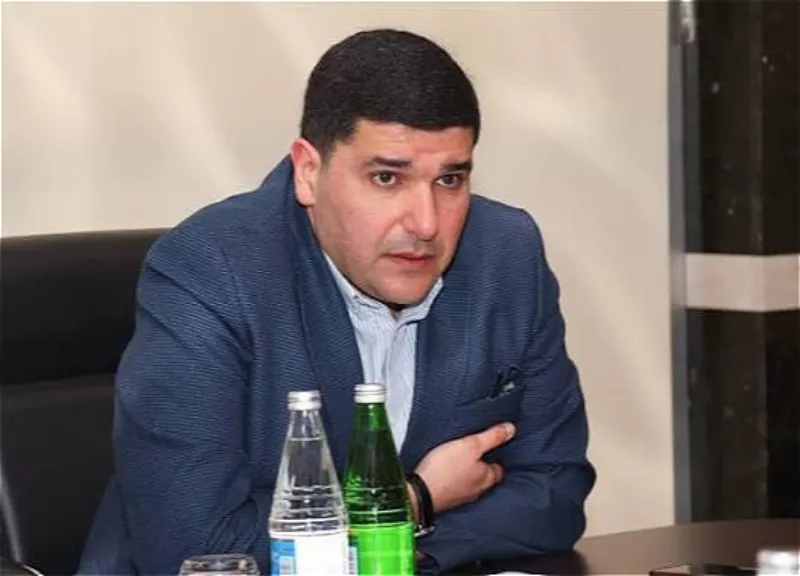
How the changes in the U.S. legislative branch will affect the stability of the White House, global security and the situation in the South Caucasus was described to 1news.az by Deputy Head of the Center of Analysis of International Relations and Multiculturalism Farhad Mammadov:
“A great deal will change. First of all, the Democrats will begin taking revenge both on Trump himself and on the key figures of his administration — from the FBI director and the secretary of war to the secretary of state and other high-ranking officials. To do this, they will make use of the committees of the Congress and the Senate, summoning functionaries to hearings and initiating investigations in order to effectively paralyze the work of the presidential administration. Over the next two years, we will witness a fierce domestic political struggle and chaos in the United States.
The most interesting question is exactly how U.S. activity in the context of the Russian-Ukrainian war will change and transform. Although this concerns foreign policy, where the U.S. president has broad freedom of action, the Democrats, through the Congress and the Senate, are capable of making substantial adjustments to the American position on this crisis.
Even more relevant and intriguing is the question regarding Iran. Under the War Powers Resolution, the Trump administration has the right to conduct limited military actions for 60 days without the prior approval and sanction of Congress.
But this is precisely what the Iranian side, which adheres to a strategy of ‘playing the long game,’ is counting on. Accordingly, possible strikes on Iran and the U.S. negotiating position as a whole will be substantially weakened in the process of settling the Iranian crisis.
As for our region, the money for the TRIPP project has already been allocated, meaning that the main work has been done and the key political decisions have been made. All that remains is the practical implementation of these decisions over the next six months, in order to complete the process of forming the company and to begin construction. There will be no changes in the pace of TRIPP's implementation.
However, if the positions of the Armenian lobby in the Congress and the Senate are strengthened, we may witness the emergence of new frictions in U.S.-Azerbaijani relations. This will have a negative effect on the pace of implementation of the agreements along the Azerbaijani track.
The Armenian diaspora seeks to put forward its own conditions for any U.S. activity with respect to Azerbaijan, linking it to demands concerning the release of convicted persons of Armenian origin, the delimitation of the border and the preservation of cultural heritage. This factor will create certain problems both of a substantive nature and in the information space.
If we look at the situation as a whole, unpredictability and uncertainty in international relations will only grow. Over the next two years — and especially in the remaining month and a half before the new composition of the Congress and the Senate begins its work — President Trump will try to make maximum use of the available time to implement concrete practical steps.”