Armenia on the path to autocracy: the opposition is being arrested, Europe turns a blind eye

Armenia's political landscape is going through yet another profound upheaval, caused by harsh pressure on the opponents of the current authorities.
What until recently was presented to the international community as an "island of democracy in the Caucasus" is in practice increasingly displaying the classic features of an autocracy.
After the detentions during the parliamentary elections, a new wave of forceful actions followed: searches at dozens of addresses, criminal prosecution of opposition leaders, and new rulings on their pretrial detention. The new wave of detentions and searches that has swept the country indicates that administrative resources and the law enforcement system have turned into instruments for suppressing political competition.
The trigger for this new round of escalation was the events surrounding the "Strong Armenia" party and its leader Samvel Karapetyan. The security agencies carried out a large-scale special operation: searches were conducted simultaneously at dozens of addresses, and dozens of people, including political leaders, were detained. The Main Department for the Investigation of Economic Crimes and Smuggling of Armenia's Investigative Committee announced an investigation into a case of violations in the private sector. However, the coincidence in timing between the law enforcement actions and the opposition's steps to consolidate its forces points to a clear political subtext to what is happening.
The evolution of pressure
These events are difficult to consider in isolation from the general political context. So, on the morning of November 4, officers of the security agencies conducted searches at 65 addresses, including the homes of the leader of the "Strong Armenia" party Samvel Karapetyan and the head of that political force's parliamentary faction, Narek Karapetyan. Samvel Karapetyan, who had previously been under house arrest, was detained and taken to the Investigative Committee. Already on November 5, the Anti-Corruption Court ruled to place him in custody for one month.
The Investigative Committee explained the operation as an investigation into alleged economic crimes at the company "Electric Networks of Armenia." According to the investigation, in 2016–2024 a group of individuals abused their powers in the private sector, misappropriated property, and engaged in money laundering. The alleged damage to the company is estimated at 64.5 billion drams — about $177–179 million. As part of the case, criminal prosecution has been initiated against 36 people.
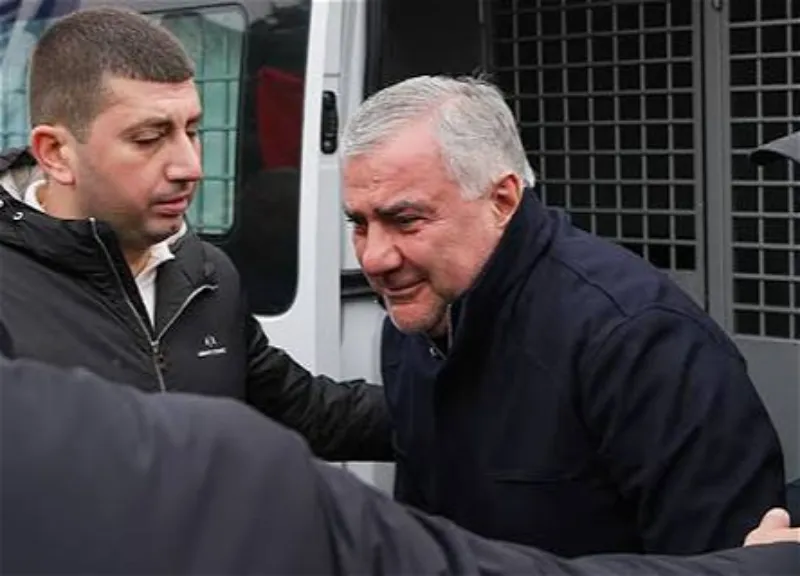
Of course, the charges brought must receive a legal assessment in court, and the guilt of each defendant must be proven. However, the existence of a criminal case does not in itself remove questions about the political component of what is happening. All the more so when it concerns the leader of an opposition party whose political activity is becoming increasingly noticeable, and when the law enforcement operation coincides with a period of acute confrontation over the country's future constitutional structure.
Particularly important is the question of why the forceful pressure is intensifying precisely at the moment when the opposition is trying to consolidate and offer society an alternative political program.
In this context, the statement of Narek Karapetyan is telling: according to him, the leader of "Strong Armenia" intended to make a political statement on November 5 and present an alternative to the course of the current authorities. The detention thwarted these plans.
Nevertheless, today the opposition structures have still announced the formation of a nationwide consolidated front.
The current situation did not arise out of nowhere; it is a continuation of a systemic policy of neutralizing the government's critics. The practice of using criminal cases and forceful detentions against political opponents in Armenia was already evident during past election campaigns, when regional leaders, independent candidates, and activists came under investigation. Today we are witnessing a new, deeper round of this strategy. When public criticism is consistently followed by legal sanctions, searches in dozens of homes, and the arrests of key figures, the line between justice and political persecution is erased.
Already during the recent parliamentary campaign in Armenia, detentions of opposition representatives were recorded. After the June elections, several opposition politicians came under investigation. Thus, the current events look not like an isolated investigative episode, but like a continuation of a political crisis that is gradually taking on ever harsher forms.
A few days ago, representatives of a whole range of opposition forces gathered at the home of Samvel Karapetyan. The meeting was attended by representatives of the "Armenia" bloc, the Armenian National Congress, the "Hayakve" initiative, the parties "Prosperous Armenia," "Heritage," the "Republican Party of Armenia," "New Era," "Together," "A Country to Live In," and other political associations.
The discussion concerned the formation of a nationwide consolidation. Among the priorities named were the protection of national identity and the Armenian Apostolic Church, the restoration of democratic rights and freedoms, the rejection of the new Constitution in the format proposed by the authorities, as well as the achievement of peace without unilateral concessions and territorial losses.
In other words, the opposition attempted to move beyond fragmented criticism of the government and form a common political platform.
It is precisely here that a fundamental question arises: how free can political competition be if the leaders of opposition forces end up in pretrial detention centers one after another, and their political activity is accompanied by criminal cases and law enforcement operations?
The authorities reject the political motivation of the investigative actions and insist on their lawful nature. But even if specific charges, say, of economic crimes have grounds, this does not relieve the authorities of the obligation to ensure the independence of the court, the proportionality of preventive measures, and the absence of selective justice.
The events around Samvel Karapetyan are unfolding simultaneously with another high-profile story. On November 5, the court extended by another three months the arrest of the leader of the "Prosperous Armenia" party, Gagik Tsarukyan, who has been in custody since July 7, 2026.
He has been charged with fraud and the laundering of $21 million in a case concerning the activities of the Armenian-Iranian Chamber of Commerce in 2022–2024. In addition, the investigation accuses him of the fraudulent embezzlement of $934,000 as part of a fuel supply deal.
Here it is necessary to await the court's assessment of the charges brought. However, the political context cannot be ignored: this concerns yet another well-known opposition party leader who remains behind bars.
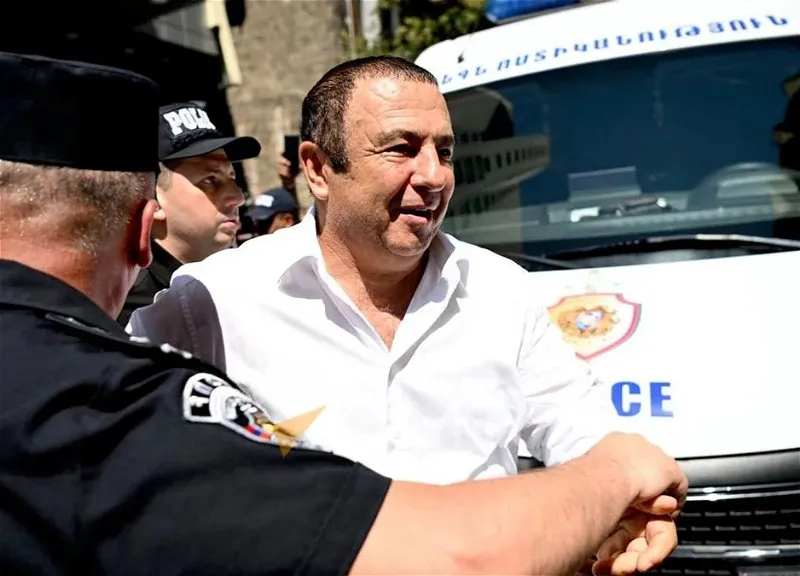
When criminal prosecution affects several influential political figures at once, and their parties are involved in forming an alternative to the current leadership, society has the right to demand from the authorities maximum transparency and convincing evidence of the absence of political selectivity.
Otherwise, the impression arises that the political field is gradually being cleared of the government's most influential opponents not as a result of democratic competition, but through law enforcement and judicial mechanisms.
Europe and human rights defenders
Another notable feature of the ongoing processes remains the reaction — or rather, its complete absence — on the part of leading international human rights and intergovernmental institutions. Organizations that traditionally declare uncompromising protection of human rights and freedom of speech show surprising restraint when it comes to Armenia.
Where are the loud statements and emergency reports that usually accompany similar events in other regions of the world? Where is the consistent and visible reaction of the Council of Europe Commissioner for Human Rights? What assessment of what is happening is given by PACE and the European Parliament? Why is there no comparable-scale public attention from Amnesty International and other international human rights organizations? True, during the latest elections PACE did touch upon problems related to the criminal prosecution of opposition and religious figures in Armenia, including in the context of the parliamentary elections. But is that enough when, after the elections, the situation not only fails to calm down but takes on new developments?
Human rights institutions must respond not only to violations that are convenient to include in a political agenda. Their task is to assess respect for fundamental rights regardless of who is in power, what the country's foreign policy orientation is, and how well it corresponds to the interests of individual European capitals.
It is especially important that international structures assess not only the criminal cases themselves, but also the circumstances of the detentions, the justification for keeping people in custody, the independence of judicial decisions, and respect for the opposition's right to political activity.
It is precisely such questions that should be at the center of attention of European institutions today.
Double standards in action
The phenomenon of "selective vision" becomes especially obvious when analyzing how the international community and affiliated media resources cover events in the South Caucasus region.
With regard to Azerbaijan, even minor everyday, social, or administrative problems often become a pretext for large-scale political discussions. Individual court rulings, local conflicts, and public incidents gain international resonance, are instantly elevated to the rank of a "global human rights violation," and are accompanied by statements from politicians, human rights defenders, and various organizations. Information campaigns are launched, resolutions are adopted, calls for sanctions are heard. Any minor incident is politicized and presented through the prism of a "systemic crisis of freedom."
In Armenia's case, however, the exact opposite picture is observed. Large-scale purges of the political field are interpreted as "internal investigative procedures" or a "fight against corruption." The detention of dozens of opposition figures does not provoke a wave of condemnation in European capitals. Open warnings addressed to opponents by the country's leadership remain without proper assessment from international experts.
So why is similar "principledness" not shown when it comes to Armenia? Why do large-scale searches, the detention of opposition leaders, and the prolonged detention of politicians not attract comparable attention from the very same circles that so actively comment on internal processes in Azerbaijan? After all, human rights cannot be a subject of geopolitical bargaining, and that is precisely why standards must be the same. If freedom of political activity is a universal value, then why should its protection depend on exactly who has come under investigation?
Such selectivity damages not only trust in individual institutions, but the very idea of international human rights protection. Universal principles lose their meaning when their application is determined by political expediency.
The scales of democracy
Such an imbalance undermines the authority of the very concept of human rights protection. When legal standards are applied selectively depending on political expediency, they cease to be a universal value and turn into a geopolitical instrument.
Today Armenia faces a serious test. In a country that positions itself as a democratic state, political competition is increasingly accompanied by criminal cases, detentions, and conflicts between the authorities and the opposition.
This is not about politicians receiving immunity from criminal liability solely because of their status. But using the fight against crime as a cover for restricting political pluralism is inadmissible. These are two fundamentally different things, and the state is obliged to prove that the first does not turn into the second.
If the charges against opposition leaders are justified, this must be proven in an open and independent judicial process. But if criminal prosecution becomes a means of eliminating political competitors, then this is no longer simply an internal political crisis, but a serious threat to democratic institutions.
And here the responsibility lies both with the Armenian authorities and with international organizations, which are obliged to monitor compliance with the principles on which the European system of human rights protection is based.
Ultimately, the main question today is not who will win in the confrontation between the Armenian authorities and the opposition. The question is different: will there remain space in Armenia for a political alternative, or will the right to dissent gradually turn into the risk of ending up behind bars?
And if the international defenders of democracy are not ready to ask this question now, then when do they intend to do so?