
The Washington summit one year later: A world with no alternative and the status quo established by Azerbaijan
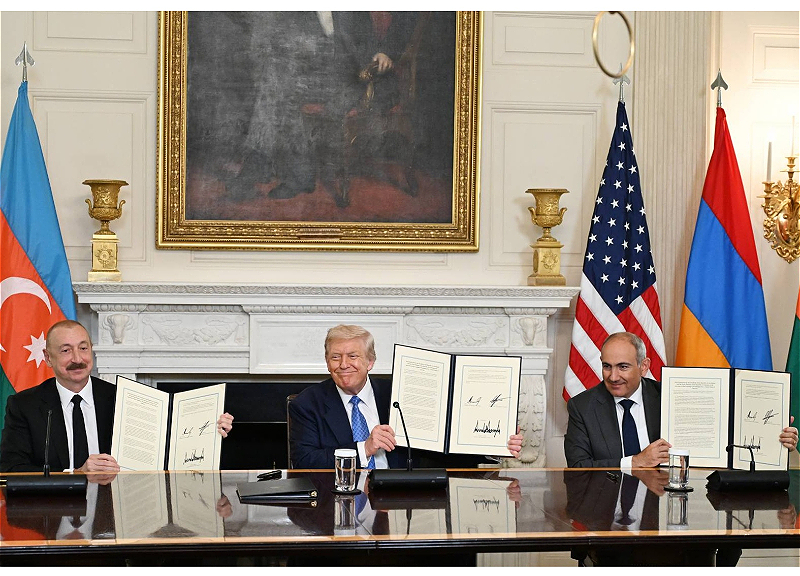
August 8 marks one year since the Washington summit, which can be called one of the most important diplomatic events in the modern history of the South Caucasus.
The Joint Declaration of the leaders of Azerbaijan and Armenia signed at the White House in the presence of the President of the United States, and the initialing of the Agreement on the Establishment of Peace and Interstate Relations between the two countries, launched a new architecture of regional interaction, becoming not merely political decisions but a milestone marking the region's transition from years of confrontation to the practical building of peace.
The past year has convincingly shown that Azerbaijan's peace strategy is not declarative but practical in nature, radically changing the geopolitical and geoeconomic architecture of a vast geography. During this time it has become obvious that the new regional agenda initiated by Baku has ceased to be a diplomatic concept and has turned into a reality that is already bringing concrete political, economic, and humanitarian results.
President of Azerbaijan Ilham Aliyev notes that today peace has de facto been achieved between the two countries, and emphasizes its advantages. "We have taken many unilateral steps to demonstrate that peace exists not only on paper, it can be felt in everyday life. Azerbaijan has lifted all restrictions on the transit of goods through its territory to Armenia. These restrictions were introduced in connection with Armenia's occupation of our internationally recognized territories. We have also begun supplying Armenia with critically important fuel, in particular gasoline and diesel fuel. In the current geopolitical situation, this is even more important than ever before. Thus, we are demonstrating that for us peace is something that can already be sensed and felt, and we are learning to live in conditions of peace. We lived under occupation for 30 years and restored our sovereignty and territorial integrity by our own efforts — both by military means and by political means. And we offered Armenia peace. So now peace is a reality, but we must work hard to strengthen it, to make it lasting, to make it eternal."
These words are confirmed by Azerbaijan's practical steps. Peace has ceased to exist exclusively in the format of negotiations — it has begun to be embodied in concrete mechanisms of cooperation. The most vivid confirmation of this comes from real economic and logistical processes. Thus, according to data as of August 6, more than 36,000 tons of grain, about 9,000 tons of fertilizers, 1,136 tons of propane, 133 tons of aluminum, 414 tons of anthracite, and 67,000 tons of lumber have been sent from Russia to Armenia in transit through Azerbaijan. At the same time, to date about 15,000 tons of diesel fuel, as well as about 5,000 tons of AI-92 and AI-95 gasoline, have been exported from Azerbaijan to Armenia.
As can be seen, Azerbaijan is making a very tangible contribution to the peace process, providing Armenia with various goods, including petroleum products. "This is especially important now, when many countries are experiencing difficulties in accessing fuel sources, Armenia has a reliable supplier in the person of Azerbaijan. If it were not for this, they would probably have to look for gasoline and diesel fuel all over the world today," the Azerbaijani leader says about this.
The figures cited are in themselves the most convincing proof of the qualitatively new atmosphere that has developed in the region. Economic interaction is gradually becoming one of the most important instruments for strengthening trust between the two states.
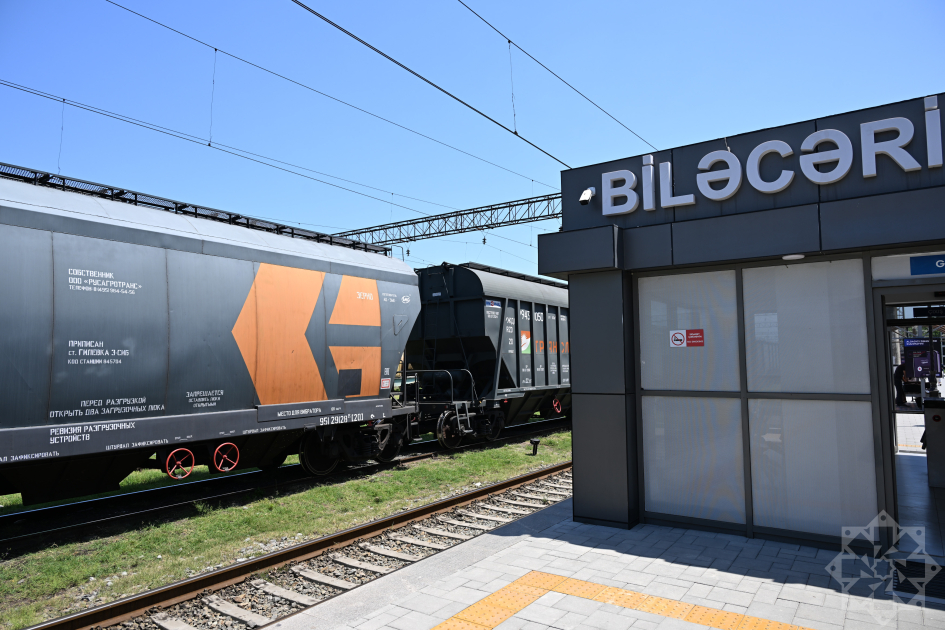
All the results achieved over the past year are united by one important feature — they became possible exclusively thanks to direct Azerbaijani-Armenian dialogue. The visible progress achieved within its framework once again demonstrates the effectiveness of this approach, which was also initiated by Baku. As was the entire peace process as a whole — let us recall that it was Azerbaijan that put forward the 5 main principles for normalizing relations with Armenia, which formed the basis of the Peace Agreement initialed in Washington. At the same time, its signing and ratification require additional measures, which is also confirmed in the leaders' Joint Declaration. As the main condition within the framework of the peace process, Baku has put forward the removal from Armenia's Constitution of the article containing territorial claims against Azerbaijan. Another of Baku's demands has already been fulfilled — this concerns the dissolution of the OSCE Minsk Group, which completely put an end to the attempts of those who for many years tried to cement the occupation with the terms "frozen conflict," "status quo," and "disputed status."
Now a new — just — status quo has been established in the region, and its author is Azerbaijan and its leader Ilham Aliyev.

Today Baku and Yerevan are conducting direct dialogue on key normalization issues at the highest and high levels. Government commissions headed by deputy prime ministers are dealing with organizational and technical issues related to border delimitation. Negotiations between the parties' delegations have been held both in Azerbaijan and in Armenia.
Civil society has also been drawn into the peace process — this concerns the "Bridge of Peace" initiative, which is also taking place within the framework of the bilateral peace agenda adopted at the Washington summit. Participants of the platform discuss what civil society can do to strengthen trust and prepare the peoples for sustainable peace.
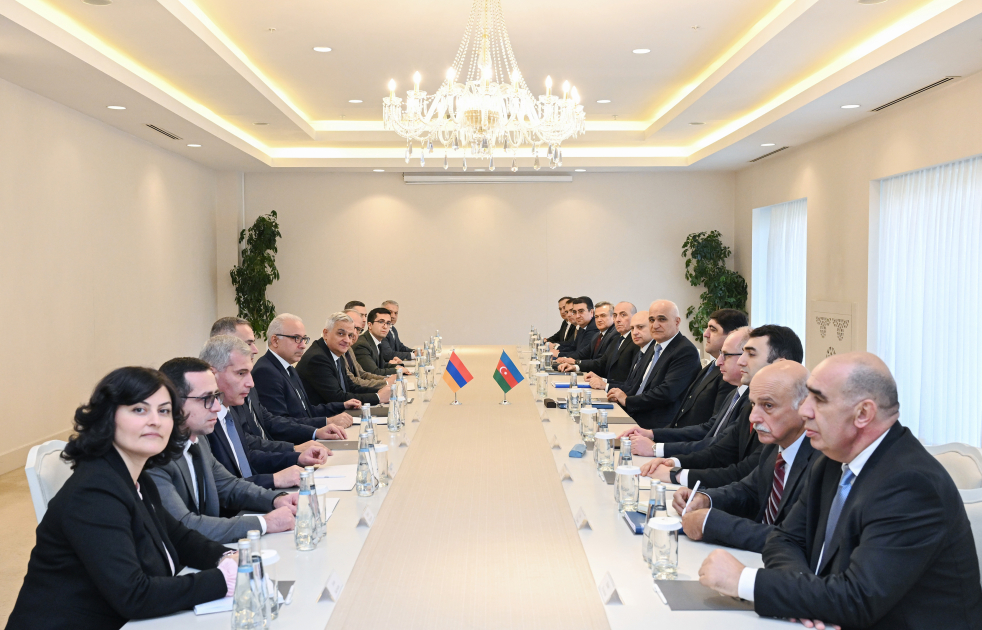
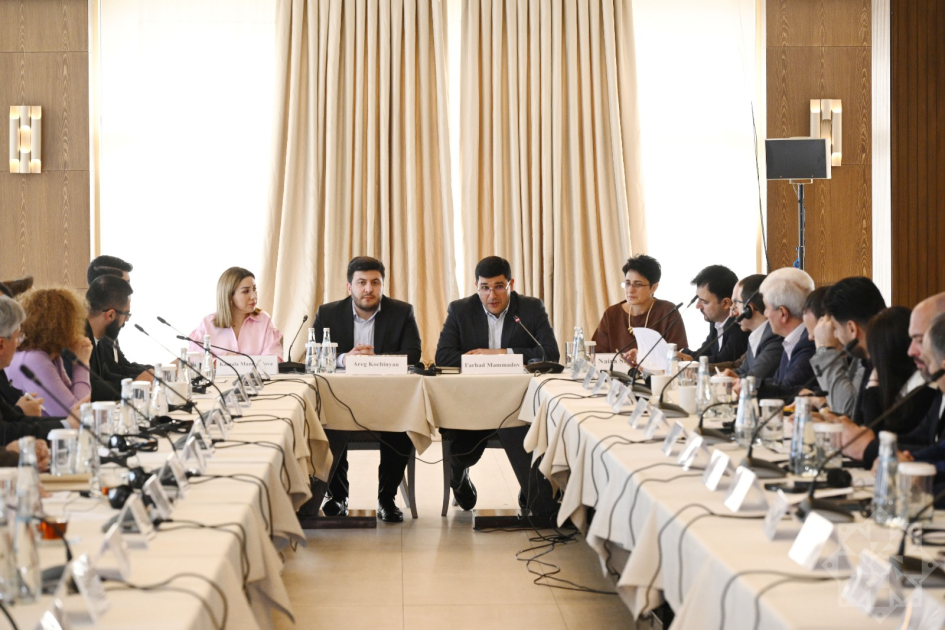
In the photo: a meeting of the government commissions of Azerbaijan and Armenia (Gabala, November 28, 2025) and a round table with the participation of representatives of civil societies within the framework of the "Bridge of Peace" initiative (Baku, April 10, 2026).
Everything achieved to date has clearly demonstrated the limitations of external mediation formats and at the same time confirmed the effectiveness — and therefore the absence of any alternative to — the bilateral mechanism for advancing the peace process.
Today it is developing not only in the political sphere, but also in the infrastructure sphere.
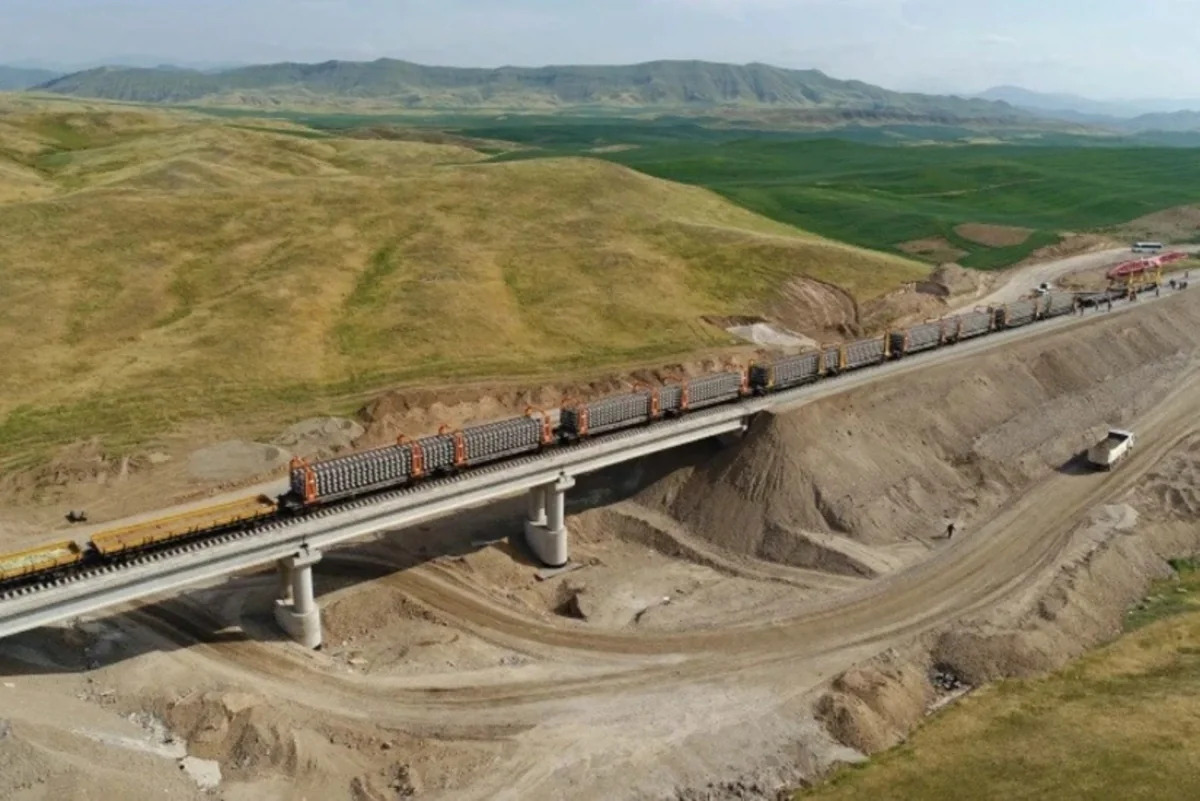
One of its material embodiments is the TRIPP project — the "Trump Route for International Peace and Prosperity," which is already being called the anchor of the peace agreement and the foundation of a new model of regional cooperation. The project covers the 42-kilometer section of the Zangezur corridor passing through the territory of Armenia. Construction work on TRIPP is expected to begin this year. To implement the project, Washington has created a special investment fund, TRIPP+, with a funding volume of $402 million. Thus, TRIPP is gradually turning into a platform for long-term economic interaction between the South Caucasus and the United States and global logistics chains.
The visible results of the peace agenda convincingly prove the viability of the new model of regional development. Issues that until recently seemed unsolvable are gradually moving into the plane of diplomacy and practical interaction. Of course, fundamentally important stages still lie ahead — amending Armenia's Constitution, further delimitation and demarcation of the state border, and the full implementation of the TRIPP project. However, the main thing is already obvious today — the process has been irreversibly launched. The peace agenda formed by Azerbaijan continues to be filled with concrete content and is becoming the basis of a new architecture of security and cooperation in the South Caucasus.
The Washington summit became a turning point not only in the process of normalizing Armenian-Azerbaijani relations. It also marked a qualitatively new stage in relations between Azerbaijan and the United States, opening prospects for strategic partnership across a wide range of areas.
The results of the negotiations between Presidents Ilham Aliyev and Donald Trump opened a new page in the history of Azerbaijani-American interaction. The heads of state signed a Memorandum of Understanding on the creation of a Strategic Working Group with the aim of preparing a Charter on Strategic Partnership between the two countries. It was signed on February 10 in Baku. The document was signed by President of Azerbaijan Ilham Aliyev and Vice President of the United States JD Vance. Along with the traditional areas of cooperation, which remain energy, trade, and investment, the two countries will now also interact in the spheres of digital transformation and artificial intelligence.
An important step was President Trump's decision to suspend the implementation of the unfair sanctions against Azerbaijan imposed in 1992 through the efforts of the Armenian lobby in the United States. This concerns Section 907 of the Freedom Support Act, which prohibits the U.S. government from providing direct assistance to Azerbaijan. President Ilham Aliyev emphasizes that the final repeal of Section 907 by the U.S. Congress will put an end to the legacy of double standards and will strengthen trust and cooperation at a time when Azerbaijan is making its contribution to global security and stability.
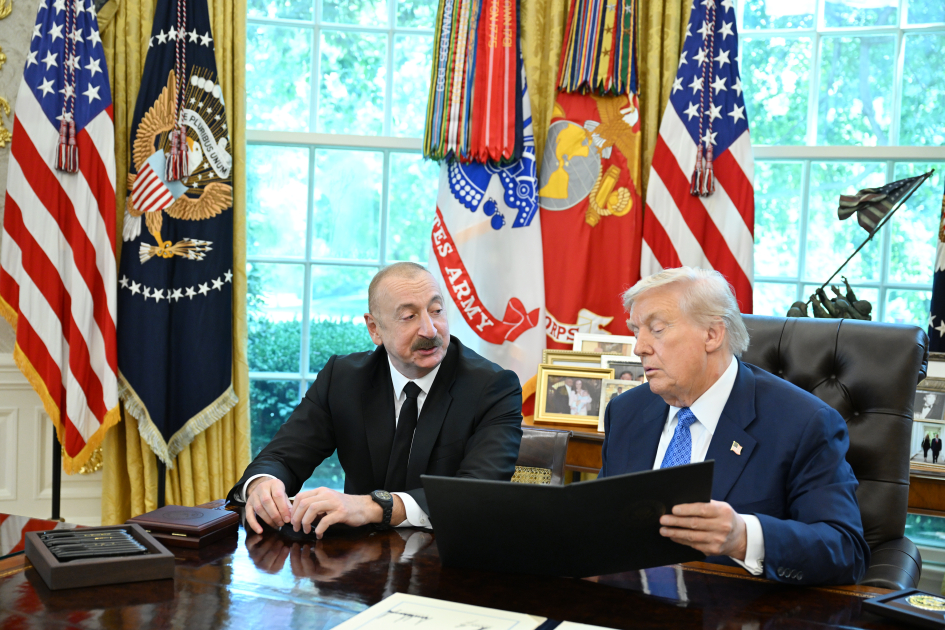
The degree of respectful and trusting relations between the leaders of Azerbaijan and the United States is evidenced by the tone of their correspondence. In their messages, the heads of state also emphasize the significance of the Washington summit. "The United States continues to support a lasting peace between Azerbaijan and Armenia," says Donald Trump's congratulatory letter to President Ilham Aliyev on the occasion of Azerbaijan's Independence Day. "We are encouraged by Azerbaijan's efforts to advance the peace agreement that you initialed in August of last year, including the ongoing border delimitation process, the release of four Armenian prisoners in January 2026, fuel supplies to Armenia, and also the 'Bridge of Peace' initiative bringing together the civil societies of the two countries," the U.S. president noted, emphasizing that he looks forward to the further strengthening of the strategic partnership in the coming years and decades.
President Ilham Aliyev, for his part, notes the irreplaceable role of the American leader in establishing and deepening the strategic partnership between Azerbaijan and the United States. "The signing of the Charter on Strategic Partnership, initiated during our historic meeting with you at the White House in August of last year and completed six months later during the visit of U.S. Vice President JD Vance to our country, has brought Azerbaijani-American relations to a qualitatively new level. This remarkable achievement is a clear testament to your unwavering will and determination. We express our gratitude to you for the great importance you attach to the development of our interstate relations, and for your unfailing support in this regard.
We are also grateful to you for your determination in advancing the peace agenda in the South Caucasus. The signing in your presence in Washington of the trilateral joint declaration, as well as the initialing of the Agreement on the Establishment of Peace and Interstate Relations with Armenia, are the result of your consistent peacebuilding efforts. At the same time, we regard the 'Trump Route for International Peace and Prosperity' (TRIPP), which will ensure unimpeded communication between the main territory of the Republic of Azerbaijan and Nakhchivan and will become part of the Middle Corridor, as yet another contribution to the development of sustainable peace and cooperation in the region," reads the congratulatory letter from the head of the Azerbaijani state to U.S. President Donald Trump on the occasion of his 80th birthday.

Thus, a year after the historic meeting at the White House, it can already be confidently said that the Washington summit became not a one-time diplomatic act, but the starting point for the formation of a new political reality in the South Caucasus. Over this year, the very principle of building relations in the region has changed.
The documents signed at the White House, the subsequent practical steps of the parties, the launch of joint infrastructure projects, and the transition to direct dialogue have confirmed the viability of the new model of regional interaction.
The peace agenda initiated by Azerbaijan continues to be consistently implemented, strengthening the foundations of long-term stability, cooperation, and economic development. That is why the anniversary of the Washington summit is not just a memorable date, but a symbol of irreversible changes that have opened a new page in the history of the South Caucasus.