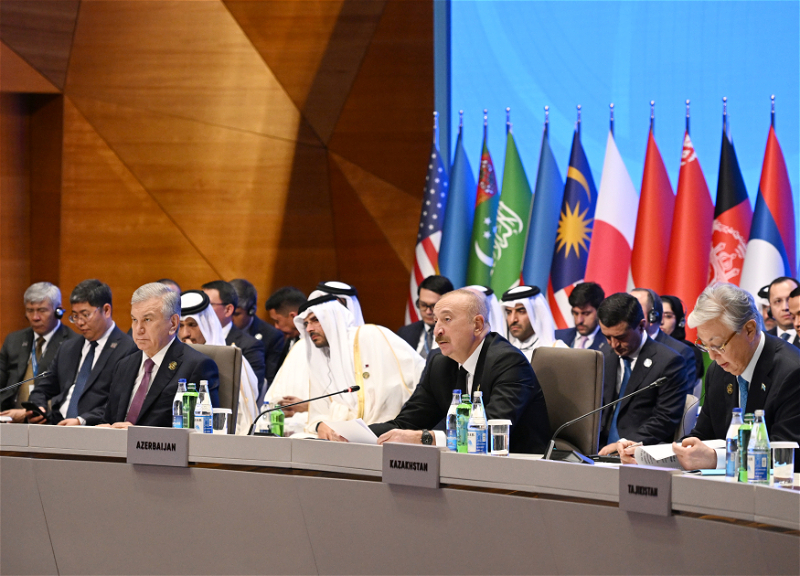
Ankara has confused brotherhood with bossiness

The myth of "selfless brotherhood," behind which Ankara has grown accustomed to concealing its geopolitical appetites, has finally cracked.
It appears that in certain Turkish offices they have mixed up the addressees and decided that one can speak to Baku in a lordly tone, showering an ally with grievances, reproaches, and outright street-level abuse. For some reason, in Turkey they imagined that Azerbaijani society is plasticine, out of which, by means of artificial media attacks and clerical pressure, one can mold any shape Ankara needs. What a fatal, foolish, and unforgivable delusion…
The calculation of the organizers of this dirty campaign was amateurishly simple. In certain Turkish offices and party headquarters they decided, for some reason, that a methodical informational assault, vile slander, and artificially stoked street hysteria were capable of shaking Baku, sowing panic, and forcing the Azerbaijani authorities to meekly bend under someone else's ultimatums. In Ankara they seriously imagined that before them stood the same weak Azerbaijan of the 1990s model, bound hand and foot by internal and external problems, at which one could shout, dictating one's will from the position of a senior overseer.
This poisonous abscess had been ripening for more than a day. It is no longer a secret to anyone that the planned campaign to denigrate Azerbaijan, which has been going on for three years now and is repeated with renewed force at every convenient opportunity, is of a purely artificial and deliberate nature. The curators in power and their henchmen in Turkey were merely waiting for pretexts. The latest attack flared up with particular cruelty when the Azerbaijani representative remained in the hall during the speech of Israeli Prime Minister Benjamin Netanyahu at the session of the United Nations General Assembly. Immediately after this, the provocateurs found a new pretext and fanned the flames right after the entry into force in Azerbaijan of the Cabinet of Ministers' decision on the introduction of a mandatory unified school uniform.
But this time the organizers of the harassment campaign clearly crossed the line. In Baku, this planned tactlessness overflowed the cup of patience of both the state and the entire society.
The failure of hybrid pressure and the collapse of calculations
In launching their hybrid attack, the authors of the provocation failed to calculate basic things. They completely ignored the unquestioned authority of President Ilham Aliyev in Azerbaijan, the colossal sympathy of the people for their leader, as well as the deep respect for the head of the Azerbaijani state throughout the Islamic world, including Turkey itself. They utterly forgot the fundamental law of the Azerbaijani character: in the face of any external threat, our society instantly rallies around its leader and mobilizes all its resources for the common goal.

The outcome of this three-year political pressure turned out to be absolutely nil for its initiators and devastating for their designs.
First, the organizers of the harassment campaign failed to exert the slightest influence on internal processes and public opinion in Azerbaijan. Our public, in its overwhelming majority, unconditionally supported the decisions of the country's leadership, clearly demonstrating complete confidence in their correctness.
Second, in Ankara they clearly saw exactly how Azerbaijani society consolidates in the face of external attacks, building an unshakable monolith of national unity and solidarity.
Third, the authors of the provocations learned from their own experience a simple truth — to speak with Baku in the language of threats, blackmail, and boorish lecturing is not merely useless, but absolutely impossible. No one has ever managed to knock Azerbaijan off its chosen path.
But the most unexpected and painful ricochet of this process struck Turkey itself. The attempt to carry out an ideological onslaught split Turkish society, pitting the religious stratum of supporters of the ruling Justice and Development Party (AKP) against the nationalist and secular camp. Turkish nationalists and convinced supporters of the Republic took a sharp, uncompromising stance against the Nursist-Islamist leadership of the AKP, openly accusing it of betraying pan-Turkic interests.
In their time, the strength, firmness, and futility of pressure on Baku were well understood in Moscow, Washington, and Tehran. Russia, the West, and Iran long ago realized that with modern Azerbaijan one can speak exclusively as equals. Now the time has come for Turkey, too, to finally grasp this reality and begin to take it into account in bilateral relations.
A blow to the Turkic world and the Ottoman rake
The dirty process launched from within the AKP ultimately turned against the Turkish authorities themselves. However, the tragedy is that the consequences of this adventure extend far beyond the internal squabbles in Ankara. At stake is a key factor — the unity of the entire Turkic world.
Observing the neo-Ottoman ambitions and attempts at unceremonious interference in the internal affairs of a sovereign ally, absolutely everyone drew conclusions. The states of Central Asia, as well as Turkic-speaking peoples in Russia and other regions of the planet, have drawn the harshest lessons from what is happening. One can state with absolute certainty the fact that the group that has occupied key positions in the AKP has dealt a colossal, most severe blow to trust within the Turkic space. The mistakes and arrogance once committed by the Ottoman Empire, which led it to collapse, are today being repeated with the stubbornness of the doomed in modern Turkey.

Most notable is that sober voices in Turkey itself did not merely call the smear campaign harmful and unacceptable. Turkish patriots and sensible analysts pointed out in plain language to their country's leadership that their state, with its vivid bouquet of internal sores, would do well to put its own house in order before lecturing its neighbors.
The list of these sores is enormous and obvious to anyone who comes to today's Turkey. It is the total swamp of corruption, the bribery engulfing the country, mutual cover-ups, the dominance of monopolies, the endless scandals around shadow financial funds, the rampant practice of early marriages, and the grossest violations of women's rights.
Particular cynicism is added by the behavior of the Islamist rabble, who tear their shirts in attacks against Baku but flatly fail to notice what is happening right under their noses. These rabble-rousers prefer "not to see" the utter debauchery, the night bars, the revelry and carousing that flourish luxuriantly in Turkey's largest megacities, including Istanbul.
Ankara's foreign policy also reeks of the deepest hypocrisy. On the one hand, the authorities stoke public hysteria against Israel for the cameras, posing as an uncompromising fighter for the faith. On the other hand, under the carpets, multimillion-dollar trade and logistics schemes with that same Israel continue to spin.
Turkish cities are no longer being modernized, social and road infrastructure is rapidly aging and breaking down, and the pompous populist slogans about "great construction projects" have long since turned into banal dust-throwing in the eyes of a duped electorate.
Degradation served with a sauce of obscurantism
The history of bilateral relations knows many difficult stages. Disagreements arose between Baku and Ankara, there were frictions and periods of tension. But the fact remains: throughout all the years of independence, no country in the world has poured on Azerbaijan as much filth, boorishness, outright slander, and insults as certain figures in Turkey have allowed themselves over the past three years.
This is not merely a lapse of diplomatic tact. It is a vivid diagnosis of a deep social illness. Turkish society is being forcibly plunged into ignorance, obscurantism, and regression.
Today the country is experiencing a most dangerous crisis of polarization, sliding into a reality of harsh internal confrontation. In order to retain their slipping control, the ruling circles artificially stimulate radical religiosity, creating an explosive mixture that destroys the fundamental foundations of the Turkish state itself.
It is time for Ankara to finally shed its arrogance and see the reality whose name is modern, powerful, self-sufficient Azerbaijan. This is no longer that torn-apart state, twenty percent of whose territories were under Armenian occupation. Today Baku is a regional leader, capable of firmly defending itself, solving tasks of any complexity, and independently dictating the agenda.
With this Azerbaijan it is impossible and useless to speak the language of pressure or dictate. The United States, Russia, and Iran have already learned this from their own experience. It is time for Ankara, too, to draw the appropriate conclusions, while it is not yet entirely too late.
The account is closed: the end of "one-sided brotherhood"
Of course, the crisis processes and problems in Turkey cause deep concern among the Azerbaijani people. However, Baku, unlike Ankara, strictly observes international norms and never allows itself to interfere in the internal affairs of other states.
At the same time, today in Turkish offices they are very fond of raising as a banner the theme of the support rendered to Baku during the 44-day Patriotic War, trying to present it as a kind of "eternal benefaction" for which Azerbaijan is supposedly obliged to pay with its sovereignty. But was that support one-sided?
If one sets aside the historical tomes and looks at recent history, Azerbaijan has forgotten nothing. Baku remembers perfectly well Turkey's separate attempts to restore ties with Yerevan, the so-called Zurich Protocols, the treacherous "football diplomacy," and the many-thousand-strong marches on the streets of Istanbul and Ankara with the slogans "We are all Hrant Dink, we are all Armenians" after the murder of the journalist of Armenian origin.
Despite this, it was Azerbaijan that, at the most critical moment, without hesitation stood up for Turkey's interests. Because of the Northern Cyprus issue, Baku was not afraid to enter into a direct, harsh conflict with the European Union, Greece, and the most powerful Greek lobby in the United States — which, by the way, is the second most influential after the Jewish one. Azerbaijan took an uncompromising position: it did not recognize Greek Cyprus, opened an official representation of the Turkish Republic of Northern Cyprus on its territory, ensured contacts at the highest state level, and regularly invites the leader of the TRNC to the largest international summits.
And one wants to ask a question: is that filth, tactlessness, and stream of insults now flowing from Ankara toward Baku the "brotherly gratitude" for everything that has been done?
The conclusion drawn from this lesson is final and irrevocable. The stage of naive romanticism in bilateral relations is over forever. Azerbaijani society has seen with its own eyes the true, undisguised face and cynical intentions of certain circles in Turkey. In response, Baku is forced to reconsider its approach. From now on, purely cold rationalism will prevail in the bilateral agenda with Turkey. Friendship and respect between the peoples remain, but from now on everyone must clearly remember and understand that we have different policies, each has its own state, and the national interests of Azerbaijan stand, for Azerbaijanis, above any fine-sounding chants.
Farhad Huseyn