"Zero trade" with Israel: Ankara's declarations versus the facts

While certain Turkish political circles and media structures accuse Azerbaijan of insufficient solidarity with Palestine because of its relations with Israel, data on the delivery of goods through third countries and on oil transit via Ceyhan call into question the consistency of such moral assessments.
It turns out that demands are being made of Baku that the critics themselves are not always ready to apply to their own arguments and approaches.
Against the backdrop of data from international analytical companies showing that pragmatic business is hidden behind loud anti-Israeli slogans, attempts to criticize Azerbaijan are a classic example of double standards.
The myth of "zero trade"
The Turkish authorities declared a complete halt to trade operations and an embargo against Israel as of May 2, 2024. But despite Ankara's statements at the official level about a complete cessation of trade ties with Israel and the reduction of trade to "zero," maritime shipping data and official international trade statistics testify to a completely different reality.
Although the Turkish government has banned ships flying the Turkish flag from entering Israeli ports, trade has continued through roundabout routes. A fleet of vessels owned by Turkey or operated from Turkish ports continues to transport cargo to Israel unimpeded under the flags of such countries as the Marshall Islands, Panama, Malta, and Liberia.
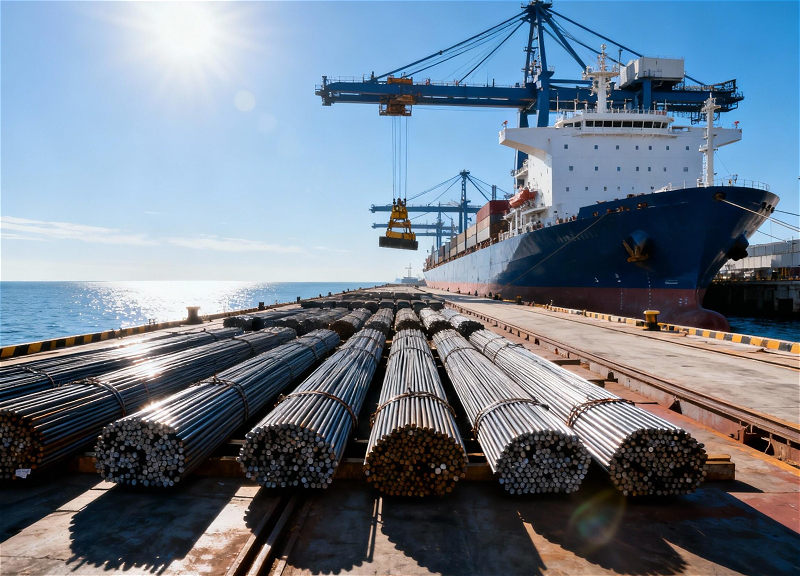
A policy in which anti-Israeli slogans are voiced in public while economic benefit continues to be extracted behind the scenes is not entirely sincere. Those who try to accuse Azerbaijan should first of all explain the ships heading daily from their own country to Israel. Thanks to these opaque supply schemes, steel, cement, construction materials, and raw materials loaded at Turkish ports continue to directly supply Israeli industry.
According to official data from Israel and international statistical organizations such as UN Comtrade and Israel's Central Bureau of Statistics (CBS), goods of Turkish origin arrive in Israel through the ports and free economic zones of third countries, including Greece, Romania, Bulgaria, and Egypt, with the cargo documents (bills of lading) being altered. Israeli sources still record trade turnover worth hundreds of millions of dollars in imports of goods of Turkish origin.
The Turkish Statistical Institute (TÜİK) presents these figures in its reports without indicating the code "Israel," masking the data under the designations "unspecified country" or "aid to Palestine." However, it is hardly a secret that Palestine's infrastructure capabilities do not allow for the import of such enormous volumes of cement and metal, and as a result it is not difficult to assume that these goods are going directly to the Israeli market.
Another contradiction: oil via Ceyhan
Another topic of speculation by marginal groups in the Turkish media is the oil route along which crude oil reaches Israel through the port of Ceyhan. Data from international analytical companies in the energy sector, for example Kpler, show that the volumes of oil loaded at the port of Ceyhan in Turkey and delivered to Israel have not decreased in the slightest; on the contrary, in certain periods they have even grown.
Turkish officials explain their position by saying that they are "bound by international agreements and cannot interfere in the operation of a transit pipeline." But if Turkey, citing its international legal and economic obligations, does not halt this process, then on what grounds does it criticize the strategic partnerships and international agreements that Azerbaijan is building within the framework of its own independent foreign policy? This is an obvious example of double standards.
Azerbaijan has never resorted to hidden mechanisms in foreign policy. Baku builds relations with both Israel and Palestine openly, transparently, and in accordance with the norms of international law.
Therefore, the question is not whether the Turks have trade ties with the Israelis, but how far public statements correspond to actual actions. If declarations of a complete halt to trade are being made, then these words must be confirmed by data. And if critics of Azerbaijan demand what they are not ready to demand consistently of their own country, then this is no longer about principles but about political selectivity. Moral claims are convincing only when they are made according to the same rules.
Elnara Mammadova